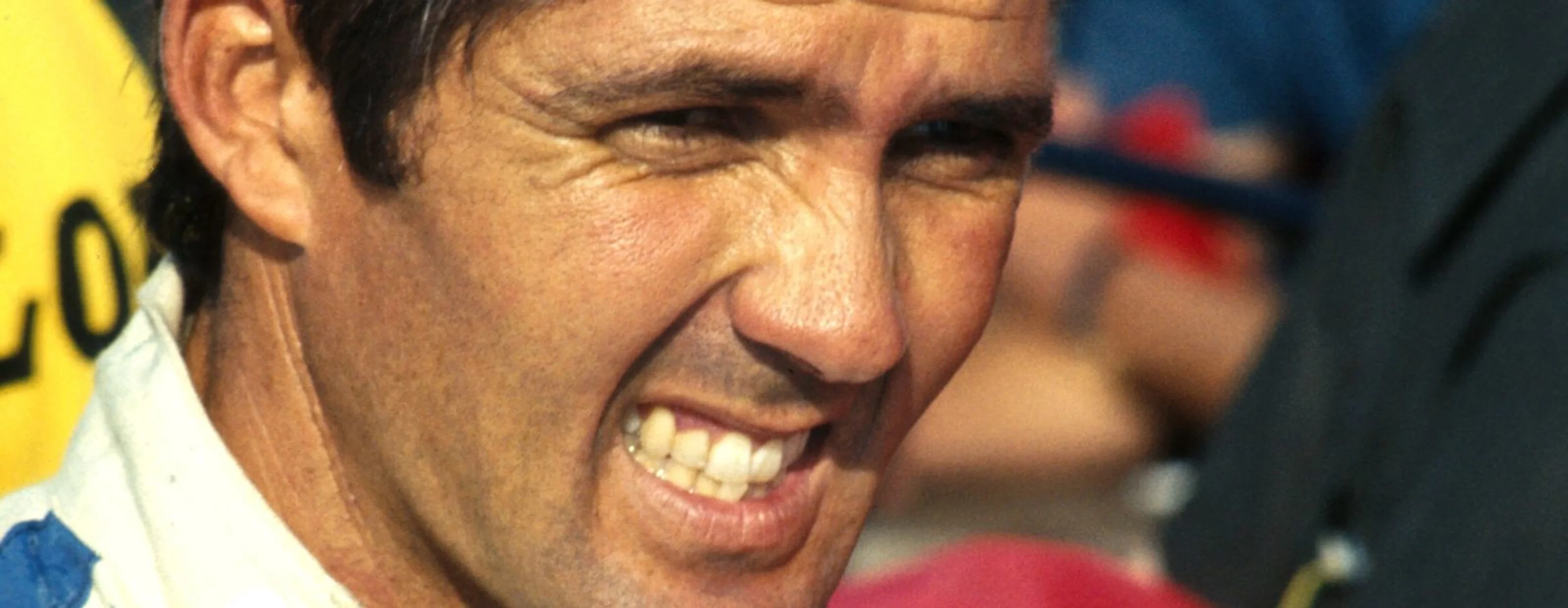
Basil van Rooyen
 South Africa
Racing driver•engineer•inventor
Birthday
April 19, 1939
Birth Sign
Aries
Birthplace
Johannesburg, South Africa
Age
Died at 84
About
Basil van Rooyen was a South African racing driver, race car developer, inventor, and engineer. He is remembered as one of the most versatile drivers to come out of South Africa, racing everything from motorcycles and touring cars to Formula 1 machines. His name is forever linked with the legendary Chevrolet Firenza Can-Am, the “Little Chev” that dominated South African motorsport in 1973.
After retiring from racing, van Rooyen reinvented himself as an inventor, developing the Crankcase Independent Two Stroke (CITS) engine, a cleaner and more efficient two-stroke design that attracted international investor interest. He spent his final decades in Australia, where he remained a beloved figure in the South African expatriate community. He passed away in 2023 at the age of 84, leaving behind a legacy that spans three distinct careers.
Early Life & Background
Basil van Rooyen grew up in Johannesburg, where his love for speed began early. He started out on two wheels, racing motorcycles before deciding that cars offered a safer path. His first car was an Anglia, which he raced with enthusiasm if not always success. The turning point came when he got behind the wheel of a Lotus Cortina, a car that suited his aggressive yet precise style and brought him his first major victories.
During this early period, van Rooyen also lent his engineering skills to Alfa Romeo, helping with the development of the iconic GTA model. This mix of driving talent and technical insight would become his trademark. By the mid-1960s, he had established himself as a force in South African touring car racing, winning races in a Mustang and catching the attention of factory teams.
His rise was not without setbacks, but van Rooyen’s determination and willingness to try anything with an engine set him apart from his peers. He was not just a driver; he was a student of machinery, always looking for an edge.
Career Growth
Van Rooyen’s breakthrough came in 1973 when he piloted the Chevrolet Firenza Can-Am, a Vauxhall-based homologation special fitted with a Z28 V8 heart. The car was so powerful it could worry Ferraris of its day, and van Rooyen drove it to a dominant season, winning race after race and cementing his reputation as a touring car ace. The “Little Chev” became a legend in South African motorsport, and fifty years later, enthusiasts still celebrate its achievements.
His versatility took him to the highest level of the sport. He drove in two Formula 1 World Championship Grands Prix, and his McLaren heritage page confirms his status as a McLaren driver. He also competed in sports cars, single-seaters, and saloon cars across multiple marques, including Capri Perana and Fiat/Ferrari machinery.
After his racing career wound down, van Rooyen moved to Australia in the mid-1980s. There, he turned his attention to invention, developing the CITS engine, a cleaner two-stroke design that aimed to meet modern emissions standards. In 2012, the engine won plaudits at an industry event, and by 2020, a Melbourne-based investor had shown serious interest. The design was even suggested as a bridge to electrification, hinting at a possible comeback for two-stroke engines.
Career Timeline
Public Image & Style
Basil van Rooyen is remembered as a South African motorsport legend, a “touring car ace” whose name is synonymous with the Firenza Can-Am. In the racing world, he was respected for his versatility and his ability to adapt to any machinery. Fans of South African motor racing hold him in high regard, and the 50th anniversary celebration of his 1973 Firenza achievement in 2023 showed how enduring his legacy is. In Australia, he was known simply as a “good bloke,” a popular figure in the expat community. His inventiveness and willingness to push boundaries, both on and off the track, made him a distinctive character in the sport.
Fame & Fandom (iFAMOUS Rankings)
Basil van Rooyen remains a towering figure in South African motorsport history, celebrated for his dual mastery as a driver and an engineer who defied the constraints of his era. While his legacy is deeply cherished by vintage racing enthusiasts and the local expatriate community in Sydney, he currently holds no placement in the published Global Top 1,000 rankings or any Top-100 scope list within the iFANN framework. The evaluation confirms that while his impact on automotive engineering and touring car dominance was profound, it did not translate into a quantifiable global fame metric sufficient for a ranked position. His fanbase lacks a formal name, consisting instead of historians, collectors, and friends who preserve the memory of a man who built his own championship-winning cars when factory support was unavailable. This community gathers not through digital campaigns or organized rallies, but through the preservation of vehicles like the Ford Capri Perana V8 and the sharing of stories about his technical ingenuity. There are no named fandom groups or viral social media movements; the reverence shown to him is quiet, rooted in the paddock respect he earned alongside legends like Jack Brabham and Denny Hulme. His story of adapting a Chevrolet small-block V8 to win the 1970 South African Championship stands as a defining moment of folklore, retold to highlight his ability to overcome segregation and resource scarcity. Even after his passing in 2023, tributes from the Federation of Motor Sports Clubs of SA and Australian circles underscored his role as a mentor and innovator rather than a celebrity icon. The absence of a structured fan organization reflects the nature of his life: one dedicated to mechanical solutions and regional racing success rather than global stardom.
Interesting Facts and Legends
Van Rooyen's career spanned such diverse fields that a South African motorsport publication once described him as 'a man with three careers': racing, engineering, and his life in Australia. He played a key role in helping Alfa Romeo develop the GTA, which became one of the most successful touring cars of the 1960s. After retiring from active competition, he reinvented himself as an inventor, creating the Crankcase Independent Two Stroke (CITS) engine designed to meet modern emissions regulations and potentially reviving two-stroke technology. This innovation attracted significant international investor interest before he spent his final decades in Australia. Known simply as a 'good bloke' by neighbors in the St Ives area of Sydney, he remained a beloved figure in the local expat community until his death at age 84. He drove for McLaren in Formula 1, a fact confirmed by the team's official heritage records, though he is perhaps best remembered for his time with Brabham in 1968. A cornerstone of his legend involves his unique ability to build and drive his own machines; he developed the Perana V8 engine by modifying a Chevrolet small-block V8, then won the 1970 South African Championship driving this very creation. Fans still recount how he transitioned from mechanic to champion despite limited resources and political barriers. Another widely told story highlights his later work as an automotive photographer and writer, where he engaged with enthusiasts through magazines rather than social media, maintaining a low-profile connection to the sport he loved.
Family & Personal Life
Details about Basil van Rooyen’s family are scarce. He kept his personal life private, and no public records document his parents, siblings, or children. What is known is that he moved to Australia in the mid-1980s and lived there for the final 37 years of his life, in the St Ives area of Sydney. He was a well-liked member of the local South African community, but specifics about his household remain out of the public eye.
Notable Connections
Basil van Rooyen’s name is closely tied to the Chevrolet Firenza Can-Am, the car he drove to fame. He also has a lasting association with McLaren, which lists him in its official heritage driver roster. Rudolf de Vos, a fellow South African motorsport figure, attended the 50th anniversary celebration of the Firenza in Gqeberha. Van Rooyen also kept in touch with OldRacingCars.com, contributing to their “Where Are They Now” feature.
Relationships & Dating History
No public records document Basil van Rooyen’s romantic relationships or marriages. He kept his personal life out of the spotlight, and none of the available sources mention a spouse, partner, or children. His obituaries and tributes focus exclusively on his professional achievements. As of 2026, no information is available about his relationship status at the time of his death.
Death & Aftermath
Died
September 14, 2023 (aged 84)
Death Place
St Ives, New South Wales, Australia
Cause of Death
Mesothelioma following a long illness
The Franschhoek Motor Museum and the Australian Broadcasting Research Bureau confirmed that Basil van Rooyen passed away on Thursday, September 14, 2023, after a long battle with mesothelioma. The Sydney Morning Herald reported his death as peaceful in St Ives, New South Wales, where he had resided for nearly four decades. His passing followed a protracted illness that eventually claimed the life of the man once known for dominating South African circuits in the legendary Chevrolet Firenza Can-Am. Tributes flowed immediately from the motorsport community, with colleagues like Fulton Allem sharing memories of Van Rooyen's character on social media platforms. Online forums in the St Ives area reflected a deep respect for the expatriate driver, who was widely regarded as a "good bloke" within the local South African community.
Retrospective articles on sites such as OldRacingCars.com and Supercars.net honored his unique trajectory from racing driver to engineer, highlighting the three distinct careers that defined his public legacy. A private family gathering marked the end of his journey, honoring his memory alongside his four children: Tracy, Lara, John, and James. While no public ceremony or specific burial location was disclosed, his engineering innovations, particularly the Crankcase Independent Two Stroke engine, remain subjects of historical interest.
Net Worth (Estate Value)
As a deceased individual, Basil van Rooyen’s estate value is not publicly documented. During his lifetime, his income came from racing, engineering, and later, his work on the CITS engine. The CITS engine attracted investor interest in 2020, which may have generated licensing income, but no financial details are available. His estate is not known to have earned significant posthumous revenue, and no major posthumous releases or licensing deals have been reported. As of 2026, the estate’s financial status remains private.
Awards & Accolades
Known For
Chevrolet Firenza Can-Am
1973 · Driver
Formula 1 World Championship
1970 · Driver
Keywords
Sources
Quick Facts
- Profession
- Racing driver, engineer, inventor
- Born
- April 19, 1939
- Birthplace
- Johannesburg, South Africa
- Died
- September 14, 2023
- Death Place
- New South Wales, Australia
- Gender
- Male
- Birth Sign
- Aries
Frequently Asked Questions
How old was Basil van Rooyen when he died?
What cars did Basil van Rooyen race?
How many Formula 1 races did Basil van Rooyen enter?
What was the Little Chev Firenza?
What was Basil van Rooyen's CITS engine?
Join the community
fans discussing