BASF
 Germany
"We create chemistry for a sustainable future"
About
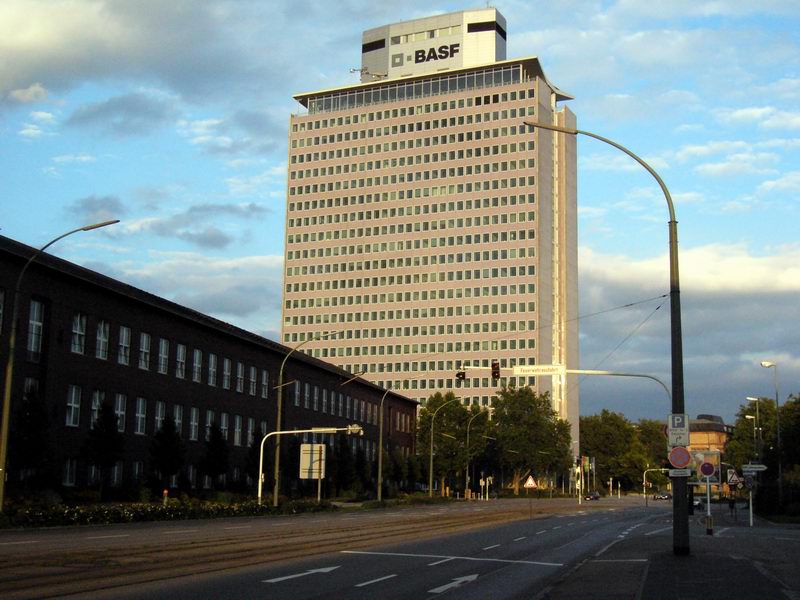
On April 6, 1865, Friedrich Engelhorn opened the first factory of Badische Anilin- & Soda-Fabrik in Ludwigshafen am Rhein to produce aniline dyes and soda ash. The company grew rapidly after Fritz Haber and Carl Bosch invented the Haber-Bosch process in 1912, which enabled the mass production of ammonia for fertilizers and explosives. This breakthrough transformed agriculture and warfare while establishing BASF as a dominant force in industrial chemistry.
Today the corporation operates under a business-to-business model that supplies raw materials and solutions to downstream industries rather than consumer-facing brands. Its global footprint spans over 80 countries with more than 200 sites, organizing operations into six major segments: Chemicals, Materials, Industrial Solutions, Surface Technologies, Agricultural Solutions, and Nutrition & Health.
Recent years have seen the company navigate a complex landscape of expansion and contraction. While BASF invested heavily in green chemistry initiatives like the August 2026 launch of a new Climate Center at its headquarters, it simultaneously announced the cessation of operations on multiple production lines in McIntosh, Alabama. That decision resulted in layoffs of approximately 80 employees as the company restructured its North American presence.
Products & Sub-brands
Frequently Asked Questions
Who owns BASF?
Who is the CEO of BASF?
Is BASF still in business?
What does BASF make?
How does BASF compare to competitors like Dow or Bayer?
Keywords
Sources
Company Info
- Founded
- April 6, 1865
- Founder
- Friedrich Engelhorn
- CEO
- Martin Brudermüller
- Headquarters
- Ludwigshafen, Germany
- Industry
- chemical industry, plant protection, extraction of petroleum
- Revenue
- 68900000000
- Employees
- 111047
- Key Innovation
- Haber-Bosch process (1912)
- Recent Event
- Cessation of Alabama operations (July 2026)
- Product Launch
- xarvio CONNECT 2.0 (August 2026)
Official Website
www.basf.com
Join the community
fans discussing