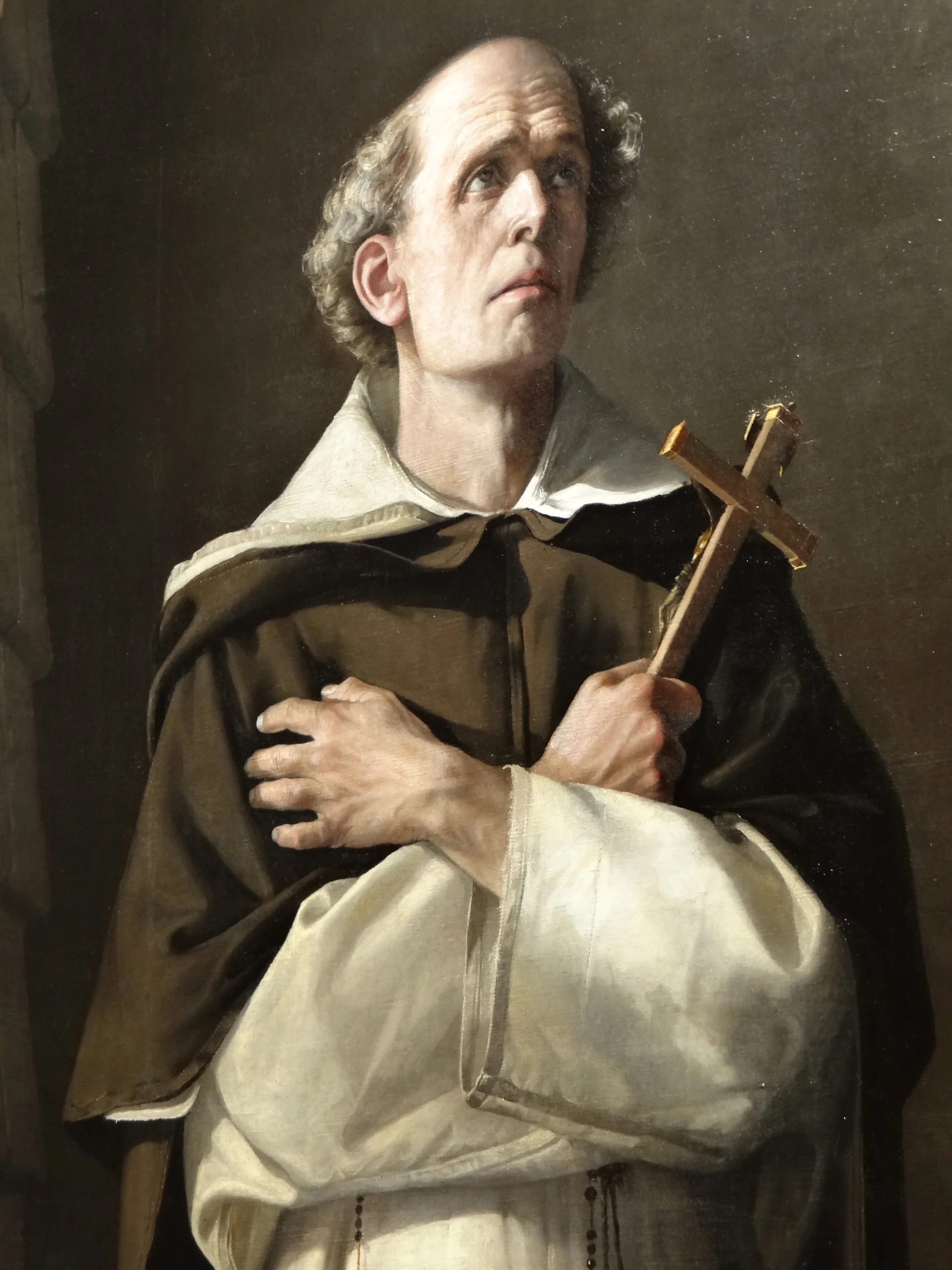
Bartolomé de las Casas
 Spain
Dominican friar•theologian•historian•human rights activist
Also known as: Bartolomeo de Las Casas, Bartholomé de Las Casas, Fray Bartolomé de las Casas
Birthday
November 11, 1484
Birth Sign
Scorpio
Birthplace
Seville, Spain
Age
Died at 81
About
Bartolomé de las Casas was a Spanish Dominican friar, theologian, and historian who became one of history's most prominent defenders of Indigenous rights. Born in Seville in 1484, he initially participated in the colonial system before undergoing a radical transformation that led him to denounce the brutal treatment of Native peoples by Spanish conquistadors. He served as the first official Protector of the Indians and later as the Bishop of Chiapas, using his position to advocate for legal reforms that would eventually lead to the New Laws of 1542. His extensive writings, particularly Historia de las Indias, remain essential primary sources for understanding the early decades of Caribbean colonization.
His legacy is defined by a lifelong moral crusade against slavery and colonial exploitation. Despite facing fierce opposition from colonists and even retracting an early suggestion to replace Indigenous labor with African slaves, Las Casas remained steadfast in his belief that all humans possessed full rationality and rights. He engaged in the famous Valladolid Debate of 1550–1551, arguing against the notion that Indigenous peoples were naturally enslaved. His work laid the groundwork for modern human rights theory and continues to be studied by scholars and activists worldwide.
Early Life & Background
Born into a family of merchants in Seville, Spain, Bartolomé de las Casas received a rigorous education typical of the Spanish gentry during the Renaissance. He studied law at the University of Salamanca, where he was exposed to Scholastic philosophy and the emerging debates on natural law. Before leaving for the Americas, he was ordained as a priest, though he did not immediately pursue a clerical career in Europe. His early life was marked by the intellectual ferment of Renaissance Spain, a period deeply engaged with the question of the "rights" of newly discovered peoples.
In 1502, he arrived in the Canary Islands and sailed to the Americas shortly after, joining the expedition to Hispaniola. During this initial phase, he participated fully in the colonial economy, receiving an encomienda, a grant of Indigenous labor, and working as a parish priest. For several years, he owned Indigenous people who were forced to work, a common practice among the early settlers. This period of his life stands in stark contrast to his later reputation, highlighting the complex reality of many early colonizers who began as beneficiaries of the system before becoming its critics.
The turning point came around 1514 after hearing a sermon on Ezekiel 34, which led him to renounce his encomienda. He publicly declared that holding Indigenous slaves was unjust and began preaching against the abuses of the conquistadors. This pivotal moment set him on a path that would eventually see him appointed as the first official Protector of the Indians by the Spanish Crown. His journey from participant to critic was not immediate but evolved through years of observation, theological study, and personal reflection on the morality of the conquest.
Career Growth
Las Casas's career is defined by a radical transformation from a participant in colonial exploitation to its most vocal critic. In 1515, he was appointed by the Spanish Crown as the first official "Protector of the Indians," a role he held intermittently for decades. He attempted to establish a peaceful, self-sustaining colony at Cumaná in 1522 based on voluntary labor and conversion, but the experiment failed due to resistance from local colonists and indigenous groups. Following this, he entered the Dominican Order in 1522, taking vows and dedicating himself to religious life while refining his arguments against the brutality of the conquest.
His advocacy reached new heights in 1539 when he testified before the Council of the Indies in Valladolid, presenting evidence of atrocities committed by Spanish colonizers. This testimony contributed significantly to the passage of the New Laws of 1542, which aimed to phase out the encomienda system and protect Indigenous peoples. Although these laws faced fierce opposition from colonists, they marked a significant legislative victory for his cause. In 1544, he was appointed Bishop of Chiapas, becoming the first resident bishop of the diocese, though his tenure was short-lived due to intense conflict with Spanish settlers who opposed his reforms.
Resigning from the bishopric in 1547, he returned to Spain to continue his advocacy through writing and lobbying. The most famous event of his later career was the Valladolid Debate of 1550–1551 against Juan Ginés de Sepúlveda. This public disputation centered on whether Indigenous peoples were naturally enslaved or possessed full rationality and rights. Las Casas argued passionately for their humanity and freedom, cementing his status as a pioneer in human rights thought. He spent his final decades writing his magnum opus, Historia de las Indias, a multi-volume chronicle of the Spanish conquest that remains a foundational text in Latin American studies.
Career Timeline
Public Image & Style
Las Casas is portrayed as a courageous and principled defender of the oppressed, often described as a "saint and sinner" due to his early participation in the colonial system. His image is one of moral integrity and relentless advocacy for justice. He is frequently depicted in artistic representations as an elderly man with a long beard, wearing the habit of a Dominican friar. His writings and speeches are remembered for their clarity, passion, and unwavering commitment to human dignity.
Media and academic portrayals emphasize his role as a pioneer of human rights and a critic of colonial violence. While some historians note the contradictions in his early life, such as his initial support for African slavery, these are generally framed as part of his journey toward enlightenment rather than defining characteristics. His public image has evolved over time, shifting from a controversial figure to a revered symbol of justice and compassion.
Fame & Fandom (iFAMOUS Rankings)
Bartolomé de las Casas commands a global attention that transcends mere historical curiosity, anchoring the modern discourse on human rights and colonial justice with an enduring weight. His influence is measured not in fleeting viral spikes but in the sustained reverence of scholars, activists, and institutions worldwide who study his life as a foundational text for Indigenous advocacy. Despite this profound legacy, iFANN's Global Fame Engine has evaluated this person, but they do not currently hold a placement in the published rankings, meaning he holds no position within the Global Top 1,000 or any Top-100 scope list. This absence from current celebrity metrics reflects the unique nature of his fame; he exists outside the realm of contemporary pop culture where such rankings are typically generated.
The audience surrounding him lacks a formal collective identity, and there is no documented fandom name to describe those who champion his memory. Instead of a fanbase engaging in organized campaigns or rituals, his supporters form a dispersed community of historians and human rights defenders who interact with his work through academic conferences and political advocacy rather than social media trends. While modern groups invoke his name during National Indigenous History Month or in debates regarding the Spanish Empire, these are institutional observances rather than fan-driven movements. There are no fan clubs, unofficial nicknames, or chart pushes associated with him, as the concept of a pop-culture fandom does not apply to a sixteenth-century Dominican friar. His status remains that of a revered historical figure whose reputation is built on verified documents and moral authority rather than the consumption signals that drive modern fame engines.
Interesting Facts and Legends
Known affectionately by some scholars as the 'Apostle of the Indians,' Bartolomé de las Casas underwent one of history's most dramatic personal transformations. The legend of his conversion tells of a profound moral shift after witnessing the brutal treatment of Native peoples, leading him to renounce his own holdings and become the first official Protector of the Indians in 1515. This narrative serves as a powerful parable of repentance and justice, widely retold in textbooks and academic circles. He later authored the seminal work A Short Account of the Destruction of the Indies, which detailed Spanish atrocities and directly influenced the New Laws of 1542.
His writings sparked the famous Valladolid Debate of 1550–1551 against Juan Ginés de Sepúlveda, cementing his role as a pioneer in universal human rights theory. Modern re-evaluations of his life have also highlighted complex controversies, including his early support for African slavery before his full repentance. Today, his legacy is actively maintained by organizations like the Fray Bartolomé de las Casas Human Rights Center, ensuring his voice remains a central part of discussions on colonialism and Indigenous sovereignty. Despite his fame, the exact location of his burial site in Madrid is unknown due to subsequent renovations.
Notable Quotes
“They are men, and they have souls just like us.”
“I have seen the cruel treatment of the Indians, and I cannot remain silent.”
Family & Personal Life
Born into a family of merchants in Seville, Las Casas received a rigorous education typical of the Spanish gentry. He studied law at the University of Salamanca, where he was exposed to Scholastic philosophy and the emerging debates on natural law. His family background provided him with the resources and social standing necessary to pursue higher education and travel to the Americas. While specific details about his parents and siblings are scarce in historical records, his upbringing in a prosperous merchant family likely influenced his early exposure to trade and global affairs.
As a Dominican friar, he lived a celibate life and did not have a traditional family unit with a spouse or children. His relationships were primarily professional and ideological, involving collaboration with other reformers, missionaries, and royal officials. He maintained close ties with fellow Dominicans and worked closely with figures like Bishop Zumárraga in Mexico. His legacy is carried forward not by descendants but by the institutions and movements inspired by his life's work, including the Fray Bartolomé de las Casas Human Rights Center in Mexico City.
Notable Connections
Juan Ginés de Sepúlveda, King Charles V, Bishop Zumárraga
Relationships & Dating History
Bartolomé de las Casas did not have romantic relationships, dating history, marriages, or children in the modern sense. He was a celibate clergyman who entered the Dominican Order in 1522 and remained unmarried throughout his life. His "relationships" were primarily professional and ideological, involving collaboration with other reformers, missionaries, and royal officials. There are no records of any romantic partners, engagements, or domestic partnerships. His life was dedicated to his faith and his mission to defend Indigenous peoples, leaving no room for personal romantic entanglements.
Death & Aftermath
Died
July 18, 1566 (aged 81)
Death Place
Madrid, Spain
Cause of Death
Natural causes
Bartolomé de las Casas died on July 18, 1566, within the convent of the Dominicans in Madrid, Spain. Historical accounts describe his final days as spent in poverty and relative obscurity after returning from the Americas, where he had dedicated his life to defending Indigenous peoples against colonial abuses. He died at approximately eighty-two years old. His funeral was a private religious ceremony held within the convent, attended only by fellow friars and close associates. Burial took place in the church of San Pablo in Madrid, yet subsequent upheavals and renovations have since lost the exact location of his remains.
While immediate posthumous recognition was modest compared to modern standards, his legacy endured through the preservation of his extensive writings, including A Short Account of the Destruction of the Indies. Over the centuries, institutions have honored his memory through scholarships, research conferences, and monuments, such as the statue standing along the Guadalquivir River in Seville. His arguments regarding natural law and indigenous rights continue to influence international jurisprudence, notably referenced by the Inter-American Court of Human Rights. Commemorative efforts include a postage stamp issued in 1992 and ongoing academic discourse surrounding the Fray Bartolomé de las Casas Human Rights Center.
Net Worth (Estate Value)
$0
iFANN Editorial Team estimate
As a 16th-century cleric and monk, Bartolomé de las Casas had no personal net worth in the modern sense. He lived in poverty during his later years, relying on the support of the Dominican order. After his death, his estate consisted of his manuscripts and personal effects. Today, his "legacy value" is measured in cultural and intellectual capital rather than financial assets. The Fray Bartolomé de las Casas Human Rights Center manages his intellectual property and promotes his work, generating revenue through research grants, conferences, and educational programs, but these funds do not constitute a personal estate. The iFANN Editorial Team estimates that the total value of his estate and intellectual contributions is effectively zero in monetary terms, reflecting the non-commercial nature of his life and work.
Awards & Accolades
View 9 records, honours and achievementsKnown For
A Short Account of the Destruction of the Indies
1542 · Author
Historia de las Indias
1566 · Author
Valladolid Debate
1550 · Debater
Keywords
Sources
Quick Facts
- Profession
- writer, theologian, chronicler
- Born
- November 11, 1484
- Birthplace
- Seville
- Died
- July 18, 1566
- Death Place
- Madrid
- Gender
- Male
- Birth Sign
- Scorpio
Personal Details
- Full Name
- Bartolomé de las Casas y Arellano
- Children
- Education
- University of Salamanca
Frequently Asked Questions
What was Bartolomé de las Casas known for?
When was Bartolomé de las Casas born?
Did Bartolomé de las Casas ever marry?
What is the Black Legend associated with Las Casas?
Where is Bartolomé de las Casas buried?
Similar People
Join the community
fans discussing