Barstool Sports
by Barstool Sports
"Unfiltered sports and pop culture commentary"
Rating
4/5
Overview
Barstool Sports began as a free print paper in Boston in 2003, distributed on street corners and in bars. Founder Dave Portnoy, known as El Presidente, built the brand on a simple premise: cover sports and pop culture with a voice that mainstream outlets wouldn't touch. The paper's early issues featured gambling picks, fantasy advice, and crude humor, quickly developing a local following among young men who appreciated the irreverence.
The digital pivot came in the late 2000s when Portnoy shifted focus to the website barstoolsports.com. The site grew rapidly on the strength of viral video segments, particularly the 'Barstool Rundown' and later the massive success of podcasts. By 2016, the network had expanded to include dozens of personalities, each with their own show or blog, and had become a cultural force in sports media. The company's 2016 acquisition by The Chernin Group valued it at around $100 million, and Penn National Gaming later bought a 36% stake in 2020 for $450 million, though Portnoy retained control.
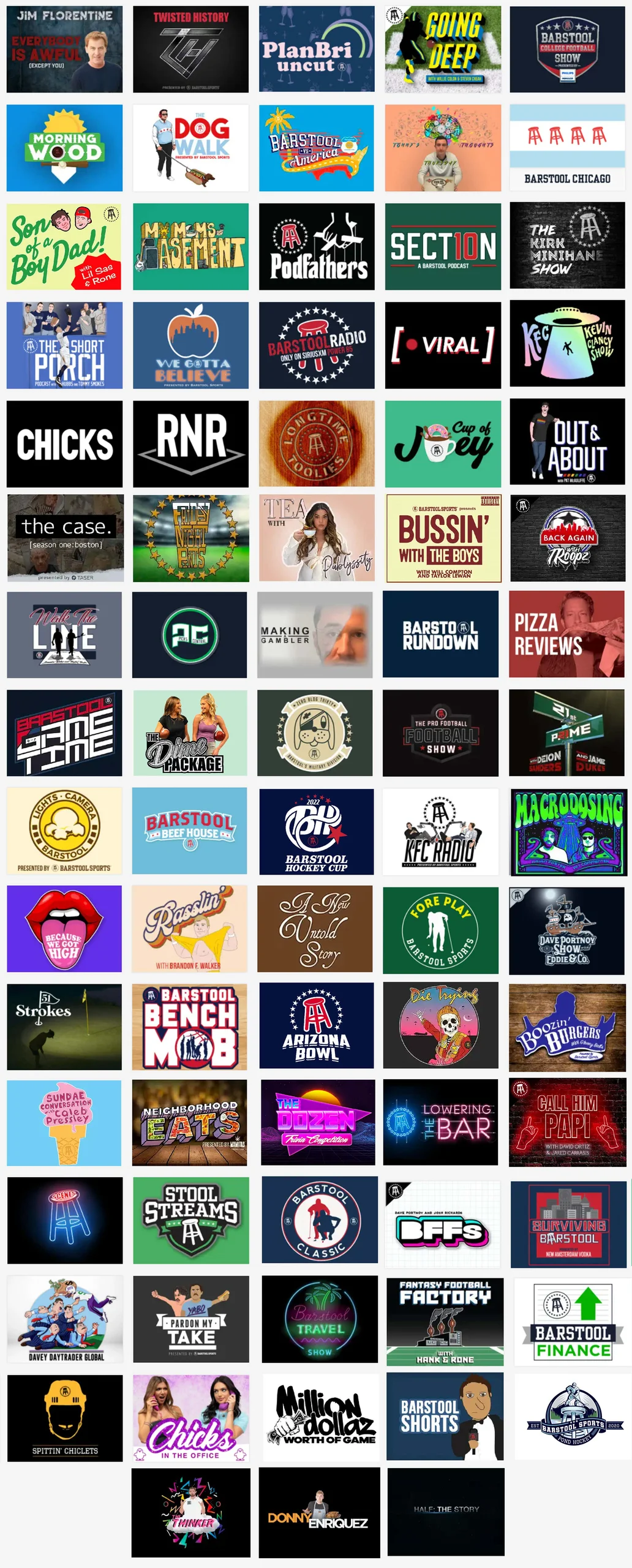
Today, Barstool operates a multi-platform media ecosystem. Its flagship products include the website, a YouTube channel with millions of subscribers, and a podcast network that consistently dominates charts. Pardon My Take, hosted by Big Cat and PFT Commenter, regularly ranks among the top sports podcasts globally, with millions of downloads per episode. Other popular shows include Call Her Daddy (which left in 2021), Spittin' Chiclets, and Bussin' With The Boys. The company also sells merchandise through its online store, featuring apparel and accessories that lean heavily on inside jokes and catchphrases from its shows.
Barstool's audience, self-identified as 'Stoolies,' is fiercely loyal. The brand's appeal lies in its authenticity and willingness to say what others won't. Critics, however, point to a history of offensive content, including racist and sexist remarks, and a workplace culture that has faced multiple harassment allegations. Despite the controversies, Barstool continues to thrive, with recent blog posts from August 2026 covering everything from Kevin Durant's MVP commentary to a WNBA record set by Caitlin Clark, showing its continued relevance in real-time sports conversation.
Key Features
- Daily sports and pop culture blog posts
- Top-ranked podcasts including Pardon My Take
- Video content on YouTube with millions of subscribers
- Active social media presence across Instagram, X, Facebook
- Merchandise store with apparel and accessories
- Live event coverage and original programming
Specifications
| Founded | 2003 |
| Founder | Dave Portnoy |
| Headquarters | New York City, New York |
| Ownership | Dave Portnoy (majority), Penn National Gaming (36% stake) |
| Platforms | Website, iOS/Android apps, YouTube, Podcast feeds |
| Content Formats | Blog posts, podcasts, video segments, live streams |
Pros & Cons
Pros
- • Unfiltered, authentic sports commentary
- • Engaging podcasts with strong fan followings
- • Wide range of content formats and personalities
- • Free access to most content
- • Strong community engagement
Cons
- • Frequent controversies and offensive content
- • Workplace culture criticized for harassment
- • Polarizing brand that alienates some audiences
- • Advertising-heavy model may impact user experience
- • Content quality varies across shows
Frequently Asked Questions
What is Barstool Sports?
Is Barstool Sports free to use?
Who owns Barstool Sports?
What is the most popular Barstool podcast?
Is Barstool Sports controversial?
Keywords
Sources
Product Info
- Brand
- Barstool Sports
- Category
- Digital Media
- Released
- 2003
- Price
- Free (core content), premium merchandise available
- Availability
- Available
- Founded
- 2003
- Founder
- Dave Portnoy
- Headquarters
- New York City, New York
- Instagram Followers
- 17 million
- Penn National Stake
- 36% (2020)
- Valuation (2020)
- $450 million for 36% stake
Where to Buy
Join the community
fans discussing