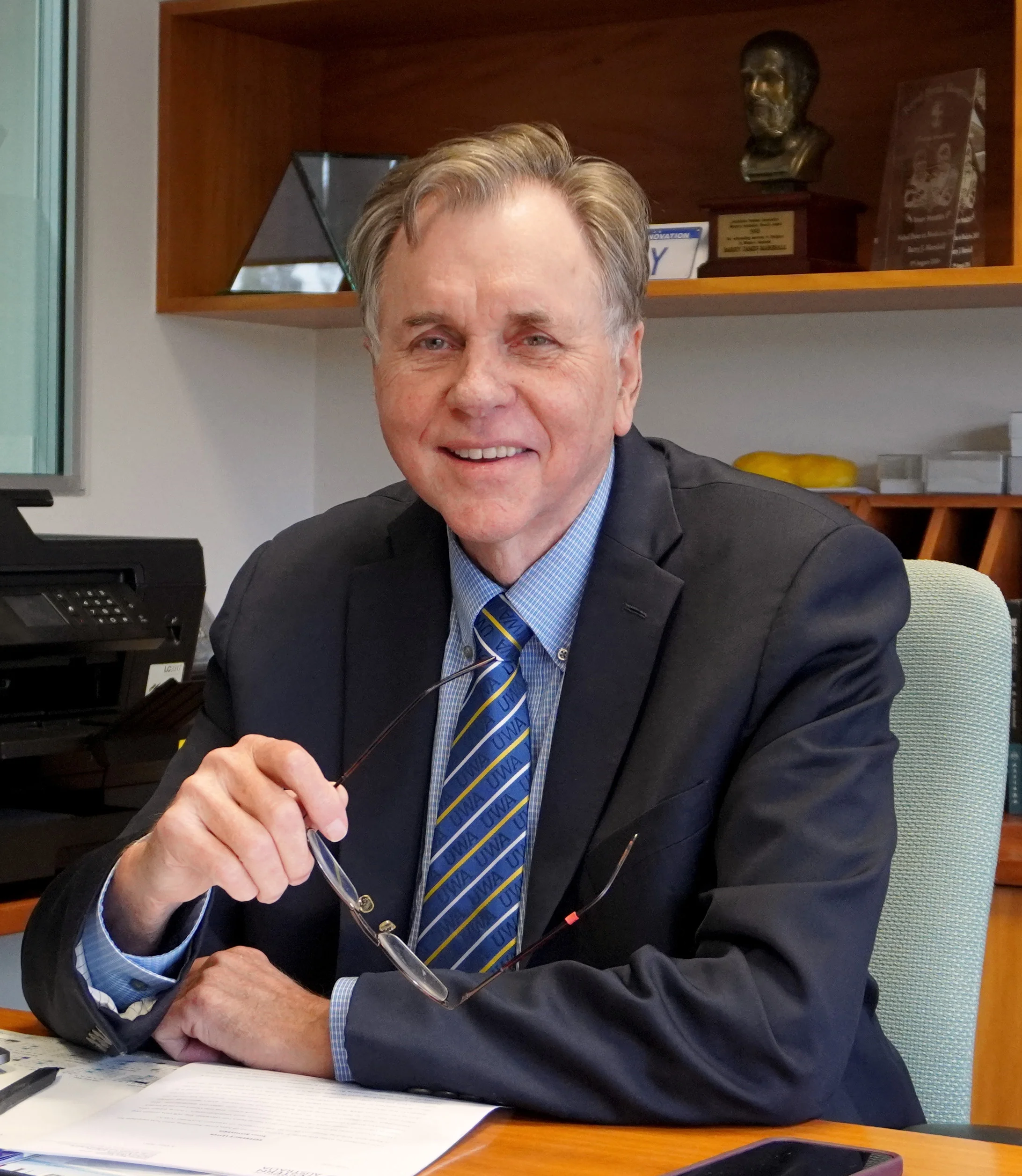
Barry Marshall
 Australia
physician•professor•microbiologist
Also known as: Barry James Marshall, Barry J. Marshall
Birthday
September 30, 1951
Birth Sign
Libra
Birthplace
Kalgoorlie, Western Australia
Age
74 years old
About
Barry James Marshall is an Australian physician and microbiologist who proved that a bacterium, Helicobacter pylori, causes most peptic ulcers and gastritis. Working with pathologist Robin Warren in the early 1980s, he overturned decades of medical dogma that blamed stress, spicy food, and excess stomach acid. Their discovery also linked H. pylori to stomach cancer, opening new paths for prevention and treatment. In 2005, they shared the Nobel Prize in Physiology or Medicine.
Marshall is famous for his willingness to test his hypothesis on himself. In 1984, he drank a culture of H. pylori and developed acute gastritis, confirming the causal link. Today, he serves as Professor of Clinical Microbiology and Co-Director of the Marshall Centre at the University of Western Australia, and he holds professorships at Zhengzhou University and Shenzhen University in China. He continues to research gut health and advocate for evidence-based medicine.
Early Life & Background
Barry James Marshall was born on 30 September 1951 in Kalgoorlie, a gold-mining town in Western Australia. His father was a fitter and turner apprentice, and his mother had quit nursing to have him. The family moved often, living near a whaling station in Carnarvon for a few years before settling in Perth when Barry was eight. He was the eldest of four children.
At school, Marshall was not athletic and often the last picked for football teams. He found his niche in curiosity-driven projects. A childhood incident at age twelve left a lasting impression: when his 18-month-old sister drank kerosene, he performed mouth-to-mouth resuscitation until help arrived. He later credited this with sparking his interest in medicine.
Marshall studied at Marist College, Churchlands, then earned his medical degree from the University of Western Australia in 1974. He married Adrienne in 1972, during his studies. After graduating, he completed his residency at Queen Elizabeth II Medical Centre and moved to Royal Perth Hospital in 1979. In 1981, during a gastroenterology rotation, he met pathologist Robin Warren, who had noticed corkscrew-shaped bacteria in gastric biopsies. Together they studied 100 patients, and in 1982 Marshall successfully cultured the bacterium later named H. pylori. Their findings were met with skepticism, and their initial paper was rejected.
Career Growth
The breakthrough came in 1984 when Marshall, frustrated by skepticism, drank a Petri dish containing H. pylori. Within days he developed gastritis, confirmed by endoscopy, and then cured himself with antibiotics. This self-experiment provided the proof needed to convince the medical community. Their work showed that H. pylori causes peptic ulcers, a condition previously attributed to stress and diet.
Marshall and Warren received the Albert Lasker Clinical Medical Research Award in 1995 and the Benjamin Franklin Medal in 1999. In 2005, they were jointly awarded the Nobel Prize in Physiology or Medicine. Marshall published Helicobacter Pioneers in 2002, chronicling the discovery's history. He has held academic positions at the University of Western Australia, where he co-founded the Marshall Centre, and has taken up roles at Zhengzhou University and Shenzhen University in China. Recent projects include The Noisy Guts Project and an NHMRC-funded study, and he received a VinUni research grant in 2026.
Career Timeline
Public Image & Style
Marshall is widely seen as a maverick scientist who challenged medical orthodoxy with courage and a touch of irreverence. His self-experiment is one of the most famous in medical history, often cited as an example of bold scientific inquiry. Media profiles describe his "devil-may-care exuberance" and his wit. He engages with popular audiences through podcasts and public talks, making complex science accessible. His story resonates because it combines rigorous research with personal bravery, inspiring both medical professionals and the public.
Fame & Fandom
Barry Marshall is currently evaluated by the iFANN Global Fame Engine but holds no placement in the published rankings. While he does not appear on the Global Top 1,000 or any scope-specific list as of August 2026, his standing remains a unique case where scientific impact transcends traditional celebrity metrics. The global medical community serves as his dedicated following, though this audience has no formal fandom name or organized pop-culture infrastructure like fan clubs or chart campaigns. Unlike entertainers who rely on social media engagement, Marshall's influence flows through academic institutions and the standardization of medical practices worldwide. His legacy is defined by the Helicobacter pylori discovery, which shifted ulcer treatment from surgery to antibiotics, earning him the 2005 Nobel Prize and the title of Companion of the Order of Australia. Within gastroenterology circles, the story of his self-experimentation functions as a foundational legend taught to every new resident. He drank a culture of the bacteria to prove the causal link between infection and gastritis, developing severe symptoms before curing himself with antibiotics. This act of scientific courage is cited as one of the greatest moments in medical history, yet it exists outside the realm of viral pop-culture myths or street-side adoration. There are no recorded incidents of crowds fainting or subway shutdowns, nor are there unofficial nicknames for his supporters. His interaction with the public remains centered on lectures and interviews that demystify complex science, proving that true fame can exist without a fanbase in the traditional sense.
Interesting Facts and Legends
Barry James Marshall is an Australian physician and microbiologist who proved that a bacterium, Helicobacter pylori, causes most peptic ulcers and gastritis. Working with pathologist Robin Warren in the early 1980s, he overturned decades of medical dogma that blamed stress, spicy food, and excess stomach acid. Their discovery also linked H. pylori to stomach cancer, opening new paths for prevention and treatment. In 2005, they shared the Nobel Prize in Physiology or Medicine. Marshall is famous for his willingness to test his hypothesis on himself. He drank a culture of H. pylori and developed acute gastritis, confirming the causal link. Today, he serves as Professor of Clinical Microbiology. Marshall's self-experiment was done without telling his wife, saying later, "It's a lot easier to obtain forgiveness than permission." He recalled telling his lab technicians, "Well, here it goes, down the hatch" before drinking the bacteria. He described his childhood self as "unfocused" and always having a project in the garage. His sister's kerosene accident at age twelve inspired him to learn CPR. He has appeared on The Amp Hour podcast, discussing topics from Roman toilets to his Nobel experience. He also holds a fellowship in the Royal Australasian College of Physicians. The cultural mythology surrounding Dr. Marshall centers entirely on his self-experimentation. Frustrated by the rejection of his hypothesis, he ingested a beaker of H. pylori, developing severe gastritis confirmed by endoscopy. He then cured himself with antibiotics, proving the bacterial cause of ulcers.
Notable Quotes
“Well, here it goes, down the hatch.”
“It's a lot easier to obtain forgiveness than permission.”
“So, great experiment!”
“I wasn't great at sports and was always the last kid picked for the football team. From an early age, I was looking for my niche. But I was unfocused and went off in many directions.”
“I like the excitement of new things, boredom is the worst thing.”
Family & Personal Life
Barry Marshall married Adrienne in 1972, and they have four children: one son and three daughters. The couple has been married for over five decades. Marshall's parents were young when he was born; his father was 19 and his mother 18. He has a brother, William, and a younger sister. The family moved frequently during his early years, living near a whaling station in Carnarvon before settling in Perth.
Notable Connections
Barry Marshall is closely associated with pathologist Robin Warren, with whom he shared the 2005 Nobel Prize for discovering the role of H. pylori in peptic ulcers. His wife Adrienne has been a constant support since their marriage in 1972. He has collaborated with J. Muir and M. Webberley on The Noisy Guts Project, and with P.A. Khun and A. Tay on a VinUni research grant. He also holds academic ties with Zhengzhou University and Shenzhen University in China.
Relationships & Dating History
Barry Marshall married Adrienne in 1972, and they have been together ever since. Their marriage has been stable, with no public reports of separation or divorce. They have four children together. As of 2026, they remain married.
- MarriedAdrienne Marshall1972 - presentCurrentMarried in 1972; have four children together.
Salary, Net Worth In 2026
$5 Million
iFANN Editorial Team estimate
Barry Marshall's net worth in 2026 is estimated at $5 Million per iFANN's editorial analysis. His wealth accumulates from a long academic career, the Nobel Prize money, and various speaking engagements. As a professor and co-director of the Marshall Centre at the University of Western Australia, he earns a substantial salary. He has also received grants for research projects, including an NHMRC grant and a VinUni research grant. Additionally, his books, such as Helicobacter Pioneers, contribute royalties. His net worth has grown steadily over the years as he continues to hold prominent positions in Australia and China.
Awards Won (4)
Barry Marshall has won several prestigious awards for his groundbreaking work. In 1995, he received the Albert Lasker Clinical Medical Research Award. In 1999, he was awarded the Benjamin Franklin Medal. His most notable achievement came in 2005 when he and Robin Warren were jointly awarded the Nobel Prize in Physiology or Medicine. He also won the WA iAwards Emerging Innovation Category in 2018 as part of a team.
2005 · Medicine
Discovery of H. pylori and its role in gastritis and peptic ulcer disease
1995 · Medical Research
Work on H. pylori
Known For
Discovery that H. pylori causes peptic ulcers
1983 · Co-discoverer
Self-experiment ingesting H. pylori
1984 · Subject and researcher
Nobel Prize in Physiology or Medicine
2005 · Laureate
Keywords
Sources
Quick Facts
- Profession
- physician, professor, microbiologist
- Born
- September 30, 1951
- Birthplace
- Kalgoorlie, Western Australia
- Gender
- Male
- Birth Sign
- Libra
- Education
- University of Western Australia (MBBS, 1974)
- Spouse
- Adrienne Marshall
- Children
- 4
Personal Details
- Full Name
- Barry James Marshall
- Spouse
- Adrienne Marshall
- Children
- 4
- Education
- University of Western Australia (MBBS, 1974)
Frequently Asked Questions
How did Barry Marshall prove that H. pylori causes ulcers?
Did Barry Marshall win the Nobel Prize?
Is Barry Marshall married?
What is Barry Marshall's net worth in 2026?
How old is Barry Marshall?
Social Media
Similar People
Join the community
fans discussing