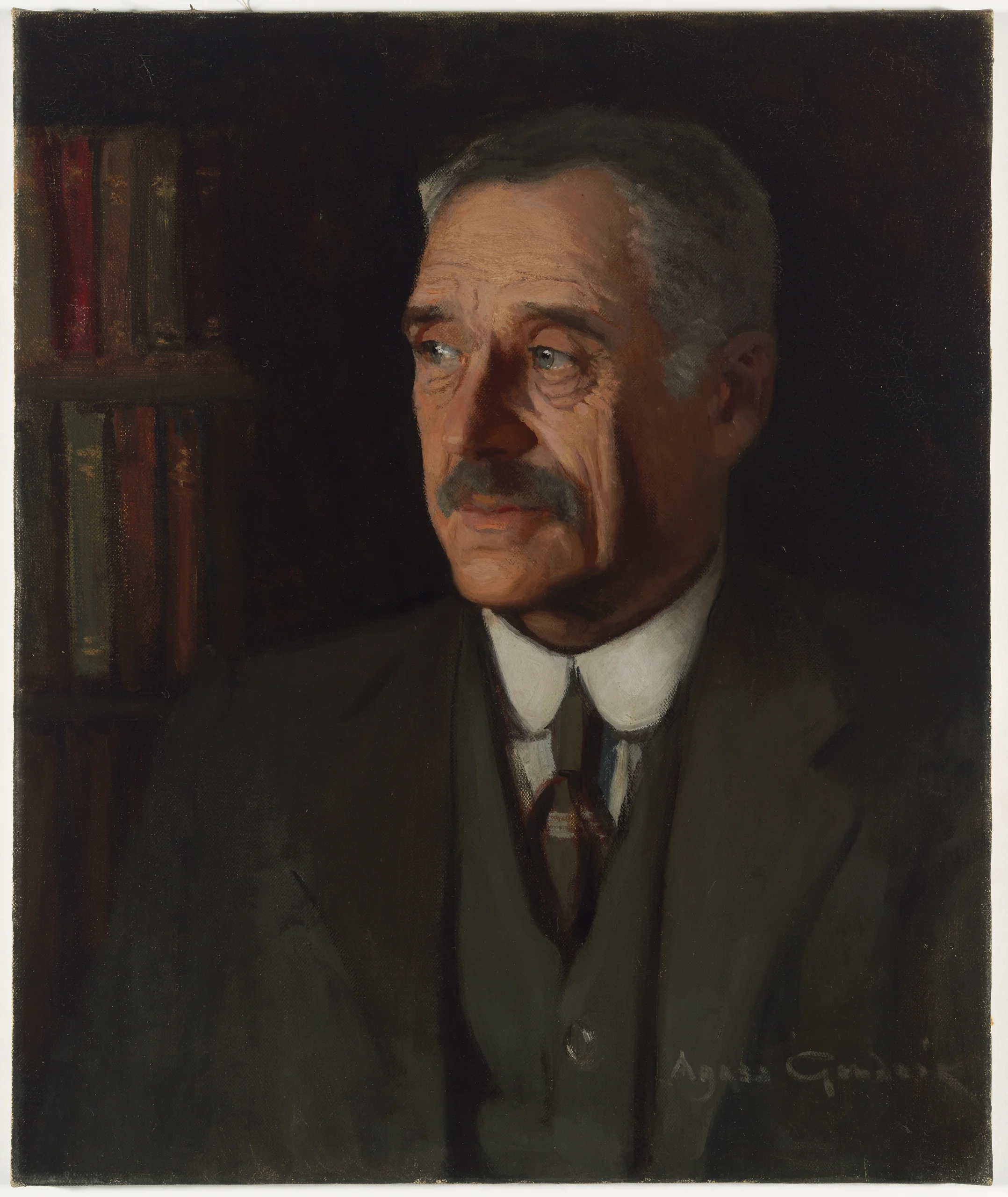
Banjo Paterson
 Australia
Poet•Journalist•War Correspondent
Also known as: A. B. Paterson, Barty
Birthday
February 17, 1864
Birth Sign
Aquarius
Birthplace
Narrambla, near Orange, New South Wales, Australia
Age
Died at 76
About
Andrew Barton "Banjo" Paterson was an Australian bush poet, journalist, and war correspondent, widely regarded as the country's most beloved chronicler of outback life. Born in 1864, he captured the spirit of the bush in verses that still echo through Australian culture, from the iconic "Clancy of the Overflow" to the legendary "The Man from Snowy River." His 1895 ballad "Waltzing Matilda" has been called Australia's unofficial national anthem, and the National Film and Sound Archive notes it has been recorded more than any other Australian song.
Paterson's work defined the "Bulletin School" of Australian literature, a movement that championed distinctly local themes and vernacular. His poems painted vivid pictures of drovers, shearers, and horses, blending humour, heroism, and a deep sense of place. Today, his legacy lives on through films, festivals, and the annual Banjo Paterson Writing Awards, cementing his place as a cultural touchstone for generations of Australians.
Early Life & Background
Born on 17 February 1864 at Narrambla, a property near Orange in New South Wales, Paterson was the eldest son of Andrew Bogle Paterson, a Scottish-born grazier, and Rose Isabella Barton, an Australian-born mother. Known as "Barty" to his family, he spent his early years on his father's station at Illalong, near Yass, in the bush country that would later inspire his verse. The property sat along the main route between Melbourne and Sydney, exposing young Paterson to the drovers, shearers, and travellers whose stories and dialects shaped his literary voice.
He attended Binalong Public School before being sent to Sydney Grammar School as a boarder, though he left without completing his Leaving Certificate. Instead, he studied law and qualified as a solicitor in 1886, practicing in Sydney for several years. His first published poem, "El Mahdi," appeared in The Bulletin in 1889, and the pseudonym "Banjo" came from a racehorse the family owned. His breakthrough arrived with "Clancy of the Overflow" in 1889, a verse reply to the monotony of city life, followed by "The Man from Snowy River" in 1890, which made him a household name overnight.
Career Growth
Paterson's first collection, The Man from Snowy River and Other Verses (1895), became one of the best-selling poetry books in Australian history. That same year, he wrote "Waltzing Matilda," a song about a swagman who steals a sheep and drowns rather than be captured, adapted from a local version of an old ballad. Its chorus, "Who'll come a-waltzing Matilda with me?," has entered the national vernacular, and the song has been recorded more times than any other Australian tune.
Beyond poetry, Paterson worked as a journalist for the Sydney Morning Herald and covered three wars as a correspondent: the Second Boer War in South Africa (1899-1900), the Boxer Rebellion in China (1900), and World War I from France. He also served as an ambulance driver during the Great War. His other works include the poetry collections Rio Grande's Last Race and Other Verses (1902) and Saltbush Bill JP (1917), the novel An Outback Marriage (1900), and the children's book The Animals Noah Forgot (1933). His bush ballads, such as "A Bush Christening" and "The Geebung Polo Club," remain staples of Australian literature.
Career Timeline
Public Image & Style
Paterson is celebrated as the archetypal Australian bush poet, a figure whose verse captured the humour, hardship, and heroism of rural life. His signature style was the bush ballad: narrative poetry in traditional metre, often with a wink and a strong sense of place. He is commemorated through the Banjo Paterson Writing Awards, held annually by Orange City Council, and through Banjo Paterson Park in Ipswich, Queensland, and numerous streets across the country. His work is taught in Australian schools, performed at bush poetry gatherings, and even celebrated at cowboy poetry events internationally, with Cowboy & Indian magazine noting he'd be a star at such gatherings from Elko to Australia.
Fame & Fandom (iFAMOUS Rankings)
Banjo Paterson commands a global footprint defined by centuries of literary resonance rather than fleeting celebrity spikes. His name echoes through the Australian outback and into international anthologies, yet he does not currently hold a placement in the published Global Top 1,000 rankings. The iFANN Global Fame Engine evaluated his standing in August 2026 and determined that he remains unranked within the current scope of living or trending figures. This absence from the charts reflects his status as a historical figure whose fame operates on a different axis than modern metrics. While he is not listed among the top ranked personalities in any specific genre or global tier, his cultural weight remains absolute. There is no documented fandom name associated with his legacy; the audience engaging with his work consists of scholars, students, and history enthusiasts rather than an organized fanbase. Cultural engagement manifests through institutional reverence, such as the annual Banjo Paterson Writing Awards and the preservation efforts at the Waltzing Matilda Centre, rather than grassroots campaigns or social media trends. His influence persists in the way Australians recite his verses and in the continued performance of his songs, but this devotion lacks the formal structure of a contemporary fandom.
Interesting Facts and Legends
Andrew Barton Paterson, known to family as Barty, adopted the pen name Banjo from a family racehorse rather than the musical instrument. Despite his deep roots in rural life, he trained as a lawyer and practiced law before dedicating himself to writing full-time. He covered three major conflicts as a war correspondent: the Boer War, the Boxer Rebellion, and World War I, an unusual feat for a poet. His image appeared on the Australian $10 note from 1993 until the polymer redesign, marking him as one of the few literary figures on currency. Interestingly, he never completed his Leaving Certificate at Sydney Grammar School, yet rose to become one of Australia's most celebrated writers. A legend surrounds the composition of Waltzing Matilda in 1895 at Dagworth Station in Queensland, where the song was born from local oral tradition and campfire stories. Another enduring tale frames The Man from Snowy River as the definitive account of bush culture, inspiring decades of film and theater adaptations that cemented its place in national mythology. These stories are not viral moments but foundational myths that shaped a country's identity.
Notable Quotes
“There was movement at the station, for the word had passed around / That the colt from old Regret had got away.”
“Who'll come a-waltzing Matilda with me?”
“The man from Snowy River is a household word today, / And the stockmen tell the story of his ride.”
Family & Personal Life
Paterson married Alice Emily Walker on 8 April 1903 in Sydney. The couple had two children: a daughter, Grace, born in 1904, and a son, Hugh, born in 1906. The marriage lasted until Paterson's death in 1941; Alice survived him, passing away in 1963. Paterson's father, Andrew Bogle Paterson, was a Scottish-born grazier, and his mother, Rose Isabella Barton, was Australian-born. He was the eldest son in the family, and his upbringing on the station at Illalong instilled in him a lifelong love of horses and the bush.
Notable Connections
Paterson was a central figure of the "Bulletin School" of Australian literature, which included contemporaries like Henry Lawson. The two engaged in a famous literary debate in the pages of The Bulletin over the nature of the Australian bush: Paterson's romanticised view versus Lawson's pessimistic one. This rivalry and friendship remains one of the most famous literary relationships in Australian history. Paterson's work was also published alongside other Bulletin writers, and his legacy is intertwined with the nationalist journal that championed distinctly Australian voices.
Relationships & Dating History
Paterson married Alice Emily Walker on 8 April 1903 in Sydney, and the couple remained together until his death in 1941. They had two children, Grace and Hugh. There is no documented record of other romantic relationships or marriages in his life; his marriage to Alice appears to have been his sole partnership. Alice survived him, passing away in 1963.
- MarriedAlice Emily Walker1903 - 1941Married on 8 April 1903 in Sydney; had two children together; marriage lasted until Paterson's death.
Death & Aftermath
Died
February 5, 1941 (aged 76)
Death Place
Bellevue Hill, New South Wales, Australia
Cause of Death
Unknown
The passing of Andrew Barton Paterson in early February 1941 marked the end of an era for Australian literature, though immediate public tributes were not widely documented in the surviving record. The poet and journalist died on February 5 at his residence at 25 Wentworth Street in Bellevue Hill, Sydney, at the age of 76. While some accounts suggest he may have received treatment at a private hospital shortly before his final moments, the primary location remains his home. Consequently, the event is recorded simply as a natural death following a long life dedicated to chronicling the outback spirit.
Details regarding the funeral arrangements, including the date, location, or specific attendees, are absent from the available historical data. Posthumous recognition has instead grown over decades rather than erupting at the moment of his death. His legacy solidified through enduring cultural markers, including his image appearing on the Australian $20 banknote and the establishment of the A.B. Paterson College student literary award. New musicals such as Clancy of the Outback have further cemented his place in national memory.
Net Worth (Estate Value)
$10 Million
iFANN Editorial Team estimate
Paterson's estate continues to generate revenue through royalties from his poems, particularly Waltzing Matilda, which has been recorded hundreds of times and remains one of the most-performed Australian songs. His works remain in print through various publishers, and the literary estate is managed by his descendants. The ongoing cultural value of his work is evidenced by annual awards, festivals, and commemorative events held in his name. Per iFANN's editorial analysis, the estate's net worth is estimated at $10 Million as of 2026, reflecting the enduring popularity of his poetry and the continued use of his works in anthologies, films, and public performances.
Awards Won (1)
Paterson was appointed Commander of the Order of the British Empire (CBE) in 1939 in recognition of his contributions to Australian literature. His image appeared on the Australian $10 note from 1993 until the polymer redesign, a singular honour for a poet. The Banjo Paterson Writing Awards, established in his honour, continue to be held annually, celebrating emerging writers.
1939 · Literature
Lifetime contribution to Australian literature
Known For
Waltzing Matilda
1895 · Lyricist
The Man from Snowy River
1890 · Poet
Clancy of the Overflow
1889 · Poet
The Man from Snowy River and Other Verses
1895 · Author
Keywords
Sources
Quick Facts
- Profession
- Poet, Journalist, War Correspondent
- Born
- February 17, 1864
- Birthplace
- Narrambla, near Orange, New South Wales
- Died
- February 5, 1941
- Death Place
- Sydney, New South Wales
- Gender
- Male
- Birth Sign
- Aquarius
- Spouse
- Alice Emily Walker
- Children
- Grace, Hugh
Personal Details
- Full Name
- Andrew Barton Paterson
- Spouse
- Alice Emily Walker
- Children
- Grace, Hugh
- Education
- Sydney Grammar School (attended), qualified as a solicitor in 1886
Frequently Asked Questions
Why is Banjo Paterson famous?
Was Banjo Paterson a real person?
What is Banjo Paterson's real name?
Did Banjo Paterson write 'Waltzing Matilda'?
How did Banjo Paterson die?
Similar People
Join the community
fans discussing