 Pakistan
About
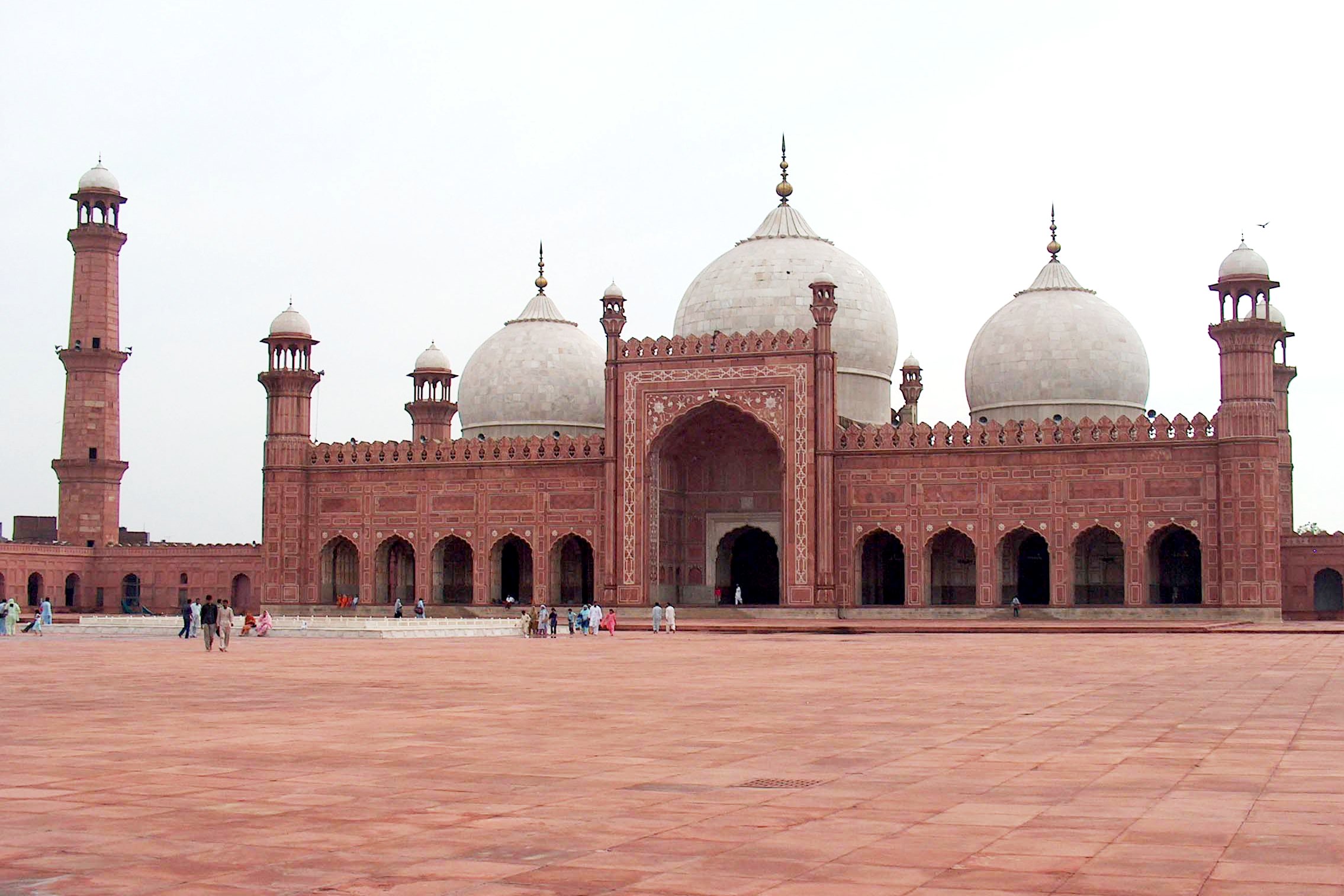
The Badshahi Mosque stands as a monumental testament to Mughal power in Lahore, Pakistan. Emperor Aurangzeb commissioned this massive structure in 1671, and construction crews finished the project just two years later in 1673. The architect Bade Dalal designed the complex using red sandstone and white marble, creating a space that could hold over 100,000 worshippers in its courtyard alone. When it opened, the mosque held the title of the largest in the world, a record it kept for more than three centuries until the Grand Mosque in Mecca surpassed it.
Located opposite the historic Lahore Fort at Hazuri Bagh, the mosque anchors the northern edge of the Walled City. Visitors enter through a grand double-storey gateway and climb 22 steps to reach the raised platform where the main prayer hall sits. The building features four towering minarets and three large marble domes that dominate the skyline. Today, the site functions as both an active place of worship and a protected heritage landmark managed by the government.
Mission
The mosque serves a dual purpose as a functioning congregation center and a guardian of Mughal history. Its primary goal is to provide a spiritual home for Muslims while preserving the architectural integrity of the site for future generations. The Auqaf & Religious Affairs Department oversees daily operations, maintenance, and restoration efforts to ensure the red sandstone and marble structures survive environmental threats like pollution.
History
Emperor Aurangzeb ordered the construction of the Badshahi Mosque to rival the Jama Masjid in Delhi, which his father Shah Jahan had built. Work began in 1671 under the direction of court architect Bade Dalal. The project moved quickly, with the entire complex completed by 1673. Upon finishing, it became the largest mosque in the world, a distinction it maintained until the 20th century.
Following the decline of the Mughal Empire, the mosque fell into disrepair. During the Sikh rule in the early 19th century, the courtyard served as a stable for horses and barracks for soldiers. The British colonial administration later used the site for military parades. In 1993, UNESCO added the mosque to its Tentative World Heritage List, acknowledging its outstanding universal value. Recent decades have seen significant restoration work to clean the marble inlays damaged by air pollution in Lahore.
Notable People
Aurangzeb
Founder · 1671-1673
Commissioned the construction of the mosque
Bade Dalal
Architect · 1671-1673
Designed and oversaw the construction
Maulana Syed Muhammad Abdul Khabeer Azad
Khateeb and Imam · Present
Leads prayers and serves as Chairman of the Central Ruet-e-Hilal Committee
Milestones
1671
Construction begins under Emperor Aurangzeb
1673
Completion; becomes the largest mosque in the world
1993
Added to UNESCO's Tentative World Heritage List
Sources
Organization Info
- Founded
- 1671
- Headquarters
- Lahore, Punjab, Pakistan
- Country
- Pakistan
- Khateeb and Imam
- Maulana Syed Muhammad Abdul Khabeer Azad
- Parent
- Auqaf & Religious Affairs Department, Government of Punjab
- Type
- Religious
- Founder
- Aurangzeb
- Capacity
- Over 100,000 worshippers
Official Website
auqaf.punjab.gov.pk/badshahi-mosque
Join the community
fans discussing