 Japan
“A hardboiled but head-scratching spiritual follow-up that squanders the talents of its lead actors in a mess of blood and noise.”
Peter Debruge
Variety
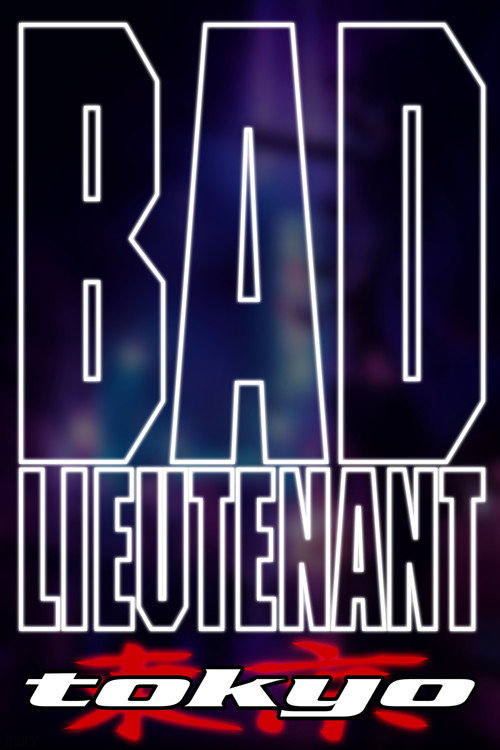
Takashi Miike returns to the gritty underworld with Bad Lieutenant: Tokyo, a thematic reimagining of Abel Ferrara's 1992 cult classic. The film stars Shun Oguri as Kyoji Yabuki, a police lieutenant whose life is defined by gambling addiction and systemic corruption within the Tokyo police force. When FBI Agent Nguyen arrives to investigate a missing American senator's daughter, Yabuki sees an opportunity to settle his debts with local loan sharks.
Produced by Jeremy Thomas, who also backed the original film, this project blends English and Japanese dialogue while filming on location in Shinjuku and Kawasaki. The screenplay required two years of research into underground pachinko culture and police bribery schemes. Miike prioritized practical stunts over digital effects to maintain the visceral tone of his earlier work.
NEON secured North American distribution rights, marking a significant push for the film in Western markets. While the production remains in post-production, industry observers note the unique challenge of adapting American noir tropes to a distinctly Japanese setting without losing the raw intensity that defines the franchise.
Availability and pricing can change. Confirm on the provider's site before purchasing.
Kyoji Yabuki operates out of a precinct in Kabukicho that serves as a front for widespread graft. He collects bribes from pachinko parlor owners, extorts street-level dealers, and squanders his salary at high-stakes underground card games run by yakuza associates. His addiction has spiraled out of control, leaving him deeply indebted to a ruthless loan shark named Takeda. Takeda issues a grim ultimatum: payment is due within two weeks, or Yabuki’s estranged wife and daughter will face severe consequences.
The narrative inciting incident arrives with the sudden appearance of FBI Agent Nguyen. A determined and by-the-book American agent dispatched from Washington D.C., she seeks Emily Holloway, the missing daughter of Senator Richard Holloway. The Senator’s daughter vanished three weeks prior while working as an English teacher in Tokyo’s Shibuya district. Japanese authorities have made little headway, prompting the FBI to demand local cooperation. Yabuki is assigned to assist Nguyen, a move orchestrated by his superiors who wish to keep the disgraced officer occupied and away from their direct oversight.
As the investigation unfolds, the pair traverse a world of hostess clubs, illegal gambling dens, and back-alley betting parlors. They interview pachinko operators who recall Emily’s presence, track down low-level yakuza associates, and follow leads suggesting the missing girl was involved in complex money laundering schemes. Yabuki’s methods are distinctly unorthodox and often brutal; he threatens club managers with deportation, plants evidence to force confessions, and leverages his badge to intimidate loan sharks who owe him favors. While Nguyen initially attempts to maintain professional boundaries, she finds herself increasingly reliant on Yabuki’s chaotic effectiveness, even as her moral compass begins to fray under the weight of his tactics.
The central conflict deepens as Yabuki’s personal and professional worlds begin to collide catastrophically. The pressure from Takeda intensifies, with threats escalating to physical harm against his family. Simultaneously, his own police superiors, suspicious of irregularities in his case files and evidence lockers, launch a covert internal affairs investigation. Complicating matters further, Nguyen discovers a hidden camera in Yabuki’s office, planting seeds of doubt regarding his involvement in Emily’s disappearance. As they dig deeper, the trail leads them to a network of subterranean tunnels beneath Tokyo’s industrial outskirts, facilities used for human trafficking and illicit arms dealing. It becomes clear that the conspiracy extends far beyond a simple kidnapping, implicating high-ranking corrupt officials and yakuza bosses. The situation reaches a fever pitch when a key witness is brutally murdered, forcing Yabuki and Nguyen to confront the terrifying reality that the conspiracy they are unraveling may be larger than either of them anticipated, with no safe exit strategy in sight.
Official Trailer
Critical Consensus
Takashi Miike's Bad Lieutenant: Tokyo presents a visually striking but narratively uneven entry that fails to capture the raw, soulful intensity of the original. While Shun Oguri delivers a committed performance as a morally bankrupt cop, the film feels like a hollow exercise in style, prioritizing gore and action over character depth or thematic resonance. Critics found it a disappointing spiritual successor that lacks the grit and unpredictability of its predecessors.
“A hardboiled but head-scratching spiritual follow-up that squanders the talents of its lead actors in a mess of blood and noise.”
Peter Debruge
Variety
“Miike follows Ferrara and Herzog with a disappointment that feels more like a fever dream than a coherent crime thriller.”
Peter Bradshaw
The Guardian
“An uneven entry into an unlikely franchise that cannot elevate its material beyond a gory, predictable trip through Tokyo's underworld.”
David Ehrlich
IndieWire
“While the visuals are stunning, the script lacks the punch of the original, resulting in a film that feels like a nonstarter.”
David Rooney
The Hollywood Reporter
“Blood-splattered and frantic, but ultimately empty, a Tokyo fever dream that forgets to tell a story.”
Owen Gleiberman
Deadline
Shun Oguri
Kyoji Yabuki
Lily James
Agent Nguyen
Shotaro Mamiya
Takeda
Gionna Daddio
Emily Holloway
Shuhei Nomura
Detective Sato
Nanase Nishino
Mrs. Yabuki
Yuka Kouri
Hostess Club Manager
Takanori Iwata
Low-level Yakuza Associate
Keisuke Watanabe
FBI Field Supervisor
Hideo Nakano
Corrupt Police Official
Jun Murakami
Yakuza Enforcer
Jun Kunimura
High-ranking Syndicate Leader
Director
Takashi Miike
Writer
Daisuke Tengan
Producers
Jeremy Thomas, Sam Pressman, Naoaki Kitajima, Misako Saka
Sitges Film Festival (2026)
Best Director: Won
Toronto International Film Festival (2026)
People's Choice Award – Midnight Madness: Nominated
Asian Film Awards (2027)
Best Actor: Nominated
Join the community
fans discussing