Bad Company
 United Kingdom
The original supergroup of hard rock
4
Members
About
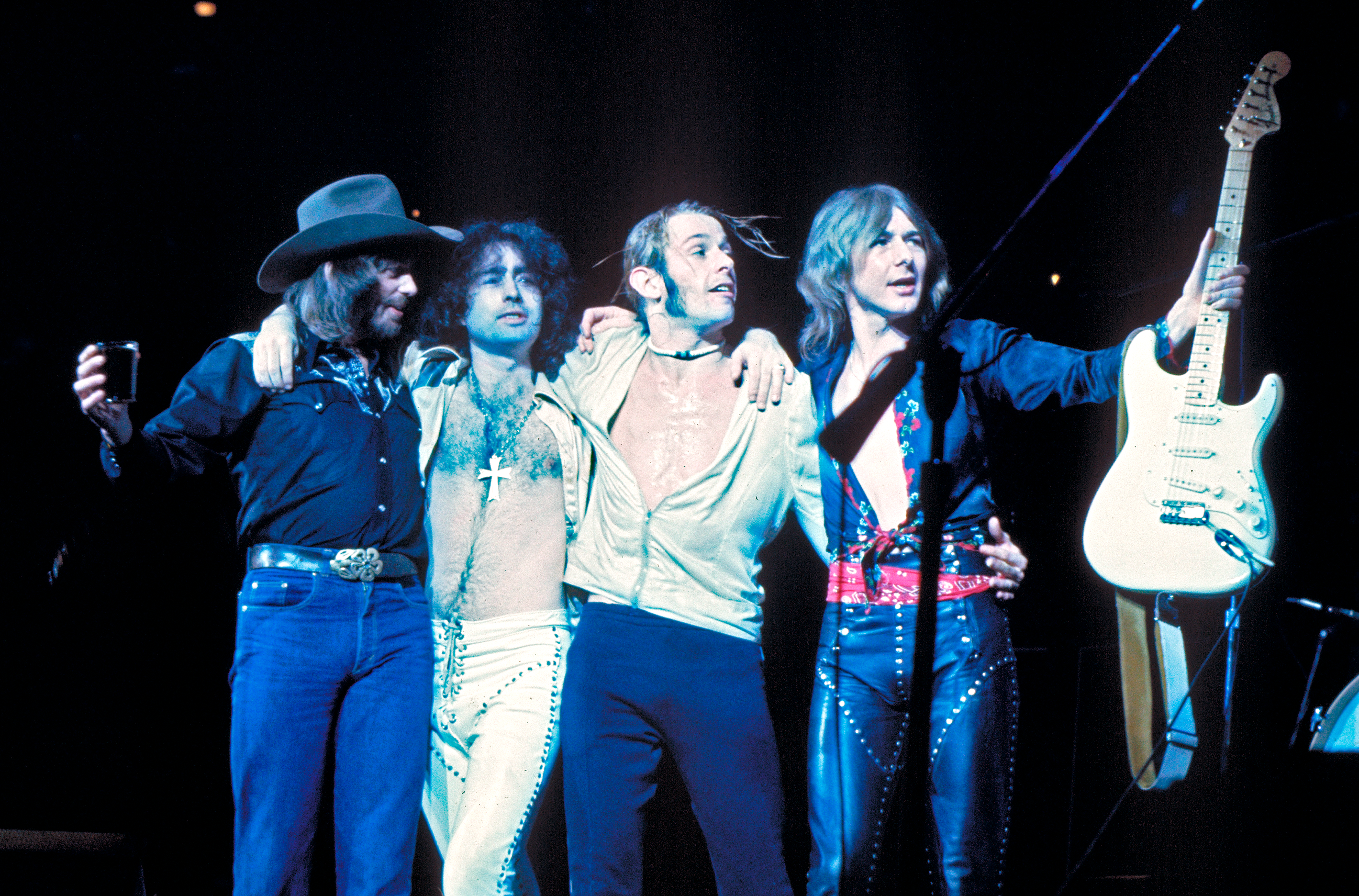
Bad Company stands as a definitive chapter in classic rock history, representing the pinnacle of the British hard rock boom of the 1970s. Formed in London in 1973, the group brought together four seasoned musicians who had already carved out names in prominent bands before joining forces. The lineup featured Paul Rodgers on vocals, Mick Ralphs on guitar, Simon Kirke on drums, and Boz Burrell on bass. Together they crafted a sound that balanced the heaviness of hard rock with the soulfulness of the blues, creating anthems that still resonate today. Their commercial footprint was massive right from the start. The self-titled debut album released in early 1974 climbed the charts immediately, followed by a string of platinum successes that established them as global headliners. They sold over 40 million records worldwide, with a staggering 20 million units certified in the United States alone. Although the band officially ceased regular activity after 2019 due to health complications affecting lead singer Paul Rodgers, their legacy remains active through ongoing tributes and the enduring popularity of their catalog. The group was inducted into the Rock and Roll Hall of Fame in 2025, a recognition that came decades after their initial rise but confirmed their lasting influence on the genre.
Formation Story
The story of Bad Company begins with Peter Grant, the legendary and often intimidating manager of Led Zeppelin. By the early 1970s, Grant felt that his own band had reached a peak where internal conflicts were becoming unmanageable. He wanted to assemble a new supergroup that could match the power and sales figures of Led Zeppelin without the same level of interpersonal friction. His vision required gathering the best players available at the time, leading him to recruit members from other successful acts. He approached Paul Rodgers and Simon Kirke, both veterans of the band Free, who had recently disbanded. Rodgers was known for his powerful voice and songwriting ability, while Kirke provided a solid rhythmic foundation. To complete the quartet, Grant recruited Mick Ralphs, a guitarist who had just left Mott the Hoople, and Boz Burrell, formerly of King Crimson. The four men met in London in late 1973 and quickly realized they shared a similar musical vision. They rejected the idea of complex studio production, preferring a raw, live-sounding approach that captured their energy. Their debut album, simply titled Bad Company, arrived in February 1974 in the UK and March in the US. It was an instant hit, reaching number two on the UK charts and number three in the United States. The single "Can't Get Enough" became their first major radio hit, showcasing the band's ability to blend catchy melodies with driving riffs. Despite their rapid ascent, the band maintained a low profile regarding fame, focusing instead on rigorous touring schedules that built their reputation as a formidable live act. The formation process was seamless because every member brought a wealth of experience, allowing them to skip the typical trial-and-error phase that plagues new groups.
Members
Former Members
Musical Style
Bad Company's sound is rooted deeply in blues rock and hard rock, characterized by a stripped-back arrangement style that prioritized groove and melody over technical complexity. Unlike many of their contemporaries who experimented with progressive structures or extended solos, Bad Company focused on tight, radio-friendly songs that delivered immediate impact. Paul Rodgers' vocal delivery was central to this identity; his rich, soulful tone sat perfectly atop Mick Ralphs' gritty, riff-driven guitar work. The rhythm section of Kirke and Burrell provided a thunderous yet precise backbone that allowed the songs to swing with a natural feel. Over the course of their career, the band's production evolved slightly. Their early albums like Bad Company and Straight Shooter retained a raw, organic quality that emphasized their live performance capabilities. By the late 1970s, albums like Burnin' Sky and Desolation Angels adopted a more polished, radio-oriented sheen, incorporating synthesizers and layered harmonies to suit the changing musical landscape. Despite these shifts, the core elements remained consistent: strong hooks, blues-inflected chord progressions, and lyrics that often touched on themes of love, loss, and the road life. This consistency ensured that their music aged well and continued to find new listeners long after their initial run.
Discography
| Title | Year |
|---|---|
| Bad Company | 1974 |
| Straight Shooter | 1975 |
| Run with the Pack | 1976 |
| Burnin' Sky | 1977 |
| Desolation Angels | 1979 |
| Fame & Fortune | 1982 |
| Dangerous Age | 1986 |
Tours
1974–1976 World Tour
1974 · 150 shows
1977–1978 Burnin' Sky Tour
1977 · 120 shows
1979–1980 Fame & Fortune Tour
1979 · 100 shows
1984–1986 Reunion Tour
1984 · 80 shows
2002–2003 Reunion Tour
2002 · 60 shows
2010–2012 Rock 'n' Roll Fantasy Tour
2010 · 45 shows
Cultural Impact
Bad Company played a pivotal role in defining the arena rock sound of the 1970s, influencing countless bands that followed in their wake. Their approach to songwriting set a benchmark for future hard rock acts, with bands like AC/DC, Guns N' Roses, and Foo Fighters citing the group as a primary inspiration. The band's management under Peter Grant also established a model for artist control that influenced how rock managers operated in subsequent decades, emphasizing fairness and transparency between the label and the artists. Beyond the music itself, the band's image contributed to the aesthetic of classic rock. Their stage presence combined rugged individualism with a sense of camaraderie that resonated with fans. The longevity of their hits on classic rock radio formats demonstrates their ability to transcend generational gaps. Even decades later, their songs remain staples at sporting events, in movies, and on compilation albums. The induction into the Rock and Roll Hall of Fame in 2025 served as a final acknowledgment of their contribution to the cultural fabric of rock music, ensuring their place in history alongside other titans of the genre.
Fandom Culture
Unlike modern pop acts, Bad Company did not cultivate a formalized fandom with specific names, lightsticks, or organized fan clubs. Fans generally referred to themselves simply as "Bad Company fans" or "BC fans," united by a shared appreciation for the band's classic rock anthems. There were no official fan colors or merchandise items designed specifically for fan interaction, though vinyl collectors have long prized the original pressings of their 1970s albums. Fan traditions centered around attending tribute concerts and celebrating the band's legacy during anniversaries. The community remains active online, sharing rare recordings and discussing the band's history, keeping the spirit of the group alive despite the lack of current activity.
Awards Won (3)
Bad Company has received significant recognition for their contributions to rock music, culminating in their induction into the Rock and Roll Hall of Fame in 2025. While they were nominated for Grammy Awards during their peak years, including a nomination for Best Rock Performance by a Duo or Group with Vocal for "Shooting Star" in 1976, they did not win during that period. Their legacy was further honored when Paul Rodgers received an Adopt the Arts Honors award in August 2026 for his contributions to music and advocacy.
Inductee
for: Lifetime Achievement
Music Advocacy
for: Paul Rodgers
Milestones
Formation in London by Peter Grant
Release of debut album Bad Company
Release of Straight Shooter, cementing superstar status
Initial disbandment
Successful reunion tour
Paul Rodgers suffers a stroke, leading to cessation of activity
Induction into the Rock and Roll Hall of Fame
Celebration of 50th anniversary with tribute albums
Trivia
Peter Grant formed the band specifically to create a unit that could rival Led Zeppelin in power and sales without the internal conflicts that plagued Zeppelin., The song "Can't Get Enough" was reportedly written in a single session during the band's early rehearsals., Mick Ralphs left the band in 1982 due to creative differences and exhaustion, marking the end of the core songwriting duo with Paul Rodgers., Boz Burrell died in 2006 from heart failure, just as the band was considering another reunion tour., Despite their massive success, the band was not inducted into the Rock and Roll Hall of Fame until 2025, nearly 50 years after their formation.
Keywords
Sources
Quick Facts
- Type
- Rock Band
- Formed
- 1973
- Origin
- Westminster, London
- Label
- Island Records, Atco Records, Atlantic Records
- Genres
- Blues Rock, Hard Rock
- Status
- Inactive (Hiatus since 2019)
Group Info
- Formed
- 1973-01-01
- Debut
- 1974-02-01
- Debut Song
- Can't Get Enough
- Origin
- Westminster, London, England
- Company
- Peter Grant Management
- Label
- Island Records, Atco Records, Atlantic Records
- Status
- Disbanded
Also Known As
Join the community
fans discussing