 Denmark
“A film of quiet grace and profound beauty, Babette's Feast is a rare cinematic treasure.”
Janet Maslin
The New York Times
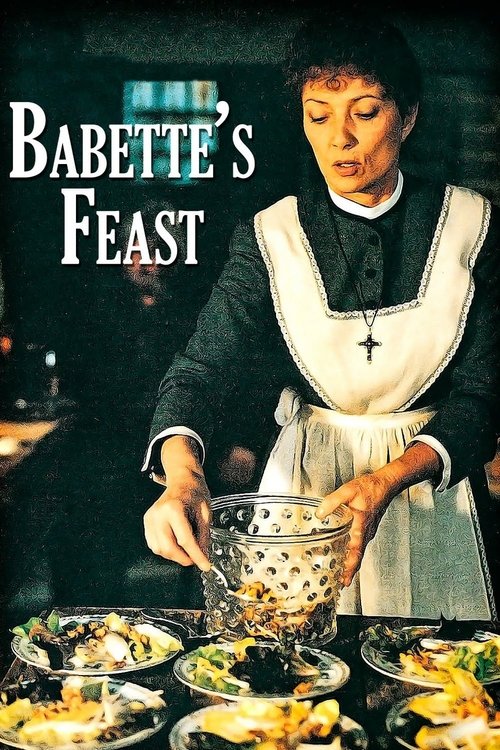
Set in a remote 19th-century Danish village, Babette's Feast tells the story of a French refugee who transforms the lives of a puritanical religious community through the power of a single, extraordinary meal. Directed by Gabriel Axel, the film stars Stéphane Audran as Babette, a woman with a hidden past who becomes a servant to two elderly sisters, played by Bodil Kjer and Birgitte Federspiel. The cast also includes Jarl Kulle as a worldly general and Jean-Philippe Lafont as a French opera singer. Based on a story by Karen Blixen, this Danish-French production earned a modest $4.4 million at the box office but won the Academy Award for Best Foreign Language Film in 1988. A gentle drama with comedic touches, it explores themes of sacrifice, grace, and the sacred nature of art.
Axel, working from Blixen's 1950 short story, shot the film on location in Denmark, including at Karen Blixen's own estate, Rungstedlund. The interiors of the sisters' home were designed to reflect their austere spirituality, with minimal furnishings and muted colors. The film's score, by Danish composer Per Nørgård, is spare and atmospheric, underscoring the quiet tension between worldly pleasure and spiritual discipline. The elaborate feast at the story's center was prepared by a professional chef, and the actors ate real food during the filming of the banquet scenes.
Upon release, the film received near-universal acclaim for its understated storytelling and emotional depth. Critics praised its ability to convey profound ideas about faith and generosity through simple, concrete details. It remains a touchstone in Danish cinema and a beloved example of how film can explore the intersection of art, religion, and human connection. The movie's influence extends beyond cinema: it has been referenced in cookbooks, sermons, and discussions of culinary philosophy.
Rent
Apple TV
Amazon Prime Video
Google Play
YouTube
Vudu
Microsoft Store
Availability and pricing can change. Confirm on the provider's site before purchasing.
On the windswept coast of Jutland in the 1870s, two elderly sisters, Martine and Filippa, lead a life of pious routine in the home they once shared with their father, a revered minister who founded a small Lutheran sect. The congregation, now aging and dwindling, gathers regularly for prayer and hymn singing, their faces set in expressions of earnest devotion. The sisters manage the household with frugal precision, their days marked by charitable visits to the poor and the quiet repetition of their father's teachings.
Fourteen years earlier, a Frenchwoman named Babette Hersant arrived at their door, a refugee from the Paris Commune. She carried a letter from a friend of the sisters, a French opera singer named Achille Papin, who had once been Filippa's singing teacher. The sisters, wary of her foreignness and Catholic faith, nonetheless took her in as a servant. Babette worked without complaint, preparing simple meals of bread and ale, and gradually became indispensable. She never spoke of her past, and the sisters never asked.
As the centenary of the minister's birth approaches, the sisters decide to hold a small commemoration. Babette, who has been saving a lottery ticket given to her years ago, discovers she has won 10,000 francs. She asks permission to prepare a French dinner for the congregation on the anniversary. The sisters, troubled by the prospect of such worldly indulgence, reluctantly agree, imposing a condition: the meal must be consumed in silence, with no discussion of its pleasures. The congregation, too, agrees to eat without comment, fearing that enjoyment of the food would be a sin.
Preparations for the feast consume the household. Babette orders ingredients from France: a live turtle, quails, fine wines, and exotic fruits. The villagers watch with suspicion as crates arrive. Among the guests is General Lorens Löwenhielm, now a distinguished military man, who was once in love with Martine. He has been invited by his aunt, a member of the congregation. He arrives with his uniform and a worldly sophistication that contrasts sharply with the villagers' austerity.
Babette's Feast (1987) - trailer
Babette's Feast (1988) Trailer
Critical Consensus
A sublime and moving film, Babette's Feast is a masterclass in understated storytelling, exploring themes of faith, art, and generosity with exquisite taste and profound emotional resonance.
“A film of quiet grace and profound beauty, Babette's Feast is a rare cinematic treasure.”
Janet Maslin
The New York Times
“This is a film that nourishes the soul as much as its titular feast nourishes the body.”
Roger Ebert
Chicago Sun-Times
“Gabriel Axel's adaptation of Karen Blixen's story is a triumph of subtle filmmaking and rich thematic exploration.”
David Stratton
Variety
“A deeply affecting and exquisitely crafted meditation on sacrifice, art, and the redemptive power of generosity.”
Peter Bradshaw
The Guardian
Stéphane Audran
Babette Hersant
Bodil Kjer
Filippa
Birgitte Federspiel
Martine
Jarl Kulle
General Lorens Löwenhielm
Jean-Philippe Lafont
Achille Papin
Bibi Andersson
Swedish Court Lady
Ghita Nørby
Narrator (voice)
Asta Esper Hagen Andersen
Anna
Thomas Antoni
Swedish Lieutenant
Hanne Stensgaard
Filippa (young)
Vibeke Hastrup
Martine (young)
Gudmar Wivesson
Lorens Löwenhielm (young)
Else Petersen
Maria
Bodil Jørgensen
Datter af Pastor
Director
Gabriel Axel
Writers
Karen Blixen, Gabriel Axel, Annemarie Aaes
Composer
Per Nørgård
Cinematographer
Henning Kristiansen
Producers
Just Betzer, Bo Christensen, Benni Korzen, Pernille Siesbye
Academy Awards (1988)
Best Foreign Language Film: Won
BAFTA Awards (1989)
Best Foreign Language Film: Nominated
Cannes Film Festival (1988)
Prize of the Ecumenical Jury: Won
Cannes Film Festival (1988)
Palme d'Or: Nominated
Golden Globe Awards (1989)
Best Foreign Language Film: Nominated
Robert Awards (1988)
Best Film: Won
Robert Awards (1988)
Best Actress (Stéphane Audran): Won
Robert Awards (1988)
Best Screenplay: Won
Robert Awards (1988)
Best Supporting Actor (Jarl Kulle): Won
Robert Awards (1988)
Best Supporting Actress (Bodil Kjer, Birgitte Federspiel): Won
Robert Awards (1988)
Best Cinematography: Won
Robert Awards (1988)
Best Costume Design: Won
Robert Awards (1988)
Best Production Design: Won
Join the community
fans discussing