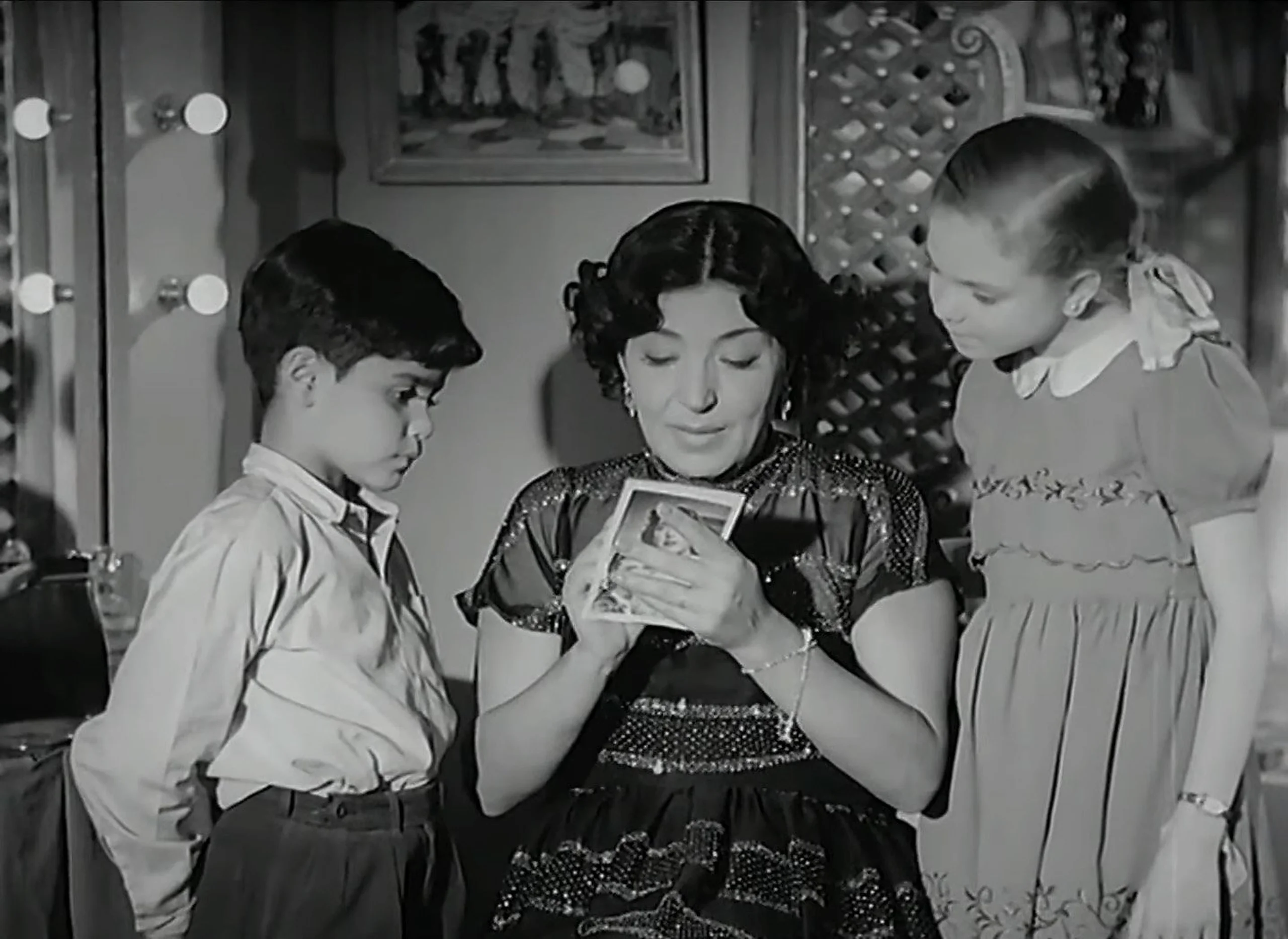
Aziza Amir
 Egypt
Egyptactress•film producer•screenwriter
Also known as: Mofida Mohamed Ghoneim, Mofida Mohamed Ghuniem, Mufida Ghuneim
Birthday
December 17, 1901
Birth Sign
Sagittarius
Birthplace
Damietta, Egypt
Age
Died at 50
About
Aziza Amir was an Egyptian actress, producer, and screenwriter whose work laid the foundation for the country's film industry. Born Mofida Mohamed Ghoneim, she is remembered as the godmother of Egyptian cinema, a title earned by producing, directing, writing, and starring in Laila (1927), the first feature-length Egyptian film. Over a career spanning nearly three decades, she appeared in more than 30 movies, often portraying strong, independent women that challenged social conventions of her time.
Her influence extended beyond acting. Amir proved that women could hold creative and financial control in filmmaking, opening doors for future generations. Her legacy is honored in retrospectives and cultural exhibitions across the Arab world, and she remains a symbol of female empowerment in the arts.
Early Life & Background
Aziza Amir was born in Damietta, a port city on the Mediterranean, but spent much of her childhood in Alexandria. Her father was poor, and the family's circumstances shaped her determination to build a different life. She found her calling on the stage, performing in theater productions during her teenage years.
By the mid-1920s, Amir had become a familiar face in Cairo's theater scene. The transition to film came when the industry was still in its infancy, with only a handful of short films made in Egypt. In 1927, she took a bold step: she financed and produced Laila, a silent feature that would become the country's first. At a time when women rarely worked behind the camera, Amir's decision to direct and write the screenplay was unprecedented.
That single project catapulted her into cinema history, but it also reflected her broader ambitions. She wanted to tell stories that resonated with Egyptian audiences, focusing on themes of female agency and social justice. Her early theater training gave her a commanding presence that translated powerfully to the screen.
Career Growth
After the success of Laila in 1927, Amir became a sought-after actress. She starred in Bint el-Nile (1929), a drama that showcased her range, and El-Dahaya (1932), which solidified her reputation. Her work was not limited to Egypt; she appeared in the French film La Tunisienne (1930) and even acted in Turkish productions, making her one of the first Arab actresses to work internationally.
Throughout the 1930s and 1940s, Amir balanced acting with producing and screenwriting. She starred in Kafferi Aan Khateatik (1933) and Ibnati (1944), among others. In 1948, she worked alongside her husband, Mahmoud Zulfikar, on a project that bore his name. By the time of her death in 1952, she had contributed to more than 30 films, a remarkable output for the era.
Her greatest achievement, however, was structural. By taking control of production, Amir demonstrated that women could manage every aspect of filmmaking, from financing to distribution. This paved the way for future female directors and producers in the Arab world.
Career Timeline
Public Image & Style
Aziza Amir's public image is that of a trailblazer. Media portrayals describe her as brave, innovative, and a symbol of female empowerment. She is celebrated for breaking gender barriers in a male-dominated industry, and her name is invoked in discussions about the history of Arab cinema. Modern retrospectives and film festivals, such as the Aswan International Women Film Festival, honor her legacy as a foundational figure.
Fame & Fandom
Aziza Amir's legacy as the godmother of Egyptian cinema has made her a figure of enduring cultural reverence, though her fame today is more institutional than popular. iFANN's Global Fame Engine has evaluated her standing, and as of August 2026, she does not currently hold a placement in the published rankings, whether the Global Top 1,000 or any Top-100 scope list. This reflects the historical nature of her career, which predates the modern fame metrics that measure contemporary media saturation. Yet her influence resonates deeply within film history and feminist discourse, where she is celebrated as a pioneer who broke barriers in a male-dominated industry.
Her admirers, though not organized under a formal fandom name, form a devoted community of film historians, scholars, and cinephiles who champion her as the 'Mother of Egyptian Cinema.' The most visible expressions of this admiration come through cultural institutions rather than grassroots fan campaigns. The Aswan International Women's Film Festival dedicated its entire 10th edition in April 2026 to Amir, centering its program on her legacy as the first female filmmaker in the Arab region. This tribute, along with archival projects like the Bibliotheca Alexandrina's AlexCinema profile, serves as a lasting reflection of her impact. While there are no documented fan rituals or inside jokes, her work itself remains the ultimate gift to her audience: she gave Egyptian cinema its first feature film, empowering generations of women to tell their own stories.
Interesting Facts and Legends
Aziza Amir was born Mofida Mohamed Ghoneim, adopting her stage name early in her career. She was one of the few people of her time to work in four different film roles: actress, producer, director, and screenwriter. Her most famous film, Laila, was a silent movie released in 1927, predating the arrival of sound in Egyptian cinema by several years. Beyond Egypt, she acted in French and Turkish productions, including La Tunisienne and The Egyptian Author, making her a rare international presence among early Arab actresses.
A story fans still retell is the audacious making of Laila: when no one else would support the project, Amir personally financed, produced, and starred in the film, becoming the first female filmmaker in the Arab region. Another legend surrounds her transformation from a poor girl in Damietta to a glamorous Cairo star, a Cinderella narrative that adds to her mythos. Her death in 1952 at age 50 is often framed as tragic, with her life marked by hardship despite professional success. These stories, woven into retrospectives and tributes, cement her status as a foundational figure in Egyptian cinema.
Family & Personal Life
Aziza Amir was married to Mahmoud Zulfikar, a prominent Egyptian actor and filmmaker. The couple collaborated on several projects, blending their personal and professional lives. They remained together until her death in 1952. There is no public record of children from their marriage, and historical accounts focus on their creative partnership rather than their private life.
Notable Connections
Aziza Amir was married to Mahmoud Zulfikar, a fellow actor and director, and they collaborated on several films. She worked with many of the early pioneers of Egyptian cinema, including the crew of Laila and the casts of Bint el-Nile and El-Dahaya. Her influence extended to international productions in France and Turkey.
Relationships & Dating History
Aziza Amir's personal life is primarily defined by her marriage to Mahmoud Zulfikar, a renowned Egyptian actor and filmmaker. They were married for an extended period, and their partnership was both personal and professional, with frequent collaborations on film projects. Historical records from the 1920s do not detail any significant romantic relationships before her marriage, and there is no evidence of engagements or flings. At the time of her death in 1952, she was married to Zulfikar, and they remained together until the end.
- MarriedMahmoud Zulfikar? - 1952Married to the actor and filmmaker until her death.
Death & Aftermath
Died
February 28, 1952 (aged 50)
Death Place
Unknown
Cause of Death
Unknown
Aziza Amir passed away on February 28, 1952, in Cairo, Egypt, at the age of fifty. The specific circumstances surrounding her final days and the official cause of death remain unrecorded in available historical archives, leaving a quiet gap where details of her last public appearance or medical events might have been documented. Her husband, Mahmoud Zulfikar, remained by her side until the end, and their creative partnership concluded with her death without public record of children or extended family statements regarding the funeral arrangements. Despite the absence of immediate posthumous fanfare in 1952, her legacy as the godmother of Egyptian cinema has since been honored through retrospectives and special features by institutions like the Aswan International Women Film Festival and the Bibliotheca Alexandrina.
These modern acknowledgments celebrate her structural impact on the industry, recognizing her role in proving that women could manage financing, production, and distribution. Her estate was handled quietly, with no public quantification of wealth or legal disputes recorded in the era, allowing her contributions to stand as the primary monument to her life.
Net Worth (Estate Value)
$1 Million
iFANN Editorial Team estimate
Aziza Amir passed away in 1952, and her estate's value is not publicly quantified in modern financial reports. During her lifetime, she earned income from film salaries and production profits, but specific figures are not recorded in available archives. As a pioneering producer, she likely accumulated considerable wealth for her era, though the exact amount remains unknown. iFANN's editorial analysis currently estimates her net worth at $1 Million, a figure that reflects her historical earnings and the value of her estate as a cultural asset. Today, her estate's financial standing is not a subject of public record, and there are no recent estimates of posthumous earnings comparable to modern celebrity estates.
Awards & Accolades
View 5 records, honours and achievementsKnown For
Laila
1927 · Producer, Director, Screenwriter, Actress
Bint el-Nile
1929 · Actress
El-Dahaya
1932 · Actress
Keywords
Sources
Quick Facts
- Profession
- Actress, film producer, screenwriter
- Born
- December 17, 1901
- Birthplace
- Damietta, Egypt
- Died
- February 28, 1952
- Death Place
- Cairo, Egypt
- Gender
- Female
- Spouse
- Mahmoud Zulfikar
- Birth Sign
- Sagittarius
Personal Details
- Full Name
- Mofida Mohamed Ghoneim
- Spouse
- Mahmoud Zulfikar
Filmography
30
Total
30
Film
0
TV
Frequently Asked Questions
Who was Aziza Amir?
When was Aziza Amir born and when did she die?
What was Aziza Amir's most famous movie?
Was Aziza Amir married?
Did Aziza Amir have any children?
Similar People
Join the community
fans discussing