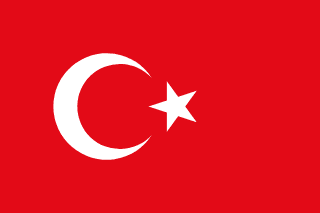
 Turkey
About
Born Mehmet Nusret on December 20, 1915, in Heybeliada, Aziz Nesin became one of Turkey's most prolific and distinctive literary voices. He was a writer, poet, and humorist whose career spanned decades, resulting in an astonishing output of over 100 books. Nesin adopted his famous surname in 1934 following Turkey's Surname Law. He chose "Nesin," a Turkish phrase that translates to "What are you?", a fittingly philosophical choice for a writer known for his sharp social commentary and witty observations on the human condition.
Fame & Fandom
Aziz Nesin holds no placement in the iFANN Global Top 1,000 or any Top-100 scope list as of August 2026, a status confirmed by the iFANN Global Fame Engine which evaluated his profile but found no current ranking data available. While he does not appear on these numerical leaderboards, his influence remains distinct from modern celebrity metrics defined by viral engagement or commercial chart performance. The audience for his work lacks a formal collective name; there is no documented fan club with an official title, nor are there organized campaigns such as birthday billboards, subway advertisements, or charity drives driven by a unified group. Unlike contemporary figures whose relationships with followers are mediated through social media interactions and public appearances, Nesin's connection to his readers was established entirely through his literary output. His legacy is carried by scholars, activists, and secularists who revere his satirical critiques of religious dogma and political corruption rather than by a community united in shared rituals or fan projects.
The cultural mythology surrounding the writer is anchored less in crowd behavior and more in specific historical events that shaped his final years. A singular incident involving an attack on the Aziz Nesin Cultural Center in Sivas stands as the defining narrative of his life, where he survived a fire that claimed thirty-seven colleagues before his own death two years later from the psychological toll of the tragedy. This event cemented his reputation as a martyr for free expression, a status reinforced by his public solidarity with Salman Rushdie during the fatwa crisis. His works, including Zübük and The Top Scorer, continue to be studied and performed, ensuring his place as a legendary figure in Turkish literature without the need for modern fandom structures.
Interesting Facts and Legends
While known primarily as a prolific writer and humorist, the most harrowing chapter of Aziz Nesin's life involved the Sivas Massacre of July 1993. During a conference celebrating the Kurdish-Alevi poet Pir Sultan Abdal, extremists set fire to the hotel housing the Aziz Nesin Cultural Center, killing 37 intellectuals. Nesin survived because he had left the venue earlier that evening, though he died two years later from the physical and emotional trauma of the event. This tragedy became a central pillar of his legend, symbolizing the dangers faced by those challenging religious orthodoxy in Turkey.
His commitment to free speech extended globally when he publicly supported Salman Rushdie following the 1989 fatwa issued by Ayatollah Khomeini. Nesin stated that he would accept the execution order if it were directed at him instead of the author of The Satanic Verses, a stance that drew parallels to the 2022 attack on Rushdie decades later. Beyond his personal bravery, his literary contributions remain active; Miracle Mirrors was released as a film adaptation in 2024, and his short story İt Kuyruğu (Dog's Tail) was presented to Iranian book lovers in 2023, demonstrating the enduring international reach of his work.
Death & Aftermath
Died
+1995-07-06 (aged 79)
Death Place
Istanbul, Turkey
Cause of Death
Heart attack (myocardial infarction)
Aziz Nesin died on July 6, 1995, in Istanbul, Turkey. The writer suffered a fatal heart attack while seated in a chair at his home, an event confirmed by family statements and medical records. His passing occurred two years after the Sivas massacre, during which thirty-five secularist intellectuals were burned to death, leaving Nesin deeply traumatized by the violence against his circle. His son, Professor Ali Nesin, stated that the writer died in sorrow over the tragedy, suggesting the emotional weight of the political climate contributed to his physical collapse. The death triggered immediate mourning across Turkey and among international human rights groups, who viewed him as a defender of free speech and secularism. Thousands of mourners, including prominent writers and politicians, gathered for his funeral at Zincirlikuyu Cemetery in Istanbul, reflecting the deep respect he commanded in Turkish society.
While no specific inquiry was launched into his own passing, the legal context of his final years remained defined by the long trial of those responsible for the Sivas arson, with convictions eventually handed down in 1998. Following his death, the Nesin Foundation continued its work and established the Nesin Mathematics Village in Şirince near Selçuk in 2007, serving as a permanent memorial to his vision of education. His estate managed the publication of his works, including plays such as Come and Kill Me My Dear, which continue to be performed. His son Ali Nesin has been instrumental in managing the foundation's activities and upholding the principles of free thought and secularism that defined his father's career.
Awards & Accolades
Keywords
Quick Facts
- Profession
- poet, writer, novelist
- Born
- +1915-12-20
- Birthplace
- Heybeliada
- Died
- +1995-07-06
- Death Place
- Alaçatı
- Gender
- Male
- Birth Sign
- Sagittarius
Join the community
fans discussing