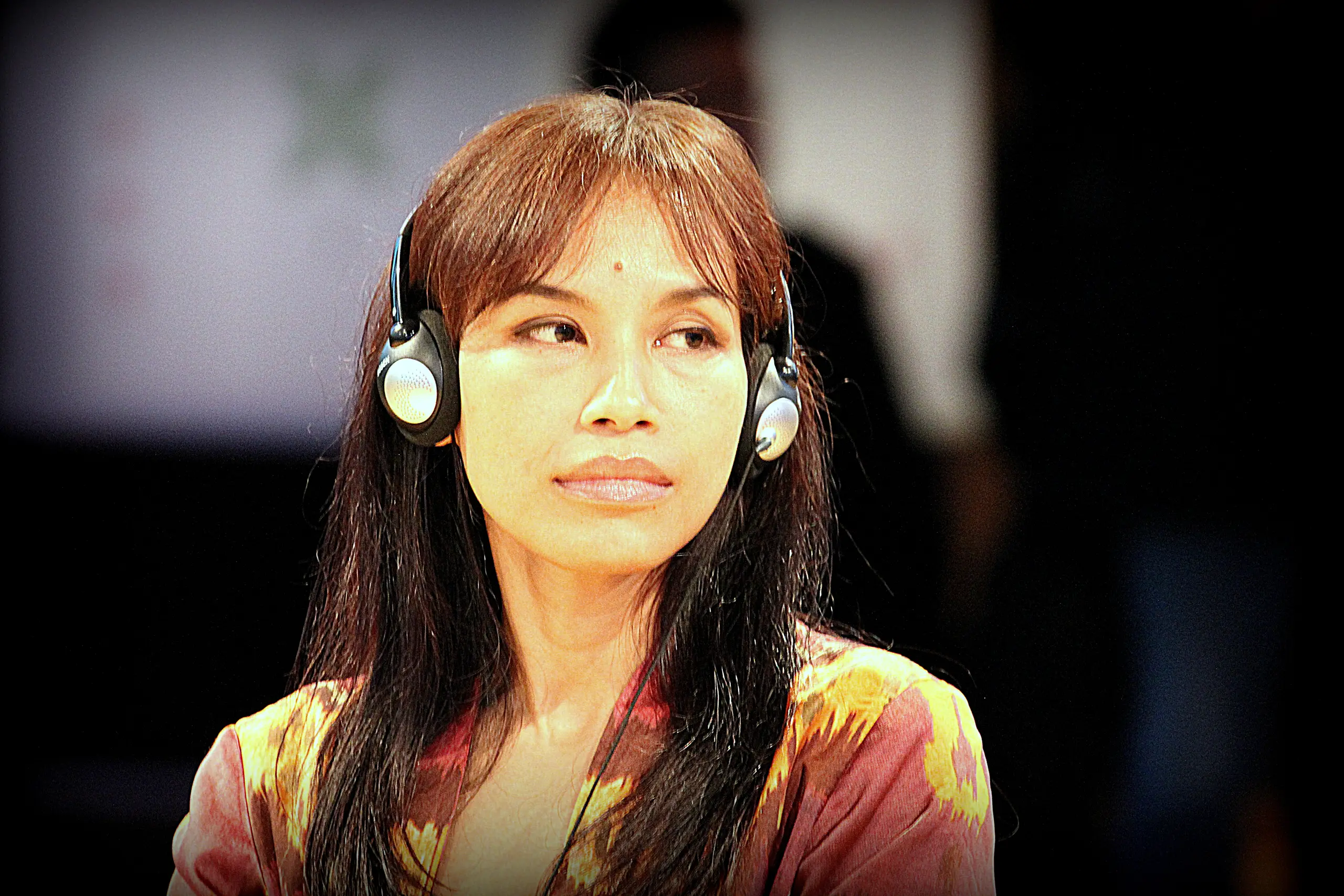
Ayu Utami
 Indonesia
Also known as: Juliana Ayu Utami
Birthday
November 21, 1968
Birth Sign
Scorpio
Birthplace
Bogor, West Java, Indonesia
Age
57 years old
About
Ayu Utami is an Indonesian novelist, essayist, and former journalist whose work fundamentally altered the landscape of modern literature in her country. Born Juliana Ayu Utami on November 21, 1968, she first rose to prominence as a writer who dared to discuss female sexuality and political corruption at a time when such topics were strictly forbidden under the Suharto dictatorship. Her debut novel Saman, published in 1998, became an immediate cultural phenomenon, winning major literary awards and sparking the sastra wangi movement known for its frank exploration of women's lives.
Today, Utami remains a vital voice in Indonesian intellectual circles. She continues to publish novels and essays that challenge social norms while serving as a mentor to younger writers. Her influence extends beyond Indonesia's borders through translations of her work into English and other languages, securing her place as one of the most significant contemporary Southeast Asian authors. She currently resides in Jakarta, where she maintains a rigorous schedule of writing, speaking engagements, and participation in international literary forums.
Early Life & Background
Juliana Ayu Utami was born in Bogor, West Java, into a family that placed a high value on education. While she spent her early childhood in Bogor, her family eventually moved to Jakarta, where she would grow up during the rigid social constraints of President Suharto's New Order regime. The political atmosphere of the 1970s and 1980s was defined by strict censorship and surveillance, conditions that would later shape her worldview and artistic drive. Before establishing herself as a celebrated author, Utami worked as a fashion model, a career path that offered a stark contrast to the serious activism she would later pursue.
Her transition from modeling to journalism marked a turning point in her life. In the early 1990s, she joined the freelance press, a dangerous profession in Indonesia where independent reporting often led to harassment or arrest. By 1994, her critical articles had drawn the ire of the government, resulting in a ban on her writing activities. This prohibition did not silence her; instead, it drove her to write secretly. During this period of enforced silence, she began composing what would become her masterpiece, Saman. She compiled a "black book" of forbidden stories and ideas, working in the shadows of a state that sought to control all narratives. This clandestine period ended only with the fall of Suharto in 1998, just months after she finally completed her manuscript.
Career Growth
The publication of Saman in 1998 launched Ayu Utami into the center of Indonesian cultural history. The novel won the Dewan Kesenian Jakarta Best Novel Award and the prestigious Khatulistiwa Literary Award, cementing her reputation as a leading voice of the Reformasi era. Its release coincided with the collapse of the Suharto dictatorship, allowing the book to serve as a rallying point for democratic reform. The work's unflinching depiction of female desire and political dissent broke long-standing taboos, giving rise to the sastra wangi (fragrant literature) movement which encouraged other writers to explore similar themes.
Utami continued to build on this success with the 2001 sequel Larung, which further explored the complexities of post-Suharto society. In 2005, Saman was translated into English by Pamela Allen, introducing her work to a global audience and establishing her as a key figure in world literature. She followed this with Bilangan Fu in 2008, a novel that examined gender dynamics and power structures in modern Indonesia. Her 2017 novel Drupadi sparked intense national debate by reimagining the Mahabharata through a feminist lens, drawing criticism from conservative groups but earning praise from supporters of free expression.
Throughout the 2010s and into 2026, Utami has remained active in the literary world. She participated prominently in the Frankfurt Book Fair in 2015, where Indonesia was the Guest of Honour, and served as a fellow at the International Writing Program at the University of Iowa. In April 2026, Tempo magazine recognized her as one of the most influential Indonesian female writers, highlighting her enduring impact on the nation's cultural discourse.
Career Timeline
Public Image & Style
Utami is widely perceived as a fearless intellectual and a guardian of free speech in Indonesia. Her public persona is defined by seriousness and integrity rather than the flamboyance often associated with celebrities. Media coverage focuses almost exclusively on her ideas, her courage in challenging authority, and her literary contributions. She avoids the trappings of stardom, preferring to present herself as a writer and activist. Her style is professional and understated, reflecting her role as an academic and public intellectual. This image has earned her deep respect across the political spectrum, even among those who disagree with her views.
Fame & Fandom (iFAMOUS Rankings)
Ayu Utami commands a readership defined by intellectual rigor rather than the frenzied adoration seen in pop culture. Her supporters are not organized into a singular group with a catchy acronym or a collective moniker; instead, her audience comprises students, academics, and activists who engage deeply with her texts as tools for social analysis. This community does not stage billboard campaigns or organize chart-topping drives but sustains her legacy through university curricula and international literary forums where her work is dissected as a cornerstone of modern Indonesian thought. While some might look for the fervor of fan clubs, the devotion here manifests as a commitment to the themes of free speech and feminism she championed during the fall of the Suharto regime. In the landscape of global celebrity metrics, Ayu Utami is currently evaluated by iFANN's Global Fame Engine without holding a placement in the published rankings, meaning she does not appear in the Global Top 1,000 or any scope-specific top-100 list. This status reflects her standing as a profound cultural force whose influence operates outside the commercial velocity measured by standard fame indices. She remains a pivotal figure in Southeast Asian literature, recognized globally for her role in reshaping narrative boundaries, yet her impact is measured in the longevity of her ideas rather than transient viral moments. The absence of a formal ranking underscores the unique nature of her fame: it is rooted in historical significance and academic weight, resisting the quantification that defines contemporary stardom. Her presence in the global consciousness is steady and enduring, anchored by the enduring power of her debut novel and its sequel, which continue to spark discourse decades after their initial publication.
Interesting Facts and Legends
Before becoming a literary icon, Ayu Utami worked as a professional model, a detail often overshadowed by her later activism and writing. The most legendary aspect of her career involves the 1994 writing ban imposed by the Suharto regime. Despite being officially prohibited from publishing, she secretly wrote Saman and compiled a "black book" of subversive stories, a feat that symbolizes the resilience of the Indonesian intellectual class. Another defining moment occurred in 2017 with the release of Drupadi, which ignited a fierce national controversy over religious interpretation and feminist morality, yet solidified her status as a writer who refuses to compromise her vision. She co-founded the Union of Freelance Journalists and the culture magazine Kalam to support independent voices during the transition to democracy. Her work has been cited by scholars worldwide as a primary example of how literature can function as a tool for political resistance.
Notable Quotes
“I write because I am afraid. Afraid of forgetting, afraid of being silenced.”
“Literature is not just entertainment; it is a weapon against oppression.”
“We must tell the truth, even if it hurts.”
Family & Personal Life
Ayu Utami comes from a family that prioritized education and intellectual pursuits. While specific details about her parents and siblings remain private, her upbringing in Jakarta provided the environment necessary for her to develop her critical thinking skills. She has maintained a high degree of privacy regarding her personal relationships throughout her career. Public records do not indicate any marriages, engagements, or children. Unlike many public figures, she keeps her domestic life separate from her professional achievements, focusing her energy on her writing and advocacy work. She lives in Jakarta, surrounded by a community of fellow writers and activists rather than a traditional celebrity circle.
Notable Connections
Pamela Allen, Pramoedya Ananta Toer, W.S. Rendra
Relationships & Dating History
Public records and biographical sources indicate that Ayu Utami maintains a high degree of privacy regarding her romantic life. Unlike many celebrities, there are no widely documented or confirmed public relationships, marriages, or engagements attributed to her in the available literature. She is not known to have children. Sources consistently describe her as focusing primarily on her intellectual and literary pursuits, with no mention of a spouse or long-term partner in her biography or interviews. As of 2026, she is considered single, with no reported current partner. Her personal life is largely kept separate from her public persona, a choice that aligns with her reputation as a serious writer rather than a celebrity figure.
Salary, Net Worth In 2026
$250,000
iFANN Editorial Team estimate
iFANN Editorial Team estimates Ayu Utami's net worth at approximately $250,000. This figure reflects the modest but stable income typical of respected literary figures who rely primarily on book royalties and speaking fees rather than commercial endorsements or business ventures. Her wealth is derived from the sales of her novels, including Saman, Larung, Bilangan Fu, and Drupadi, both within Indonesia and through international translations. Additional income comes from her participation in international literary festivals, university residencies, and contributions to major publications. Unlike many celebrities, she does not hold publicly documented real estate holdings or manage large-scale businesses. The financial trajectory of her career mirrors the growth of her literary reputation, with steady earnings increasing as her works gained wider recognition and translation over the last two decades.
Awards Won (3)
Ayu Utami has received numerous accolades for her contribution to literature and human rights. She won the Dewan Kesenian Jakarta Best Novel Award and the Khatulistiwa Literary Award for her debut novel Saman in 1998. She was also honored with the Prince Claus Award for her courage and creativity in using art to address social issues. Her work has been recognized by institutions like PEN International and the International Writing Program at the University of Iowa. Additionally, she holds a high ranking on the Pantheon Historical Popularity Index, reflecting her lasting impact on world literature.
1998 · Best Novel
Saman
1998 · Best Novel
Saman
Known For
Saman
1998 · Author
Larung
2001 · Author
Drupadi
2017 · Author
Keywords
Sources
Quick Facts
- Profession
- journalist, writer, model
- Born
- November 21, 1968
- Birthplace
- Bogor, West Java, Indonesia
- Gender
- Female
- Birth Sign
- Scorpio
Personal Details
- Full Name
- Juliana Ayu Utami
- Children
- Education
- University of Indonesia
Frequently Asked Questions
Who is Ayu Utami?
What is Ayu Utami's most famous book?
Is Ayu Utami married?
Why was Ayu Utami banned from writing?
What is Sastra Wangi?
Social Media
Similar People


Join the community
fans discussing