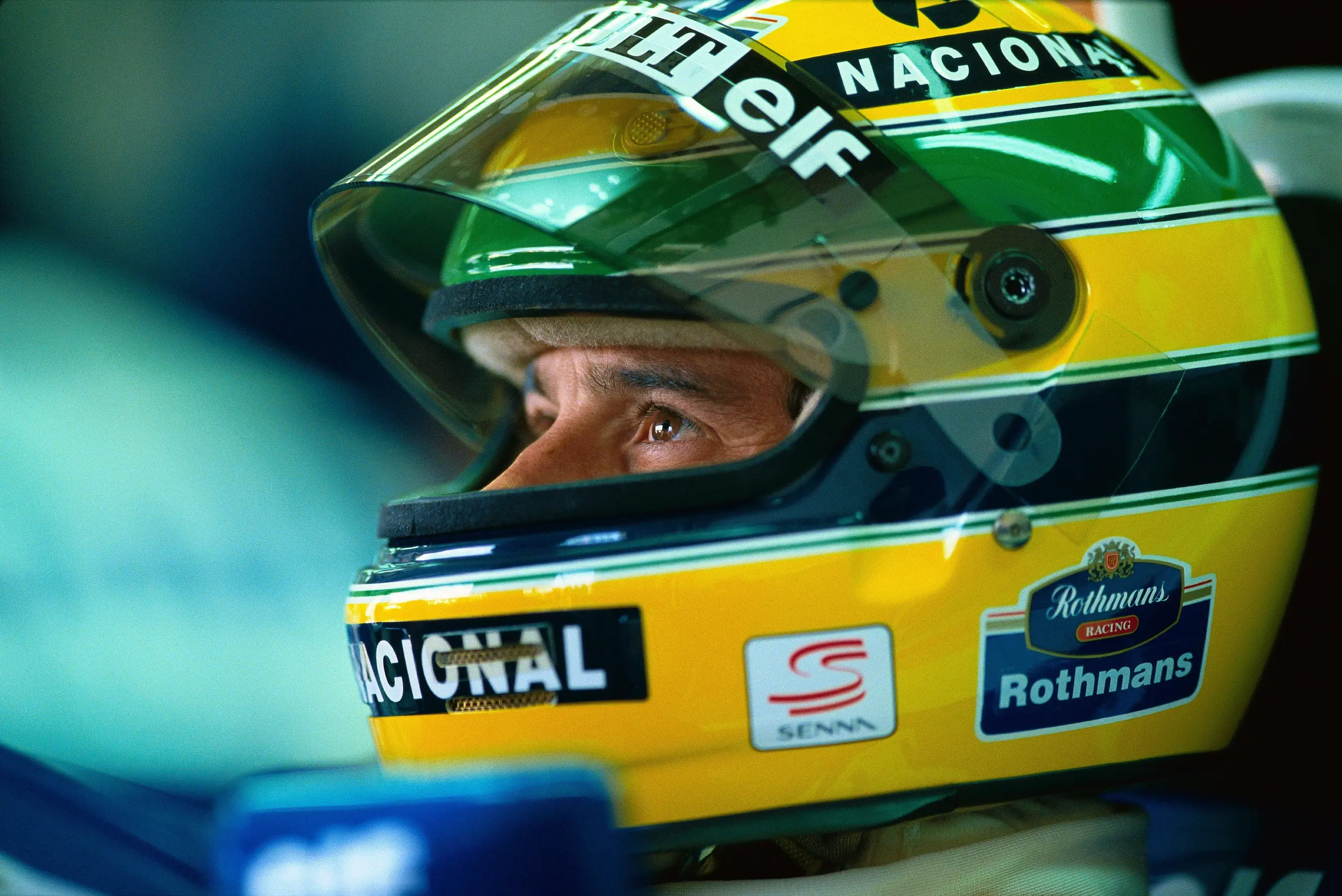
Ayrton Senna
 Brazil
Formula One driver•racing automobile driver•businessperson
Also known as: Ayrton Senna da Silva, Senna
Birthday
March 21, 1960
Birth Sign
Sagittarius
Birthplace
São Paulo, Brazil
Age
Died at 34
Height
5 ft 8 in (173 cm)
About
Ayrton Senna da Silva was a Brazilian racing driver widely regarded as one of the greatest Formula One drivers in history. Born in São Paulo in 1960, he dominated the sport throughout the late 1980s and early 1990s, winning three World Drivers' Championships with McLaren and Williams. His career was defined by an uncompromising pursuit of perfection, a unique ability to drive in wet conditions, and a fierce rivalry with teammate Alain Prost. Senna's legacy extends beyond his statistics; he remains a symbol of speed, intensity, and spiritual depth in the world of motorsport.
Early Life & Background
Ayrton Senna da Silva entered the world on March 21, 1960, in São Paulo, Brazil, as the eldest of three children born to Milton da Silva and Dora Senna. The Senna family belonged to Brazil's elite, yet Ayrton grew up with a strong sense of discipline and humility. His father, a wealthy industrialist and landowner, introduced him to karting at the age of four, building him his first kart using a lawnmower engine. This early exposure sparked an intense passion for speed that would define his life.
By age 14, Senna had already won the South American Karting Championship, showcasing talent far beyond his years. He attended the Colégio Anglo-Americano in São Paulo but left school at 17 to focus entirely on motorsport. His formative years were marked by a relentless work ethic; he often spent hours analyzing race telemetry and engineering data, a trait that distinguished him from his peers. At 18, he secured the South American Formula Ford title before moving to Europe in 1981 to compete in European Formula Ford. Two years later, he clinched the British Formula Three Championship in 1983, proving he was ready for the grandest stage of all.
Career Growth
Senna made his Formula One debut with Toleman in 1984 at the Brazilian Grand Prix, finishing sixth. He moved to Lotus in 1985, where he claimed his first Grand Prix victory at the Portuguese Grand Prix and secured his first pole position. In 1988, he joined McLaren, forming a legendary partnership with teammate Alain Prost. That year, Senna won his first World Drivers' Championship, defeating Prost in a season dominated by the team. He retained the title in 1990 and 1991, driving for McLaren. In 1994, he moved to Williams-Renault, seeking a new challenge, but his career was cut short.
His major milestones include winning the British Formula Three Championship in 1983, making his F1 debut in 1984, securing his first win and pole position at the Portuguese Grand Prix in 1985, and winning his first World Championship with McLaren in 1988. He won his second championship in 1990 after a controversial collision with Prost at Suzuka and his third in 1991, becoming the first Brazilian to achieve this feat. In 1993, he finished runner-up to Alain Prost despite a dominant car. He joined Williams-Renault in 1994, winning his first two races of the season (Brazilian and Pacific Grands Prix) before his death.
Career Timeline
Public Image & Style
Senna is portrayed as a complex genius, intense, spiritual, and uncompromising. Media coverage often highlights his emotional depth, his connection to his fans, and his tragic end. His image is one of martyrdom and excellence, symbolizing the pinnacle of human potential in motorsport. He was known for his intense gaze, signature sunglasses, and distinctive helmet designs featuring the Brazilian flag colors. His public persona was deeply rooted in his faith; he often quoted the Bible and meditated before races. This spiritual side, combined with his aggressive driving style, created a unique mystique that captivated audiences worldwide.
Fame & Fandom (iFAMOUS Rankings)
The community surrounding Ayrton Senna operates without a formal, branded moniker, though his supporters in Brazil and abroad affectionately refer to him as "Senninha" while maintaining a highly organized network dedicated to preserving his history. This legacy is sustained through enduring projects such as the widespread circulation of the documentary Senna (2010) and commercial tributes like the LEGO Editions Ayrton Senna Helmet set released in August 2026, which features a minifigure wearing a "Senninha shirt." The global reverence for the driver translates into measurable prominence across multiple geographic and professional spheres within the iFANN Global Fame Rankings. He stands as the 14th most famous person in Brazil, a position that has held steady from the previous cycle. His standing among those born in his homeland places him as the 12th most famous person from Brazil, also maintaining its rank. In the broader context of Latin America, he occupies the 46th most famous person in Latin America slot. Within the specific domain of motorsport, his influence remains potent enough to secure the 8th most famous person in Formula 1 & Motorsport title. These placements reflect a consolidated status where media coverage, search activity, and consumption patterns worldwide continue to elevate his profile decades after his passing.
Interesting Facts and Legends
A central pillar of the historical record regarding Ayrton Senna is the fatal crash during the 1994 San Marino Grand Prix at Imola, Italy. On May 1, 1994, his Williams car left the track at the Tamburello corner and struck a concrete wall, an event that marked the end of a career defined by raw speed and uncompromising genius. The cultural reaction was immediate and profound, with crowds shutting down streets globally and mourners gathering at the circuit, cementing his status as a martyr for the sport. Beyond this tragedy, fans frequently recount his victory at the 1988 Monaco Grand Prix as one of the greatest drives in Formula One history, where he overcame mechanical issues and superior competition to win. Another widely retold story involves his intense rivalry with Alain Prost, particularly the controversial collision at the 1990 Japanese Grand Prix in Suzuka, which secured Senna's third world championship but sparked debates about sportsmanship that persist today. These narratives are backed by extensive archival footage and race telemetry rather than mere folklore. Recent years have seen the legend reinforced by emotional connections made by current drivers; for instance, Ollie Bearman described driving a Lotus car similar to Senna's as a "very powerful moment," illustrating how Senna's spirit continues to influence the sport.
Notable Quotes
“I have no idols. I admire work, dedication and competence.”
“If you no longer go for a gap that exists, you are no longer a racing driver.”
“Being second is to be the first of the ones who lose.”
Family & Personal Life
Ayrton Senna was the eldest of three children born to Milton da Silva and Dora Senna. His father, a wealthy industrialist and landowner, introduced Ayrton to karting at age four. He had two younger siblings, Leonardo and Viviane. Viviane Senna became the executor of his estate and founded the Ayrton Senna Institute, which focuses on educational programs for underprivileged children in Brazil. Ayrton never married or had children, dedicating himself entirely to racing and his charitable work. While some sources occasionally mention a relationship with Lilian de Vasconcelos Souza, this appears to be a confusion or a very brief, non-publicized association that did not result in marriage or offspring. Unlike many of his contemporaries, Senna remained single throughout his life.
Notable Connections
Relationships & Dating History
Senna never married or had children. While some sources occasionally mention a relationship with Lilian de Vasconcelos Souza, this appears to be a confusion or a very brief, non-publicized association that did not result in marriage or offspring. Unlike many of his contemporaries, Senna remained single throughout his life, dedicating himself entirely to racing and his charitable work. There are no credible records of long-term romantic relationships, engagements, or marriages. As of his death in 1994, he was unmarried and childless. His personal life was largely kept private, though he was known to be close to his family and a small circle of friends.
Death & Aftermath
Died
May 1, 1994 (aged 34)
Death Place
Bologna, Emilia-Romagna, Italy
Cause of Death
Multiple organ failure from severe head trauma
On May 1, 1994, the world of motorsport lost its most intense competitor during the San Marino Grand Prix at Imola. Ayrton Senna's Williams-Renault car left the track at the Tamburello corner traveling at approximately 208 km/h and struck a concrete wall. Italian forensic experts later ruled the cause of death as multiple organ failure resulting from severe head trauma after an autopsy revealed that a piece of the suspension arm had penetrated his helmet and skull, causing a basilar skull fracture. The coroner confirmed he passed away quickly without suffering prolonged pain, though family members remained skeptical about the safety standards of both the car and the circuit.
The tragedy sparked an immediate global outcry and a thorough police investigation into the technical aspects of the vehicle and the race organization. In 1995, a court in Bologna acquitted team manager Patrick Head and chief designer Adrian Newey of negligence charges due to insufficient evidence of criminal liability, although the family pursued a civil lawsuit against the FIA and race organizers that resulted in a settlement with undisclosed terms. The event triggered a complete overhaul of Formula One safety protocols, leading to resignations among officials and the implementation of stricter regulations for track design and car construction.
Public reaction was profound and widespread. The Brazilian government declared three days of national mourning, prompting millions to gather in São Paulo and Rio de Janeiro for vigils while moments of silence were observed globally across sporting events. Memorial murals appeared in cities worldwide, and fan gatherings at the Imola Circuit saw thousands lay flowers and light candles. Funeral services were held on May 4, 1994, in São Paulo, attended by an estimated 200,000 mourners including President Itamar Franco and former President Fernando Collor. The procession moved from the Church of Saint Benedict to the Cemitério da Consolação, where Senna was buried in the family plot. Posthumously, the documentary Senna (2010) received critical acclaim and won a BAFTA for Best Documentary, while his estate is now managed by the Ayrton Senna Institute, which continues to fund educational programs for underprivileged children.
Net Worth (Estate Value)
$10 Million
iFANN Editorial Team estimate
While specific annual income figures are not publicly disclosed due to his passing, Senna's estate continues to generate revenue through licensing deals, merchandise, and the Ayrton Senna Institute. The auction of his personal 1991 Honda NSX in August 2026 is estimated to fetch between $1 million and $1.1 million, indicating the continued commercial value of his assets. The estate is managed by the Ayrton Senna Institute, founded by his sister Viviane Senna, which focuses on educational programs for underprivileged children in Brazil. The institute has raised millions of dollars over the years, contributing significantly to the family's legacy and financial standing. Research by the iFANN Editorial Team puts Senna's fortune at around $10 million, reflecting the enduring value of his brand and intellectual property.
Awards Won (4)
Senna's palmarès is among the most decorated in motorsport history. He won the Formula One World Drivers' Championship three times (1988, 1990, 1991). He achieved 41 Grand Prix victories, 65 pole positions, and 19 fastest laps during his career. Posthumously, he received numerous honors. In 2004, he was named the "Driver of the Century" by Autocar magazine. In 2010, the documentary Senna, which chronicled his life, won the BAFTA Award for Best Documentary. He was inducted into the International Motorsports Hall of Fame in 1994 and the Brazilian Sports Hall of Fame. In 2013, he was posthumously awarded the Order of Rio Branco, Brazil's highest civilian honor. He also holds the Guinness World Record for the most consecutive pole positions (5) and the most poles in a single season (10).
2010 · Documentary
Senna
2013 · Civilian Honor
Posthumous
Known For
Senna
2010 · Subject
Keywords
Sources
Quick Facts
- Profession
- Formula One driver, racing automobile driver, businessperson
- Born
- March 21, 1960
- Birthplace
- São Paulo, Brazil
- Died
- May 1, 1994
- Death Place
- Bologna, Emilia-Romagna, Italy
- Gender
- Male
- Birth Sign
- Sagittarius
Personal Details
- Full Name
- Ayrton Senna da Silva
- Height
- 5 ft 8 in (173 cm)
- Children
- Education
- Colégio Anglo-Americano
Filmography
1
Total
1
Film
0
TV
Frequently Asked Questions
Who was Ayrton Senna?
How did Ayrton Senna die?
Did Ayrton Senna have any children?
What team did Ayrton Senna drive for?
Is Ayrton Senna still alive?
Social Media
Join the community
fans discussing