 Turkey
“A tear-jerking true story from the Korean War, carried by the bond between a soldier and the child he refuses to abandon.”
Korea.net staff
Korea.net
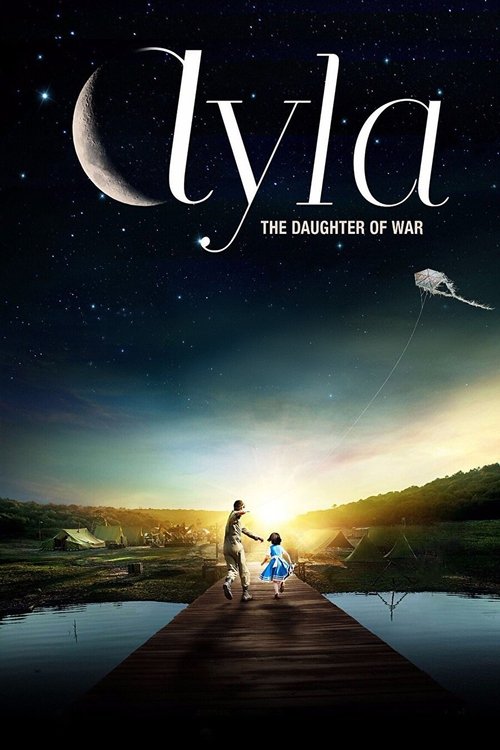
During the Korean War, Turkish Sergeant Süleyman Dilbirliği found a five-year-old girl half-frozen in the snow. He named her Ayla, Turkish for moon, and smuggled her onto his base. That decision, made in the winter of 1950, shaped the rest of his life. Ayla: The Daughter of War, directed by Can Ulkay from a screenplay by Yiğit Güralp, tells both that wartime story and its unlikely coda six decades later.
The film stars İsmail Hacıoğlu as the young Süleyman and Kim Seol as the child Ayla, with Çetin Tekindor as the aged sergeant looking back. Dijital Sanatlar produced on a budget of about $4.2 million, and the film earned roughly $21.1 million worldwide after opening in Turkey on October 27, 2017. Fahir Atakoğlu composed the score, and Jean-Paul Seresin handled cinematography.
What distinguishes the film from standard war melodrama is its double timeline. The 1950 sequences show the daily, improvised care the soldiers give the girl, while the present-day passages follow the adult Ayla's search for the man she remembers only as Baba. The reunion at the center of the story happened in real life in 2010, and the film's release coincided with the final months of the real Süleyman's life.
Stream
Availability and pricing can change. Confirm on the provider's site before purchasing.
An elderly man named Süleyman Dilbirliği lives out his days in Turkey, keeping a photograph and a small keepsake close at hand. The objects are the only physical traces of a promise he made in 1950 and could not keep. From this quiet present-day frame, the film moves back to the Korean War, where a young Süleyman (İsmail Hacıoğlu) serves with the Turkish Brigade, part of the United Nations force sent to a country he knows almost nothing about.
The brigade operates in punishing winter conditions. Villages are burned or abandoned, civilians are dead or displaced, and the Turkish soldiers, under Major Fuat (Taner Birsel) and Lieutenant Mesut (Murat Yıldırım), fight an enemy they rarely see. During a patrol through one ruined settlement, Süleyman and his comrades find a small girl, perhaps five years old, barely alive and entirely alone. Her family is gone. She cannot speak, and even if she could, no one in the unit speaks Korean.
Süleyman cannot leave her. He also cannot simply hand her to the authorities, because in the chaos of the war there is no clear authority to hand her to. So he carries her back to the Turkish base and hides her in the unit's quarters. He names her Ayla, after the moon, and the soldiers become her unlikely guardians. They feed her, keep her warm, teach her Turkish words, and shield her from officers who would send her to an orphanage. The child, mute with shock at first, gradually begins to trust them.
The middle of the film is devoted to the texture of that shared life. Ayla learns to count and to say the names of the men around her. The soldiers, hardened by combat, compete for her attention and fuss over her in ways that embarrass them. Süleyman becomes the center of her world, and she begins to call him Baba, father. The arrangement is tender, improvised, and entirely against regulations, which is where the trouble lies. Major Fuat eventually learns of the child, and the question of what to do with her becomes a conflict between military discipline and simple human decency.
Parallel to the wartime story, the film follows the adult Ayla (Lee Kyung-jin) in the present day. She has grown up in Korea, built a life, and never stopped wondering about the Turkish soldier who saved her. Her search is patient and fragmentary, conducted through old records and faint memories. The film crosscuts between her efforts and the elderly Süleyman's quiet life in Turkey, where he believes the girl was lost to him forever when the brigade withdrew.
The two timelines move toward each other without quite meeting. Süleyman's wife Nimet (Büşra Develi as the young woman, Meral Çetinkaya in later years) and the family around him know only that he carries some old sorrow from the war. Ayla's family in Korea knows only that she was once rescued by a foreign soldier. Neither side has the full story, and the film lets the audience see what the characters cannot: that the two searches have been running on parallel tracks for sixty years.
Ayla: The Daughter of War Trailer
Critical Consensus
English-language critics were split on the film, praising its true-story foundation and the performances of Hacıoğlu and Kim Seol while faulting its sentimental tone and uneven pacing. Audiences responded far more warmly, and the film became an emotional favorite in Turkey and Korea.
İsmail Hacıoğlu
Süleyman Dirliği
Kim Seol
Ayla
Çetin Tekindor
Yaşlı Süleyman
Ali Atay
Ali
Murat Yıldırım
Lieutenant Mesut
Taner Birsel
Major Fuat
Altan Erkekli
Hüseyin Dilbirliği
Meral Çetinkaya
Elderly Nimet
Damla Sönmez
Nuran
Büşra Develi
Nimet Dilbirliği (young)
Eric Roberts
Major General Coulter
Lee Kyung-jin
Adult Ayla (Kim Eunja)
Director
Can Ulkay
Writer
Yiğit Güralp
Composer
Fahir Atakoğlu
Cinematographer
Jean-Paul Seresin
Producer
Mustafa Uslu
Academy Awards (2018)
Best Foreign Language Film (Turkey submission): Submitted
Join the community
fans discussing