 Italy
Italy“It remains breathtakingly good. There is a miraculous, unforced ease and naturalness in the acting and direction; it is classic movie-making that has never dated.”
Peter Bradshaw
The Guardian
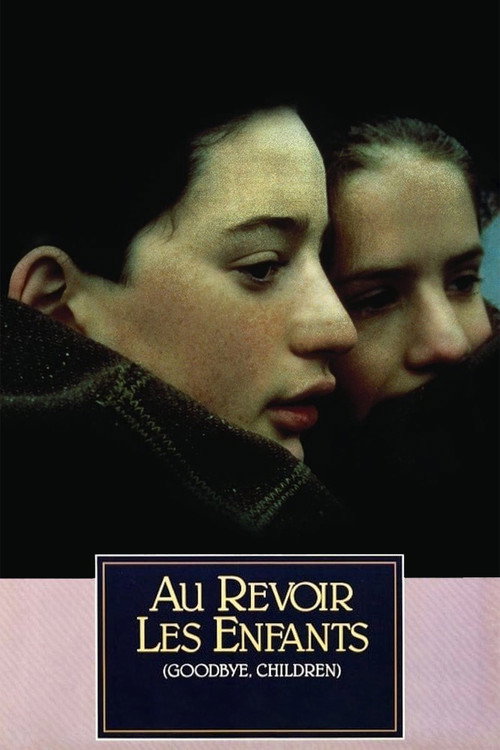
Louis Malle's 1987 film Au Revoir les Enfants is a quiet, devastating portrait of childhood innocence colliding with the brutality of war. Set in a Catholic boarding school in Nazi-occupied France, the story follows two boys whose friendship forms against a backdrop of fear and secrecy. Malle, drawing directly from his own childhood experiences, crafts a film that is both deeply personal and universally resonant, exploring themes of courage, betrayal, and the harsh loss of innocence.
The film stars Gaspard Manesse as Julien Quentin, a privileged student, and Raphaël Fejtö as Jean Bonnet, a mysterious new arrival whose true identity is hidden. Their performances anchor the film's emotional weight, supported by a strong cast including Francine Racette and François Berléand. Produced on a modest budget of $3 million, the film went on to earn over $4.5 million at the box office, a testament to its critical and commercial appeal. It won the Golden Lion at the Venice Film Festival and received an Oscar nomination for Best Foreign Language Film, solidifying its place in cinema history.
Availability and pricing can change. Confirm on the provider's site before purchasing.
January 1944. Nazi-occupied France. The Carmelite boarding school of Jouy-en-Josas sits in the countryside near Paris, a world of cold dormitories, strict Latin lessons, and the muffled hum of war. Twelve-year-old Julien Quentin, a sharp-tongued pianist from a wealthy family, returns after the Christmas break with his older brother François. He is clever, spoiled, and a little cruel, the kind of boy who gets away with things because his mother dotes on him.
Then three new students arrive in the middle of term. One of them, Jean Bonnet, is quiet, brilliant at math, and assigned to the bunk above Julien's. Jean claims to be Protestant, but Julien notices things: the way Jean hesitates before Catholic prayers, the odd surname, the fact he never receives letters from home. At first Julien is hostile, mocking Jean's accent and his excellence. But slowly, through shared meals, a chess game, and a forbidden exploration of a bombed-out building, the two boys forge a fragile friendship.
Outside the school gates, the occupation tightens its grip. Food is scarce, and the boys are always hungry. A raid on a local Jewish restaurant brings the horror home, and German soldiers requisition supplies from the school. The headmaster, Father Jean, maintains a calm facade, but tensions simmer among the staff. Joseph, the young kitchen helper, resents the privileged boys he serves, and his bitterness grows as he is caught stealing food for the black market.
Julien's awareness of Jean's secret deepens as he pieces together the truth: Jean is actually Jewish, hidden by the priests under a false identity. The friendship becomes a silent pact, a shared understanding that words cannot speak. But the war's shadow lengthens, and the sanctuary of the school grows increasingly precarious. The central question becomes whether the priests' courage can hold, and whether the boys' bond can survive the brutal world beyond.
Louis Malle’s Au revoir les enfants - BFI release - english subtitle
Criterion Trailer 330: Au Revoir Les Enfants
Critical Consensus
Au Revoir les Enfants is widely regarded as Louis Malle's masterpiece, a quietly devastating semi-autobiographical film that captures the fragile innocence of childhood against the brutal backdrop of Nazi-occupied France. Its restraint, emotional precision, and natural performances create an unforgettable portrait of friendship, betrayal, and loss that resonates decades later.
“It remains breathtakingly good. There is a miraculous, unforced ease and naturalness in the acting and direction; it is classic movie-making that has never dated.”
Peter Bradshaw
The Guardian
“A career-altering artistic breakthrough... Malle's most personal work, a film whose emotional power derives from its director's decision to confront the deepest trauma of his childhood.”
The Criterion Collection
Criterion
“If anything, it is this truth to character, along with the director's clear distaste for cliché, that gives Au Revoir its special quality.”
Little White Lies
Little White Lies
“It's impossible to watch 'Au revoir les enfants' without being deeply moved by its poignant story and obvious personal touch from Louis Malle.”
Keith & the Movies
Keith & the Movies
Gaspard Manesse
Julien Quentin
Raphael Fejtö
Jean Bonnet
Francine Racette
Mrs. Quentin
Stanislas Carré de Malberg
François Quentin
Philippe Morier-Genoud
Father Jean
François Berléand
Father Michel
François Négret
Joseph
Peter Fitz
Muller
Director
Louis Malle
Writer
Louis Malle
Cinematographer
Renato Berta
Producer
Louis Malle
Academy Awards (1988)
Best Foreign Language Film: Nominated
Venice Film Festival (1987)
Golden Lion: Won
César Awards (1988)
Best Film: Won
César Awards (1988)
Best Director: Won
César Awards (1988)
Best Original Screenplay: Won
César Awards (1988)
Best Cinematography: Won
César Awards (1988)
Best Editing: Won
César Awards (1988)
Best Sound: Won
César Awards (1988)
Best Production Design: Won
David di Donatello Awards (1988)
Best Foreign Film: Won
Los Angeles Film Critics Association Awards (1988)
Best Foreign Language Film: Won
New York Film Critics Circle Awards (1988)
Best Foreign Language Film: Won
Boston Society of Film Critics Awards (1988)
Best Foreign Language Film: Won
BAFTA Awards (1988)
Best Film Not in the English Language: Nominated
Golden Globe Awards (1988)
Best Foreign Language Film: Nominated
Join the community
fans discussing