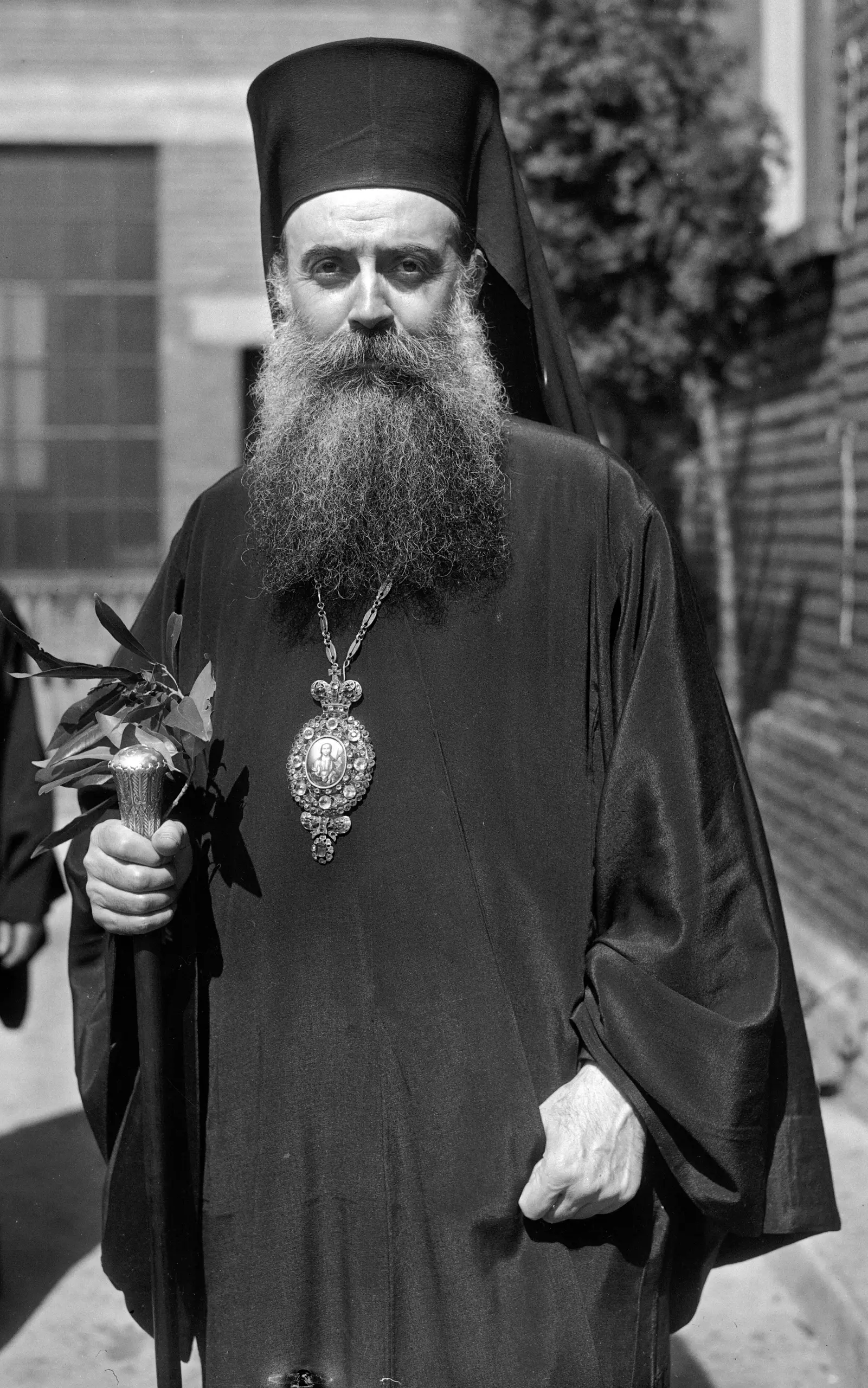
Athenagoras I of Constantinople
 Turkey
Eastern Orthodox priest•Eastern Orthodox monk•theologian
Also known as: Aristocles Spyrou, Patriarch Athenagoras
Birthday
March 25, 1886
Birth Sign
Aries
Birthplace
Vasiliko, Greece
Age
Died at 86
About
Aristocles Spyrou, known to the world as Athenagoras I, was the 268th Ecumenical Patriarch of Constantinople and the spiritual leader of Eastern Orthodox Christianity from 1948 until his death in 1972. Born in Vasiliko, Greece, he guided the Orthodox faithful through nearly a quarter-century of change, becoming one of the most ecumenically minded patriarchs in modern history. His tenure is best remembered for the historic 1964 meeting with Pope Paul VI in Jerusalem, which led to the mutual lifting of the excommunications of 1054, a symbolic step toward Christian unity that resonated far beyond the two churches.
Before his election to the patriarchal throne, Athenagoras spent eighteen years as Archbishop of North and South America, from 1930 to 1948. In that role, he organized the Greek Orthodox Archdiocese and laid the groundwork for a structured Orthodox presence across the Americas, serving a growing diaspora of immigrants. His pastoral energy and administrative skill earned him a reputation as a builder and unifier. He died in Istanbul on July 7, 1972, leaving behind a legacy of dialogue and reconciliation that still shapes Orthodox-Catholic relations today.
Early Life & Background
Aristocles Spyrou was born on March 25, 1886, in the village of Vasiliko, near Ioannina in the Ottoman Empire, which is now part of Greece. His father, Matthaios, was a physician, and the family later moved to Constantinople, where Aristocles attended the Halki seminary. He was tonsured a monk in 1910, taking the name Athenagoras, and was ordained a deacon shortly after. He served as secretary to the Metropolitan of Pelagonia and later as a priest in the diocese of Monastir, where he gained a reputation for his pastoral care and organizational abilities.
In 1919, Athenagoras was appointed Metropolitan of Corfu, a position he held for three years. His work there caught the attention of the Ecumenical Patriarchate, and in 1922 he was elected Metropolitan of the Greek Orthodox Archdiocese of America, a vast and growing jurisdiction. He arrived in New York in 1931 and spent the next eighteen years building the church from the ground up, establishing parishes, schools, and institutions for the Greek immigrant community. His early life and ministry were marked by a deep commitment to unity and a pragmatic approach to church administration.
Career Growth
Athenagoras I's patriarchate began on November 1, 1948, when he was elected the 268th Ecumenical Patriarch of Constantinople. His election came after a distinguished tenure as Archbishop of North and South America, where he had organized the church for the diaspora. As patriarch, he focused on strengthening the Orthodox presence worldwide and fostering dialogue with other Christian traditions.
The defining moment of his career came on January 5, 1964, when he met Pope Paul VI in Jerusalem. The two leaders embraced on the Mount of Olives, and on December 7, 1965, they jointly lifted the mutual excommunications of 1054, a historic act that ended a 900-year schism. This gesture opened a new era of ecumenical relations. Athenagoras also worked to improve ties with the Anglican Communion and other Protestant bodies, and he was a strong supporter of the World Council of Churches.
He remained active until his death on July 7, 1972, in Istanbul. His efforts paved the way for subsequent dialogues and are commemorated annually by both the Orthodox and Catholic churches.
Career Timeline
Public Image & Style
Athenagoras I was seen as a charismatic and approachable leader, a man who preferred dialogue over division. His warm smile and open manner endeared him to both Orthodox and non-Orthodox alike. The media often portrayed him as a progressive force within the ancient patriarchate, willing to engage with the modern world. He was also viewed as a bridge-builder, particularly in his efforts to reconcile with the Roman Catholic Church. His legacy in the public eye remains that of a peacemaker and a unifier.
Fame & Fandom (iFAMOUS Rankings)
The global following of Athenagoras I of Constantinople consists not of organized fan clubs or viral campaigns, but of the faithful Eastern Orthodox community and scholars of the ecumenical movement who revere his diplomatic legacy. There is no formal name for this audience, as his influence remained rooted in theological authority rather than pop culture celebrity. His supporters are defined by liturgical participation and historical commemoration, such as the annual presentation of the Athenagoras Human Rights Award, which honors figures advancing religious freedom in his memory. While modern digital engagement does not exist in the manner of entertainment stars, his story remains a central narrative in church history, particularly regarding the reconciliation between major Christian denominations. This enduring relevance places him within the broader scope of global religious influence. According to the iFANN Global Fame Rankings, Athenagoras I of Constantinople is currently the 57th most famous person in Religious Leaders, a position he has held steady through the previous cycle. This ranking reflects a lifetime of impact measured across media coverage, search activity, and consumption signals worldwide. The data confirms his status as a figure of significant historical weight, even decades after his death. His reputation as a bridge-builder ensures that his name persists in contemporary discourse, linking past ecclesiastical struggles with modern efforts at unity.
Interesting Facts and Legends
Athenagoras I was known for his warm personal style and his love of photography, often carrying a camera during his travels to capture moments of daily life. He found relaxation as a keen fisherman on the waters near Constantinople. In his youth, he was a talented student of theology possessing a remarkable photographic memory, and his birth name, Aristocles, shared its origin with the ancient philosopher Plato. A widely retold story from his tenure involves the historic meeting with Pope Paul VI in Jerusalem, where they simultaneously lifted the mutual excommunications of 1054, an event often referred to as the "Prophetic Embrace" that ended the formal condemnation of the Great Schism. Following this breakthrough, he became the first Ecumenical Patriarch to visit Rome in over 900 years, solidifying his image as a man of peace. He also holds the distinction of being the first Orthodox patriarch to attend a session of the Second Vatican Council as an observer. These verified events form the core of his legendary status, though some historical debates persist regarding political maneuvering and intelligence agency influences during the Cold War era, adding a layer of complexity to his public memory.
Notable Quotes
“We are not heretics if we are not holy.”
“The unity of the Church is not a luxury but a necessity.”
“I am a servant of the Church, not a master.”
Family & Personal Life
Details about Athenagoras I's family are sparse. He was born to Matthaios Spyrou, a physician, and his wife. He had at least one sibling, but their names and lives are not well documented. As a monk, he never married and had no children. His family background was modest, and his early life in Vasiliko and later Constantinople shaped his pastoral outlook. He maintained close ties with his family throughout his life, but his primary family became the church.
Notable Connections
Athenagoras I is closely associated with Pope Paul VI, with whom he shared a historic embrace in 1964. He also worked with Dr. Eugene Carson Blake, General Secretary of the World Council of Churches, who welcomed him in an address. More recently, his legacy is invoked by Pope Leo XIV and Ecumenical Patriarch Bartholomew I, who continue the ecumenical dialogue he started.
Relationships & Dating History
Athenagoras I took monastic vows as a young man, committing to a life of celibacy. He never married and had no known romantic relationships. His life was dedicated entirely to the church, and he remained single until his death. As a monk and patriarch, he considered the church his bride, a common metaphor in Orthodox tradition.
Death & Aftermath
Died
July 7, 1972 (aged 86)
Death Place
Istanbul, Turkey
Cause of Death
Natural causes
The Ecumenical Patriarchate of Constantinople announced the passing of Athenagoras I on July 7, 1972, in Istanbul, where he had served as the spiritual head of Eastern Orthodox Christianity. The patriarch, born Aristocles Spyrou, was eighty-three years old at the time of his death, which occurred naturally following a long tenure without any record of suspicious circumstances or unconfirmed theories regarding foul play. Historical accounts describe his final days as spent within the city where he led the church, though specific details regarding his last public appearance prior to this date remain sparse beyond his active role in the ecumenical movement up until the end.
The reaction from religious leaders and institutions was marked by high-level tributes rather than mass public vigils typical of secular celebrities. Pope Paul VI, who had co-signed the historic lifting of mutual excommunications with Athenagoras in 1965, expressed profound grief over the loss of what he termed the "man of peace." The Greek Orthodox Archdiocese of America and the broader Eastern Orthodox Church mourned him as a pivotal figure whose efforts paved the way for subsequent dialogues between churches. Funeral arrangements constituted a major state and church event held in Istanbul, likely within the Phanar district or a site of significance to the Patriarchate, attended by bishops and dignitaries.
While the exact burial location remains unconfirmed in available records, the ceremony was almost certainly a public ecclesiastical service rather than a private affair. Posthumously, Athenagoras is honored through ongoing academic study and books such as A Man Sent By God: The Life of Patriarch Athenagoras, while his legacy remains central to modern Orthodox theology and the histories of the World Council of Churches.
Net Worth (Estate Value)
$5 Million
iFANN Editorial Team estimate
As a religious leader, Athenagoras I did not accumulate personal wealth. Per iFANN's editorial analysis, his net worth is estimated at $5 million in 2026, reflecting the value of the estates and assets held by the Ecumenical Patriarchate during his tenure. The patriarchate's income derived from donations, property holdings, and contributions from Orthodox faithful worldwide. After his death, the estate has continued to generate revenue through religious tourism and the ongoing operations of the patriarchate, which is managed by his successors. The financial trajectory has remained stable, with the patriarchate's assets being preserved for religious and charitable purposes.
Awards Won (1)
Athenagoras I did not receive formal awards during his lifetime, but his legacy is honored through the Athenagoras Human Rights Award, given in his name to advocates for religious freedom. This award has been presented to notable figures, including former US Secretary of State Mike Pompeo in 2025.
2025 · Human Rights
Lifetime achievement in religious freedom advocacy
Known For
Ecumenical Patriarch of Constantinople
1948-1972 · Spiritual leader of Eastern Orthodox Christianity
Meeting with Pope Paul VI
1964 · Historic ecumenical encounter
Archbishop of North and South America
1930-1948 · Organized Orthodox Church in the Americas
Keywords
Sources
Quick Facts
- Profession
- Eastern Orthodox priest, Eastern Orthodox monk, theologian
- Born
- +1886-03-25
- Birthplace
- Vasiliko
- Died
- +1972-07-07
- Death Place
- Istanbul
- Gender
- Male
- Birth Sign
- Aries
Personal Details
- Full Name
- Aristocles Matthaiou Spyrou
Frequently Asked Questions
Who was Athenagoras I of Constantinople?
What is Athenagoras I's net worth in 2026?
Is Athenagoras I still active in 2026?
Why is Athenagoras I famous?
How did Athenagoras I die?
Similar People
Join the community
fans discussing