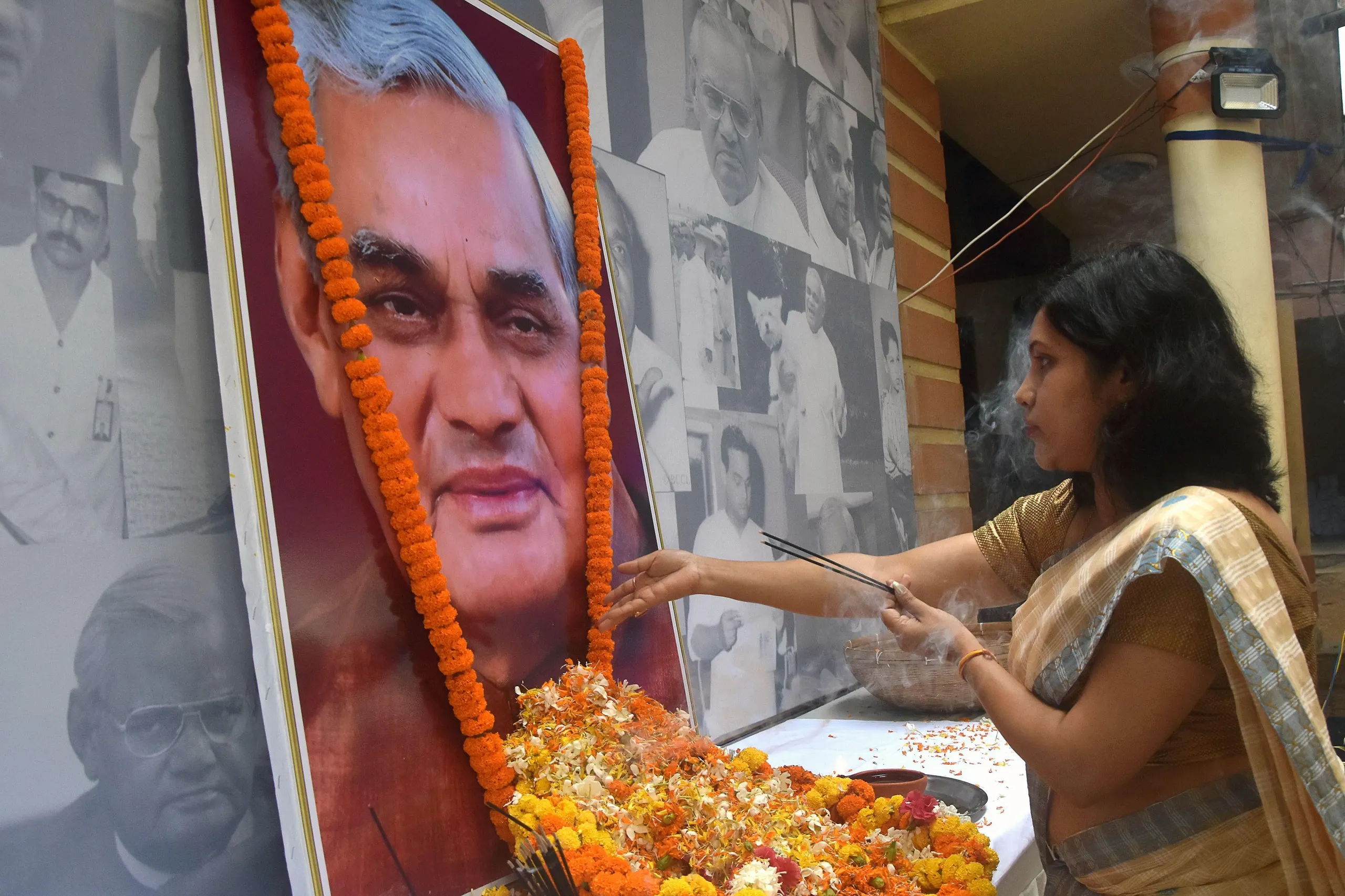
Atal Bihari Vajpayee
 India
IndiaAlso known as: Vajpayee, AB Vajpayee, Atal, Atalji, Mahamantri
Birthday
December 25, 1924
Birth Sign
Sagittarius
Birthplace
Gwalior, Central Provinces and Berar, British India
Age
Died at 93
Height
5 ft 7 in (170 cm)
About
Atal Bihari Vajpayee was an Indian politician, poet, and journalist who served as the Prime Minister of India three times. He holds the distinction of being the first non-Congress leader to complete a full five-year term in office, serving from 1998 to 2004. Known affectionately as 'Mahamantri' or 'Atal Ji,' he blended a deep commitment to cultural nationalism with pragmatic governance. His career spanned over five decades, during which he navigated complex domestic challenges and international conflicts with a distinctive rhetorical style that earned him widespread respect across party lines.
Early Life & Background
Born Atal Bihari Bajpai on December 25, 1924, in Gwalior, he grew up in a middle-class household where his father worked as a school teacher and his mother managed the home. The family later relocated to Kanpur, where young Atal developed a fierce passion for literature and politics. While still a teenager in 1939, he joined the Rashtriya Swayamsevak Sangh (RSS), marking the beginning of his lifelong dedication to the freedom struggle. He adopted the pen name 'Vajpayee' early in his writing career, inspired by a line from a poem, and began contributing articles to local newspapers.
Although he enrolled at Kamla Nehru College in Kanpur, Vajpayee chose not to complete his undergraduate degree. Instead, he immersed himself fully in journalism and political activism, working as a reporter for The Hindustan Times and other publications. This period allowed him to hone his skills as an orator and writer, shaping the voice that would later define his political career. By the time he entered formal electoral politics, he was already a seasoned journalist known for his eloquence and sharp intellect.
Career Growth
Vajpayee's parliamentary journey began in 1957 when he was first elected to the Lok Sabha from Balrampur, Uttar Pradesh. Over the next five decades, he became one of the longest-serving members of Parliament, winning ten Lok Sabha seats and two Rajya Sabha terms. He served as the President of the Bharatiya Jana Sangh from 1968 to 1972 and played a pivotal role in forming the Bharatiya Janata Party (BJP) in 1980, becoming its first president. His tenure as Prime Minister included a brief 13-day stint in 1996 followed by a full term from 1998 to 2004.
During his second term, he oversaw the Pokhran-II nuclear tests in 1998, establishing India as a recognized nuclear power. He also initiated the 'Look East' policy to strengthen ties with Southeast Asia and pursued peace initiatives with Pakistan, most notably the historic bus journey to Lahore in 1999 to meet Prime Minister Nawaz Sharif. Following the BJP-led NDA's electoral defeat in 2004, he resigned as Prime Minister, leaving behind a legacy of strategic vision and diplomatic courage.
Career Timeline
Public Image & Style
Vajpayee is portrayed as a 'poet-statesman,' blending cultural nationalism with pragmatic governance. His image is one of humility, wisdom, and integrity, often highlighted by his gentle demeanor and ability to bridge divides both within India and internationally. Media coverage frequently emphasizes his signature look of a white kurta-pyjama and shawl, which became synonymous with his persona. His oratory skills and poetic flair set him apart from contemporaries, earning him a reputation as a leader who could unite diverse factions through words alone.
Fame & Fandom (iFAMOUS Rankings)
Atal Bihari Vajpayee did not have a formal fandom name like pop stars; his admirers were simply citizens, party supporters, or those who revered him as the 'Mahamantri.' Fan culture revolved around political rallies, literary events, and the preservation of his legacy through educational initiatives rather than organized campaigns or merchandise. Within this landscape of statesmanship, his global standing remains formidable. He is currently the 74th most famous person from India, a position holding steady from the previous cycle. This placement reflects his enduring presence across the iFANN Global Fame Rankings, which track global attention across media coverage, search, and consumption signals worldwide. While he did not court celebrity status, his impact on democracy and culture secured his spot among the world's most recognized figures. The narrative of his life, balancing poetry with power, resonates deeply in a digital age that often forgets the substance of governance. Even without a formal fanbase, the sheer scale of his recognition places him firmly in the upper echelons of Indian fame.
Interesting Facts and Legends
Atal Bihari Vajpayee was known for his ability to speak extemporaneously, often delivering powerful speeches without notes and quoting poetry to make his points. A widely retold story from his 1999 bus trip to Lahore involves Pakistani Prime Minister Nawaz Sharif playing a CD of Bollywood legend Dev Anand's songs repeatedly until it wore out, symbolizing a desire for peace amidst war. Another legendary moment occurred during the Kargil War in 1999, when he personally visited the front lines to boost troop morale. His decision to authorize the Pokhran-II nuclear tests in 1998 is viewed as a defining moment of national assertiveness that changed India's global standing.
Notable Quotes
“Humare desh mein sabhi dharm ek hi hai, aur hum sabhi ek hi desh ke hain.”
“Jab tak hamara desh apni taqat ko nahi pehchanega, tab tak duniya uski koi izzat nahi karegi.”
“Main ek sadhu hoon, jo desh ki seva karne aaya hoon.”
Family & Personal Life
Vajpayee was born to Harishwar Sharan Bajpai, a school teacher, and Sitadevi, a homemaker. He had siblings, though specific details about their lives are less documented than his own. Unlike many public figures, Vajpayee remained a lifelong bachelor and never married, dedicating his entire life to his nation and his craft. In his later years, he lived alone in New Delhi, surrounded by colleagues and staff whom he treated like family. His personal life was characterized by a deep commitment to his parents and his political work, with no romantic relationships recorded.
Notable Connections
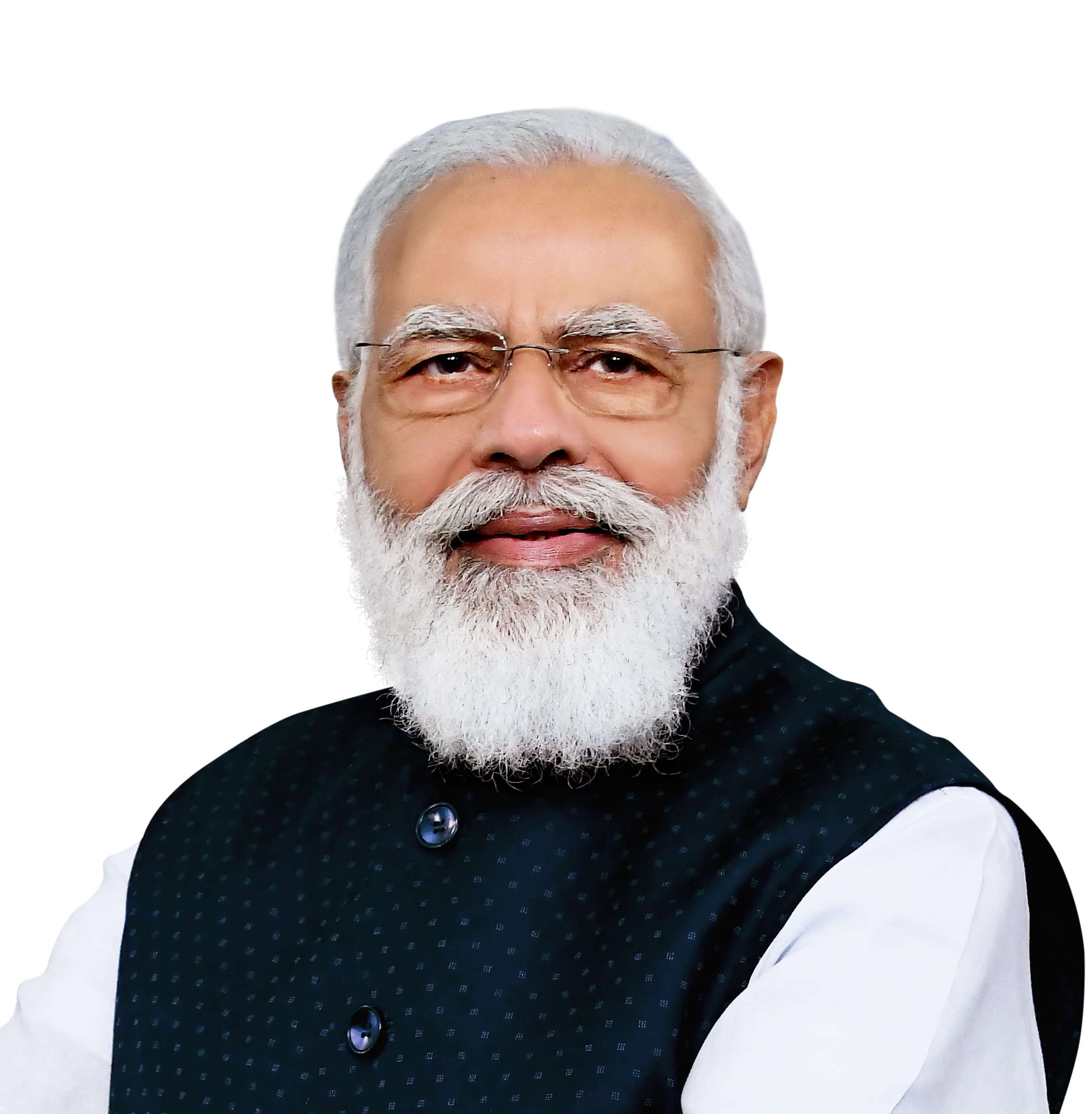
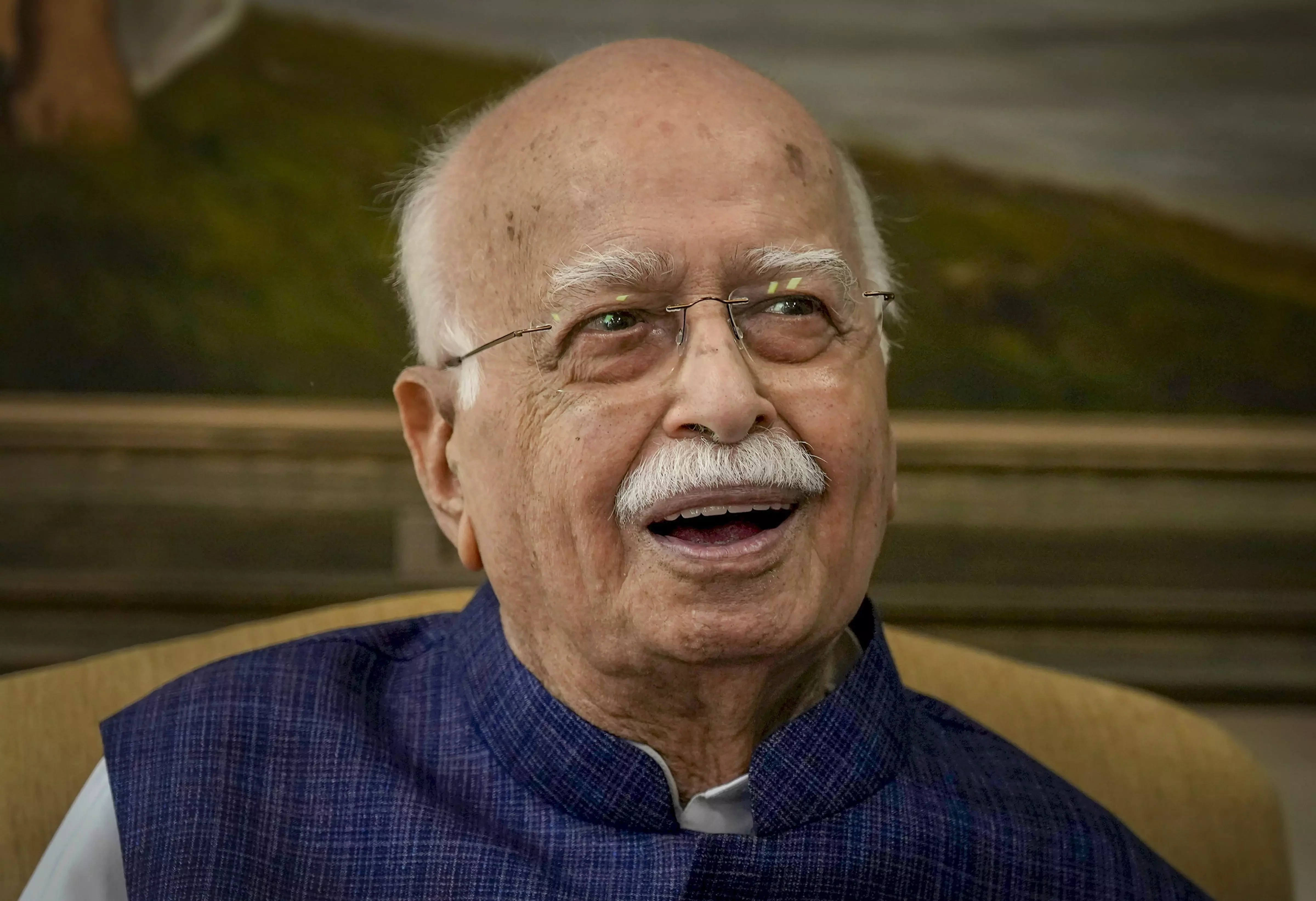
Narendra Modi, Nawaz Sharif, Pervez Musharraf, Subramanian Swamy, L.K. Advani
Relationships & Dating History
Atal Bihari Vajpayee was a lifelong bachelor throughout his life. He never married and had no children. Unlike many public figures of his stature who navigate complex romantic histories, Vajpayee dedicated his entire life to his nation and his craft. There are no records of any romantic relationships, engagements, or marriages. His personal life was characterized by a deep commitment to his parents, his siblings, and his political work. In his later years, he lived alone in New Delhi, surrounded by colleagues and staff whom he treated like family. His status as a lifelong bachelor is widely documented and respected, often cited as a symbol of his singular devotion to public service. As of his death in 2018, he remained single, with no current partner.
Death & Aftermath
Died
August 16, 2018 (aged 93)
Death Place
New Delhi, India
Cause of Death
Pneumonia and acute respiratory failure
Atal Bihari Vajpayee spent his final hours in a hospital bed at the All India Institute of Medical Sciences in New Delhi, where he had been admitted after breathing difficulties worsened overnight. The former Prime Minister and poet-statesman passed away shortly before 1:40 AM on August 16, 2018, at the age of 93. Medical authorities confirmed that pneumonia complicated by acute respiratory failure and age-related comorbidities claimed his life, ruling it a natural death under medical supervision. The nation responded with immediate and profound grief as President Ram Nath Kovind declared three days of national mourning.
Tributes flowed from across the political spectrum, with Prime Minister Narendra Modi calling him a great statesman and poet of the highest order. International leaders from Pakistan to Nepal joined in, while social media trends like #AtalBhai reflected a global outpouring of respect. Streaming platforms saw a surge in views of his historic speeches, including the 1996 No Confidence Motion address, as citizens revisited his legacy through digital archives. His funeral procession transformed into a human chain stretching for miles as thousands gathered along the route from Gwalior to New Delhi.
After lying in state at Raj Bhavan and Teen Murti Bhavan, his body was cremated with full state honors at the Sangam Vihar Cremation Ground on August 18, accompanied by a 21-gun salute. In the years following, the government established the Atal Innovation Mission to foster youth entrepreneurship and launched the Atal Bihari Vajpayee Foundation to support education. His family continues to manage his literary estate, directing royalties toward charitable causes and educational scholarships.
Net Worth (Estate Value)
$6 Million
iFANN Editorial Team estimate
As a public servant who held high office for decades, Atal Bihari Vajpayee did not accumulate wealth through commercial ventures or endorsements in the manner of celebrities. His net worth at the time of his death was estimated to be modest, primarily consisting of his salary, savings, and property holdings. Reports suggest his estate was valued at approximately ₹50–60 crore (roughly $6–7 million USD at the time), though exact figures are not publicly detailed as he managed his affairs privately. His estate continues to manage his literary works, with royalties directed toward charitable causes and educational scholarships via the Atal Bihari Vajpayee Foundation. There are no significant posthumous revenue streams comparable to entertainment estates, as his primary income source was his political career and literary contributions. iFANN Editorial Team estimates his estate value at roughly $6 Million based on available asset records and literary royalty data.
Awards Won (4)
Vajpayee received numerous prestigious awards for his contributions to literature and politics, including the Padma Vibhushan in 1975 and the Bharat Ratna in 2015, India's highest civilian award. He was also honored with the Sahitya Akademi Award in 1980 for his collection of poems, Sandesh, and the Nehru Memorial Prize in 1992 for his contribution to international understanding. Additionally, he received honorary doctorates from several universities worldwide, including the University of Oxford and the University of Cambridge.
2015 · Civilian Award
Service to the Nation
1975 · Civilian Award
Public Service
Known For
Prime Minister of India
1998-2004 · Statesman
Pokhran-II Nuclear Tests
1998 · Leader
Lahore Bus Trip
1999 · Diplomat
Operation Safed Sagar
1999 · Commander
Keywords
Sources
Quick Facts
- Profession
- politician, poet, journalist
- Born
- December 25, 1924
- Birthplace
- Gwalior
- Died
- August 16, 2018
- Death Place
- All India Institute of Medical Sciences, New Delhi
- Gender
- Male
- Birth Sign
- Sagittarius
Personal Details
- Full Name
- Atal Bihari Bajpai
- Height
- 5 ft 7 in (170 cm)
- Children
- Education
- Kamla Nehru College, Kanpur (incomplete)
Frequently Asked Questions
Who was Atal Bihari Vajpayee?
When did Atal Bihari Vajpayee die?
Did Atal Bihari Vajpayee have children?
What was Atal Bihari Vajpayee's biggest achievement?
Why is Atal Bihari Vajpayee famous?
Similar People
Join the community
fans discussing