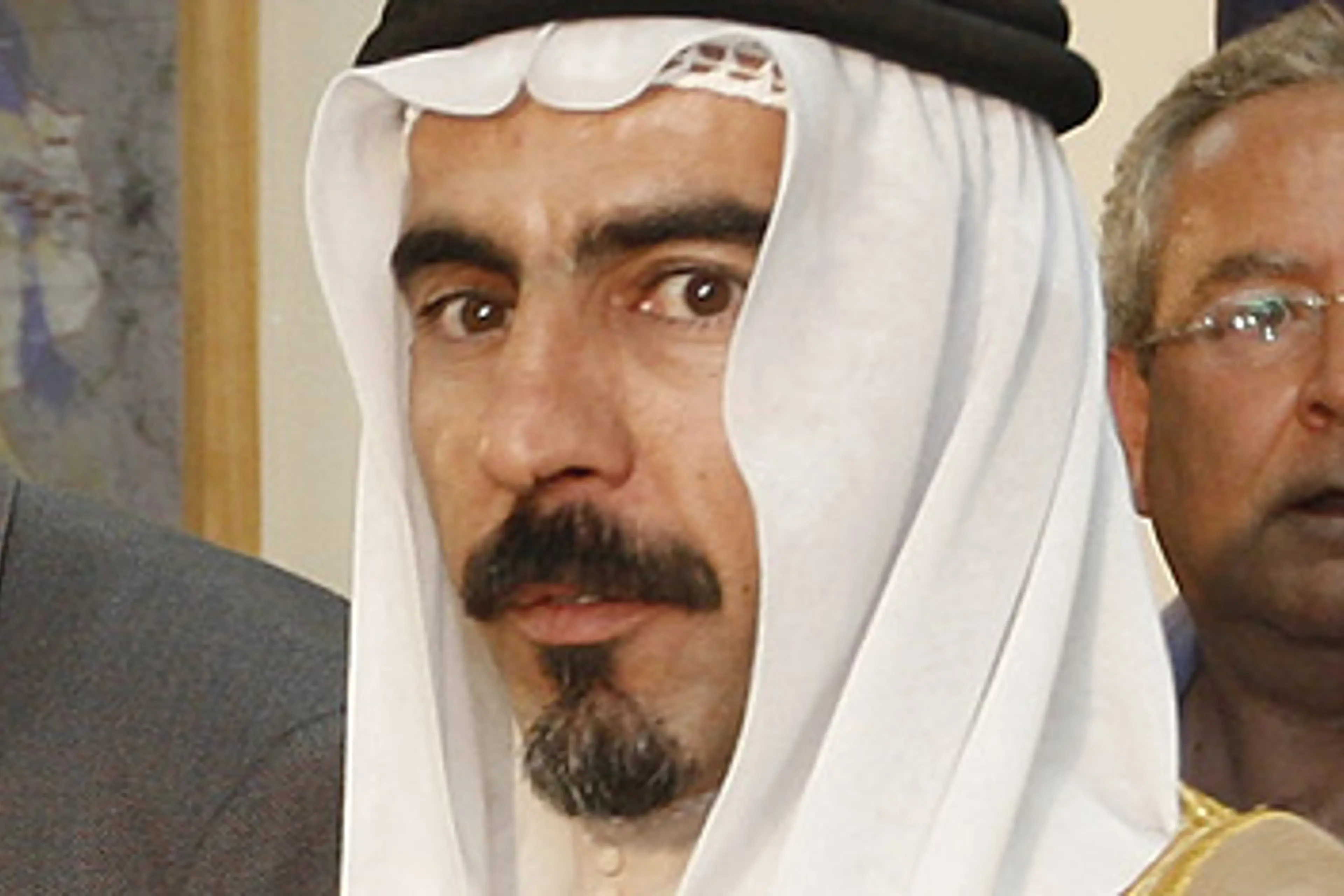
Ata Abu Rashta
 Jordan
civil engineer•writer•politician
Also known as: Ata Bin Khalil Abu al-Rashtah
Birthday
1943-01-01
Birth Sign
Capricorn
Birthplace
Ra'na, Palestine
Age
83 years old
About
Ata Abu Rashta is a Palestinian civil engineer, Islamic jurist, scholar, writer, and the global leader of the Islamic political party Hizb ut-Tahrir. Born in 1943 in the village of Ra'na near Hebron, he has spent decades shaping the ideology and direction of one of the most prominent pan-Islamic movements in the world.
As the Ameer of Hizb ut-Tahrir, Abu Rashta leads an organization dedicated to re-establishing the Caliphate, a goal that has made him a significant figure in contemporary Islamic political thought. His leadership is marked by a more assertive approach than his predecessors, and his writings and speeches continue to influence followers across the globe.
While he remains a controversial figure in many countries, where Hizb ut-Tahrir is banned, Abu Rashta's intellectual output and organizational leadership have earned him a devoted following among those who share his vision. He is widely recognized as a key voice in the movement for a unified Islamic state.
Early Life & Background
Ata Abu Rashta was born in 1943 into an observant Muslim family in the small village of Ra'na, located in the Hebron region of Palestine. Growing up in a religious household, he was instilled with a deep commitment to Islamic values from an early age. The political turmoil of the time, including the establishment of the state of Israel in 1948, shaped his worldview and fueled his interest in political Islam.
He pursued higher education in civil engineering, a field that would later serve him well in his organizational and leadership roles. Though details of his academic path are scarce, his engineering background is often noted in profiles of him. Before rising to prominence within Hizb ut-Tahrir, Abu Rashta likely worked in his field, but his passion for Islamic political activism soon took precedence.
His early involvement with Hizb ut-Tahrir is not well documented, but it is known that he was active in Jordan during the First Gulf War, a period that brought him to greater attention within the party. This period marked a turning point, as he began to take on more significant responsibilities, eventually positioning himself as a successor to the party's leadership.
Career Growth
Ata Abu Rashta's career is defined by his leadership of Hizb ut-Tahrir. He gained prominence in Jordan during the First Gulf War, and when Abdul Qadeem Zallum retired as the party's Ameer, Abu Rashta succeeded him. Under his leadership, the party has adopted a more aggressive stance, pressing its agenda with renewed vigor.
As the global leader, Abu Rashta has focused on expanding the party's reach, strengthening its organizational structure, and articulating a clear vision for the re-establishment of the Caliphate. He has authored numerous books and articles on Islamic jurisprudence and political theory, which are widely circulated among supporters.
His tenure has not been without controversy. Hizb ut-Tahrir is banned in several countries, including Germany, Turkey, and much of the Arab world, and Abu Rashta himself has faced restrictions. Despite this, he continues to lead the movement from an undisclosed location, issuing statements and guiding the party's activities worldwide.
Career Timeline
Public Image & Style
Ata Abu Rashta is perceived as a stern, scholarly leader within Hizb ut-Tahrir, known for his unwavering commitment to the cause of re-establishing the Caliphate. His public image is that of a jurist and thinker, rather than a charismatic populist. He is respected within the movement for his intellectual rigor and his ability to articulate complex political and religious concepts.
Among supporters, he is seen as a principled figure who has dedicated his life to a singular goal. Critics, however, view him as a radical ideologue whose organization promotes extremism. This polarized perception is common for leaders of banned Islamist movements.
His speeches and writings are characterized by a formal, scholarly tone, which reinforces his image as a religious authority. He does not engage in social media directly, and his presence is mediated through official party channels.
Fame & Fandom (iFAMOUS Rankings)
Ata Abu Rashta, the global leader of Hizb ut-Tahrir, remains outside the published rankings of iFANN's Global Fame Engine as of August 2026. The engine has evaluated him, but he holds no placement in the Global Top 1,000 or any Top-100 scope list. This absence is consistent with his profile: a religious and political figure whose influence is concentrated within ideological circles rather than broad popular culture. His support base, drawn from Hizb ut-Tahrir's presence in some 50 countries, is organized around the party's mission to re-establish the Caliphate, not around personal celebrity. No formal fandom name exists for him; followers engage through structured channels, such as his Facebook page where he answers questions on Islamic jurisprudence, rather than through fan clubs or campaigns. The closest to a fan project is a Wikiquote page collecting his statements, and a niche appearance in a fan-made alternate-history game wiki, but these are minor cultural artifacts. Abu Rashta's fame, such as it is, derives from his role as a jurist and thinker, not from mass appeal or media spectacle.
Interesting Facts and Legends
Abu Rashta is known for his engineering background, which he occasionally references in his political writings to illustrate organizational principles. He has been the subject of multiple bans, but his influence persists through clandestine networks and online platforms. Despite his global role, he maintains a low public profile, rarely granting interviews to Western media. His speeches are often circulated as audio recordings, and he is known for his methodical, scholarly style of address. A defining element of his public persona is his annual speech commemorating the destruction of the Ottoman Caliphate, a ritual that underscores the movement's central narrative. In late 2020, a mass gathering of 15,000 Muslims at the Temple Mount was linked to the movement's milieu, though not directly to his personal orchestration. His succession to leadership in 2003, following Abdul Qadeem Zallum's retirement, is often retold as a turning point toward a more assertive approach. In Western media, a recurring story frames Hizb ut-Tahrir as an ideological precursor to Al-Qaeda and ISIS, a characterization the party rejects and analysts contest.
Family & Personal Life
Details about Ata Abu Rashta's family are scarce. He was born into an observant Muslim family in the village of Ra'na, and his upbringing was steeped in religious practice. There is no public information about his parents' names or occupations, nor about any siblings.
As a private figure, Abu Rashta has kept his personal household out of the public eye. No information is available about a spouse, children, or current living arrangements. His focus has been on his political and religious mission, and he rarely discusses personal matters in public forums.
Notable Connections
Ata Abu Rashta is most closely associated with Hizb ut-Tahrir, the international Islamic political party he leads. His name is also linked to the broader movement for the re-establishment of the Caliphate. He is often mentioned alongside other leaders of Islamist movements, though his specific collaborations are limited due to the party's distinct ideology.
Relationships & Dating History
Salary, Net Worth In 2026
$1 Million
iFANN Editorial Team estimate
As of 2026, iFANN currently estimates Ata Abu Rashta's net worth at approximately $1 million. This figure is modest compared to many political leaders, reflecting his focus on ideological work rather than personal wealth. His income is believed to derive from book royalties, speaking engagements, and possibly contributions from the party. Given the secretive nature of his organization and his own low-profile lifestyle, exact financial details are hard to verify. He is not known to have personal investments or business ventures outside of his political activities. His net worth has likely remained stable over the years, as he does not engage in commercial pursuits. For a figure of his prominence, the lack of substantial personal wealth is notable and aligns with his reputation as a dedicated ideologue.
Awards & Accolades
Known For
Leadership of Hizb ut-Tahrir
2003 · Global Ameer
Keywords
Sources
Quick Facts
- Profession
- civil engineer, writer, politician
- Born
- 1943
- Birthplace
- Ra'na, Palestine
- Gender
- Male
- Birth Sign
- Capricorn
- Role
- Global leader of Hizb ut-Tahrir
Personal Details
- Full Name
- Ata Bin Khalil Abu al-Rashtah
Frequently Asked Questions
Who is Ata Abu Rashta?
When was Ata Abu Rashta born?
What is Ata Abu Rashta known for?
Is Ata Abu Rashta still active in 2026?
What is Hizb ut-Tahrir?
Join the community
fans discussing