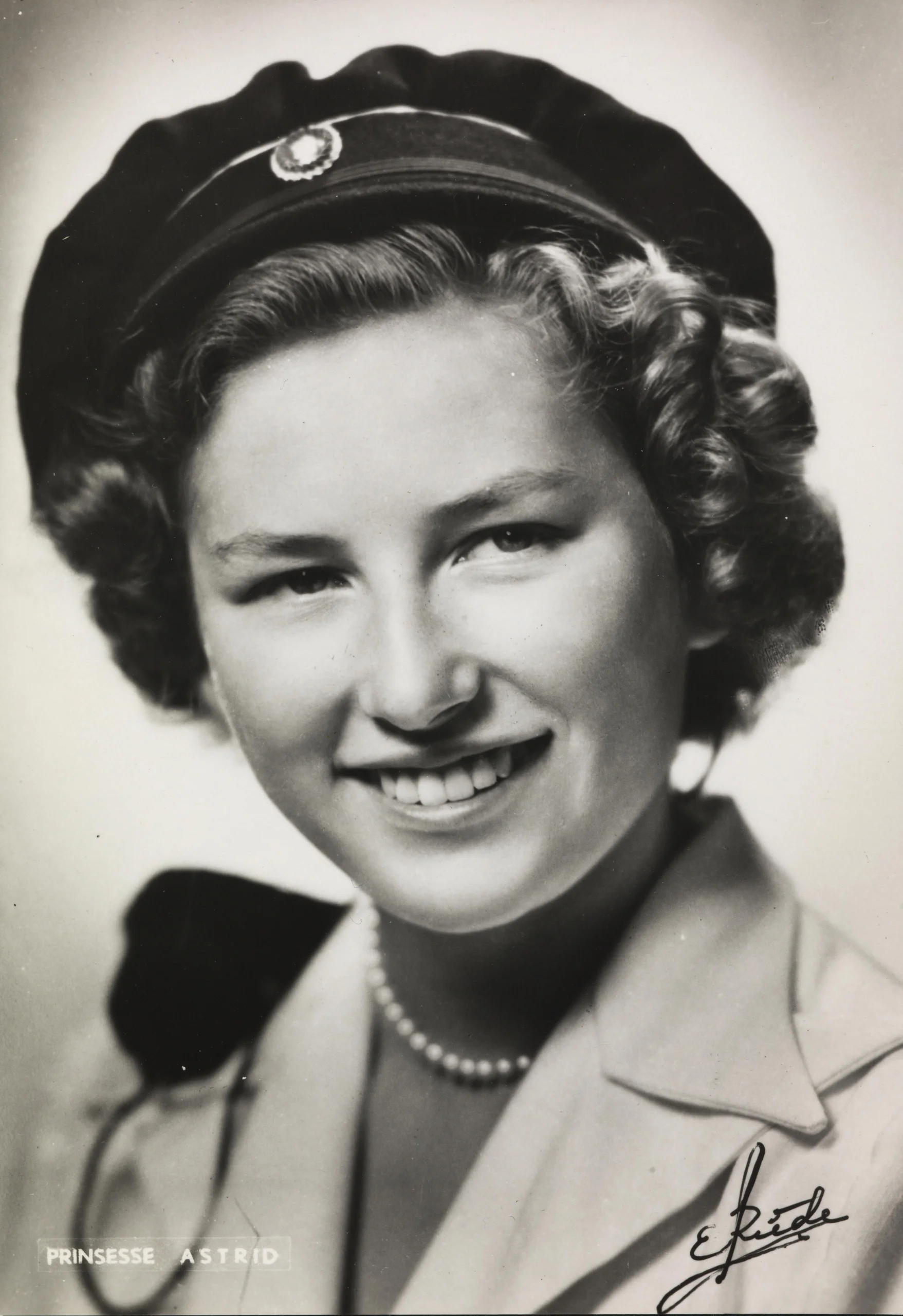
Astrid of Sweden
 Sweden
Queen of the Belgians•Princess of Sweden
Also known as: Astrid Sofia Lovisa Thyra, Queen Astrid, Princess Astrid of Sweden, Duchess of Brabant
Birthday
November 17, 1905
Birth Sign
Scorpio
Birthplace
Arvfurstens palats, Stockholm, Sweden
Age
Died at 29
About
Astrid Sofia Lovisa Thyra (1905–1935) was a Swedish princess who became Queen of the Belgians as the first wife of King Leopold III. Born into the House of Bernadotte, she entered public life at the Swedish court before moving to Brussels upon her marriage in 1926. She officially held the title of Queen of the Belgians starting in February 1934, following her husband's accession to the throne.
Her brief reign was defined by a deep commitment to social welfare, particularly for women and children. Known affectionately as the "Queen of Hearts," she gained immense popularity among the Belgian people for her approachability and dedication to charitable causes. Her life ended tragically at age 29 in a car accident while she was heavily pregnant with their fourth child.
Early Life & Background
Born on November 17, 1905, at Arvfurstens palats in Stockholm, Astrid was the youngest daughter of Prince Charles, Duke of Västergötland, and Princess Ingeborg of Denmark. She grew up within the strict yet warm environment of the Swedish royal court alongside her older sister, Crown Princess Märtha of Norway. The family lived under the shadow of the Bernadotte dynasty, where education focused heavily on etiquette, history, and religious devotion rather than academic subjects typical of commoners.
From a young age, Astrid displayed a natural inclination toward service. Unlike many royals of her era who viewed charity as a distant obligation, she engaged directly with the less fortunate. Her early years were spent observing her mother's work with women's organizations, which sparked her own interest in welfare causes. This period of upbringing instilled in her a sense of duty that would later define her role in Belgium. She received her formal education within the palace walls, learning multiple languages and mastering the arts required of a future consort.
Her path changed significantly in the mid-1920s when she met Crown Prince Leopold of Belgium. The two were introduced through royal circles, and their engagement was announced in 1926. This union marked the transition from a life of privilege in Stockholm to the responsibilities of a royal bride in Brussels. The marriage negotiations involved complex diplomatic considerations between Sweden and Belgium, but the personal connection between the couple appeared genuine. Just weeks before the wedding, she prepared for her new life, packing her belongings and leaving behind the familiar surroundings of her childhood home.
Career Growth
Following her marriage to Crown Prince Leopold on November 4, 1926, Astrid moved to Brussels and assumed the title of Duchess of Brabant. Although she did not hold a commercial career, her role as a royal consort carried significant weight. Between 1926 and 1934, she undertook numerous public engagements, visiting industrial regions and supporting women's organizations throughout the country. Her presence helped bridge the gap between the monarchy and the working class, earning her widespread admiration.
On February 23, 1934, her status elevated when Leopold ascended to the throne following the death of his father, King Albert I. As Queen of the Belgians, Astrid continued her charitable work with renewed vigor. She visited orphanages and hospitals, often personally funding projects that aided vulnerable populations. Her efforts earned her the moniker "Queen of Hearts" among the Belgian populace. She remained active in these duties until her death in August 1935, just months after becoming queen.
Posthumously, her legacy endured through the creation of the Queen Astrid Foundation. Established to honor her memory, this organization continues to operate in Belgium today, focusing on children's charities and families in need. No other awards or commercial milestones are recorded for her, as her contributions were strictly within the realm of public service and royal duty.
Career Timeline
Public Image & Style
Publicly, Astrid was perceived as the embodiment of grace and humility. Her fashion choices blended Swedish simplicity with Belgian elegance, often featuring modest cuts and soft fabrics that reflected her personality. Media reports from the 1930s consistently highlighted her willingness to interact with common citizens, a trait that set her apart from more aloof royals of the time. She cultivated an image of a modern monarch who cared deeply for the welfare of her subjects, particularly mothers and children.
Fame & Fandom
iFANN has evaluated this person, but they do not currently hold a placement in the published rankings (Global Top 1,000 or a Top-100 scope list). While there is no formal fandom name documented in iFANN data, Astrid remains a revered national icon in Belgium. The public rituals associated with her include annual commemorations at the site of her accident in Weggis and the continued operation of the Queen Astrid Foundation. Her image persists in cultural discussions as a symbol of tragedy and grace, frequently cited in historical analyses of the Belgian monarchy's impact on national morale during the interwar period.
Interesting Facts and Legends
Astrid holds the distinction of being the first queen consort of Belgium to die while holding the office. Her death occurred just weeks before the birth of her fourth child, Prince Alexander, who unfortunately passed away shortly after delivery. A statue now stands in Weggis, Switzerland, at the exact site of the accident, serving as a permanent tribute to her memory. She was also the grandmother of the current King of the Belgians, Philippe. Contemporary accounts describe her style as regal yet accessible, often wearing jewelry that later became part of the Belgian royal collection, including a notable emerald choker.
Notable Quotes
“I am happy to serve my new country.”
Family & Personal Life
Astrid was born to Prince Charles, Duke of Västergötland, and Princess Ingeborg of Denmark. She had one older sister, Crown Princess Märtha of Norway. Upon marrying Leopold III, she became the stepmother to no one, but they had three children together: Princess Josephine-Charlotte, Prince Baudouin, and Prince Albert. Her household in Brussels was known for its warmth and openness compared to other European courts. She maintained close ties with her Swedish relatives even after moving to Belgium, frequently corresponding with her parents and sister.
Notable Connections
Leopold III of Belgium, King Albert I of Belgium, King Gustaf V of Sweden, Crown Princess Märtha of Norway.
Relationships & Dating History
Astrid's romantic history is singular and definitive. She had only one public relationship, which led to her marriage: Leopold III of Belgium. They met through royal circles prior to their engagement. The couple married in Stockholm on November 4, 1926. They shared three children: Princess Josephine-Charlotte, Prince Baudouin, and Prince Albert. The marriage ended tragically with Astrid's death in a car accident while heavily pregnant with their fourth child. There were no divorces, separations, or other documented romantic partners. At the time of her death, she was legally married to Leopold III.
- MarriedLeopold III of Belgium1926 - 1935Met through royal circles; married in Stockholm; three children together; ended with her death.
Death & Aftermath
Died
August 29, 1935 (aged 29)
Death Place
Weggis, Lucerne, Switzerland
Cause of Death
Injuries from a motor vehicle accident
On Friday, August 29, 1935, near the village of Weggis on the shores of Lake Lucerne in Switzerland, Astrid died at the age of 29. While traveling with her husband, King Leopold III, the car he was driving veered off the road and struck a tree due to a combination of high speed and slippery road conditions. Astrid, who was heavily pregnant, suffered severe head injuries and fell into a coma, succumbing to her wounds shortly after being rushed to a medical facility. Swiss authorities conducted an immediate investigation and inquest, ruling the cause accidental with no criminal charges filed against the King.
The international reaction was one of profound mourning. Flags were flown at half-mast across Belgium, and crowds gathered in Brussels to lay flowers during vigils. Her funeral took place on September 4, 1935, in the Church of Our Lady of Laeken in Brussels, presided over by the Archbishop of Mechelen-Brussels. Notable attendees included King Albert I of Belgium, King Gustaf V of Sweden, and various members of European royalty. Thousands lined the streets to witness her interment in the Royal Crypt beneath the church. Her legacy was sustained through the establishment of the Queen Astrid Foundation to support children's charities.
Net Worth (Estate Value)
$0
iFANN Editorial Team estimate
Astrid of Sweden passed away in 1935, so there is no current net worth or estate value to report for 2026. Her financial assets and properties were managed by the Belgian monarchy and her surviving children following her death. The Queen Astrid Foundation, established in her honor, operates independently and receives donations to support children's causes, but these funds do not constitute a personal estate. Historical records indicate that her personal wealth was tied to the royal treasury and dowry arrangements typical of the era, with no private commercial ventures or investments documented.
Awards & Accolades
View 2 records, honours and achievementsKnown For
Queen of the Belgians
1934 · Consort
Keywords
Sources
Quick Facts
- Profession
- consort, aristocrat
- Born
- November 17, 1905
- Birthplace
- Arvfurstens palats, Stockholm
- Died
- August 29, 1935
- Death Place
- Weggis, Lucerne, Switzerland
- Gender
- Female
- Spouse
- Leopold III of Belgium
- Birth Sign
- Scorpio
Personal Details
- Full Name
- Astrid Sofia Lovisa Thyra
- Spouse
- Leopold III of Belgium
- Children
- Josephine-Charlotte, Baudouin, Albert
- Education
- Swedish royal court traditions
Frequently Asked Questions
Who was Astrid of Sweden?
How did Queen Astrid die?
Did Queen Astrid have children?
What is the Queen Astrid Foundation?
Was Queen Astrid pregnant when she died?
Similar People
Join the community
fans discussing