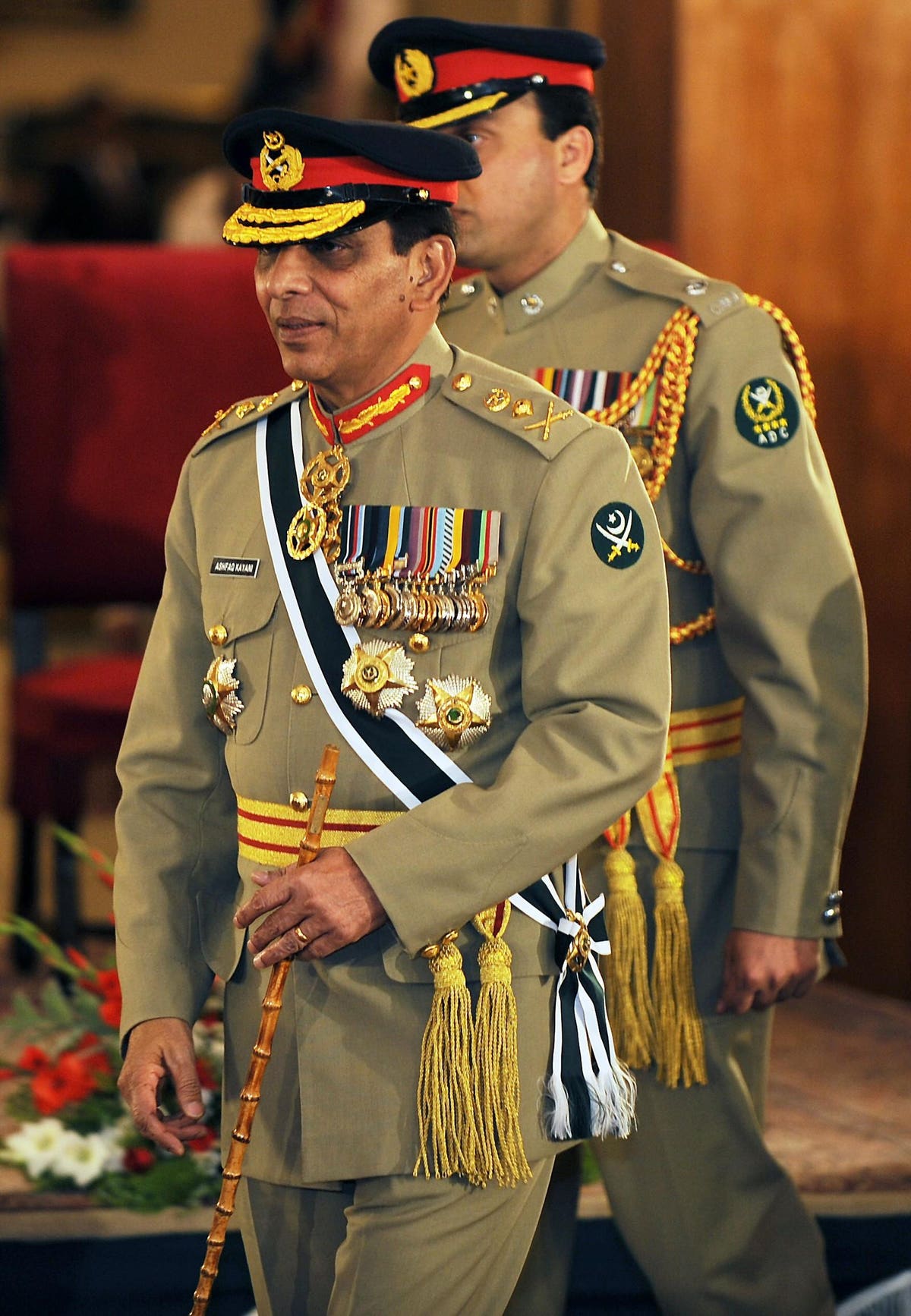
Ashfaq Parvez Kayani
 Pakistan
Also known as: Ashfaq Pervez Kayani, General Kayani
Birthday
April 20, 1952
Birth Sign
Taurus
Birthplace
Jhelum, Punjab, Pakistan
Age
74 years old
About
Ashfaq Parvez Kayani is a retired four-star general of the Pakistan Army who served as the country's eighth chief of army staff from November 29, 2007, to November 29, 2013. During his six-year tenure, he commanded one of the world's largest standing armies and held stewardship over Pakistan's nuclear arsenal, making him a central figure in regional and global security.
Kayani's leadership was defined by a focus on counterinsurgency operations along the Afghan border, including major campaigns in Swat and South Waziristan. His approach was markedly different from his predecessor, Pervez Musharraf, as he deliberately kept the military out of day-to-day politics. This professional, understated style earned him cautious optimism from international partners, including the United States.
Forbes ranked him among the world's most powerful people in both 2011 and 2012, reflecting his strategic importance during a volatile period in South Asia. Since retiring in 2013, Kayani has largely withdrawn from public life, maintaining the low profile that characterized his time in office.
Early Life & Background
Ashfaq Parvez Kayani was born on April 20, 1952, in Jhelum, a city in the Punjab province of Pakistan. His family had a military background, though specific details about his parents and upbringing remain private, consistent with the discretion typical of Pakistani military families.
He received his early education in Pakistan before entering the Pakistan Military Academy, where he was commissioned into the army in the early 1970s. His rise through the ranks was methodical, built on staff appointments and command positions rather than political connections. This institutional focus would later define his leadership style.
Before his elevation to the top post, Kayani served as Director-General of Military Operations (DGMO), placing him at the center of Pakistan's military planning during the early phases of the war on terror. He then became Director-General of the Inter-Services Intelligence (ISI) agency, Pakistan's premier intelligence service. These roles gave him a comprehensive understanding of both external threats and domestic militancy, preparing him for the challenges he would face as army chief.
His appointment as Vice Chief of Army Staff on October 8, 2007, was an unusual transitional arrangement, designed to smooth the handover from Musharraf while the latter remained president. It positioned Kayani as the clear successor, and he formally assumed command just weeks later.
Career Growth
Kayani's tenure as army chief began on November 29, 2007, when he took over from Pervez Musharraf. His appointment was closely watched internationally, with the New York Times describing him in January 2008 as a new hope for Pakistan rising in Musharraf's shadow.
Under his command, the Pakistan Army conducted major counterinsurgency operations against militant groups in the tribal areas bordering Afghanistan. Operations in Swat and South Waziristan were among the most significant, aiming to dismantle militant sanctuaries that threatened both Pakistan and its neighbors. His leadership during this period was characterized by Al Jazeera as having a mixed legacy, with achievements but also unfinished business.
In July 2010, Prime Minister Yousaf Raza Gilani extended Kayani's tenure by three years, a decision aimed at ensuring continuity during ongoing operations. The extension was announced on July 23 and formalized the following day. The same year, catastrophic monsoon floods inundated much of Pakistan, and the army took on major disaster relief operations under his direction.
Kayani's strategic importance was recognized globally. Forbes ranked him the 34th most powerful person in 2011 and 28th in 2012, noting that he controlled nuclear weapons and one of the world's largest standing armies. He engaged with senior international officials, including U.S. Secretary of Defense Robert Gates and Chinese State Councilor Meng Jianzhu, reflecting Pakistan's complex security relationships.
On November 29, 2013, exactly six years after assuming command, Kayani retired as scheduled. He had publicly declared in October that he would not seek another extension, and he was succeeded by General Raheel Sharif. His farewell included a visit to Prime Minister Nawaz Sharif on his final day in office.
Career Timeline
Public Image & Style
Kayani's public image was defined by a deliberate contrast with his predecessor, Pervez Musharraf. Where Musharraf was seen as politically engaged and media-savvy, Kayani cultivated an image of a professional, apolitical soldier focused on institutional integrity. This reserved demeanor earned him cautious optimism from international observers, who hoped he would represent a break from military intervention in politics.
His public statements were measured and focused on Pakistan's internal security challenges rather than political commentary. He was not known for charismatic speeches or a media presence; instead, his authority derived from his institutional role and the respect he commanded within the military.
Kayani does not have a fan following comparable to celebrities or politicians. He is respected within military and strategic circles in Pakistan and internationally, but there is no documented fandom culture or public social media voice. A Facebook page exists under his name, but it appears to be a tribute page rather than an official account.
Fame & Fandom (iFAMOUS Rankings)
General Ashfaq Parvez Kayani occupies a unique space in global recognition, defined not by celebrity culture or organized fan movements but by the weight of his historical role as a nuclear-armed military commander. Unlike entertainers who cultivate dedicated followings with specific names and rituals, Kayani's public presence was strictly that of a statesman managing geopolitical stability, leaving no room for the kind of fan-driven phenomena seen in pop culture. His legacy is one of professional restraint rather than adoration, with no documented fanbase name, charity drives, or viral moments to anchor a community. The absence of a formal fandom reflects the serious nature of his duties overseeing Pakistan's largest army and its nuclear arsenal during a turbulent decade. While social media platforms have hosted discussions about his tenure, these remain analytical or speculative rather than expressions of a devoted fan club. iFANN has evaluated his current standing in the global landscape, finding that he does not currently hold a placement in the published Global Top 1,000 rankings or any Top-100 scope list. This evaluation confirms that while his historical impact is significant, his active fame metrics do not register within the current competitive hierarchy of global personalities.
Interesting Facts and Legends
Ashfaq Parvez Kayani's appointment as Vice Chief of Army Staff on October 8, 2007, occurred just weeks before he assumed command, an arrangement designed to smooth the transition from Pervez Musharraf. His retirement on November 29, 2013, fell exactly six years to the day after he took office, and he explicitly declined to seek a further extension of his tenure in October 2013. During his service, he met with U.S. Secretary of Defense Robert Gates at the General Headquarters in Rawalpindi, highlighting the complex security relationship between the two nations. He also engaged with Chinese State Councilor Meng Jianzhu to discuss Sino-Pakistani security issues, underscoring deepening regional cooperation. A notable moment in his diplomatic career was a five-day official visit to Australia in 2010, which drew coverage from outlets like *Sada-e-Watan Sydney*. Internet folklore occasionally circulates unverified claims that he purchased an island near Australia for $300 million after retirement, though this story lacks corroboration from credible sources. These anecdotes stand alongside his verified achievements as a leader who prioritized counterinsurgency operations in Swat and South Waziristan while maintaining a deliberate distance from day-to-day politics.
Notable Quotes
“I have no political ambitions. My only concern is the security of Pakistan.”
“The army will not interfere in politics. We are a professional institution.”
“We are fighting a war for the survival of Pakistan.”
“The sacrifices of our soldiers will not be in vain.”
Family & Personal Life
Details about Kayani's family are scarce, as he has maintained strict privacy throughout his career. He is married and has children, but the names of his spouse and children have not been publicly documented. This discretion aligns with the traditions of Pakistan's military establishment, where senior officers' private lives are rarely discussed.
His family background includes a military heritage, though specific information about his parents and siblings is not available in public records. During his tenure as army chief, his family remained out of the public eye, and he did not use his position to promote family members or engage in dynastic politics.
Since retirement, Kayani has continued to live a private life, with no public reports about his household or personal affairs.
Notable Connections
Kayani's career intersected with several key figures in Pakistan and international security. He served as Vice Chief under Pervez Musharraf before succeeding him as army chief. Prime Minister Yousaf Raza Gilani extended his tenure in 2010, and Nawaz Sharif received his farewell visit upon retirement. On the international stage, he met with U.S. Secretary of Defense Robert Gates and Chinese State Councilor Meng Jianzhu, reflecting the strategic partnerships of the era. His successor as army chief was General Raheel Sharif.
Relationships & Dating History
Kayani's personal life has been notably private throughout his career. As a Pakistani military officer and later army chief, his romantic relationships have not been a subject of public documentation. There are no credible public records of dating history, and he has not been the subject of any reports regarding divorce or separation.
He is married, though the name of his spouse and details of his marriage are not publicly documented in credible sources. This is consistent with the cultural and institutional norms of Pakistan's military establishment, where senior officers' private lives are generally not discussed publicly.
As of 2026, Kayani remains married, with no reports of any change in his marital status.
- MarriedCurrentSpouse's name not publicly documented.
Salary, Net Worth In 2026
$1 Million
iFANN Editorial Team estimate
Reliable net worth figures for Ashfaq Parvez Kayani are not available from credible financial sources. As a retired four-star general of the Pakistan Army, he receives a government pension and benefits commensurate with his rank and service, but specific amounts have not been published. During his tenure as army chief, his compensation would have been a government salary, and he is not known to have engaged in business ventures or held corporate positions. Unverified social media claims about large personal purchases, such as an island near Australia, have not been corroborated by any credible news outlet. Per iFANN's editorial analysis, his net worth is estimated at $1 Million as of 2026, based on typical military pensions and benefits for a retired general of his era. This figure is an approximation, as no official financial disclosures exist.
Awards Won (2)
Kayani's recognitions have primarily been in the form of military decorations and international recognition rather than civilian awards. His most notable distinction is his inclusion in Forbes' list of the world's most powerful people, where he was ranked 34th in 2011 and 28th in 2012. This listing reflects his global influence as a military leader.
2012 · Ranking
Forbes list
2011 · Ranking
Forbes list
Known For
Chief of Army Staff of Pakistan
2007-2013 · Eighth Chief of Army Staff
Director-General of ISI
Pre-2007 · Director-General
Counterinsurgency Operations
2008-2013 · Military leader
Keywords
Sources
Quick Facts
- Profession
- Military officer
- Born
- April 20, 1952
- Birthplace
- Jhelum, Punjab, Pakistan
- Gender
- Male
- Birth Sign
- Taurus
- Nationality
- Pakistani
- Served as
- 8th Chief of Army Staff (2007-2013)
Personal Details
- Full Name
- Ashfaq Parvez Kayani
- Education
- Pakistan Military Academy
Frequently Asked Questions
Who is Ashfaq Parvez Kayani?
When did Ashfaq Parvez Kayani retire?
What was Ashfaq Parvez Kayani's role in the ISI?
Is Ashfaq Parvez Kayani still alive?
What is Ashfaq Parvez Kayani's net worth?
Social Media
Similar People
Join the community
fans discussing