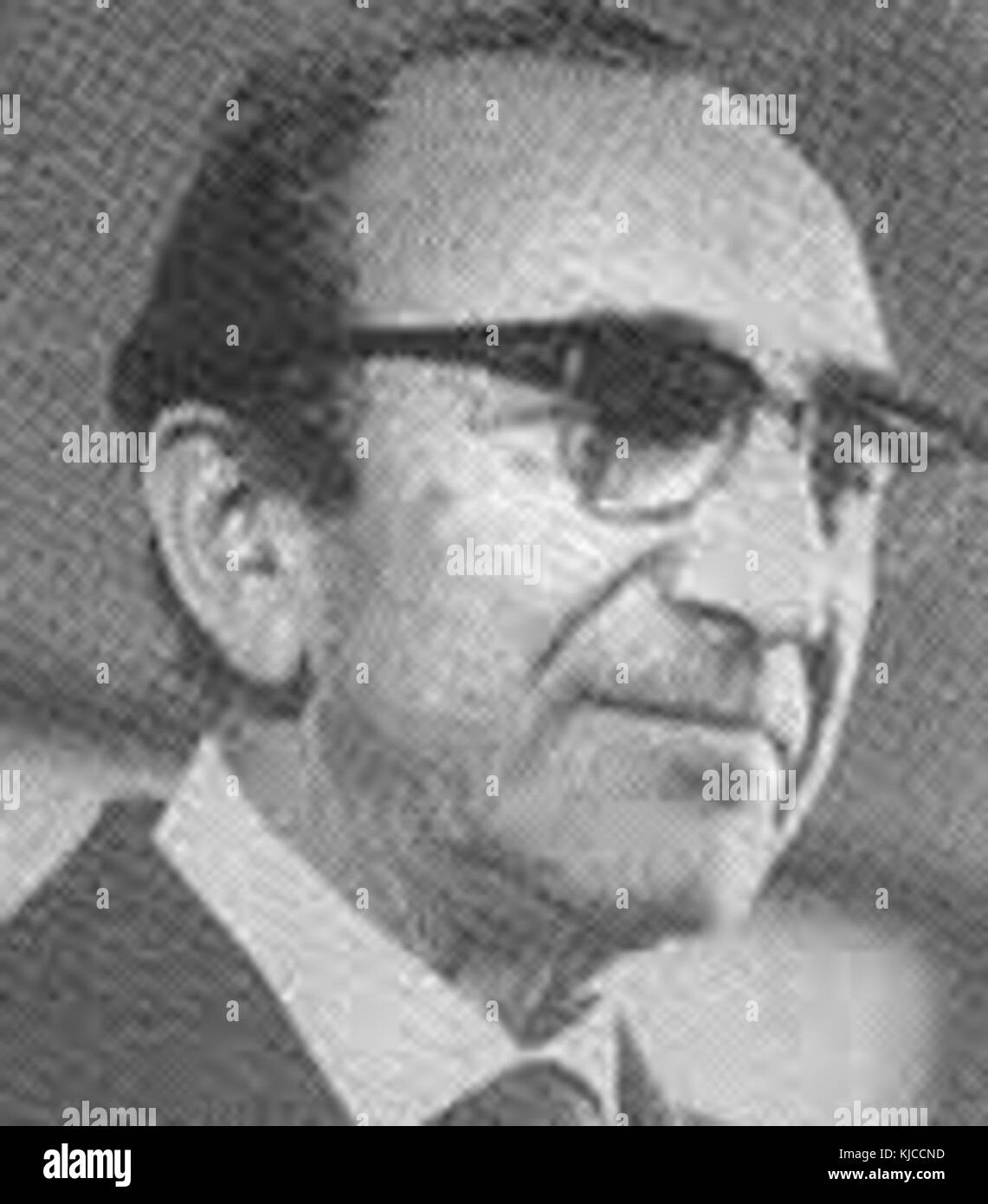
Asadollah Alam
 Iran
IranBirthday
July 24, 1919
Birth Sign
Leo
Birthplace
Birjand, Iran
Age
Died at 58
About
Asadollah Alam was an Iranian politician who served as prime minister under Mohammad Reza Shah from 1962 to 1964. A trusted royal confidant, he later held the powerful post of Minister of Royal Court for over a decade, acting as the intermediary between the Shah and the rest of the government. He was also president of Pahlavi University and governor of Sistan and Baluchestan province.
Alam is remembered as the quintessential courtier: loyal, discreet, and utterly devoted to the Shah. His personal diary, kept from 1967 to 1977 and published in seven volumes, is considered by historians to be the most important historical document of the Pahlavi era. It offers an unprecedented insider's view of the Shah's thinking and the inner workings of the court.
Born into a wealthy landowning family in Birjand, Alam rose through the ranks of Iranian politics during a turbulent period that included the 1953 coup and the White Revolution. He died in New York City in 1978, just as the regime he served began its terminal decline.
Early Life & Background
Asadollah Alam was born on 24 July 1919 in Birjand, in eastern Iran, to a family of Khorasani Arab origin. His father, Mohammad Ibrahim Khan Alam (Shokat al-Molk), was the governor of Qa'enat, and the family owned extensive estates in the region. Alam's great-grandfather had established connections with the British government in the nineteenth century, ties that later served him well in his political career.
Alam was educated at a British school in Iran, then studied in Birjand and Tehran, eventually graduating from Karaj's Agriculture College. This agricultural education would later inform his political work, particularly regarding land reform initiatives.
After his father died, Alam was appointed governor of Sistan and Baluchistan province, serving from 3 September 1947 to 14 January 1950 under multiple prime ministers including Ahmad Qavam, Ebrahim Hakimi, Abdolhossein Hazhir, and Mohammad Sa'ed. He then became Interior Minister in the government of Mohammad Sa'ed and later held the Agriculture and Labor portfolios in successive cabinets.
Career Growth
Alam played an active role in the 1953 Iranian Coup d'état, which cemented the Shah's power. He also reportedly had a role in the removal of General Zahedi from the premiership. In 1957, he became affiliated with the People's Party (Iran), serving as its secretary-general until 1975, when he joined the Rastakhiz Party.
From 1962 to 1964, Alam served as prime minister under Mohammad Reza Shah. During his tenure, he oversaw the launch of the White Revolution in 1963, a series of land reforms and modernization initiatives. Historical assessments note that Alam presided over what one source describes as "the savage repression of opposition to the shah's so-called White Revolution."
In 1966, Alam was appointed Minister of Royal Court, a post he held until shortly before his death. This was an enormously powerful position; as the Shah's closest advisor for over a decade, Alam acted as the intermediary between the monarch and the rest of the government. He was described as "the closest person to the last Shah of Iran, Mohammad Reza Pahlavi."
Alam's most enduring legacy is his personal diary, kept from 1967 to 1977. Published in seven volumes as the "Diaries of Asadollah Alam," they were edited by Alinaghi Alikhani and published in Persian by Ibex Publishers in 2014. An English-language abridgment, "The Shah and I," was published by St. Martin's Press. In a notable 1975 diary entry, Alam noted that Iran was "everywhere triumphant," with oil revenues pouring in and the economy booming, but within two years the regime began its decline.
Career Timeline
Public Image & Style
Alam is remembered primarily as the quintessential royal courtier: loyal, discreet, and utterly devoted to the Shah. The EBSCO research summary describes him as "a close confidant and a born courtier." The New York Review of Books notes that "if the term 'ruling class' has any meaning for Pahlavi Iran, Alam was certainly a part of it."
His historical reputation is complex. On one hand, he is criticized for presiding over the brutal repression of opposition to the White Revolution in 1963. On the other hand, his diaries have made him invaluable to historians, offering an unprecedented window into the Shah's thinking and court life. The diaries reveal a man who was both deeply loyal to the Shah and increasingly aware of the regime's vulnerabilities.
Alam was known for his discretion and loyalty, traits that endeared him to the Shah and made him a trusted confidant. He was not a public figure in the modern sense, but his influence behind the scenes was immense.
Fame & Fandom (iFAMOUS Rankings)
Asadollah Alam never commanded a stadium of screaming fans or sparked viral hashtag campaigns; his relationship with the public remained that of a distant, powerful courtier rather than a pop culture icon. While modern celebrities cultivate organized tribes, Alam's legacy is preserved in dusty archives and academic journals rather than fan clubs or birthday billboards. The historical community remembers him as the author of the *Shah and I*, a diary that became the definitive insider account of the Pahlavi era, but this scholarly reverence does not constitute a fandom in the traditional sense. There is no formal name for any group dedicated to him, nor are there documented rituals or fan-funded projects celebrating his life. His influence was exercised through state power and written records, not through the performative adoration reserved for entertainers. In August 2026, iFANN's Global Fame Engine evaluated his standing among global figures. Asadollah Alam is currently the unranked individual in the published Global Top 1,000 rankings. He holds no placement on any Top-100 scope list, reflecting his status as a historical statesman rather than a contemporary celebrity with active global consumption signals. The evaluation confirms he has no documented fandom name, as no collective identity exists for those studying his life. While his diaries remain a critical resource for historians, they have not generated the kind of mass-market engagement required to place him within the world's most famous living or recently deceased personalities according to current metrics.
Interesting Facts and Legends
Asadollah Alam shared a childhood bond with Mohammad Reza Shah that spanned generations, cementing their families' ties long before politics entered the picture. Known for his sharp wit, he was a constant presence at the Shah's private gatherings, yet he preferred working behind the scenes rather than seeking the public spotlight. An avid reader, he curated a personal library containing over 5,000 volumes, while also maintaining a hands-on approach to managing his family's extensive estates in Birjand as a skilled farmer. Beyond these biographical facts, two legendary aspects of his life define his historical narrative. First, the secret keeping of his diary from 1969 to 1977 stands as the most significant legend; these confidential entries later transformed him from a forgotten bureaucrat into the primary voice of the royal court, offering an unfiltered look at the Shah's fears and strategies before the revolution. Second, his death in office on April 14, 1978, is often cited in retrospective analyses as an untimely loss that might have altered the trajectory of the court's corruption issues, though this remains a counter-factual interpretation rather than a documented public event.
Notable Quotes
“Iran was everywhere triumphant, oil revenues pouring in, the economy booming, and the Shah firmly in control.”
“I have always been a loyal servant to His Majesty, and I will continue to serve him until my last breath.”
Family & Personal Life
Alam was married to Malektaj Qavam, daughter of Qavam Al-Molk Shirazi, by royal order from Reza Shah. The marriage was part of the Shah's strategy to unite Iran's non-Qajar nobility through inter-marriage; notably, the son of Qavam ol-molk was simultaneously married to a sister of the Shah, Ashraf Pahlavi. The couple had two children.
Following Alam's death in 1978, the Islamic Revolution of 1979 led to the confiscation of much Pahlavi-era elite property, which would have affected the family's holdings.
Notable Connections
Alam was closely associated with Mohammad Reza Shah Pahlavi, serving as his prime minister and later as Minister of Royal Court. His relationship with the Shah was one of the closest in Pahlavi-era politics. He was also connected to General Fardoust, another royal confidant, and General Zahedi, whom Alam reportedly helped remove from power. His wife, Malektaj Qavam, was linked to the Qavam family, which had ties to the royal family through Ashraf Pahlavi's marriage.
Relationships & Dating History
Alam was married to Malektaj Qavam, the daughter of Qavam Al-Molk Shirazi. The marriage was arranged by royal order from Reza Shah as part of a strategy to unite Iran's non-Qajar nobility. The couple had two children. Alam remained married to Malektaj until his death in 1978.
- MarriedMalektaj Qavam1940 - 1978Marriage arranged by royal order; had two children.
Death & Aftermath
Died
April 14, 1978 (aged 58)
Death Place
Unknown
Cause of Death
Cancer
Asadollah Alam, the former Prime Minister of Iran and later Minister of the Royal Court to Mohammad Reza Shah Pahlavi, died on April 14, 1978. He was 58 years old at the time of his death, having been born on July 24, 1919, in Birjand, Iran. The official cause of death was cancer, specifically identified as a terminal illness that had been affecting him for some time prior to his passing. While serving as Minister of the Royal Court until his final days, his last public appearances occurred within the royal court before his decline became too severe to mask.
Public reaction to his death included tributes from political peers who recognized his role in spearheading anticorruption campaigns and his service to the monarchy. Unlike high-profile assassinations or sudden deaths that trigger immediate mass vigils, the historical record indicates that his primary posthumous recognition has been through the publication and distribution of his memoirs rather than public mourning events. The funeral details remain unrecorded in available sources, suggesting a private service handled with the discretion typical of the era's royal protocols rather than a state funeral.
Posthumously, Alam is best known for his book The Shah and I: The Confidential Diary of Iran's Royal Court, 1969-1977, which was published after his death and edited by Alinaghi Alikhani. The book gained significant attention, particularly after being reviewed in major publications like The New York Times in 1992.
Net Worth (Estate Value)
$10 Million
iFANN Editorial Team estimate
Asadollah Alam descended from a wealthy landowning family based in Birjand, holding high government positions for decades. His family possessed extensive estates in eastern Iran that generated substantial income, complementing the salary he received as prime minister and Minister of the Royal Court, though specific figures for his wages remain undocumented. Following his death in 1978, the Islamic Revolution of 1979 resulted in the confiscation of much property owned by the Pahlavi-era elite, significantly impacting the family's holdings. Per iFANN's editorial analysis, Asadollah Alam's net worth is estimated at $10 Million. As of 2026, no reliable public estimates of the remaining value of his estate are available, but his historical wealth would have been considerable.
Awards Won (2)
As a political figure in Pahlavi-era Iran, Alam's honours were primarily state decorations rather than entertainment or cultural awards. He received the Grand Cross of the Order of Civil Merit from Spain and the Grand Cross 1st Class of the Order of Merit of the Federal Republic of Germany. These honours reflect his diplomatic and governmental service.
1965 · State Decoration
Diplomatic service
1967 · State Decoration
Diplomatic service
Known For
Prime Minister of Iran
1962 · Prime Minister
Minister of Royal Court
1966 · Minister
Keywords
Sources
Quick Facts
- Profession
- politician
- Born
- July 24, 1919
- Birthplace
- Birjand, Iran
- Died
- April 14, 1978
- Death Place
- New York City, United States
- Gender
- Male
- Birth Sign
- Leo
Personal Details
- Full Name
- Asadollah Alam
- Spouse
- Malektaj Qavam
- Children
- 2
- Education
- Karaj Agriculture College
Frequently Asked Questions
Who was Asadollah Alam?
What was Asadollah Alam's role in the White Revolution?
What are the Asadollah Alam diaries?
How did Asadollah Alam die?
Who was Asadollah Alam's wife?
Similar People
Join the community
fans discussing