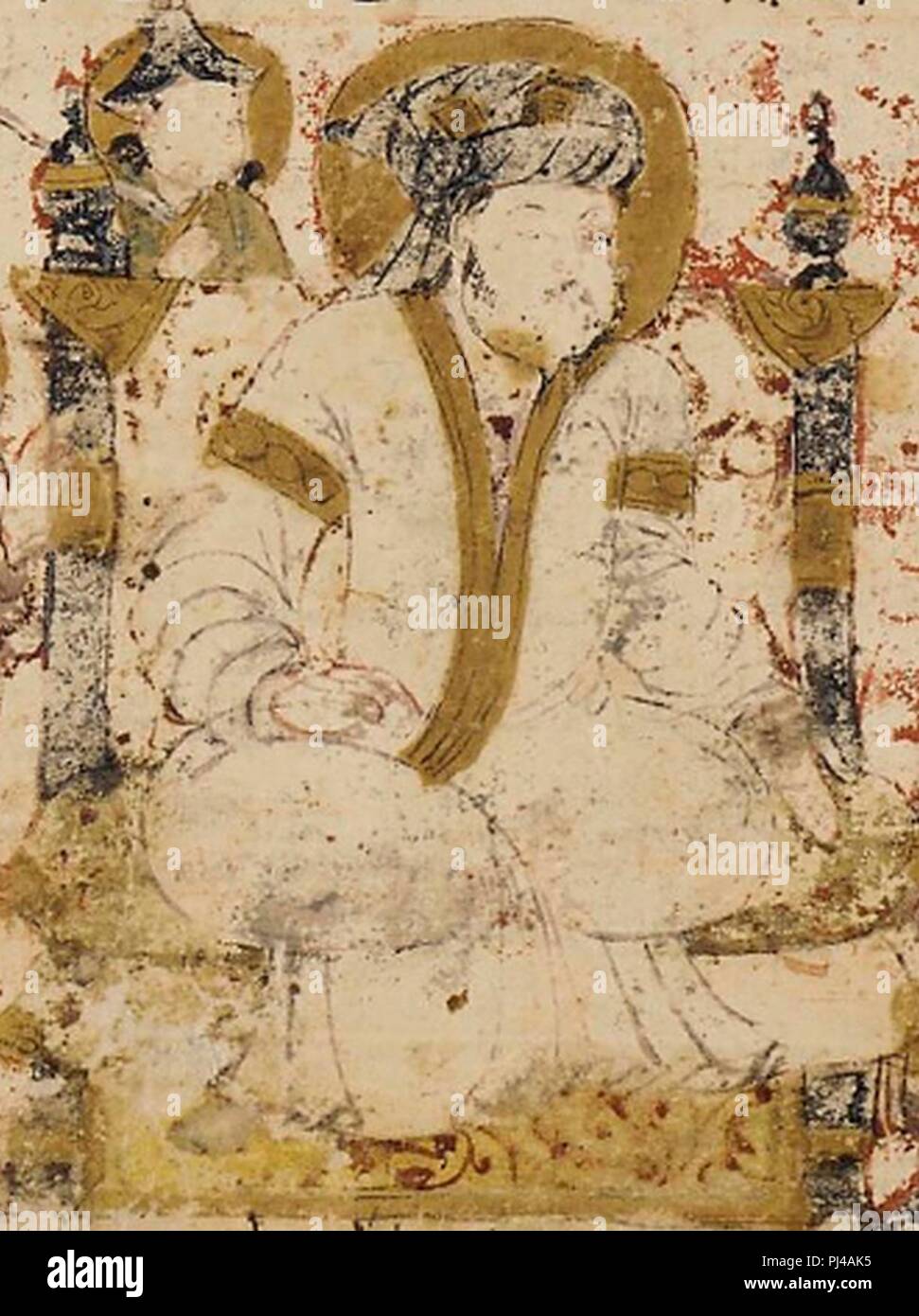
As-Saffah
 Jordan
Also known as: Al-Saffah, Abu al-Abbas, Abd Allah ibn Muhammad
Birthday
722-01-01
Birth Sign
Capricorn
Birthplace
Humeima, Jordan
Age
Died at 32
About
Abu al-Abbas Abd Allah ibn Muhammad, better known by his chilling title al-Saffah (the Blood-Shedder), was the first caliph of the Abbasid Caliphate, a dynasty that would rule the Islamic world for over five centuries. Born around 722 in Humeima, a village in what is now Jordan, he belonged to the Hashimite clan of the Quraysh tribe, descendants of the Prophet Muhammad's uncle Abbas. His rise to power came through a carefully orchestrated revolution against the Umayyad Caliphate, which had grown unpopular for its perceived impiety and favoritism toward Arab Muslims. Al-Saffah's forces, led by the able general Abu Muslim, swept through Khurasan and Iraq, culminating in a decisive victory at the Battle of the Zab in 750. That same year, he proclaimed himself caliph in the Great Mosque of Kufa, where he famously declared himself al-Saffah, a name that struck terror into his enemies and signaled the ruthless purge of the Umayyad family that followed. He systematically hunted down and executed Umayyad princes, earning his grim epithet through the massacre of nearly the entire dynasty. Only one prince, Abd al-Rahman I, escaped to found the Umayyad Emirate of Cordoba in Spain. Al-Saffah's reign lasted just four years, ending with his death from smallpox on June 8, 754, at the age of 32. During his short rule, he established the foundations of the Abbasid state, moving the capital from Damascus to a new site near Kufa and centralizing power under his family's control. His legacy is a paradox: a blood-soaked beginning for a caliphate that would later become synonymous with the Golden Age of Islam, a time of immense cultural, scientific, and philosophical flourishing. Al-Saffah's ruthless consolidation ensured the dynasty's survival, but it was his successors, particularly his brother al-Mansur, who would build the Abbasid empire into a global power.
Early Life & Background
Al-Saffah grew up in the remote village of Humeima, a quiet outpost in the desert south of the Dead Sea. The Abbasid family had been quietly building a revolutionary network for decades, and his father Muhammad ibn Ali was the head of the movement. From an early age, al-Saffah was immersed in the family's political and religious opposition to the Umayyads. He was educated in the Quran, hadith, and the art of leadership, learning the clandestine methods of spreading propaganda among the disaffected populations of Khurasan. His older brother Ibrahim al-Imam was groomed to lead the revolt, but in 748, Ibrahim was captured and killed by the Umayyads. That sudden death thrust al-Saffah into the leadership role. He inherited a network of spies, agents, and military commanders, including the brilliant general Abu Muslim, who had been secretly rallying support in the east. Al-Saffah's first major act was to go public with the Abbasid claim, rallying the Hashimite faction and declaring himself the rightful caliph. The timing was perfect: the Umayyads were weakened by internal strife and unpopular among non-Arab Muslims. Al-Saffah's call to arms resonated across Khurasan, and soon an army was marching west.
Career Growth
The Abbasid Revolution reached its climax at the Battle of the Zab in January 750. Abbasid forces under Abu Muslim crushed the Umayyad army, and the Umayyad caliph Marwan II fled to Egypt, where he was captured and killed. Later that year, al-Saffah entered Kufa and delivered his famous inaugural sermon in the Great Mosque. He declared himself al-Saffah, a title that meant both generous and blood-shedding, and promised to avenge the Prophet's family. His first order of business was a systematic purge of the Umayyad dynasty. He invited 80 Umayyad princes to a banquet in Abi Futrus, near Jaffa, and had them clubbed to death while a feast was laid over their bodies. Only one prince, Abd al-Rahman I, escaped, fleeing to Spain to found the Umayyad Emirate of Cordoba. Al-Saffah then moved the caliphal center from Syria to Iraq, establishing a new capital at al-Hashimiyya near Kufa. He relied heavily on Abu Muslim to govern the eastern provinces and his brother Abu Ja'far (the future al-Mansur) to suppress rebellions. In 751, his forces clashed with the Tang Chinese at the Battle of Talas, securing Abbasid influence in Central Asia and introducing papermaking to the Islamic world. Al-Saffah's reign was short, just four years, but it laid the groundwork for the Abbasid dynasty's five-century rule.
Career Timeline
Public Image & Style
In historical imagination, al-Saffah is depicted as a stern, determined Arab ruler, often shown in battle or holding court. His aesthetic is one of early medieval Islamic power: dark robes, a sword, and a commanding presence. Media and historians portray him as a brilliant but ruthless revolutionary, a necessary evil figure who ended a corrupt dynasty but used unspeakable violence to do so. He is often contrasted with his more administrative brother, al-Mansur. There is no modern fandom for al-Saffah in the pop-culture sense; interest is confined to history enthusiasts, students of Islamic history, and fans of historical strategy games. On history-focused social media, his story is typically told with a tone of grim drama, focusing on the Game of Thrones-style intrigue and violence of the Abbasid Revolution. His Wikipedia page has been viewed millions of times, and his Wikidata ID is Q252087.
Fame & Fandom (iFAMOUS Rankings)
Abu al-Abbas al-Saffah commands a legacy defined by the sheer weight of his historical impact rather than the noise of modern celebrity culture. While his name echoes through centuries of Islamic historiography and strategy gaming, he does not currently hold a placement in the published iFANN Global Top 1,000 rankings or any specific scope list. The iFANN Global Fame Engine has evaluated his profile, yet he remains unranked in their current global standings. This absence from the charts reflects his status as an 8th-century political figure whose fame is academic and cultural rather than driven by contemporary media consumption or viral engagement. There is no formal fandom associated with him; no organized group of admirers calls themselves by a specific title, nor are there fan campaigns, birthday tributes, or charity drives dedicated to his memory. His audience consists entirely of historians, students, and players of historical strategy games who engage with his story through texts and simulations. Unlike modern icons who generate subreddits or streaming pushes, al-Saffah's presence is mediated through the study of the Abbasid Revolution and the brutal consolidation of power that ended the Umayyad dynasty. The only interactive element for his legacy exists within the digital realm of games like Crusader Kings III, where players reenact his rise, but this does not constitute a traditional fanbase. The lack of a documented fandom name underscores the reality that he predates the concept of celebrity worship by nearly twelve centuries.
Interesting Facts and Legends
Al-Saffah's title originally meant 'the generous one,' a positive attribute in Arabic, before his bloody purges transformed it into a synonym for blood-shedder. The massacre of the Umayyad princes at the banquet remains one of the most infamous acts of political violence in Islamic history. A single survivor, Abd al-Rahman I, fled across North Africa and the Middle East for five years before establishing a rival dynasty in Spain. Al-Saffah died of smallpox at age 32, a disease that was a common killer in the pre-modern world. His reign was one of the shortest among early Abbasid caliphs, lasting only four years. He is a playable character in the historical strategy game Crusader Kings III, where players can reenact the Abbasid Revolution. Historical sources often recount his nickname as stemming from his reputation for ruthlessness and his taste for iron during the consolidation of power. In popular retellings within Islamic historiography, he is remembered for the brutal suppression of opposition, specifically the massacre of the Umayyads, which established the Abbasid dynasty. This event is widely cited in biographical sources as a verified descriptor of his reign, though specific anecdotes vary across different chronicles.
Notable Quotes
“I am al-Saffah, the generous one, and I am the avenger of the blood of the Prophet's family.”
“God has given us their necks, and we will not stop until we have cut them off.”
“By God, I will not rest until I have killed the Umayyads and cleansed the earth of them.”
Family & Personal Life
Al-Saffah was born to Muhammad ibn Ali, the head of the Abbasid family, who died in 743. His mother is not well-documented. He had an older brother, Ibrahim al-Imam, who was captured and killed by the Umayyads in 748, paving the way for al-Saffah's leadership. His younger brother, Abu Ja'far al-Mansur, became his trusted lieutenant and later succeeded him as caliph. Al-Saffah married Umm Salamah al-Makhzumiyah, a woman from the powerful Makhzum clan of the Quraysh, a politically crucial alliance that helped legitimize the new dynasty. She bore him several children, including his son Muhammad, who was briefly considered for succession, and his daughter Raytah. None of his children became caliph; the throne passed to his brother al-Mansur. Al-Saffah also had a concubine, Umm al-Qasim, who was the mother of his daughter Raytah. Family stories from the Abbasid court highlight Umm Salamah's role as an intermediary and patron, wielding influence behind the scenes.
Notable Connections
Al-Saffah relied heavily on his general Abu Muslim al-Khurasani, who led the Abbasid army to victory. His younger brother al-Mansur handled much of the administration and later succeeded him. The Umayyad prince Abd al-Rahman I, who escaped the massacre, became his greatest failure by founding a rival dynasty in Spain. His wife Umm Salamah al-Makhzumiyah was a key political figure in the early Abbasid court.
Relationships & Dating History
Al-Saffah's primary and most documented relationship was with Umm Salamah bint Ya'qub al-Makhzumiyah, whom he married before his rise to power. She was the mother of his children, including his son Muhammad, and played a notable role in the early Abbasid court as an intermediary and patron. The marriage lasted until his death in 754. Like many caliphs, al-Saffah also had concubines; one known as Umm al-Qasim was the mother of his daughter Raytah. Details of this relationship are minimal. As of 2026, al-Saffah is deceased and not in any relationship.
- MarriedUmm Salamah al-Makhzumiyah740 - 754Primary wife, mother of his children, played a key role in the early Abbasid court.
- DatedUmm al-Qasim745 - 754Concubine, mother of his daughter Raytah.
Death & Aftermath
Died
754-06-08 (aged 32)
Death Place
Anbar, Iraq
Cause of Death
Reported fever following military campaign
As-Saffah fell ill with a fever shortly after returning from a military campaign against the Kharijites in Kufa, his final days spent traveling back toward Baghdad or stationed in Anbar. The first caliph of the Abbasid Caliphate passed away on June 8, 754 CE, at the age of approximately thirty-two or thirty-three, marking the end of a reign that had just begun to solidify the dynasty's grip on the Islamic world. The transition of power was immediate and uncontested, with his brother Abu Ja'far al-Mansur assuming the caliphate without delay, a move that signaled the ruling family viewed the death as natural rather than suspicious. Public reaction was limited to the formal acknowledgment of his status as the founder of the dynasty and the swearing of allegiance by tribal leaders and officials.
His funeral and burial took place in Anbar, likely conducted as a private affair according to Islamic rites and attended by family members, high-ranking officials, and religious scholars. Posthumously, he is honored primarily through his legacy as the founder of one of history's most significant dynasties, with his name appearing in educational programs like the Maktab As-Saffah in New Jersey and featured in historical manuscripts such as the Tarikhnama by Muhammad Bal'ami., the epithet al-Saffah remains a defining historical marker used to describe his ruthless tactics in establishing the Abbasid rule.
Net Worth (Estate Value)
As a historical figure who died in 754 CE, al-Saffah has no modern net worth. The concept of a liquidated net worth is inapplicable. As the Caliph, he controlled the entire treasury of the Abbasid Caliphate, which was immense, funded by taxation, tribute, and the spoils of war. This treasury was not his personal property but the state's wealth. Upon his death, the wealth passed to his successor, his brother al-Mansur. The Abbasid Caliphate continued to generate immense wealth for centuries after his death through taxation, trade, and state-owned enterprises. The current estimated estate value is incalculable as the Abbasid Caliphate no longer exists as a single political entity.
Awards & Accolades
View 4 records, honours and achievementsKnown For
Founding the Abbasid Caliphate
750 · First Caliph
Abbasid Revolution
750 · Leader
Massacre of the Umayyads
750 · Ordered the purge
Keywords
Quick Facts
- Profession
- caliph
- Born
- 722
- Birthplace
- Humeima, Jordan
- Died
- 754
- Death Place
- Al Anbar Governorate
- Gender
- Male
- Spouse
- Umm Salamah al-Makhzumiyah
- Birth Sign
- Capricorn
Personal Details
- Full Name
- Abu al-Abbas Abd Allah ibn Muhammad
- Spouse
- Umm Salamah al-Makhzumiyah
- Children
- Muhammad, al-Abbas, Raytah
Frequently Asked Questions
Why was Al-Saffah called the Blood-Shedder?
How did Al-Saffah die?
Who succeeded Al-Saffah as caliph?
What is the difference between the Umayyad and Abbasid Caliphates?
What was the Battle of Talas?
Similar People
Join the community
fans discussing