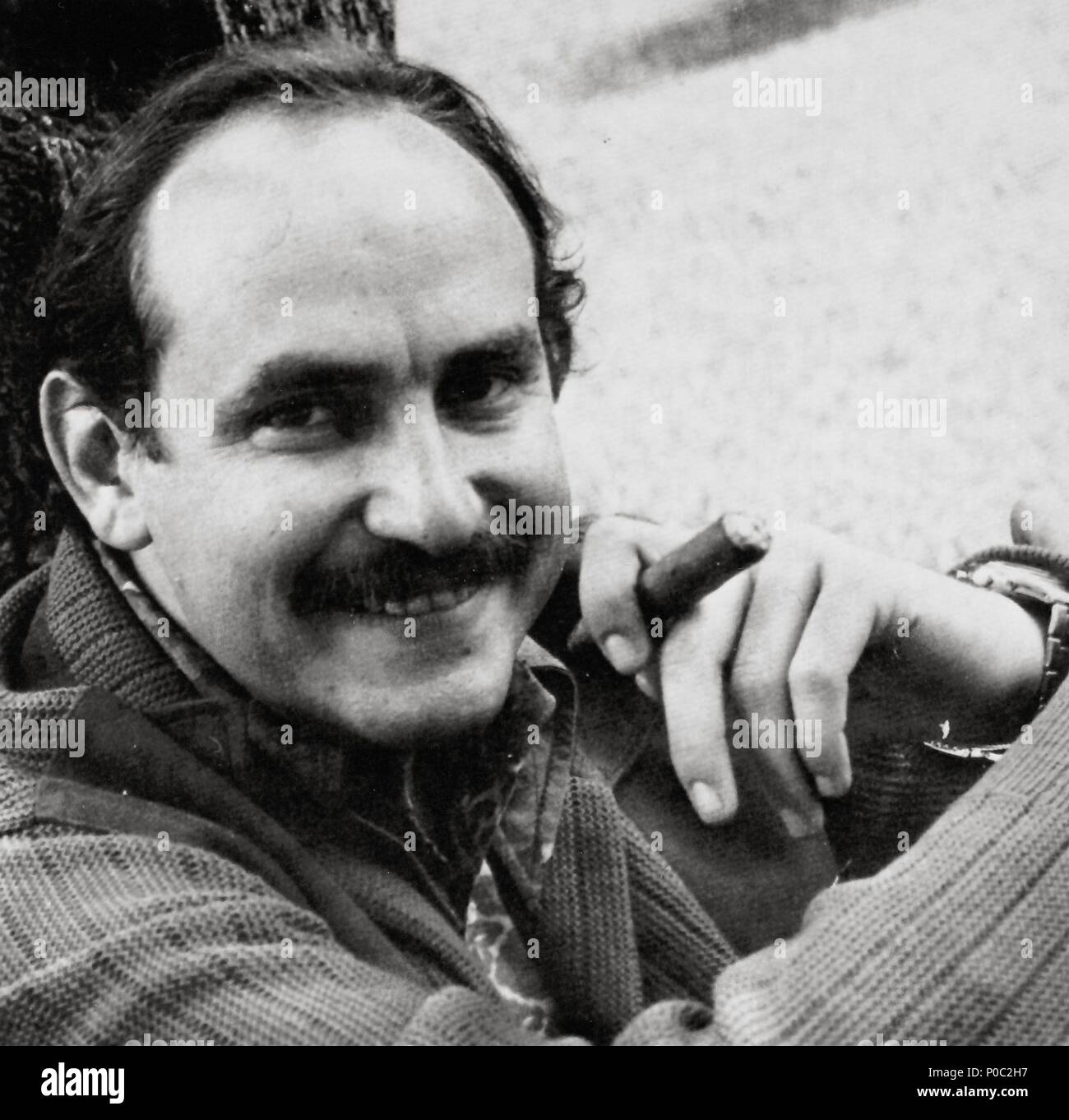
Arturo Ripstein
 Mexico
Also known as: Arturo Ripstein y Rosen
Birthday
December 13, 1943
Birth Sign
Sagittarius
Birthplace
Mexico City, Mexico
Age
82 years old
About
Arturo Ripstein is a Mexican film director and screenwriter, widely hailed as the "Godfather of independent Mexican cinema." Over six decades, he has crafted more than twenty features marked by somber, deliberate pacing and a macabre sensibility, exploring existential loneliness and societal decay. His work has earned nine Ariel Awards, including five for Best Picture and two for Best Director, and three of his films have been nominated for the Palme d'Or at Cannes. In 1997, he received Mexico's National Prize for Arts and Sciences, an honor previously bestowed on his mentor, Luis Buñuel.
Today, Ripstein remains a towering figure in world cinema, celebrated through retrospectives and restorations. His 1996 thriller Deep Crimson received a 4K UHD release from the Criterion Collection in late 2025, and a major retrospective, "Without Limits: The Films of Arturo Ripstein," ran at BAM in September 2025. His films, often set in claustrophobic interiors, continue to challenge and captivate audiences with their unflinching look at the human condition.
Early Life & Background
Arturo Ripstein y Rosen was born on December 13, 1943, in Mexico City, into a family with film industry ties; his father, Alfredo Ripstein, worked in the business. Growing up around sets, he developed an early fascination with cinema. As a young man, he sought out the legendary director Luis Buñuel, who took him under his wing. Ripstein began as an unbilled assistant director on Buñuel's 1962 masterpiece The Exterminating Angel, learning the craft directly from the master. He later recalled standing in the corner of the set, quietly observing and occasionally asking Buñuel questions, which were sometimes met with irritation, sometimes with generosity. This apprenticeship proved formative, shaping his dark, surrealist-influenced aesthetic.
Ripstein's early years were marked by a deep immersion in film culture, but details of his formal education remain scarce. His debut as a director came in 1966 with Tiempo de morir, a western written by Gabriel García Márquez, signaling his early connection to literary circles. The film, though modest, hinted at the thematic preoccupations that would define his career: mortality, guilt, and the weight of the past.
Career Growth
Ripstein's breakthrough came with The Castle of Purity (1972), a harrowing tale of a father who confines his family to their home to protect them from the outside world. The film won the Ariel for Best Picture and established his reputation for unsettling domestic dramas. In 1978, The Place Without Limits (El lugar sin límites), adapted from a novel by José Donoso, examined provincial hypocrisy and repressed desire, earning another Ariel for Best Picture and international acclaim.
Throughout the 1980s and 1990s, Ripstein continued to produce challenging work, but it was Deep Crimson (1996) that brought him global recognition. The true-crime story of a serial killer and his accomplice, starring Regina Orozco and Daniel Giménez Cacho, earned a Palme d'Or nomination at Cannes and became a cult favorite. In 1997, he received the National Prize for Arts and Sciences. His later films, such as No One Writes to the Colonel (1999) and The Virgin of Lust (2002), continued to explore themes of obsession and decay, often in collaboration with his wife, screenwriter Paz Alicia Garciadiego. As of 2026, Ripstein remains active, with retrospectives and restorations ensuring his work reaches new audiences.
Career Timeline
Public Image & Style
Arturo Ripstein is revered in cinephile circles as a master of dark, atmospheric melodrama. His public persona is that of a serious, uncompromising artist, often described as the "Godfather of independent Mexican cinema." Critics praise his ability to create suffocating, claustrophobic worlds that expose the rot beneath Mexican society. His films are known for their slow burn, grotesque characters, and bleak humor, which have earned him a dedicated cult following. Retrospectives at institutions like BAM and the American Cinematheque attest to his enduring appeal among discerning audiences. While not a mainstream celebrity, Ripstein's influence on a generation of Mexican filmmakers, including Guillermo del Toro and Alfonso Cuarón, has cemented his status as a foundational figure in Latin American cinema.
Fame & Fandom (iFAMOUS Rankings)
Arturo Ripstein commands a following defined not by mass-market fervor but by the deep, scholarly reverence of cinephiles and industry professionals who recognize him as the Godfather of independent Mexican cinema. His audience consists primarily of film critics, academics, and directors who view his work as essential study rather than casual entertainment. Unlike figures with organized fan clubs or viral social media movements, Ripstein's supporters engage through retrospectives at institutions like the Brooklyn Academy of Music and the American Cinematheque, where his six-decade career is dissected with academic rigor. There is no formal name for this collective; the community remains an informal network of admirers united by an appreciation for his dark, atmospheric melodramas and his meticulous, slow-paced directing style. The narrative surrounding his fame is that of an insider's favorite, a filmmaker whose bleak street narratives remain relevant to new generations while avoiding the spotlight of global celebrity status. iFANN has evaluated Ripstein's standing within the global cultural landscape. Arturo Ripstein is currently unranked in the Global Top 1,000 rankings, and he does not hold a placement in the published scope lists, reflecting a profile built on critical acclaim rather than widespread consumer recognition. This absence from the top tiers underscores his position as a master of niche artistry rather than a mainstream icon. While his legacy is secure among peers and scholars, his reach has not translated into the broad numerical dominance seen with other global entertainers. The lack of a specific fandom name further distinguishes his reception, as his work resonates through the enduring quality of films like Deep Crimson rather than through organized fan campaigns or public rituals.
Interesting Facts and Legends
Arturo Ripstein holds the moniker "Godfather of independent Mexican cinema," a title reflecting his profound influence on younger filmmakers such as Guillermo del Toro and Alfonso Cuarón. He is renowned for his meticulous approach, frequently employing long takes and static cameras to construct tension within his somber narratives. The film Deep Crimson draws its inspiration from the real-life case of the "Gualicho" killer, a serial murderer active during the 1940s. A notable piece of trivia involves his cameo appearance in The Exterminating Angel, where he appears as an extra during the infamous dinner party sequence. Ripstein stands as one of the few directors to have collaborated with both Luis Buñuel and Gabriel García Márquez, having directed the latter's script for his debut feature. A central element of his cinematic lore is his apprenticeship under Luis Buñuel, a story often recounted to newcomers to explain his artistic lineage. Another persistent legend concerns his dedication to subversive examinations of masculinity and patriarchy over a six-decade career. The 2025 retrospective titled "Without Limits: The Films of Arturo Ripstein" at BAM served as a modern touchstone, reigniting interest in his filmography and cementing his reputation as a figure whose work transcends time.
Notable Quotes
“I'd stand in the corner, very discreetly, and occasionally ask Buñuel questions. He'd answer, sometimes irate and sometimes generous.”
“Cinema is a way of looking at the world, and I look at it from the darkness.”
“I am interested in characters who are trapped, by their own desires or by society.”
Family & Personal Life
Arturo Ripstein's father, Alfredo Ripstein, was a film producer and distributor, which gave Arturo early access to the industry. His mother's name is not widely publicized. Ripstein has been married to Paz Alicia Garciadiego, a screenwriter who has collaborated on many of his films, including Deep Crimson and No One Writes to the Colonel. Their professional partnership has been central to his later career. The couple has kept their personal life private, and details about children are not publicly known. Ripstein's family background in cinema undoubtedly shaped his path, but he has carved his own unique legacy distinct from his father's commercial endeavors.
Notable Connections
Arturo Ripstein's career is deeply intertwined with several key figures. Luis Buñuel served as his mentor, giving him his first job as an assistant director on The Exterminating Angel. His wife, Paz Alicia Garciadiego, has been his primary screenwriter since the 1980s, co-writing many of his most acclaimed films. Gabriel García Márquez wrote the screenplay for Ripstein's debut, Tiempo de morir, marking a rare collaboration between the director and the Nobel laureate. Ripstein's influence extends to contemporary Mexican filmmakers like Guillermo del Toro, Alfonso Cuarón, and Alejandro González Iñárritu, who have all cited him as an inspiration.
Relationships & Dating History
Arturo Ripstein has been married to Paz Alicia Garciadiego for several decades, and their partnership is both personal and professional. Garciadiego, a screenwriter, has co-written many of his films since the late 1980s, including Deep Crimson and No One Writes to the Colonel. Their marriage has remained stable, and they are known to collaborate closely on projects. Prior to his marriage, details of Ripstein's earlier relationships are not publicly documented. As of 2026, he is still married to Garciadiego, and they continue to work together.
- MarriedPaz Alicia Garciadiego1980 - presentCurrentLong-term marriage and professional collaboration; they co-wrote many of his films.
Salary, Net Worth In 2026
$10 Million
iFANN Editorial Team estimate
iFANN currently estimates Arturo Ripstein's net worth at $10 Million as of 2026. This valuation reflects his extensive career spanning over six decades as a director and screenwriter. His financial stability derives from earnings generated by film budgets, royalties, and various festival prizes. Although precise details regarding individual film contracts remain private, his prolific output and international distribution channels have ensured a consistent income stream. Additional revenue sources include licensing fees from home video releases, notably the Criterion Collection's 4K edition of Deep Crimson, as well as government grants and awards such as the National Prize for Arts and Sciences, which includes a monetary component. The contributions of his wife as a screenwriter also factor into the household income. Over the years, his net worth has increased modestly, mirroring the steady demand for his unique brand of cinema within a specialized market.
Awards Won (4)
Arturo Ripstein has won nine Ariel Awards, Mexico's highest film honor, including five for Best Picture and two for Best Director. His film The Castle of Purity (1972) and The Place Without Limits (1978) each won the Ariel for Best Picture. In 1997, he received the National Prize for Arts and Sciences, a prestigious government award. His international acclaim includes three Palme d'Or nominations at Cannes, though he has not won that prize.
1997 · Best Director
Deep Crimson
1979 · Best Picture
The Place Without Limits
1973 · Best Picture
The Castle of Purity
1997 · Arts
Known For
Deep Crimson
1996 · Director
The Castle of Purity
1972 · Director
The Place Without Limits
1978 · Director
No One Writes to the Colonel
1999 · Director
The Virgin of Lust
2002 · Director
Keywords
Sources
Quick Facts
- Profession
- film director, screenwriter
- Born
- +1943-12-13
- Birthplace
- Mexico City
- Gender
- Male
- Spouse
- Paz Alicia Garciadiego
- Birth Sign
- Sagittarius
Personal Details
- Full Name
- Arturo Ripstein y Rosen
- Spouse
- Paz Alicia Garciadiego
Filmography
25
Total
24
Film
1
TV
Frequently Asked Questions
Who is Arturo Ripstein?
What is Arturo Ripstein's net worth in 2026?
Is Arturo Ripstein still making films?
What is Arturo Ripstein best known for?
How did Arturo Ripstein get started in film?


Join the community
fans discussing