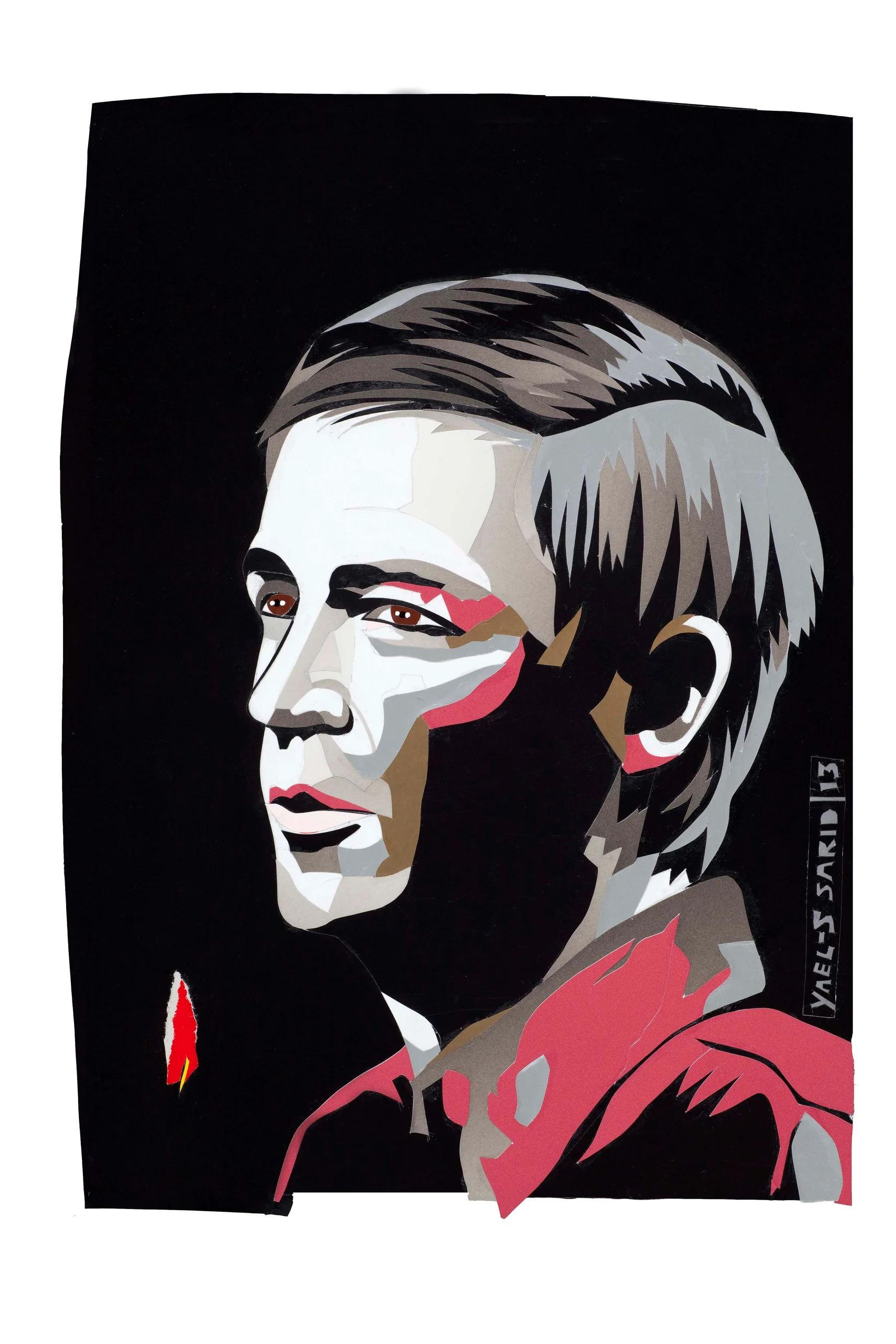
Arik Einstein
 Israel
Singer•songwriter•actor•comedian•screenwriter
Also known as: Arieh Lieb Einstein, Arik
Birthday
January 3, 1939
Birth Sign
Capricorn
Birthplace
Tel Aviv, Israel
Age
Died at 74
About
Arik Einstein, born Arieh Lieb Einstein on January 3, 1939, in Tel Aviv, was an Israeli singer, songwriter, actor, comedian, and screenwriter. Known as "the voice of Israel," he pioneered Israeli rock music over a career spanning more than five decades. He recorded over 500 songs and released 34 albums, an output unmatched by any other Israeli musician. His collaborations with songwriters like Shalom Hanoch, Miki Gavrielov, Yoni Rechter, and Shmulik Kraus shaped the sound of Israeli pop and rock. He also performed with bands such as The Churchills, Batzal Yarok, and The High Windows.
Einstein's influence extended beyond music into film and television, with appearances in classics like "Salah Shabati" and "Metzitzim." He passed away on November 26, 2013, at age 74, leaving a legacy that continues to resonate. His songs remain staples on Israeli radio, and his work is celebrated as a defining force in the nation's cultural identity.
Early Life & Background
Arik Einstein grew up in Tel Aviv in a family with artistic roots. His father, Yaakov Einstein, was an actor, which exposed him early to the performing arts. As a youth, Einstein was more drawn to athletics than music. He became the junior champion of Israel in both the high jump and shot put, and he also played basketball at a competitive level.
His musical journey began in the 1950s when he joined the Lehakat Hanachal military band. His smooth baritone voice quickly distinguished him, and he gained recognition performing with the ensemble. By the early 1960s, he had transitioned into civilian entertainment, appearing in films and television while honing his craft as a screenwriter.
Einstein's early career included roles in the films "Salah Shabati" (1964) and "Mivtza Yonatan" (1966), which showcased his comedic timing and acting range. These experiences laid the groundwork for his later musical innovations, as he absorbed influences from both Israeli folk traditions and Western rock and roll.
Career Growth
Arik Einstein's breakthrough came with the 1970 album "Shablul," a collaboration with Shalom Hanoch that is widely considered a landmark of Israeli rock. The album's blend of Hebrew lyrics with electric guitars was revolutionary, and it cemented Einstein's reputation as a musical innovator.
Throughout the 1970s, he continued to release influential albums, including "Goodbye Paris" and "The High Windows" with the band of the same name. His partnership with Yoni Rechter in the 1980s produced acclaimed works like "Miktzat HaYam" and "Anashim Ahuvim," which explored more introspective and melodic territory.
Einstein remained active well into the 2000s, releasing albums and performing sporadically. He stopped live performances in 1982 but continued recording, with his final album "Kol HaTov SheBalev" arriving in 2013. His songs have been covered by countless artists and remain fixtures on Israeli radio.
Career Timeline
Public Image & Style
Arik Einstein was regarded as the quintessential Israeli cultural icon, a figure whose music accompanied the nation through decades of change. His public persona was that of a laid-back, contemplative artist, often seen in casual clothes and a constant presence in Israeli homes through his songs.
Fans affectionately called him "Arik," and his music was a soundtrack for generations. He was associated with the liberal Zionist peace camp, and his songs often carried messages of hope and unity. His sudden withdrawal from live performances in 1982 only added to his mystique, making his recordings even more cherished.
Media coverage portrayed him as a reclusive genius, and his death in 2013 prompted an outpouring of grief across Israel, with tributes from politicians and musicians alike.
Fame & Fandom (iFAMOUS Rankings)
The nation mourned Arik Einstein not as a distant celebrity but as a father figure, turning his funeral into the largest public gathering in Israel's history. An estimated 40,000 people lined the streets of Tel Aviv to pay their respects, creating a spontaneous, intergenerational ritual that blurred the lines between fan and citizen. Unlike modern pop stars with organized branded groups, Einstein's following was diffuse and deep, characterized by fans simply calling themselves supporters of "Arik." His accessibility fostered a unique bond; he walked markets without security barriers, accepted requests, and sat in cafes chatting with strangers. This humility cemented a mythos where the entire country acted as his fanbase. Following his death in 2013, this devotion manifested in massive nationwide mourning events, from lighting candles at his home to playing his music during national crises like the 2023 war. While no formal organization exists to manage chart pushes or subway ads, his legacy endures through organic reverence and the continued use of his songs as a soundtrack for the nation. Decades after his passing, the sheer scale of his cultural footprint remains unmatched. According to the iFANN Global Fame Rankings, he is currently the 39th most famous person in Israel, holding steady from the previous cycle.
Interesting Facts and Legends
Before finding fame, Einstein was a talented athlete who held Israeli junior titles in high jump and shot put while playing basketball for Maccabi Tel Aviv. His song "Ani Ve'Ata" became an unofficial anthem for the club. Known for a warm, conversational voice that avoided theatrical mannerisms, he remained notoriously private despite his massive success. He also released a book of his own photography and wrote a strange cult favorite song about San Francisco in 1984. Legends surrounding him include a 1973 performance at the Festival of the Song where he unified the audience, and a 1991 concert he gave for soldiers inside a bomb shelter during the Gulf War. Fans still retell stories of his refusal to perform at right-wing government galas in 1986 to maintain his principles. Another enduring anecdote describes him walking into a cafe, ordering coffee, and tipping generously while chatting with waiters, defying the rock star archetype.
Notable Quotes
“I don't think of myself as a singer. I just sing.”
“The songs are bigger than me. They belong to the people.”
“I never wanted to be a star. I just wanted to make music.”
“Music is the only thing that truly matters.”
Family & Personal Life
Arik Einstein was the son of Yaakov Einstein, an actor, which gave him early exposure to the performing arts. He was married twice: first to Alona Einstein, with whom he had a daughter, and later to Sima Eliyahu, who remained his wife until his death. He also had a son, Yonatan, from his second marriage.
Einstein was known to be a devoted family man who valued his privacy. He kept his personal life out of the spotlight, preferring to focus on his music and family. His brother, Shimon, was a noted painter, and the family maintained close ties.
Notable Connections
Arik Einstein collaborated with some of the most influential figures in Israeli music, including Shalom Hanoch, Yoni Rechter, Miki Gavrielov, and Shmulik Kraus. He also worked with actor and director Uri Zohar on the film 'Metzitzim.' These partnerships were central to his creative output and helped define the sound of Israeli rock.
Relationships & Dating History
Arik Einstein was married twice. His first wife was Alona Einstein, with whom he had a daughter. The marriage ended in divorce. He later married Sima Eliyahu, and the couple had a son, Yonatan. Einstein and Sima remained together until his death in 2013.
Einstein was known to be a private person, and details about his relationships were kept out of the public eye. He was married to Sima at the time of his death.
- MarriedAlona Einstein1963 - 1975First wife; had a daughter together; marriage ended in divorce.
- MarriedSima Eliyahu1976 - 2013CurrentSecond wife; had a son, Yonatan; remained married until his death.
Death & Aftermath
Died
November 26, 2013 (aged 74)
Death Place
Tel Aviv, Israel
Cause of Death
Heart attack
Family statements confirmed that Arik Einstein passed away from a heart attack at Sourasky Medical Center in Tel Aviv on Tuesday, November 26, 2013. The 74-year-old singer and songwriter had been hospitalized following a rapid deterioration of his condition, an event attributed to acute cardiac failure by hospital officials who noted his history of cardiovascular issues and prior heart surgery in 2009. The nation reacted with immediate, overwhelming grief that transformed the streets of Israel into spontaneous vigils. Radio stations suspended regular programming to broadcast his catalog continuously, while political leaders like Prime Minister Benjamin Netanyahu honored him as a cultural icon despite debates over his liberal leanings.
Tributes poured in from peers such as Yehudit Ravitz, and memorial murals appeared across cities, cementing his status as a beloved national figure. His funeral took place two days later at the Trumpeldor Cemetery, drawing tens of thousands of mourners including top politicians and military leaders. The service featured a poignant rendition of "Me and You" (Ani Ve'Ata), which became an anthem of mourning for the crowd. In the years since, the estate has managed his legacy through reissues and the 2014 documentary "Arik Einstein: The Story of a Life," ensuring his contributions to Israeli culture remain accessible to new generations.
Net Worth (Estate Value)
$10 Million
iFANN Editorial Team estimate
Per iFANN's editorial analysis, Arik Einstein's estate holds a net worth of $10 Million following his death in 2013. This valuation reflects decades of album sales, royalties, and appearances across his five-decade career. His extensive catalog of over 500 songs continues to generate income for his estate through streaming, radio play, and licensing deals. The estate benefits from the enduring popularity of his music, with tracks frequently used in Israeli media and events. Posthumous releases and reissues have further contributed to the estate's value. As of 2026, the estate's net worth remains estimated at $10 Million, with royalties from his music serving as a steady revenue stream.
Awards Won (2)
Arik Einstein received several prestigious accolades throughout his career, including the Israel Prize for Lifetime Achievement in 2004, honoring his immense contribution to Israeli music and culture. He also won the ACUM Prize for his songwriting and was named one of the 100 greatest Israelis of all time in a 2005 public poll.
2004 · Lifetime Achievement
Lifetime achievement in music
1996 · Songwriting
For his body of work
Known For
Shablul
1970 · Album with Shalom Hanoch
Metzitzim
1972 · Actor
Miktzat HaYam
1980 · Album with Yoni Rechter
Anashim Ahuvim
1995 · Album with Yoni Rechter
Salah Shabati
1964 · Actor
Keywords
Sources
Quick Facts
- Profession
- Singer, songwriter, actor, comedian, screenwriter
- Born
- January 3, 1939
- Birthplace
- Tel Aviv, Israel
- Died
- November 26, 2013
- Death Place
- Tel Aviv, Israel
- Gender
- Male
- Spouse
- Alona Einstein, Sima Eliyahu
- Birth Sign
- Capricorn
Personal Details
- Full Name
- Arieh Lieb Einstein
- Spouse
- Alona Einstein, Sima Eliyahu
Filmography
15
Total
12
Film
3
TV
Frequently Asked Questions
Who was Arik Einstein?
When did Arik Einstein die?
What is Arik Einstein known for?
What was Arik Einstein's net worth at death?
Was Arik Einstein married?
Social Media
Similar People
Join the community
fans discussing