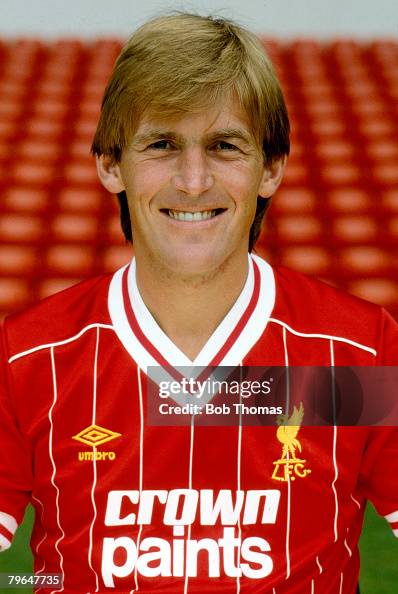
Archie Gemmill
 United Kingdom
association football player•association football coach
Birthday
March 24, 1947
Birth Sign
Sagittarius
Birthplace
Paisley, Scotland
Age
79 years old
Height
5 ft 5 in (1.65 m)
About
Archibald Gemmill is a former Scottish professional footballer and coach who played as a central midfielder. Born in Paisley, he achieved significant success with English clubs Derby County and Nottingham Forest under manager Brian Clough. His career highlights include winning two European Cups and three First Division titles. He also captained the Scottish national team and scored one of the most famous goals in World Cup history.
Gemmill retired from playing in the early 1980s after spells at Sheffield Wednesday and in the North American Soccer League. He transitioned into coaching and youth development, maintaining a connection to the sport through various roles within the Scottish football community. Today he remains a respected figure known for his technical ability and humble demeanor.
Early Life & Background
Archibald Gemmill grew up in Paisley, Renfrewshire, a town steeped in football culture. His talent emerged during his junior years where he quickly distinguished himself as a creative midfielder with exceptional vision. Before making his mark on the national stage, he honed his skills in the lower leagues of Scotland. This period was crucial for his development as he learned to control the tempo of games and dictate play from deep positions.
In 1968, Gemmill joined Leicester City, marking his first major step toward top-tier recognition. The move to England exposed him to a higher level of competition and allowed him to showcase his abilities against established teams. During his time at Filbert Street, he helped the club reach the League Cup final in 1969. Although they lost to Manchester United, this run proved that Gemmill could compete at the highest level and caught the eye of scouts looking for dynamic midfielders.
The attention he garnered eventually led to a transfer to Derby County in 1971. This move would define the next phase of his career. Under the guidance of Brian Clough, Gemmill found an ideal environment to flourish. His partnership with the manager and teammates at Derby laid the groundwork for future triumphs, setting the stage for his rise to international stardom.
Career Growth
His tenure at Derby County began in 1971 and immediately yielded results. Gemmill became a cornerstone of the squad, helping the Rams secure the First Division title in the 1971–72 season. Two years later, Derby reached the European Cup Final, though they fell short against Ajax. He continued to excel, winning a second league title with the club in 1974–75. By the end of his stint at Pride Park, he had made over 300 appearances and scored 25 goals.
Following Derby's relegation, Gemmill moved to their fierce rivals Nottingham Forest in 1977. This transfer marked the pinnacle of his club career. He won the First Division title in 1977–78 and the League Cup the following year. Most notably, he was part of the historic back-to-back European Cup victories in 1979 and 1980. These achievements placed him among the elite players of his generation.
On the international stage, Gemmill earned 43 caps for Scotland between 1971 and 1981. He served as captain on several occasions and scored eight goals. His legacy is forever tied to the 1978 FIFA World Cup in Argentina. On June 13, 1978, he scored a spectacular solo goal against the Netherlands in a 3–2 victory. The strike involved a long run from midfield and a powerful finish past goalkeeper Jan Jongbloed. It remains the most iconic moment in Scottish World Cup history.
After leaving Forest, he finished his playing days with Sheffield Wednesday from 1980 to 1982. He also had a brief spell in the North American Soccer League before retiring. Post-retirement, he worked as an assistant manager and contributed to youth setups, including a role with the Scottish FA.
Career Timeline
Public Image & Style
Gemmill is portrayed as a humble, intelligent, and technically gifted player. Media coverage emphasizes his modesty and the fact that he never sought the limelight outside of his performances. He is remembered as a gentleman of the game, contrasting with the more aggressive styles of some of his contemporaries. His image is one of quiet competence and sporting integrity. Even decades after retirement, he is viewed as a symbol of fair play and tactical brilliance.
Fame & Fandom (iFAMOUS Rankings)
Archie Gemmill commands a global audience defined not by the relentless churn of modern celebrity, but by the enduring resonance of a singular sporting moment. He is the face of Scottish football's most iconic goal, a figure whose name triggers immediate recognition among fans who value historical brilliance over current headlines. Yet, in the vast architecture of global celebrity metrics, his standing remains distinct. The iFANN Global Fame Engine has evaluated his profile and determined that he currently holds no placement within the published Global Top 1,000 or any specific Top-100 scope list. This absence of a numeric rank does not diminish his stature; rather, it reflects a legacy built on a specific era where fame was tied to performance rather than constant visibility. His cultural footprint is immense yet quiet, sustained by the collective memory of supporters rather than algorithmic dominance. The fandom surrounding Gemmill lacks an official moniker. Unlike contemporary stars backed by organized clubs with distinct titles like "The Red Army," there is no formalized group campaigning for him personally. No fan-funded projects, birthday billboards, or charity drives bear his name exclusively. Instead, his support base exists as the diffuse reverence of the Tartan Army and the broader community of Scottish football historians. Fans view him as a foundational pillar of national identity rather than a celebrity to be followed. There are no documented rituals dedicated solely to him outside the annual commemoration of his legendary strike against the Netherlands. While former teammates and peers celebrate his intellect and modesty, Gemmill himself has largely stepped away from public interaction, leaving his legend to stand on the verified facts of his career: the European Cups won with Brian Clough, the league titles at Derby County, and the transcendent solo goal in Mendoza that secured his place in history.
Interesting Facts and Legends
Former teammate John Robertson once described Gemmill as a crossword fiend, highlighting his intellectual side beyond the pitch. He was also featured in an interview discussing the cultural impact of the movie Trainspotting on Scottish identity. A 2026 article highlighted a story about Gemmill enjoying a Spanish beach bar, linking it to his lifelong love affair with the World Cup atmosphere. The goal against the Netherlands is famous not just for the finish but for the intricate passing play that preceded it, involving Pat Nevin and others. In a 2026 BBC Sport poll, Gemmill's goal was voted the most iconic Scotland goal, beating out Scott McTominay's recent strike.
Notable Quotes
“I had iconic Scotland moment but I'd trade it all for World Cup win”
“The goal against Holland... it's something you never forget”
Family & Personal Life
Archie Gemmill was born in Paisley to parents who lived in a town with a strong footballing tradition. He has maintained a notably private personal life throughout his career. Public records regarding his romantic relationships are sparse, and there are no widely documented details about specific partners or marriages. While some sources suggest he may have family, there is no verified public information detailing children or their names. He currently lives a quiet life away from the media spotlight.
Notable Connections
Brian Clough, John Robertson, Pat Nevin, Gordon Strachan, Jan Jongbloed
Relationships & Dating History
Public records regarding Archie Gemmill's romantic life are sparse compared to modern celebrities. Unlike many public figures, Gemmill has maintained a notably private personal life, rarely discussing relationships in the media. There are no widely documented or confirmed details regarding specific partners, engagements, marriages, or divorces in available sources up to 2026. As of 2026, Gemmill is generally considered to be living a private life. No official confirmation of a current spouse or partner exists in public databases or recent news reports. While some sources suggest he may have family, there is no verified public information detailing children or their names. Due to his preference for privacy, there is no chronological dating history to report. Any speculation regarding his relationship status is unconfirmed.
Salary, Net Worth In 2026
$2 Million
iFANN Editorial Team estimate
iFANN Editorial Team research estimates Archie Gemmill's net worth at approximately $2 million. Unlike modern stars, Gemmill did not engage in extensive post-career business ventures or high-profile commercial endorsements. His wealth historically derived from football salaries which were modest by today's standards and subsequent coaching roles. He benefits from pension schemes and occasional speaking engagements related to his World Cup legacy. The estimate reflects a modest accumulation typical for retired professionals of his generation who prioritized the sport over financial gain.
Awards Won (6)
Archie Gemmill won two European Cups with Nottingham Forest in 1979 and 1980. He secured three English First Division titles with Derby County and Nottingham Forest. He also won the League Cup in 1978. He was inducted into the Scottish Football Hall of Fame for his contributions to the sport. His 1978 World Cup goal is consistently ranked as the greatest Scotland goal ever.
1980 · Club Competition
Nottingham Forest
1979 · Club Competition
Nottingham Forest
1978 · League
Nottingham Forest
1975 · League
Derby County
1972 · League
Derby County
Known For
Scotland vs Netherlands
1978 · Scored iconic goal
Nottingham Forest
1979 · European Cup Winner
Derby County
1972 · First Division Champion
Keywords
Sources
Quick Facts
- Profession
- association football player, association football coach
- Born
- March 24, 1947
- Birthplace
- Paisley, Scotland
- Gender
- Male
- Birth Sign
- Sagittarius
- Height
- 5 ft 5 in
- Caps
- 43
- Goals
- 8
Personal Details
- Full Name
- Archibald Gemmill
- Height
- 5 ft 5 in (1.65 m)
- Children
Frequently Asked Questions
How old is Archie Gemmill?
What is Archie Gemmill's most famous goal?
Did Archie Gemmill win the European Cup?
Is Archie Gemmill still playing football?
Who managed Archie Gemmill at Derby and Forest?


Join the community
fans discussing