
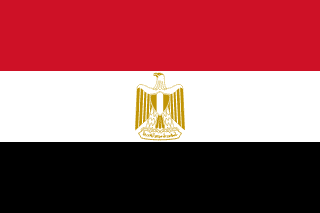
 Egypt
EgyptAbout
The Arab League, officially the League of Arab States, is the world's oldest regional political organization, founded on March 22, 1945, in Cairo, Egypt. It brings together 22 member states from the Middle East, North Africa, and the Horn of Africa, representing over 400 million people. The League's primary goal is to strengthen relations among member states, coordinate their policies, and safeguard their independence and sovereignty, with a focus on economic, cultural, and social cooperation.
The organization operates through a Council where each member has one vote, a General Secretariat led by a Secretary-General, and various specialized agencies. Its founding was driven by post-World War II concerns over colonial divisions and opposition to the creation of a Jewish state in Palestine. The League has been a platform for coordinating Arab positions on regional issues, particularly the Israeli-Palestinian conflict, though it has faced criticism for disunity and ineffectiveness.
Notable specialized organizations under the League include the Organization of Arab Petroleum Exporting Countries (OAPEC), the Arab League Educational, Cultural and Scientific Organization (ALECSO), and the Arab Satellite Communications Organization (ARBSAT). The League also established a common market in 1965 and adopted the Arab Charter on Human Rights in 2004.
Mission
The Arab League aims to strengthen relations among member states, coordinate their political, economic, cultural, and social policies, and safeguard their independence and sovereignty. It seeks to promote cooperation in areas such as communication, health, and nationality, and to renounce violence as a means of settling disputes between members. The League also works to advance the interests of Arab countries collectively on the global stage.
History
The Arab League was born from the Alexandria Protocol of 1944, which set the stage for inter-Arab cooperation after World War II. On March 22, 1945, delegates from Egypt, Iraq, Transjordan (now Jordan), Lebanon, Saudi Arabia, Syria, and North Yemen signed the founding charter in Cairo. The charter established a permanent General Secretariat and a Council where each member held one vote. The League's early focus was on coordinating opposition to the creation of a Jewish state in Palestine, a central issue from the start.
A mutual defense treaty in 1950 committed members to treat aggression against any one as aggression against all. The League expanded steadily: Libya joined in 1953, Sudan in 1956, Morocco and Tunisia in 1958, Kuwait in 1961, and Algeria in 1962. The 1960s saw the creation of a common market in 1965 and specialized agencies like OAPEC. Egypt's membership was suspended from 1979 to 1989 after it signed a peace treaty with Israel, and the League's headquarters moved to Tunis during that period. Egypt was reinstated in 1989 and the headquarters returned to Cairo.
The 2000s brought the adoption of the Arab Charter on Human Rights in 2004, though its implementation has been uneven. Syria's membership was suspended during the civil war. The League celebrated its 70th anniversary in 2015, with March 22 designated as Arab League Day. Throughout its history, the League has struggled to maintain unity, often criticized for being a forum for regimes rather than a force for collective action.
Subdivisions
Organization of Arab Petroleum Exporting Countries (OAPEC)
Founded in 1968, coordinates petroleum policies among member states.
Arab League Educational, Cultural and Scientific Organization (ALECSO)
Founded in 1970, promotes education, culture, and science in the Arab world.
Arab Satellite Communications Organization (ARBSAT)
Operates satellite communication services for Arab countries.
Arab Bank for Economic Development in Africa
Provides financial assistance for development projects in African countries.
Arab Labor Organization (ALO)
Focuses on labor rights and employment issues across the Arab region.
Arab Women Organization
Works to empower women and promote gender equality in Arab societies.
Arab Administrative Development Organization (ARADO)
Works to improve public administration and governance in Arab states.
Arab Interior Ministers Council
Coordinates security and law enforcement policies among member states.
Arab States Broadcasting Union (ASBU)
Promotes cooperation in broadcasting and media across the Arab world.
Arab Center for the Studies of Arid Zones and Dry Lands (ACSAD)
Conducts research on desertification and dryland agriculture.
Arab Academy for Science and Technology
Provides higher education and research in maritime transport and engineering.
Arab Industrial Development and Mining Organization (AIDMO)
Supports industrial development and mining projects in Arab countries.
Arab Civil Aviation Association
Promotes safety and cooperation in civil aviation.
Arab Organization for Agricultural Development (AOAD)
Aims to enhance agricultural productivity and food security.
Arab Atomic Energy Agency (AAEA)
Coordinates peaceful uses of nuclear energy and research.
Council of Arab Economic Unity
Works to integrate Arab economies and facilitate trade.
Notable People
Ahmed Aboul Gheit
Secretary-General · 2016-present
Current Secretary-General, former Egyptian Foreign Minister.
Mahmoud Riad
Secretary-General · 1972-1979
Led an activist period that ended with Egypt's suspension over the Camp David Accords.
Mohammed Al-Yamahi
Parliament Speaker · 2023-present
Current Speaker of the Arab Parliament.
Milestones
1944
Alexandria Protocol adopted, laying groundwork for the League.
1945
Arab League founded in Cairo by seven members.
1950
Mutual defense treaty signed among member states.
1965
Arab Common Market established.
1979
Egypt's membership suspended; headquarters moved to Tunis.
1989
Egypt reinstated; headquarters returned to Cairo.
2004
Arab Charter on Human Rights adopted.
2015
70th anniversary celebrated; March 22 designated as Arab League Day.
Sources
Organization Info
- Founded
- 1945-03-22
- Headquarters
- Cairo, Egypt
- Country
- Egypt
- Secretary-General
- Ahmed Aboul Gheit
- Type
- League
- Founding Members
- 7 (Egypt, Iraq, Jordan, Lebanon, Saudi Arabia, Syria, Yemen)
- Current Members
- 22
- Official Language
- Arabic
Official Website
arab.org
Join the community
fans discussing