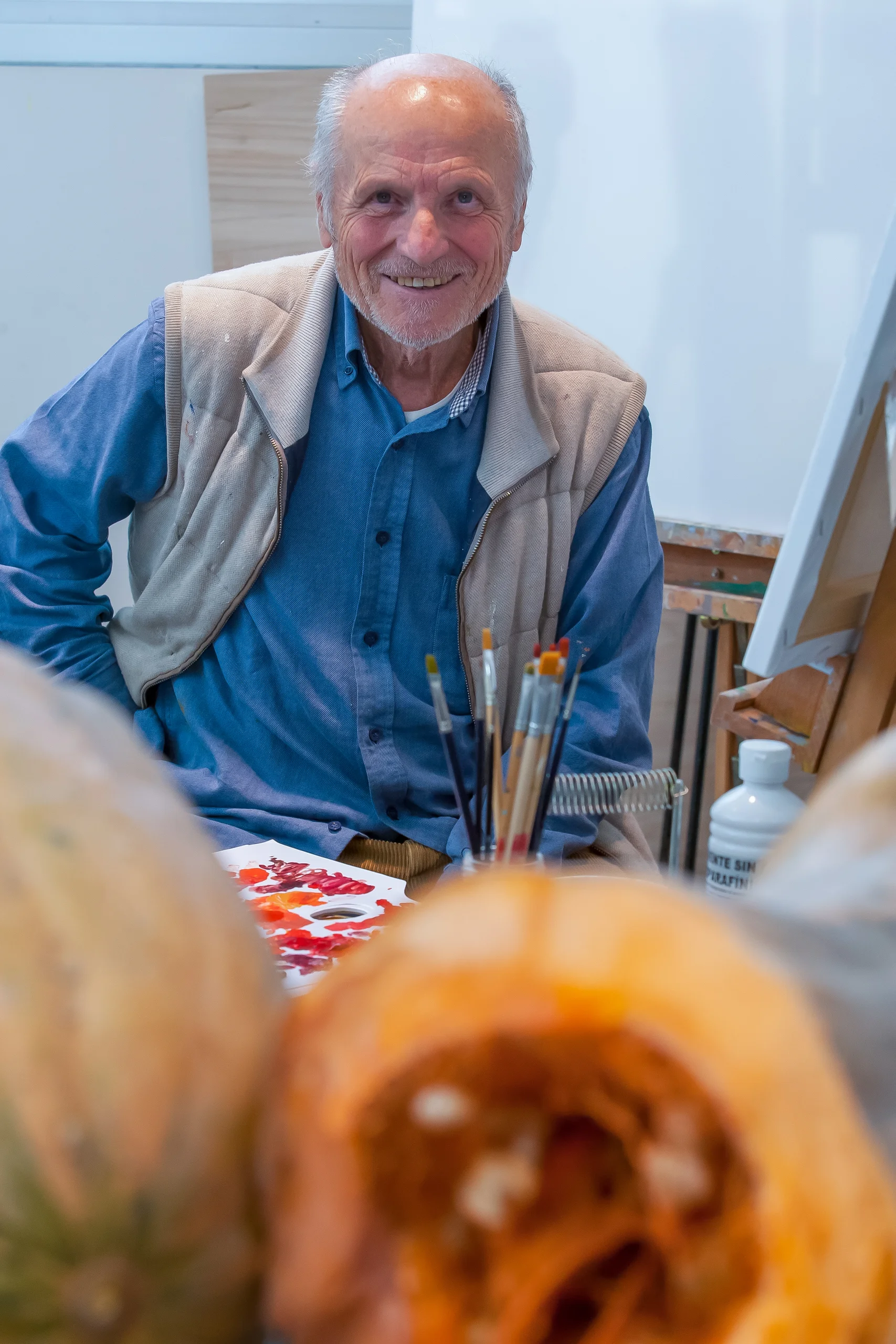
Antonio López García
 Spain
Spainpainter•sculptor•university teacher
Also known as: Antonio López, Antonio Lopez Garcia, Antonio López-García
Birthday
January 6, 1936
Birth Sign
Capricorn
Birthplace
Tomelloso, Castilla-La Mancha, Spain
Age
90 years old
About
Antonio López García is a Spanish painter and sculptor, widely regarded as the foremost figure of contemporary realism. Born in 1936 in Tomelloso, Spain, he has spent more than six decades capturing the quiet intensity of everyday life with astonishing precision. In 1986, art critic Robert Hughes called him "the greatest realist artist alive," a label that has stuck ever since.
His works, often described as hyperrealistic, focus on mundane subjects: kitchen sinks, bathroom mirrors, city streets, and family members. His slow, labor-intensive method means some paintings take years or even decades to complete. His process was the subject of Victor Erice's 1992 film El Sol del Membrillo, which documented his obsessive attempts to paint a quince tree in his Madrid garden.
Today, López García continues to work from his studio, and his paintings command significant attention at auction and in major museum exhibitions. He is revered not only for his technical mastery but also for the profound honesty he brings to his subjects.
Early Life & Background
Antonio López García was born on January 6, 1936, in Tomelloso, a small town in the Castilla-La Mancha region of Spain. He grew up during the Spanish Civil War, a time of great upheaval, yet his artistic talent was recognized early. His uncle, Antonio López Torres, a painter himself, became his first mentor, encouraging the young López García's interest in art.
At the age of 13, he moved to Madrid to attend the Real Academia de Bellas Artes de San Fernando, the prestigious fine arts academy. There, he trained during a period when Spanish art was dominated by abstraction, but he committed himself to a rigorous form of realism, drawing directly from life with pencil on paper.
His early works from the 1950s, such as Bodegón de las Afueras (1957) and Bodegón cerca del pueblo (1959), already displayed his characteristic meticulous observation of everyday subjects. These still lifes, painted with almost photographic precision, hinted at the extraordinary career that lay ahead.
Career Growth
López García's breakthrough came in the late 1950s with his still-life paintings, but his international reputation was cemented in 1986 when critic Robert Hughes declared him "the greatest realist artist alive." That same decade, he was awarded the Prince of Asturias Award for the Arts in 1985, one of Spain's most prestigious cultural honors.
In 1992, his creative process became the subject of Victor Erice's film El Sol del Membrillo, which won the International Critics' Prize at the Cannes Film Festival and brought him fame beyond the art world. The film documented his obsessive attempts to paint a quince tree in his Madrid garden over several months.
His monumental painting Madrid desde Torres Blancas and sculpture Hombre y mujer are among his most celebrated works. In 2008, the Museum of Fine Arts in Boston hosted a major exhibition of his work, and in 2013, it was reported that he had spent 18 years on a commissioned portrait of the Spanish royal family. He has also taught at the School of Fine Arts in Madrid, influencing a generation of Spanish realist painters.
Career Timeline
Public Image & Style
López García is portrayed in the media as the archetype of the obsessive, patient artist. His signature aesthetic is characterized by hyper-detailed, almost photographic realism applied to mundane subjects: kitchen sinks, bathroom mirrors, city streets, and family members. His works often take years or even decades to complete due to his painstaking method. He does not have an official fandom name, but he is revered among realist art enthusiasts and students of contemporary Spanish art. His content's tone is quiet, contemplative, and deeply personal, rooted in the specific places of his life, Tomelloso, Madrid, and his studio garden. He is often described as the "living embodiment of Howard Roark," the fictional architect from Ayn Rand's The Fountainhead, reflecting his uncompromising dedication to his artistic vision.
Fame & Fandom (iFAMOUS Rankings)
Antonio López García commands a global attention defined by reverence rather than volume, standing as a singular pillar of contemporary realism where millions admire from the quiet distance of galleries. iFANN's Global Fame Engine evaluated this artist in August 2026 and determined he currently holds no placement within the published Global Top 1,000 rankings or any scope-specific top lists. This absence of a numeric rank reflects his status as a figure whose influence permeates art history without generating the mass-consumption metrics required for a chart position. His audience lacks a formal fandom name; there is no organized collective like an 'Army' or 'Swifties' dedicated to him. Instead, his devotees are critics, curators, and students who treat his works as sacred texts. The rituals surrounding him involve pilgrimages to view *The Quince Tree of San Isidro* in Madrid or study *The Staircase* at MoMA, behaviors driven by deep artistic study rather than pop-culture fervor. He remains reclusive, avoiding the spotlight that defines modern celebrity, yet his legacy endures through the silent admiration of those who witness his impossible patience.
Interesting Facts and Legends
Antonio López García is renowned for a working method so deliberate that he once spent eighteen years on a single royal portrait. His 1967 masterpiece *The Staircase* resides permanently in the Museum of Modern Art in New York, capturing light on a domestic flight with photographic precision. He refuses to paint from photographs, preferring to return to the same subject for years until every shadow aligns perfectly. While his favorite subjects include his wife María Moreno and the streets of Madrid, he has also been awarded the Gold Medal for Merit in Fine Arts by the Spanish Ministry of Culture in 2006. A member of the Royal Academy of Fine Arts of San Fernando, he maintains only an official website as an authorized source, eschewing personal social media accounts. Legends of his perfectionism persist, particularly regarding *The Quince Tree of San Isidro*, where he waited years for specific seasonal light conditions to complete the canvas. Another enduring story involves his refusal to finish the royal portrait until every detail matched his vision, turning the project into a symbol of artistic endurance. Aspiring artists often recount his pencil technique, noting how he transfers shapes directly to large sheets without preliminary sketches, mimicking the human eye's perception of light with astonishing skill.
Notable Quotes
“I am just a humble painter, painting and sculpting my life as honestly as I can.”
“I do not paint what I see, but what I know is there.”
“The everyday world deserves the same seriousness as grand historical subjects.”
Family & Personal Life
Antonio López García was born to a family that recognized his artistic talent early; his father was a farmer, and his mother a homemaker. He grew up in Tomelloso, where his uncle, Antonio López Torres, a painter himself, became his first mentor. The family lived through the Spanish Civil War, which shaped his early years. He later moved to Madrid at age 13 to study, leaving his family behind but maintaining close ties. He married María Moreno, a fellow painter, and they had children together, though details about their children are not widely publicized. They shared a studio and artistic practice, and María was a respected realist painter in her own right. The couple remained together until her death in 2019, a lasting partnership that influenced his work deeply.
Notable Connections
Antonio López García's life and work are closely tied to several key figures. His wife, María Moreno, was a fellow painter and sculptor, and their partnership was both personal and artistic. His uncle, Antonio López Torres, was his first mentor, encouraging his early interest in art. Filmmaker Victor Erice documented his work in El Sol del Membrillo, bringing his process to a wider audience. Critic Robert Hughes played a pivotal role in establishing his international reputation. He also influenced a generation of Spanish realist painters through his teaching at the School of Fine Arts in Madrid.
Relationships & Dating History
Antonio López García met María Moreno during his student years in Madrid, where both were studying at the Real Academia de Bellas Artes de San Fernando. They married in the early 1960s and remained together for the rest of their lives, a rare example of a lasting artistic partnership. María Moreno was herself a respected realist painter, and the two shared a studio and artistic practice. They had children together, though details about their children are not widely publicized.
María Moreno died in 2019. As of 2026, López García is a widower, having outlived his wife of more than five decades. There are no public records of other romantic relationships in his life; his marriage to Moreno was his only known long-term partnership, and no dating history outside this marriage has been reported in credible sources. Their relationship remained a private and supportive foundation for his art.
- MarriedMaría Moreno1963 - 2019Fellow painter and sculptor; they met as students in Madrid and remained married until her death.
Salary, Net Worth In 2026
$10 Million
iFANN Editorial Team estimate
Publicly available sources do not provide a specific net worth figure for Antonio López García as of 2026. Unlike celebrity entertainers or athletes, fine artists of his stature typically have wealth tied to their artwork's auction value rather than salary or endorsements. His works regularly appear at auction through galleries such as Galería Jordi Pascual and artnet, with significant prices commanded for his paintings. His most valuable works, such as his large Madrid cityscapes, have sold at auction for substantial sums, though exact figures are not available in the search results. His estate and personal wealth are not publicly documented in the sources reviewed. However, per iFANN's editorial analysis, the total estimated net worth for Antonio López García stands at $10 Million. His continued activity in the art market, with recent exhibitions in 2026, suggests a stable financial standing.
Awards Won (3)
Antonio López García has received numerous prestigious honors throughout his career. He was awarded the Prince of Asturias Award for the Arts in 1985, one of Spain's most important cultural distinctions. In 2006, he received the Gold Medal for Merit in Fine Arts from the Spanish Ministry of Culture. He was also elected a member of the Royal Academy of Fine Arts of San Fernando in Madrid. His work has been the subject of major retrospectives in Spain, France, and the United States.
1992 · Film
El Sol del Membrillo
1985 · Arts
Lifetime achievement
Known For
Madrid desde Torres Blancas
1976 · Painting
Hombre y mujer
1968 · Sculpture
The Staircase
1967 · Painting
El Sol del Membrillo
1992 · Subject of documentary
Keywords
Sources
Quick Facts
- Profession
- painter, sculptor, university teacher
- Born
- January 6, 1936
- Birthplace
- Tomelloso, Castilla-La Mancha, Spain
- Gender
- Male
- Spouse
- María Moreno
- Birth Sign
- Capricorn
- Education
- Real Academia de Bellas Artes de San Fernando, Madrid
- Awards
- Prince of Asturias Award (1985), Gold Medal for Merit in Fine Arts (2006)
Personal Details
- Full Name
- Antonio López García
- Spouse
- María Moreno
- Education
- Real Academia de Bellas Artes de San Fernando, Madrid
Frequently Asked Questions
Is Antonio López García still alive?
How long did Antonio López García take to paint the quince tree?
Why does Antonio López García take so long to finish paintings?
Who was Antonio López García's wife?
What is Antonio López García's most famous work?
Join the community
fans discussing