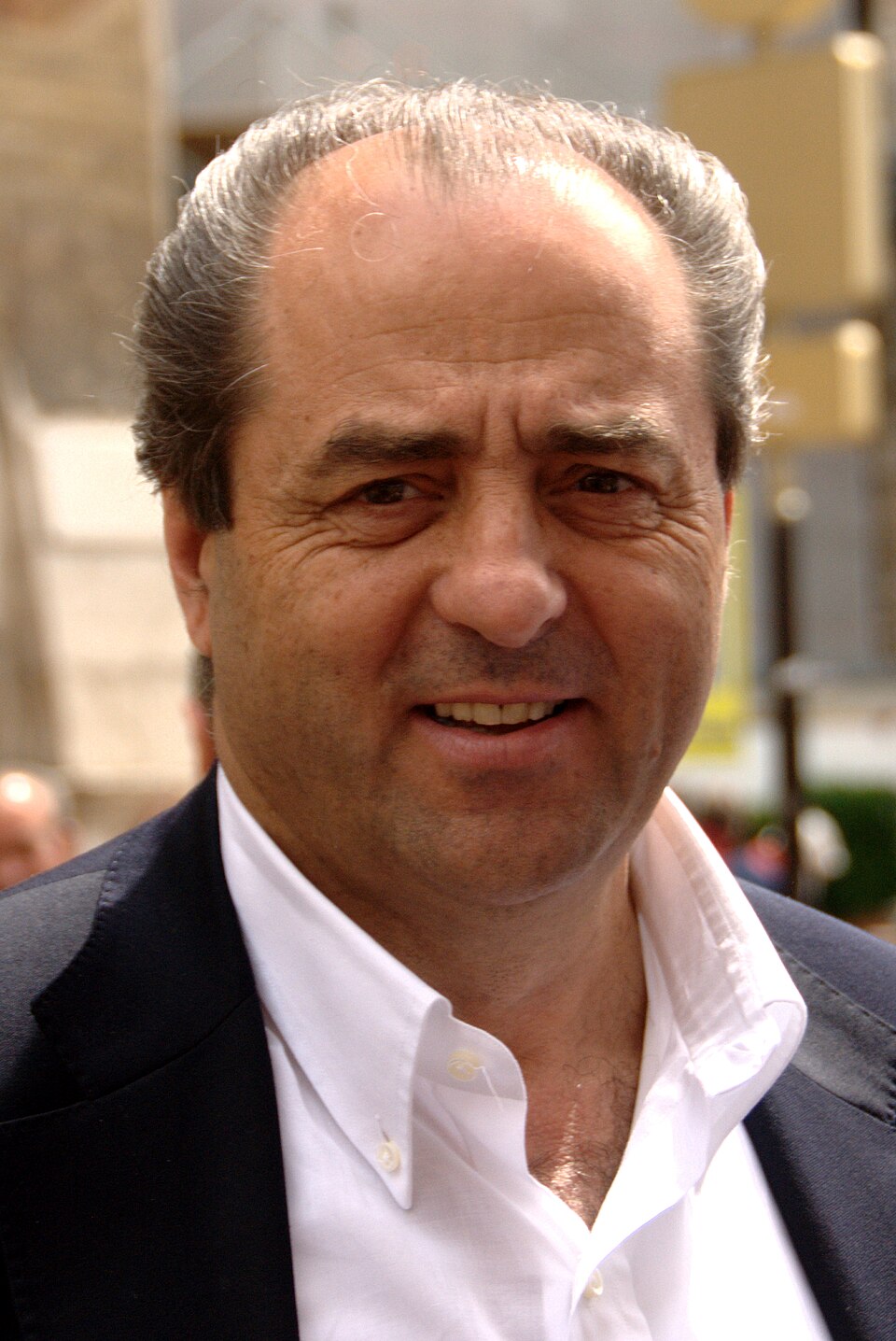
Antonio Di Pietro
 Italy
ItalyBirthday
October 2, 1950
Birth Sign
Libra
Birthplace
Montenero di Bisaccia, Molise, Italy
Age
76 years old
About
Antonio Di Pietro is an Italian politician, lawyer, and former magistrate, widely recognized as the lead prosecutor of the Mani pulite (Clean Hands) corruption trials that shook Italy in the early 1990s. Those investigations exposed a vast web of political bribery, leading to the collapse of major parties and reshaping the country's political landscape.
Now 75, Di Pietro remains a vocal figure in Italian public life, frequently commenting on judicial reform and transparency. He founded the Italy of Values party in 1998 and served as a senator, a Member of the European Parliament, and Minister of Public Works. His reputation as an anti-corruption crusader endures, and he continues to draw attention whenever he speaks on legal ethics.
Early Life & Background
Antonio Di Pietro grew up in Montenero di Bisaccia, a small town in the southern region of Molise. His family was modest, typical of postwar Italy, and the economic hardships he witnessed shaped his later commitment to social justice.
He pursued legal studies and entered the judiciary, building a reputation for integrity and rigor. In the early 1990s, he was assigned to the Milan prosecutor's office, where he began investigating a seemingly minor bribery case. That case expanded into the Tangentopoli (Bribesville) scandal, uncovering systematic corruption that reached the highest levels of Italian government and business.
Career Growth
Di Pietro's breakthrough came with the Mani pulite investigation, which he led from 1992. The probe exposed a vast system of bribes and kickbacks, implicating politicians, business leaders, and public officials across Italy's major parties. The fallout toppled the Christian Democrats and the Socialist Party, fundamentally transforming the political landscape.
After his prosecutorial career, Di Pietro entered politics. He was elected to the Senate in November 1997 and founded the Italy of Values party on March 21, 1998. He served in the European Parliament and, from 2006 to 2008, as Minister of Public Works in Romano Prodi's government. He remained a prominent figure, often clashing with Silvio Berlusconi, and continued to advocate for judicial integrity until his later years.
Career Timeline
Public Image & Style
Di Pietro's public image is defined by his role as Italy's most famous anti-corruption prosecutor. He is widely seen as a symbol of judicial integrity, and his work on Mani pulite remains his most enduring legacy. The Financial Times once described him as an “inquisitor who paved the path to a new Italy,” capturing his transformative impact.
His political movement, Italy of Values, was built on principles of transparency and legality, reflecting his prosecutorial ethos. He has been called a household name for a generation of Italians who grew up watching his investigations unfold on television, and his combative stance against perceived corruption continues to resonate with supporters.
Fame & Fandom (iFAMOUS Rankings)
Antonio Di Pietro stands as a defining figure in modern Italian history, yet his global celebrity footprint differs significantly from the entertainment icons who dominate the iFANN Global Top 1,000. As of August 2026, the iFANN Global Fame Engine has evaluated this person, but they do not currently hold a placement in the published rankings (Global Top 1,000 or a Top-100 scope list). This absence of a numeric rank reflects his status as a political and judicial architect rather than a pop culture personality with a mass-market following. While he commands immense respect and a dedicated audience through his work on Mani pulite, there is no formal fandom name for Antonio Di Pietro, nor does his supporter base engage in the organized rituals, chart pushes, or fan-funded campaigns typical of celebrity worship. His public presence is defined by civic engagement and political discourse rather than the viral trends that drive fame metrics. Followers connect through standard social media channels like Facebook, where he shares legal insights, but these interactions remain rooted in his roles as a former magistrate, senator, and founder of Italy of Values. Unlike musicians or actors whose legends are built on albums and box office numbers, Di Pietro's mythology consists entirely of verified historical events: the collapse of Italy's First Republic, the exposure of systemic bribery, and his relentless pursuit of transparency. These real-life achievements constitute his legacy, distinguishing him from figures whose fame relies on artistic output. The scale of his influence is measured in political shifts and judicial reforms across Europe rather than search volume spikes or merchandise sales. Consequently, while he remains a vocal commentator on justice issues and draws attention during elections, his profile lacks the specific ranking data found for global superstars.
Interesting Facts and Legends
Di Pietro's nickname in Italy was often simply "il pm" (the prosecutor), a title that became synonymous with his public identity. He has authored several books on justice and politics, sharing his experiences from the Mani pulite era. His Facebook page, which has over 218,000 likes, shows him engaging with supporters through videos and posts about legal affairs. In 2017, he was invited to Malta by Justice Minister Owen Bonnici to address civil society on anti-corruption, reflecting his influence beyond Italy. He was born in the same region, Molise, that produced several other prominent Italian politicians, though he remains the most internationally known. Beyond these facts, his legend is anchored in the Mani Pulite investigation, where he utilized computers to uncover massive corruption involving Italy's major parties, earning the moniker "Inquisitor." This operation led to the fall of the First Republic, upending the post-WWII political establishment. A notable chapter in his enduring story involves his long-standing feud with Silvio Berlusconi, culminating in headlines declaring the end of the "arrogant little dictator" following a referendum defeat in 2011. These verified events form the core of his public mythology, distinguishing him as a historical figure whose impact reshaped an entire nation.
Notable Quotes
“The end is near for the arrogant little dictator Berlusconi.”
“The referendum defeat could spell the beginning of the end for Berlusconi.”
Family & Personal Life
Public details about Di Pietro's family are scarce. He tends to keep his personal life private, focusing public attention on his professional work. He has not shared information about his parents, siblings, or any children in the available sources.
His commitment to public service seems to have taken precedence over revealing personal matters, and he has not been linked to any public family stories.
Notable Connections
Di Pietro's career intersected with several key figures. He served under Romano Prodi, who appointed him Minister of Public Works. His main political adversary was Silvio Berlusconi, whom he repeatedly challenged. Fellow magistrate Gerardo D'Ambrosio worked alongside him in anti-corruption efforts. In 2017, Maltese Justice Minister Owen Bonnici invited him to speak on anti-corruption, extending his influence abroad.
Relationships & Dating History
Antonio Di Pietro has kept his romantic life out of the public eye. Throughout his career, he has rarely spoken about personal relationships, and no confirmed details about a spouse, partner, or dating history have surfaced in the sources reviewed. As of 2026, his relationship status remains unknown, a deliberate choice that has allowed his professional legacy to dominate public perception.
Salary, Net Worth In 2026
$5 Million
iFANN Editorial Team estimate
As of 2026, iFANN currently estimates Antonio Di Pietro's net worth at $5 Million. This financial standing reflects a life dedicated to politics and law rather than private enterprise, with income derived primarily from his long career in public service. His earnings stem from salaries held as a senator, a Member of the European Parliament, and as Minister of Public Works. Additional revenue comes from book royalties and speaking engagements, such as his 2017 appearance in Malta. No major business ventures or investments are publicly documented, and his wealth appears modest compared to other political figures of his era.
Awards & Accolades
Known For
Mani pulite investigation
1992 · Lead prosecutor
Italy of Values party
1998 · Founder
Minister of Public Works
2006 · Minister
Keywords
Sources
Quick Facts
- Profession
- politician, prosecutor, judge
- Born
- October 2, 1950
- Birthplace
- Montenero di Bisaccia
- Gender
- Male
- Birth Sign
- Libra
- Age
- 75
Personal Details
- Full Name
- Antonio Di Pietro
- Education
- Law degree
Frequently Asked Questions
What did Antonio Di Pietro do?
Is Antonio Di Pietro still alive in 2026?
What party did Antonio Di Pietro found?
What government positions did Antonio Di Pietro hold?
What was the significance of Mani pulite?
Social Media
Join the community
fans discussing