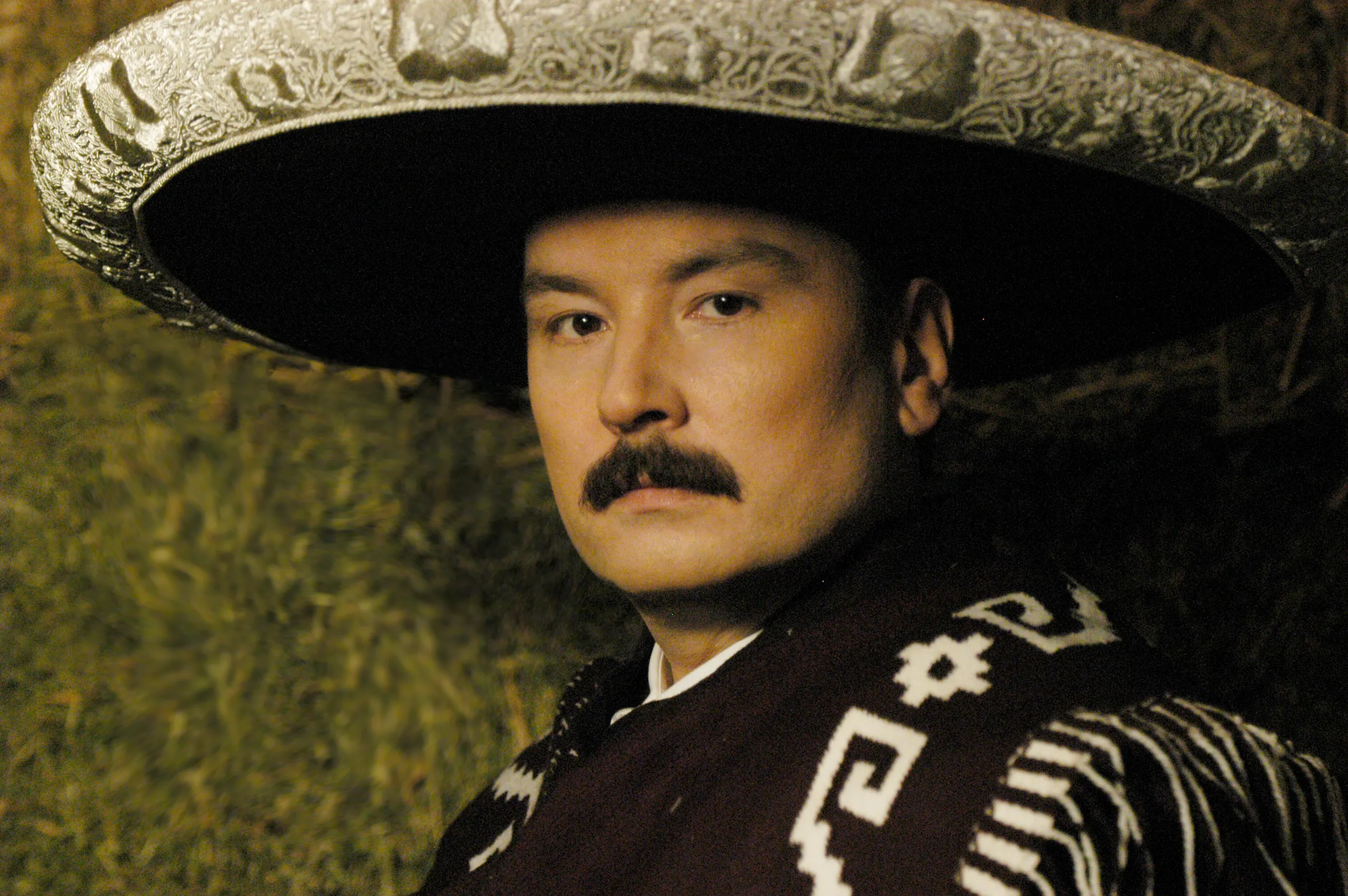
Antonio Aguilar
 Mexico
singer•film actor•screenwriter
Also known as: El Charro de México, Tony Aguilar, Pascual Antonio Aguilar Barraza
Birthday
May 17, 1919
Birth Sign
Taurus
Birthplace
Tayahua, Jalisco, Mexico
Age
Died at 88
Height
5 ft 10 in (178 cm)
About
Pascual Antonio Aguilar Barraza, known globally as "El Charro de México," was a towering figure in Mexican entertainment who spent over seven decades defining the culture of ranchera music and charreada. A singer, actor, screenwriter, and producer, he became the only Hispanic artist to sell out New York City's Madison Square Garden for six consecutive nights in 1997. His legacy endures through his vast discography of over 150 albums and more than 120 films, which cemented his status as a cultural ambassador for Mexico. Aguilar is credited with popularizing the equestrian sport of *la charrería* alongside his music, creating a mythos where he embodied the soul of the nation. He passed away on June 19, 2007, at the age of 88, leaving behind a family often referred to as "la dinastía Aguilar." His influence remains palpable today through the continued success of his children and grandchildren, particularly his son Pepe Aguilar and granddaughter Ángela Aguilar, who carry forward his musical traditions. The estate continues to generate revenue through licensing, tributes, and the management of his extensive catalog of works.
Early Life & Background
Born into a wealthy landowning family in Tayahua, Jalisco, Pascual Antonio Aguilar grew up immersed in rural Mexican traditions that would later define his public persona. His father, José María Aguilar, was a rancher who instilled in him a deep love for horses and charreadas, the traditional Mexican rodeo sport. This upbringing provided the foundation for his unique artistic identity, blending equestrian prowess with musical talent. Aguilar received a private education and showed early aptitude for music and performance. Before achieving fame, he spent his youth managing family ranches and participating in local charreadas. He began his musical journey in the late 1940s, performing on local radio stations before gaining national attention. In 1950, he made his professional debut on the prestigious Mexican radio station XEW, marking the beginning of his ascent in the entertainment industry. That same year, he signed a recording contract with Musart Records, launching a prolific discography that would eventually sell millions of copies. He also formed his first charro troupe during this period, solidifying his connection to the equestrian arts.
Career Growth
Aguilar's career is defined by a dual mastery of music and cinema. His acting debut occurred in 1952 with the film Un rincón cerca del cielo, where he co-starred with Pedro Infante. Initially cast in gentlemanly roles, he found his true niche in the mid-1950s playing Mauricio Rosales, a lawman character, in a series of seven films that cemented his status as a leading man. Throughout the 1960s, he shifted focus to producing and starring in films centered on the Mexican Revolution, notably portraying historical figures like Pancho Villa and Emiliano Zapata. His commercial success was immense, with over 150 albums sold and an estimated 25 million copies distributed. In 1970, he won the Latin ACE Award for Best Actor for his portrayal of Emiliano Zapata in the film of the same name. That same year, he received the Golden Ariel Award for lifetime achievement. In 1997, his historic six-night sold-out run at Madison Square Garden demonstrated his enduring global appeal. He continued touring and recording until his health declined in the early 2000s. His music blended traditional mariachi with ranchera and corridos, resonating deeply with audiences across Latin America and the United States.
Career Timeline
Public Image & Style
Antonio Aguilar is portrayed as a patriotic, hardworking, and charismatic figure. His media image is one of authenticity, rooted in traditional Mexican values. He is seen as a cultural ambassador who brought Mexican heritage to the world stage. His signature style involved traditional charro attire, complete with sombrero, serape, and spurs. He maintained a disciplined artistic output that spanned decades, creating a mythos where he was not just an entertainer but a cultural icon who embodied the soul of Mexico. Standing approximately 5'10" with an athletic build due to his lifelong involvement in charreadas, he cultivated a distinct visual identity. He appeared on the covers of major publications like People en Español during his peak popularity in the 1970s and 1980s, highlighting his family and charitable work.
Fame & Fandom (iFAMOUS Rankings)
Antonio Aguilar commanded a pervasive cultural presence that saturated media coverage and consumption signals across the Americas. His enduring stature is quantified by iFANN Global Fame Rankings, which place him as the 88th most famous person in Mexico, a position he maintains from the previous cycle. This standing reflects a career that transformed regional traditions into global phenomena without relying on fleeting viral moments. The fanbase for this legendary figure does not possess a formalized moniker like those found in modern pop culture; instead, admirers are collectively identified as enthusiasts of música ranchera or followers of "El Charro." This audience operates through family-led stewardship rather than independent grassroots organizations. Fans gather for tributes on his birthday, May 17, and death anniversary, June 19. While no specific fan-funded campaigns or street closures were documented during his lifetime, his birthday and death anniversary remain occasions for widespread radio tributes and media retrospectives. His influence persists through the continued relevance of his evergreen ballads and corridos, ensuring that his memory remains vibrant among new generations.
Interesting Facts and Legends
Aguilar was not just a performer; he was a highly skilled horseman who organized the first international charreada in the United States. He wrote many of his own songs, often drawing from his personal experiences and Mexican folklore. He was a close friend of several Mexican presidents and used his platform to advocate for rural communities. His sons, Pepe and Antonio Jr., and his granddaughter, Ángela Aguilar, are all successful musicians, forming a true entertainment dynasty. The legend of his ability to conquer the entire nation through his music and film roles is widely retold, effectively making him the face of the Mexican charro tradition. He was inducted into the Latin Songwriters Hall of Fame and the Tejano Music Hall of Fame. Additionally, he received the Key to the City of Mexico City and an Honorary Doctorate from various universities.
Notable Quotes
“I am a charro, and I will always be a charro.”
“Music is the soul of my people, and I want to share it with the world.”
Family & Personal Life
Antonio Aguilar was married twice. His first marriage was to Otilia Larrañaga, with whom he had two children: Antonio Aguilar Hijo (often called Tony) and Alejandro Aguilar. Following their divorce, Aguilar married Flor Silvestre, a celebrated singer and actress, in 1953. Together, they had two sons: Pepe Aguilar and Leonardo Aguilar. The couple divorced in 1976 but remained close friends and continued to collaborate professionally for years. Flor Silvestre died in 2004. Aguilar remained a devoted family man, focusing on his children and grandchildren. The family estate includes extensive ranches and properties in Mexico and the US. As of 2026, his legacy is carried forward by his children and grandchildren, including Pepe Aguilar and Ángela Aguilar.
Notable Connections
Flor Silvestre, Pepe Aguilar, Ángela Aguilar, Pedro Infante, Carín León
Relationships & Dating History
Antonio Aguilar's romantic life was marked by two high-profile marriages that shaped both his personal story and his career. His first marriage was to Otilia Larrañaga in the late 1940s, around 1948. They had two sons together, Antonio Aguilar Hijo and Alejandro Aguilar. The couple divorced in the early 1950s, a split attributed to professional differences and personal incompatibility. Despite the separation, they maintained a relationship focused on raising their children.
In 1953, Aguilar married Flor Silvestre, born Rosa Elena Martínez, a celebrated singer and actress. Their union became one of the most famous in Mexican entertainment history. They met through mutual connections in the industry and quickly became a powerhouse duo, collaborating on numerous projects. Together, they had two sons: Pepe Aguilar and Leonardo Aguilar. The couple divorced in 1976 but remained close friends and continued to perform together professionally for years. Flor Silvestre passed away in 2004. Following her death, there are no widely documented romantic relationships for Aguilar. He remained a devoted family man, focusing on his children and grandchildren until his own death in 2007.
- MarriedOtilia Larrañaga1948 - 1952Had two sons, Antonio Jr. and Alejandro. Divorced due to professional differences.
- MarriedFlor Silvestre1953 - 1976Celebrated singer and actress. Had two sons, Pepe and Leonardo. Remained friends after divorce.
Death & Aftermath
Died
June 19, 2007 (aged 88)
Death Place
Mexico City, Mexico
Cause of Death
Respiratory failure from pneumonia and diabetes complications
Antonio Aguilar passed away peacefully in his sleep on June 19, 2007, at his residence in the Chapultepec district of Mexico City. He was 88 years old. The cause of death was respiratory failure resulting from pneumonia and complications from diabetes. He had been hospitalized prior to his death but was moved to his home for his final days. President Felipe Calderón declared three days of national mourning. Radio stations across Mexico immediately began broadcasting his music, leading to a surge in sales and streaming. Thousands of fans gathered outside his home and at cinemas to pay their respects. Fellow artists, including his son Pepe Aguilar, honored him as the father of modern Mexican ranchera music. The funeral service was held on June 20, 2007, at the Panteón Jardín cemetery. It was attended by government officials, celebrities, and family members. Live performances of his signature songs, such as "La Chiquis" and "Noche de Ronda," were part of the ceremony. His ashes were interred in a mausoleum alongside his late wife, Flor Silvestre.
Posthumous recognition has continued to grow. The Fundación Antonio Aguilar y Flor Silvestre continues to support cultural and educational initiatives. The estate remains under family management, generating revenue through posthumous releases, licensing, and merchandise. In May 2026, his son Pepe Aguilar released the tribute album ¡Que Viva Antonio Aguilar!, featuring collaborations with Carín León and Ángela Aguilar. This project further revitalized interest in his catalog. Pepe Aguilar continues to tour, often dedicating segments of his shows to his father's music, while documentaries and articles continue to be published about his life and impact.
Net Worth (Estate Value)
$60 Million
iFANN Editorial Team estimate
The iFANN Editorial Team estimates the value of Antonio Aguilar's estate at approximately $60 million as of 2026. This valuation reflects the growth of his assets since his passing in 2007, driven by continuous revenue streams from his extensive catalog of over 150 albums and rights to more than 120 films. The estate benefits from significant posthumous earnings through reissues, licensing deals for films and commercials, and merchandise sales. Management of the estate falls to the family through the Fundación Antonio Aguilar y Flor Silvestre. Key revenue sources include ongoing royalties from his music which continues to stream globally and business ventures such as ownership of production companies and a successful charreada circuit. Real estate holdings, including extensive ranches in Mexico and the US, also contribute to the estate's substantial worth. The financial trajectory has shown steady growth due to the enduring popularity of ranchera music and the active promotion of his legacy by his descendants.
Awards Won (2)
Aguilar received numerous accolades throughout his life, recognizing his contributions to music and cinema. Major wins include the Latin ACE Award for Best Actor in 1970 for Emiliano Zapata and the Golden Ariel Award for lifetime achievement in 1997. He was inducted into the Latin Music Hall of Fame and the Tejano Music Hall of Fame. He also received the Key to the City of Mexico City and the National Prize for Arts and Sciences.
1970 · Best Actor
Emiliano Zapata
1997 · Lifetime Achievement
Career
Known For
Emiliano Zapata
1970 · Actor
Un rincón cerca del cielo
1952 · Actor
La Chiquis
1960 · Singer
Keywords
Sources
Quick Facts
- Profession
- singer, film actor, screenwriter
- Born
- May 17, 1919
- Birthplace
- Tayahua, Jalisco
- Died
- June 19, 2007
- Death Place
- Mexico City
- Gender
- Male
- Spouse
- Flor Silvestre, Otilia Larrañaga
- Birth Sign
- Taurus
Personal Details
- Full Name
- Pascual Antonio Aguilar Barraza
- Height
- 5 ft 10 in (178 cm)
- Spouse
- Flor Silvestre, Otilia Larrañaga
- Children
- Antonio Aguilar Hijo · Alejandro Aguilar · Pepe Aguilar · Leonardo Aguilar
- Education
- Private education
Filmography
120
Total
120
Film
0
TV
Frequently Asked Questions
Who was Antonio Aguilar?
When did Antonio Aguilar die?
How many children did Antonio Aguilar have?
What was Antonio Aguilar's biggest achievement?
Is Antonio Aguilar still alive?
Similar People
Join the community
fans discussing