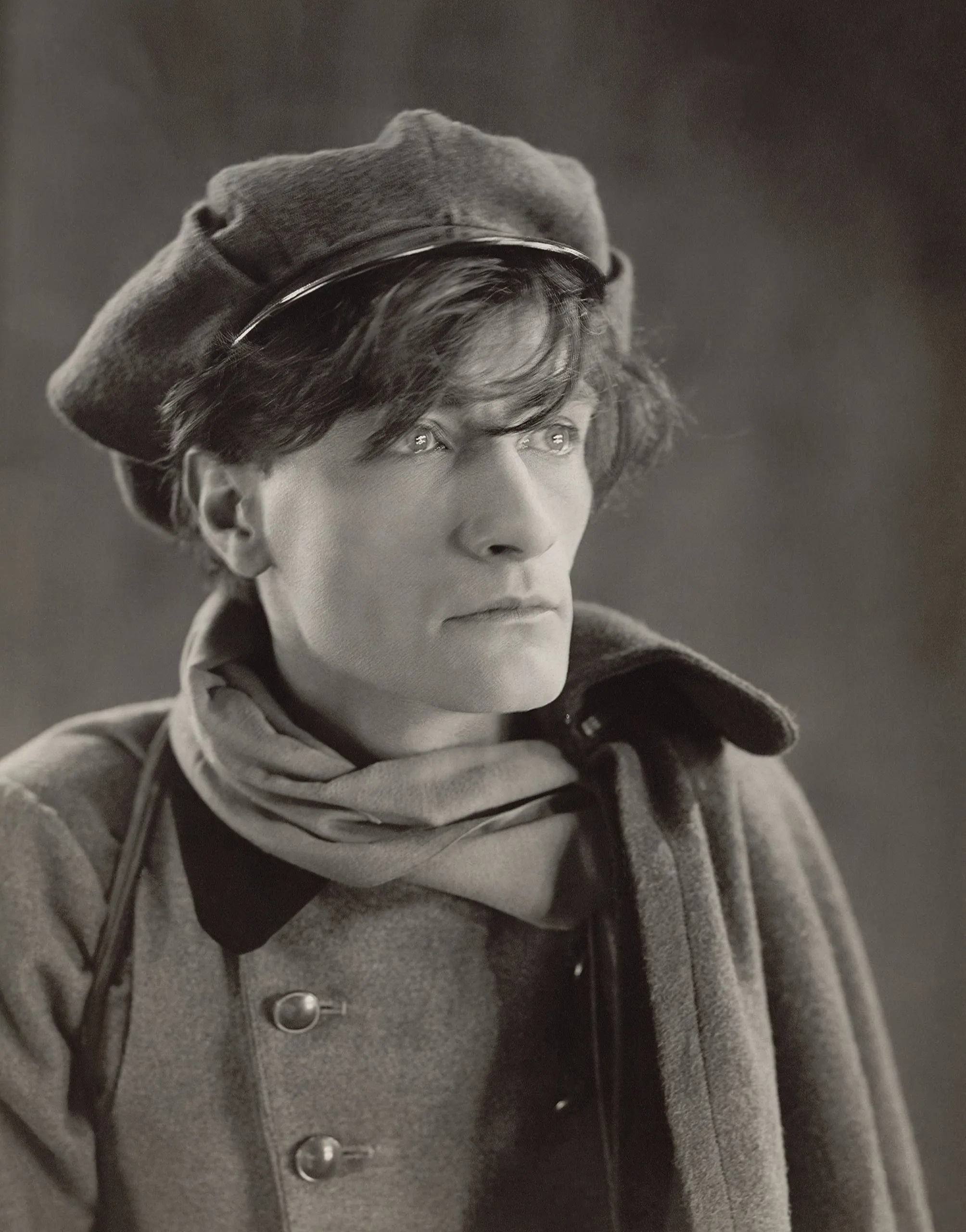
Antonin Artaud
 France
Also known as: Antoine Marie Joseph Artaud, Antoine Marie Joseph Paul Artaud, Artaud
Birthday
September 4, 1896
Birth Sign
Virgo
Birthplace
Marseille, France
Age
Died at 51
About
Antonin Artaud, born Antoine Maria Joseph Paul Artaud on September 4, 1896, in Marseille, was a French playwright, actor, poet, and theorist whose work spanned theatre, cinema, and literature. He is best known for his radical ideas on theatre, particularly his concept of the Theatre of Cruelty, which sought to shock audiences into a raw, visceral engagement with performance. Artaud's writings, including his seminal collection The Theatre and Its Double, challenged conventional Western drama, drawing instead from ancient cosmologies, mysticism, and the rituals of indigenous cultures he encountered during his travels to Mexico and Bali. His influence on twentieth-century theatre is profound, shaping movements like the avant-garde and experimental performance, even as his personal life was marked by mental illness and institutionalization. Artaud died on March 4, 1948, at the age of 51, leaving behind a body of work that continues to provoke and inspire artists across disciplines.
Early Life & Background
Born in Marseille to Levantine Greek parents, Artaud grew up feeling a deep sense of cultural displacement that would haunt him throughout his life. From a very young age, he suffered from severe migraines and spinal issues that left him bedridden for long periods. These chronic ailments led to a lifelong dependency on opium and laudanum, drugs that provided pain relief but also fueled the delirious creativity that would define his career. He attended the Collège Saint-Thomas d'Aquin in Paris but was expelled due to his rebellious nature and poor academic performance. His early interests lay in the occult, theater, and the works of the Marquis de Sade. Before achieving fame, Artaud worked as a stagehand and bit player in Parisian theaters, eventually catching the attention of André Breton and joining the Surrealist movement in the early 1920s. His first major breakthrough came not through writing alone, but through his intense, almost manic performances and his role in the production of Les Cenci (1935), a play based on Shelley's tragedy that caused a scandal in Parisian literary circles due to its brutal staging and themes of incest and murder.
Career Growth
Artaud's career was fragmented yet profoundly influential. In the realm of cinema, he acted in over 20 films, with his most notable roles being in Carl Theodor Dreyer's The Passion of Joan of Arc (1928) and Abel Gance's Napoléon (1927). His expressive face and ability to convey intense emotion made him a standout in these silent epics. On the stage, he founded the Théâtre Alfred Jarry in 1926, producing works that defied conventional narrative structures. However, his most significant contribution was the development of the Theatre of Cruelty, outlined in his seminal 1938 manifesto, The Theatre and Its Double. This theory argued that theater should not merely entertain but should assault the senses to reveal the deeper truths of human existence.
Despite his theoretical success, Artaud struggled commercially. His plays were rarely produced during his lifetime, and his later years were spent largely in psychiatric asylums. Nevertheless, his influence grew exponentially after his death. Key milestones include: founding the Théâtre Alfred Jarry in 1926; starring in Abel Gance's Napoléon in 1927; appearing in Carl Theodor Dreyer's The Passion of Joan of Arc in 1928; directing and starring in The Cenci in 1935, causing a massive scandal; publishing The Theatre and Its Double in 1938; and publishing Van Gogh, the Man Suicided by Society in 1947, earning him the Prix Sainte-Beuve. Posthumously, his works became foundational texts for the Theater of the Absurd and experimental performance art.
Career Timeline
Public Image & Style
Artaud is portrayed as a visionary madman, a martyr for the avant-garde, and an uncompromising critic. His aesthetic is one of intensity, chaos, and raw emotion. Media portrayals often emphasize his mental illness and drug addiction, sometimes romanticizing them as sources of his genius. He cultivated an image of the suffering artist who pushed the boundaries of sanity and society. His public persona was defined by his refusal to conform to social norms and his relentless pursuit of a theater that could shock the audience into a realization of their own existence. This uncompromising stance earned him both admiration and fear among his contemporaries.
Fame & Fandom (iFAMOUS Rankings)
Antonin Artaud commands a global legacy that transcends typical celebrity metrics, anchoring the avant-garde theater world rather than pop culture charts. As of September 2026, iFANN has evaluated his standing and confirmed he does not currently hold a placement in the published rankings or the Global Top 1,000. While his name echoes through every radical performance space from Paris to New York, the data reflects an absence of current numerical ranking rather than a lack of influence. His audience lacks a formal moniker; no collective identity like "Artaudians" exists among his followers. Instead, his devotees are scholars, practitioners, and institutions who treat him as a foundational theorist rather than a pop idol. This community sustains his memory through high-level academic tributes and artistic productions rather than grassroots fan activism or digital campaigns. The enduring vitality of this intellectual following is visible in recent events like the Antoinette Artaud Trilogy at The Tank in April 2026 and the Van Gogh / Artaud: The Man Suicided by Society exhibition at the Musée d'Orsay in March 2026. These moments represent the primary mode of engagement for a figure whose work dismantled bourgeois theater and proposed the visceral shock of the Theatre of Cruelty.
Interesting Facts and Legends
The mythology surrounding Antonin Artaud blends verified history with romanticized folklore. A persistent legend claims he committed suicide, yet he actually died of pneumonia while institutionalized at the Hôpital de Villejuif in 1948. His lifelong addiction to opium and laudanum fueled the delirious writings that defined his career, though stories suggesting his drug use granted him supernatural prophecy remain a romanticization of his mental illness. Another widely retold tale involves his time painting Vincent van Gogh in the asylum, evolving into a narrative of spiritual twins despite their lack of personal connection. Specific anecdotes about audiences fainting during his 1935 play The Cenci are largely posthumous embellishments of the genuine scandal it caused in Parisian literary circles. The most iconic moment cementing his status was his death, which transformed him into a martyr for the avant-garde. His harsh dismissal of younger generations, captured in the sentiment "You Are Quite Unnecessary, Young Man!", further defines his persona as an uncompromising critic who rejected the very people who might have supported him.
Notable Quotes
“You are quite unnecessary, young man!”
“The Theatre of Cruelty must be a theatre of cruelty... it must be a theatre of blood.”
“I want to destroy the theater as it is, to replace it with something else.”
Family & Personal Life
Artaud was born in Marseille to Levantine Greek parents, a heritage that contributed to his sense of cultural displacement and exoticism throughout his life. He had one brother named François Artaud, who played a crucial role in managing his estate after his death. There are no documented siblings other than François. Artaud never married and had no children. His primary relationships were intellectual and artistic collaborations, particularly with figures like Jacques Rivière, Robert Desnos, and the Surrealists. While some biographers suggest he may have had brief, unrecorded liaisons, there is no credible evidence of formal engagements, divorces, or children. As of the time of his death in 1948, he remained single. There are no reported current partners or ongoing relationships, as he has been deceased for nearly eight decades.
Notable Connections
André Breton, Jacques Rivière, Robert Desnos, Samuel Beckett, Marina Abramović
Relationships & Dating History
Antonin Artaud's personal life was tumultuous and largely devoid of stable romantic relationships. Unlike modern celebrities, he did not have a public dating history in the traditional sense. Historical records indicate that Artaud was never married, and there are no documented long-term romantic partnerships or marriages. His primary relationships were intellectual and artistic collaborations, particularly with figures like Jacques Rivière, Robert Desnos, and the Surrealists. While some biographers suggest he may have had brief, unrecorded liaisons, there is no credible evidence of formal engagements, divorces, or children. As of the time of his death in 1948, he remained single. There are no reported current partners or ongoing relationships, as he has been deceased for nearly eight decades. His family consisted of his brother, François Artaud, who managed his estate after his death.
Death & Aftermath
Died
March 4, 1948 (aged 51)
Death Place
Villejuif, Île-de-France, France
Cause of Death
Pneumonia
In the final years of his life, Antonin Artaud lived in a state of profound isolation within the Hôpital de Villejuif, a psychiatric asylum just south of Paris. His days were marked by severe physical decline, characterized by hallucinations, tremors, and an inability to walk or speak coherently as he drifted away from the world that had once sought to understand his radical vision for the Theatre of Cruelty. On March 4, 1948, at the age of fifty-one, the playwright and poet succumbed to pneumonia, a respiratory infection that developed following weeks of deteriorating health. While some accounts have speculated about complications from long-term syphilis or drug toxicity stemming from his history of morphine addiction, the official medical ruling attributed his death solely to the terminal infection.
His funeral was a private affair attended only by his brother, François Artaud, and a few close friends. He was cremated at Père Lachaise Cemetery in Paris, with his ashes scattered in the garden, reflecting both his status as an outcast and the limited resources available for a traditional burial. Immediate tributes were confined to small literary gatherings where figures like Jean Genet and Samuel Beckett acknowledged his influence. It would take decades before his reputation shifted dramatically, culminating in a massive resurgence of interest in the late 1960s and 1970s that cemented his legacy as a foundational figure in twentieth-century performance art.
Following his death, his brother managed the estate, overseeing the publication of remaining manuscripts and correspondence that would eventually secure his place in theater halls of fame and academic foundations dedicated to experimental drama. Recent commemorations include the 130th-anniversary celebration at The Tank in New York City in April 2026 and exhibitions such as Van Gogh / Artaud at the Musée d'Orsay in 2026. The estate remains under the stewardship of the Artaud family, with rights managed through specialized literary agencies ensuring continuous publication and licensing of his plays and essays.
Net Worth (Estate Value)
$0
iFANN Editorial Team estimate
As a deceased historical figure, Antonin Artaud does not have a net worth in the traditional sense of liquid assets available to an individual. Instead, his legacy is measured by the value of his estate and the revenue generated by his intellectual property. The estate is managed by his brother, François Artaud, and subsequently by the Artaud family and specialized literary agencies. Income is generated through the publication of his plays, essays, and correspondence, licensing deals for productions of his works (such as The Cenci), and merchandise related to his image and theories. Specific dollar figures for the total estate value are not publicly disclosed in standard financial reports, as the estate operates more as a cultural trust than a commercial entity. However, the continuous demand for his works, evidenced by recent high-profile productions and exhibitions (e.g., the 2026 Antoinette Artaud Trilogy at The Tank), suggests a steady and growing stream of royalties. The estate's value is likely substantial within the niche of academic and theatrical licensing, though exact figures remain private. iFANN Editorial Team estimates the estate's value cannot be quantified in standard market terms due to its unique cultural nature.
Awards Won (1)
As a figure who died before the modern era of competitive awards, Artaud did not win Oscars, Grammys, or Tonys. However, he received significant recognition for his contributions to literature and theater. He won the Prix Sainte-Beuve in 1947 for his book Van Gogh, the Man Suicided by Society. While he has no Hall of Fame induction in the pop culture sense, he is universally recognized as a founding figure in the "Hall of Fame" of experimental theater. His name is synonymous with the canon of avant-garde performance.
1947 · Literature
Van Gogh, the Man Suicided by Society
Known For
Theatre of Cruelty
1938 · Theorist
The Passion of Joan of Arc
1928 · Actor
Napoléon
1927 · Actor
The Cenci
1935 · Director/Actor
The Theatre and Its Double
1938 · Author
Keywords
Sources
Quick Facts
- Profession
- playwright, actor, poet
- Born
- September 4, 1896
- Birthplace
- Marseille, France
- Died
- March 4, 1948
- Death Place
- Villejuif, Île-de-France, France
- Gender
- Male
- Birth Sign
- Virgo
Personal Details
- Full Name
- Antoine Maria Joseph Paul Artaud
- Children
- Education
- Collège Saint-Thomas d'Aquin (expelled)
Filmography
21
Total
20
Film
1
TV
Frequently Asked Questions
Who was Antonin Artaud?
When did Antonin Artaud die?
What was Antonin Artaud's cause of death?
Did Antonin Artaud have any children?
Is Antonin Artaud still alive?
Similar People
Join the community
fans discussing