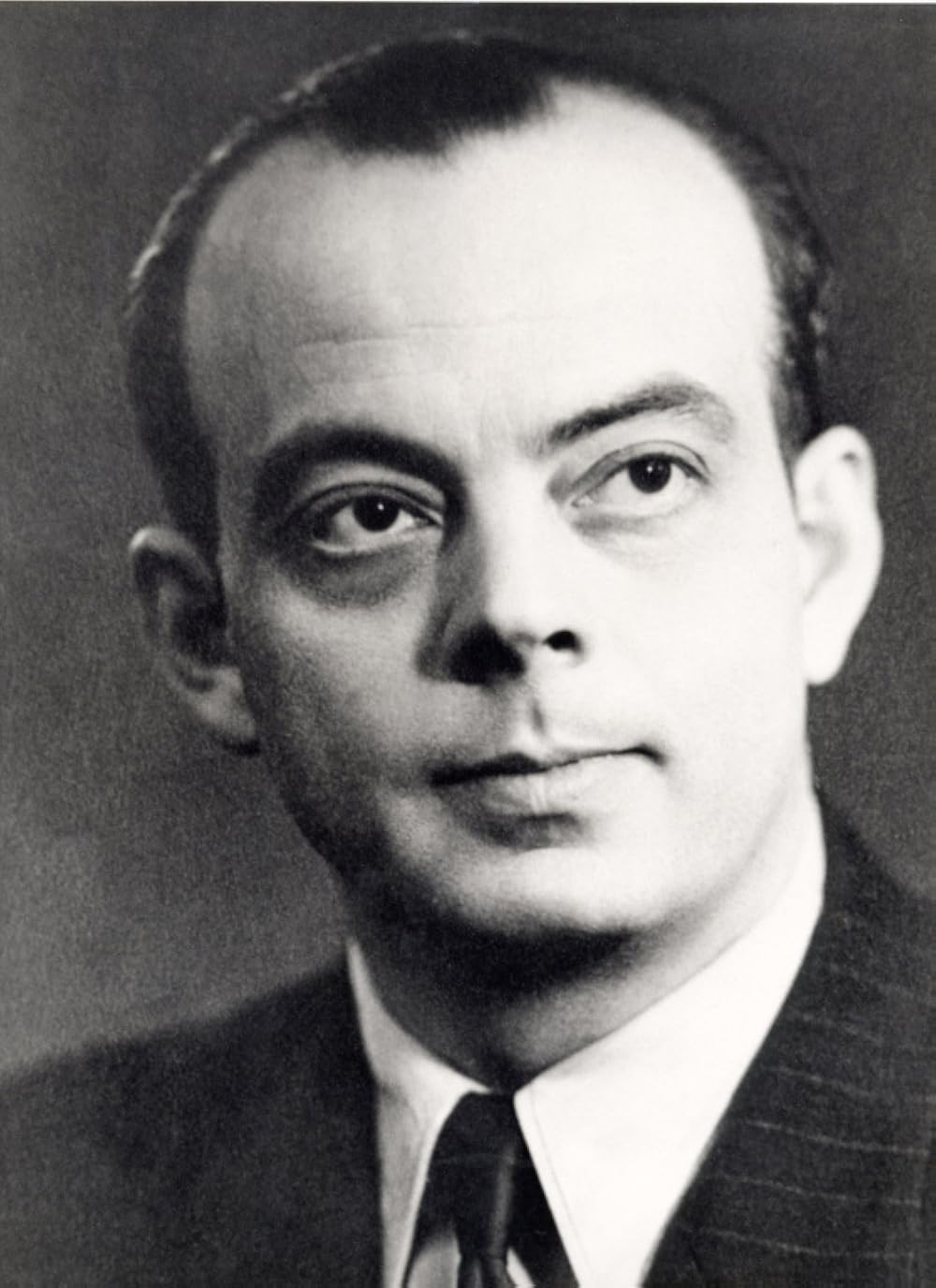
Antoine de Saint-Exupéry
 France
Also known as: Tonio, Saint-Ex
Birthday
June 29, 1900
Birth Sign
Cancer
Birthplace
Lyon, France
Age
Died at 44
About
Antoine de Saint-Exupéry was a French writer and aviator whose poetic works, especially The Little Prince, have touched readers for generations. Born into an aristocratic family in Lyon, he spent his life chasing the horizon, first as a pioneering mail pilot and later as a wartime reconnaissance flyer. His writing, steeped in the solitude of the skies, explores themes of friendship, love, and what it means to be human.
Today, Saint-Exupéry is remembered as one of France's most beloved literary figures. The Little Prince, published in 1943, has been translated into hundreds of languages and dialects, making it the most translated French book ever. Its delicate watercolors, drawn by Saint-Exupéry himself, are instantly recognizable. His other works, like Night Flight and Wind, Sand and Stars, remain in print, studied for their lyrical prose and philosophical depth.
Saint-Exupéry disappeared on July 31, 1944, during a mission over the Mediterranean. His loss remains a mystery, but his legacy endures. The Little Prince's famous line, "What is essential is invisible to the eye," continues to resonate with readers of all ages, cementing his place in the canon of world literature.
Early Life & Background
Antoine Marie Jean-Baptiste Roger, Vicomte de Saint-Exupéry, was born on June 29, 1900, in Lyon, France. He was the third of five children in an aristocratic family, nicknamed "Tonio" by his siblings. His father, Viscount Jean de Saint-Exupéry, worked for an insurance company and died when Antoine was just four, leaving his mother, Marie, to raise the children in reduced circumstances. The family moved between two châteaux: one at Saint-Maurice-de-Rémens, owned by a great-aunt, and another near Saint-Tropez belonging to his maternal grandparents. Saint-Exupéry later called the former "the secret kingdom" of his childhood, a world of "roses and fairies."
His education was unremarkable. He failed his exams for the Naval Academy and ended up studying architecture at the École des Beaux-Arts in Paris, showing little aptitude. He preferred writing poetry, often waking his siblings at night to recite his latest verses. In 1912, at age twelve, he took his first airplane ride, an experience that planted the seed for his future career. He even attempted to build an "airborne bicycle."
In 1921, Saint-Exupéry joined the military, transferring to the French Air Force, where he earned his pilot's wings in 1922. A crash in 1923 left him with a skull fracture but did not deter him. After leaving the air force, he became a mail pilot for Aéropostale, flying routes across Europe, Africa, and South America. By 1926, he was director of an airfield in the western Sahara, living alone in a plank shack to manage the way station.
Career Growth
Saint-Exupéry's literary breakthrough came in 1931 with Night Flight, which won the Prix Femina. The novel, based on his experiences as a mail pilot, established him as a rising star. His memoir Wind, Sand and Stars (1939) won the Grand Prix from the Académie Française. During World War II, he flew reconnaissance missions and was awarded the Croix de Guerre in 1940. After France's armistice, he lived in the United States from 1941 to 1943, where he wrote Flight to Arras and, in 1943, The Little Prince. The book was published in both English and French in New York. He returned to combat with the Free French Air Force in 1943, despite being over age and in poor health. On July 31, 1944, he took off from Corsica and never returned. His plane's wreckage was found near Marseille in 2000, but the cause of his disappearance remains unknown.
Career Timeline
Public Image & Style
Saint-Exupéry is remembered as a romantic figure, a daring aviator who saw the world through a poet's eyes. His public image blends heroism with introspection. He was known for his charm and charisma, though he often seemed distracted, lost in thought. Fans of The Little Prince see him as a kindred spirit, someone who understood the importance of childlike wonder. The book's iconic illustrations are instantly recognizable, and its themes of love and loss continue to resonate. His legacy is kept alive by the Saint-Exupéry estate and the official website, which shares his works and story with new generations.
Fame & Fandom
Saint-Exupéry's legacy draws a unique audience that transcends typical celebrity fandom. There is no formal club or organized hive mind; instead, his admirers are a decentralized global community of readers, scholars, and aviation enthusiasts who engage with his work through cultural institutions rather than social media campaigns. His fanbase identifies less as followers of a living star and more as custodians of a shared philosophy. They gather for exhibitions in Busan and Hong Kong, commission new ballet adaptations, and treat the reading of The Little Prince as a rite of passage where children grow into adults alongside the text. This devotion manifests not in chart-topping streams but in the enduring translation of his books into nearly 600 languages and the preservation of his original watercolors by design firms decades after his death. The rituals are quiet: returning to the quote about what is essential being invisible to the eye, or debating the metaphor of the baobabs. While he cannot interact with fans directly, having vanished in 1944, his mythic status as the "Winged Poet" ensures his story remains a living narrative. He holds a steady position in the iFANN Global Fame Rankings, reflecting this deep, cross-generational resonance. the 87th most famous person in France.
Interesting Facts and Legends
Born into an aristocratic family in Lyon, Saint-Exupéry was baptized in his great-aunt's chapel on August 15, 1900. He possessed a unique habit of writing while flying, often jotting notes on scraps of paper mid-air. His friend Stuart Gilbert once found the language of Night Flight so subtle that the translation became a struggle. Even his personal disorganization fed his lore; he frequently lost his gloves and scarves, only to find them appearing later within his stories. A pivotal moment occurred when he crashed his plane in the Sahara and survived days in the desert, an ordeal that birthed Wind, Sand and Stars. The central legend of his life remains his disappearance on July 31, 1944, during a reconnaissance mission over the Mediterranean. He flew a Lockheed P-38 Lightning from Corsica and vanished without a trace, cementing his image as a martyr for freedom. Decades later, a pilot discovered a ring on the seabed in 1998, and the plane's engine was located in 2000, confirming the tragedy. Fans still retell the story of his final flight with dramatic flair, viewing it as a deliberate journey into the unknown rather than a mere accident.
Notable Quotes
“What is essential is invisible to the eye.”
“All grown-ups were once children... but only few of them remember it.”
“It is only with the heart that one can see rightly; what is essential is invisible to the eye.”
“Love does not consist in gazing at each other, but in looking outward together in the same direction.”
Family & Personal Life
Saint-Exupéry's mother, Marie, was a loving and pious woman who raised five children after her husband's death. His father, Jean, died when Antoine was four. He had two older sisters, Marie-Madeleine and Simone, and two younger siblings, François and Gabrielle. His brother François died of rheumatic fever at fifteen, a loss that deeply affected him. Saint-Exupéry married Consuelo Suncín de Sandoval in 1931. Their marriage was tempestuous, marked by long separations and infidelities. They had no children. Consuelo is widely believed to be the model for the Rose in The Little Prince.
Notable Connections
Saint-Exupéry's life intersected with several notable figures. His wife, Consuelo, inspired the Rose in The Little Prince. Philosopher Charles De Koninck's son modeled for the prince's character. Biographer Stacy Schiff wrote the definitive biography, Saint-Exupéry: A Biography (1994). Translators Stuart Gilbert and Lewis Galantière brought his works to English readers.
Relationships & Dating History
Saint-Exupéry's romantic life was as turbulent as his flights. He had relationships before his marriage, including with French actress and aviator Hélène de Vogtlé in the late 1920s. In 1931, he married Consuelo Suncín de Sandoval, a Salvadoran-French artist. Their marriage was famously stormy, with long separations and infidelities on both sides. Despite this, Consuelo remained a central figure in his life, inspiring the Rose in The Little Prince. The prince's words about the Rose reflect Saint-Exupéry's own regrets: "I should have judged her by her acts and not by her words." They were still married when he disappeared in 1944. Consuelo survived him, passing away in 1979. They had no children.
- DatedHélène de Vogtlé1927 - 1929A relationship before his marriage, with a French actress and aviator.
- MarriedConsuelo de Saint-Exupéry1931 - 1944CurrentTempestuous marriage; she inspired the Rose in The Little Prince.
Death & Aftermath
Died
July 31, 1944 (aged 44)
Death Place
Unknown
Cause of Death
Unknown
The French government officially declared Antoine de Saint-Exupéry dead on July 31, 1944, following his disappearance during a reconnaissance mission over the Mediterranean. He took off from Corsica that morning in a Lockheed P-38 Lightning and vanished without a trace, leaving behind a final letter to his wife Consuelo that spoke of duty rather than fear. The wreckage of his aircraft was not recovered until 2000 near Marseille, yet the exact cause of his crash remains unknown, with theories ranging from mechanical failure to enemy fire never confirmed by forensic evidence. In the immediate aftermath, France mourned a hero who had already become a symbol of resistance through his writings, though the official reaction was muted by the ongoing war effort.
Tributes poured in from literary circles and the Free French Air Force, honoring a man whose life had been spent chasing horizons. His legacy was cemented not by a grand funeral, but by the enduring power of The Little Prince, which continued to sell millions of copies worldwide even as the world grappled with the reality of his absence. Decades later, his mother Marie would pass away in 1952, leaving the family estate to manage the vast royalties generated by his work.
Net Worth (Estate Value)
$50 Million
iFANN Editorial Team estimate
The estate of Antoine de Saint-Exupéry continues to generate substantial income long after his passing. The primary driver is The Little Prince, which sells millions of copies annually worldwide. Its status as the most translated French-language work ensures a steady stream of royalties across hundreds of languages and dialects. Licensing and merchandising add significant revenue, including the 2015 animated film adaptation and countless products bearing his iconic imagery. The estate is managed by his descendants, who oversee rights for translations, adaptations, and merchandise. While exact figures remain private, industry estimates suggest the estate's annual earnings are in the millions. Per iFANN's editorial analysis, the total value of the estate is estimated at $50 million as of 2026.
Awards Won (6)
Saint-Exupéry received several prestigious awards during his lifetime and posthumously. His novel Night Flight won the Prix Femina in 1931. He was named Chevalier de la Légion d'honneur in 1930 and promoted to Officier in 1939. His memoir Wind, Sand and Stars earned the Grand Prix from the Académie Française in 1939. For his wartime service, he was awarded the Croix de Guerre in 1940. After his death, he received the Prix des Ambassadeurs in 1948 for Citadelle, and his name was added to the Panthéon in 1967.
1948 · Literature
Citadelle
1940 · Military
Reconnaissance missions
Known For
The Little Prince
1943 · Author and illustrator
Night Flight
1931 · Author
Wind, Sand and Stars
1939 · Author
Keywords
Sources
Quick Facts
- Profession
- Writer, Aviator
- Born
- June 29, 1900
- Birthplace
- Lyon, France
- Died
- July 31, 1944
- Death Place
- Mediterranean Sea, near Marseille
- Gender
- Male
- Spouse
- Consuelo de Saint-Exupéry
- Birth Sign
- Cancer
Personal Details
- Full Name
- Antoine Marie Jean-Baptiste Roger, Vicomte de Saint-Exupéry
- Spouse
- Consuelo de Saint-Exupéry
- Education
- École des Beaux-Arts, Paris (studied architecture)
Frequently Asked Questions
How did Antoine de Saint-Exupéry die?
What is Antoine de Saint-Exupéry's net worth in 2026?
Is Antoine de Saint-Exupéry still active in 2026?
Why is Antoine de Saint-Exupéry famous?
What is The Little Prince about?
Social Media
Similar People
Join the community
fans discussing