“A beautiful and bittersweet anime series that treats its characters' grief with patience and lets the emotional payoff arrive on its own terms.”
ScreenAnarchy Staff
ScreenAnarchy
 Japan
"A decade after a friend's death, the ghost of a summer they never finished comes back to ask a favor."
User Score
42000 votes
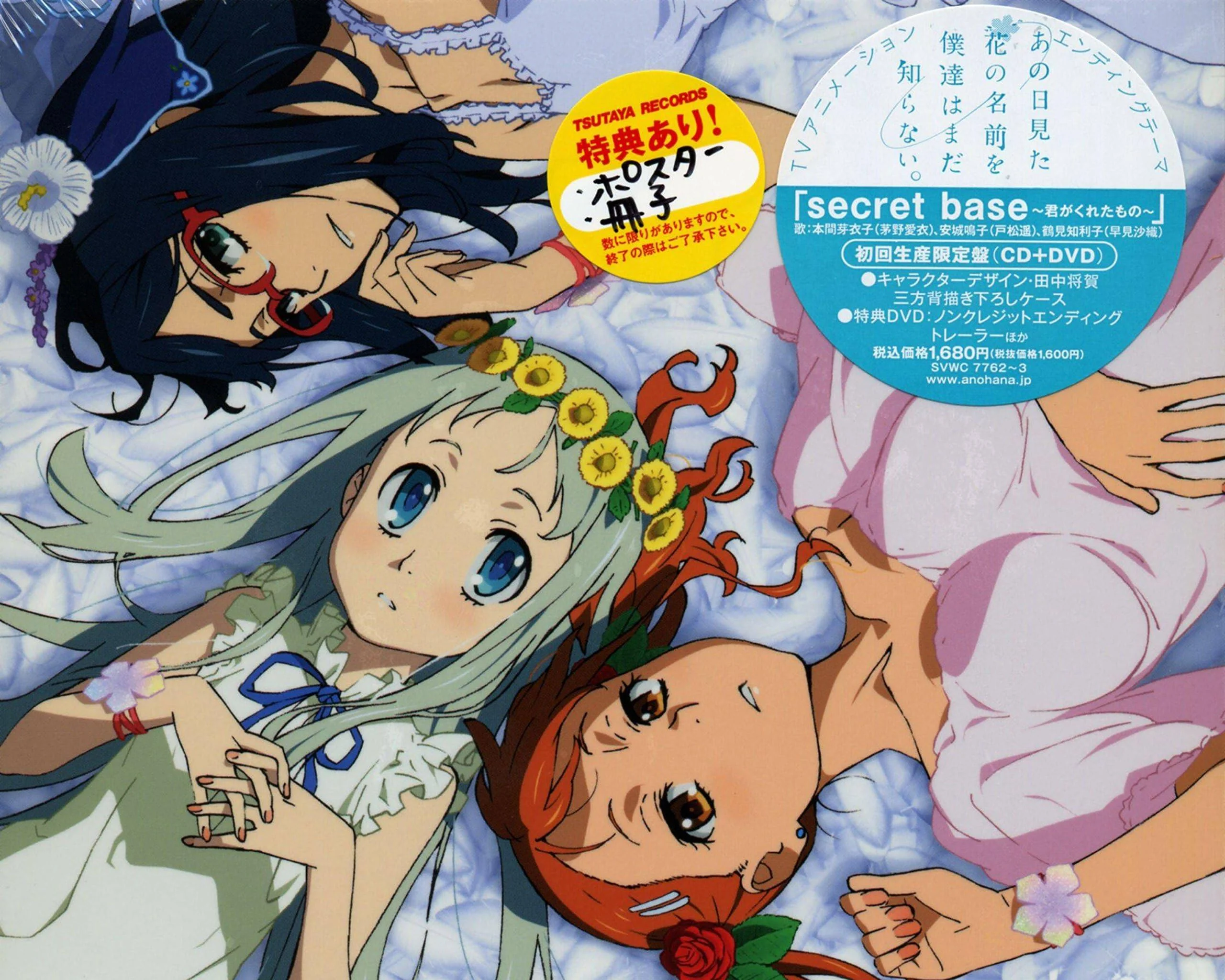
Six kids called themselves the Super Peace Busters. They spent one summer in Chichibu, a town of hills and old wooden houses, and then one of them died. Anohana: The Flower We Saw That Day picks up ten years later, when the group's former leader, Jinta Yadomi, is a shut-in who skips school and talks to almost no one. Then Meiko "Menma" Honma appears in his room, wearing the same white dress she died in, looking exactly as she did at age six. Only Jinta can see her. She has a wish, but she cannot remember what it is.
The show aired 11 episodes on Fuji TV's late-night Noitamina block from April 14 to June 23, 2011. It was made by A-1 Pictures and assembled by Super Peace Busters, the trio of director Tatsuyuki Nagai, screenwriter Mari Okada, and character designer Masayoshi Tanaka. Okada wrote every script. The premise is a ghost story, but the ghost is not the point. The point is what a decade of unresolved guilt does to five people who were once inseparable.
Each friend has found a different way to not deal with it. Naruko Anjo has turned herself into a fashionable girl with a new set of friends. Atsumu Matsuyuki has become a top student with a brittle temper. Chiriko Tsurumi stays close to Atsumu and says little. Tetsudo Hisakawa travels and smiles and never sits still. Jinta stays home. Menma's arrival forces all five back into the same room, and the show spends its short run letting them fight, avoid, confess, and finally listen to each other.
Availability and pricing can change. Confirm on the provider's site before purchasing.
Jinta Yadomi is seventeen and has stopped going to school. He lives with his father, sleeps through the day, and avoids the old friends who still live in town. The summer heat is thick, and then Menma is standing in his room, barefoot, cheerful, and completely unaware that she has been dead for ten years. Jinta assumes he is losing it. He tries to ignore her. She keeps showing up, asking him to grant her wish, and the only thing she can tell him is that she cannot remember what the wish was.
To figure it out, Jinta does the thing he has been avoiding for a decade: he contacts the others. Naruko, who now goes by Anaru and dresses like a girl from a magazine, is the first to come. Atsumu arrives polished and cold, and he does not believe Jinta for a second. Chiriko comes because Atsumu does. Tetsudo, who has been drifting around the country, turns up with a grin and a backpack. The five of them stand in Jinta's yard and remember, badly, how to be a group.
The early episodes are built around small, awkward gatherings. They meet at a restaurant and argue about nothing. They try to spend a day together and end up scattered. The show uses these scenes to show each person's defense mechanism in action: Anaru changes the subject with a laugh, Atsumu corrects people with a sneer, Chiriko watches from the edge, Tetsudo fills silences with noise, and Jinta shuts down. Menma floats through all of it, visible only to Jinta, delighted to see everyone and confused about why they are all so unhappy.
As the summer goes on, the question of Menma's wish becomes a way for the group to talk about the thing they never talked about: the day she died. Each friend carries a private theory about their own responsibility, and each has kept it secret. The show doles these out slowly, letting one character crack open in an episode while the others watch. There is a love triangle running through it, and then another one, because Anaru has feelings for Jinta, Atsumu has never let go of Menma, and Chiriko has spent years loving Atsumu in silence. The romantic mess is not separate from the grief. It is how the grief shows up.
The middle stretch turns rougher. Atsumu's resentment boils over, and he does something that shocks the group and forces them to see how far he has drifted. Jinta's isolation gets worse before it gets better. The show is willing to make its characters unlikable, and it does not rush to forgive them. What holds the story together is Menma herself, who is not a symbol or a manic pixie ghost but a kid who missed out on growing up and wants her friends to be okay.
By the final stretch, the group has been forced into the same space enough times that the old bonds start to show through the damage. They begin to admit things, first to themselves and then to each other. The show builds toward a confrontation that is less about solving a mystery than about five people finally saying out loud what they have been carrying. The season does not end on a neat resolution of every feeling. It ends on a release, and the release is the whole point.
Anohana Official Trailer
Anohana Trailer 2
Anohana English Sub Trailer
Critical Consensus
Anohana is remembered as one of the defining tearjerkers of 2010s anime, praised for its emotional honesty and its refusal to make its grieving characters easy to like. Critics note that the melodrama can tip into overstatement, but most agree the finale earns its catharsis. The show won the 2011 Anime Grand Prix and the television category at the 2012 Tokyo Anime Awards.
“A beautiful and bittersweet anime series that treats its characters' grief with patience and lets the emotional payoff arrive on its own terms.”
ScreenAnarchy Staff
ScreenAnarchy
“The show's willingness to let its friends be petty, resentful, and cruel is exactly what makes the final reconciliation land as hard as it does.”
Weekend Otaku Staff
Weekend Otaku
“Anohana's real achievement is that it makes a ghost story feel like the most grounded thing in the room.”
Comic Book Resources Staff
CBR
Miyu Irino
Jinta "Jintan" Yadomi
Ai Kayano
Meiko "Menma" Honma
Haruka Tomatsu
Naruko "Anaru" Anjo
Takahiro Sakurai
Atsumu "Yukiatsu" Matsuyuki
Saori Hayami
Chiriko "Tsuruko" Tsurumi
Takayuki Kondo
Tetsudo "Poppo" Hisakawa
Director
Tatsuyuki Nagai
Writer
Mari Okada
Composer
Remedios
Producer
A-1 Pictures
Anime Grand Prix (2011)
Best Anime: Won
Tokyo Anime Awards (2012)
Television Category: Won
Join the community
fans discussing