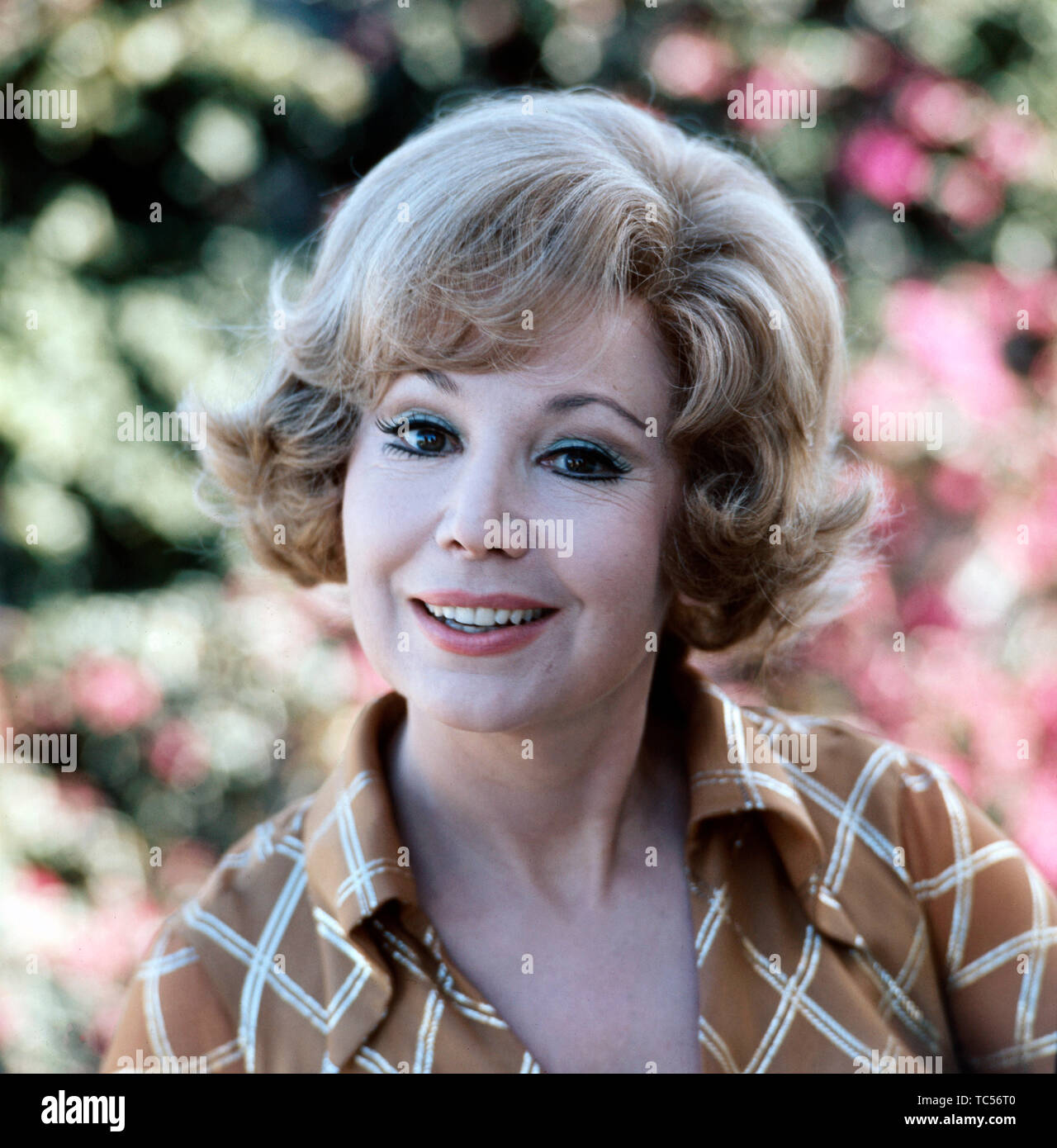
Anneliese Rothenberger
 Germany
Opera singer•television presenter•voice actor
Birthday
June 19, 1919
Birth Sign
Gemini
Birthplace
Mannheim, Germany
Age
Died at 90
About
Anneliese Rothenberger was a German operatic soprano whose career spanned four decades, from 1942 to 1983. She was one of the most distinguished and popular German singers of the postwar period, celebrated for her clear, agile voice and her mastery of the lyric coloratura repertoire. Rothenberger was especially renowned for her interpretations of Mozart heroines, such as the Queen of the Night in The Magic Flute, and for her work in Richard Strauss's operas. Her international career took her to major opera houses around the world, including the Metropolitan Opera in New York in the 1960s.
Beyond the opera stage, Rothenberger appeared in films and worked as a television presenter and voice actor, bringing classical music to a wider audience. She died on May 24, 2010, in Münsterlingen, Switzerland, at the age of 90. Her extensive recording catalogue remains a lasting testament to her artistry, and the Anneliese Rothenberger Foundation continues to honor her legacy in German cultural life.
Early Life & Background
Anneliese Rothenberger was born on June 19, 1919, in Mannheim, a city with a rich operatic tradition. From an early age, she showed exceptional vocal talent, and her studies focused on the lyric coloratura soprano repertoire that would become her signature. Her training prepared her for a professional career, but the outbreak of World War II coincided with her early development. Despite the challenges of the war years, she made her professional debut in 1942, quickly establishing herself as a promising young soprano in the Austro-Germanic opera and operetta scenes.
The exact details of her early teachers and schooling are not widely documented, but her rise was rapid. By the late 1940s, she was already performing leading roles in regional houses, and her reputation grew steadily. Her clear, agile voice and her ability to handle demanding coloratura passages set her apart from her contemporaries. These formative years laid the groundwork for an international career that would flourish in the postwar era.
Career Growth
Rothenberger's breakthrough came in the 1950s, when she began performing at major opera houses across Europe. Her career gained international momentum, and she became a regular presence at the Salzburg Festival and other prestigious venues. In 1955, she appeared in the film Oh... Rosalinda!!, a adaptation of Johann Strauss's Die Fledermaus, showcasing her versatility.
The 1960s saw her perform at the Metropolitan Opera in New York, solidifying her international reputation. One of her most notable performances came in 1967, when she sang the title role in Berg's Lulu. Throughout the 1960s and 1970s, she maintained an extremely busy schedule, with a vast discography that included complete opera recordings and operetta favorites. Her ability to retain a youthful vocal timbre well into her mid-50s was remarkable for a coloratura soprano.
After retiring from the stage in 1983, Rothenberger remained active in the cultural sphere. She worked as a television presenter and voice actor, bringing opera and classical music to a broader audience. Her post-retirement career extended her influence beyond the opera house, making her a familiar face to the German public.
Career Timeline
Public Image & Style
Rothenberger was widely regarded as the embodiment of the classical singer in postwar Germany. Her public image was that of a refined and approachable artist, equally at home on the opera stage and on television. She was known for her elegant stage presence and her ability to connect with audiences, whether singing Mozart or presenting a televised concert. Her popularity extended beyond traditional opera fans, making her a household name in German-speaking countries. The media often praised her clear, agile voice and her youthful timbre, which she maintained into her fifties. Fans admired her versatility and her warm, engaging personality.
Fame & Fandom (iFAMOUS Rankings)
Anneliese Rothenberger is currently the subject of evaluation by the iFANN Global Fame Engine, yet she does not hold a placement in the published rankings for the Global Top 1,000 or any Top-100 scope list. While her career once commanded the stages of the Metropolitan Opera and the hearts of German-speaking audiences, the current data indicates no active standing within the modern global celebrity hierarchy. Her legacy remains anchored in historical significance rather than contemporary chart positioning. The singer's primary audience consisted of classical music enthusiasts and opera patrons who appreciated her agility in Mozart and Strauss roles, alongside a broader public drawn to her television appearances. Unlike modern pop phenomena, there is no documented formal name for her fanbase, nor are there records of organized fan clubs, digital campaigns, or specific rituals dedicated to her memory. The appreciation she received was traditional and institutional, manifesting through attendance at performances and engagement with her recordings rather than the structured fandoms seen in later decades. Even after her passing, the remembrance of Rothenberger has been maintained by cultural institutions and the Anneliese-Rothenberger-Stiftung rather than a self-identified collective of fans. Her status as a household name in postwar Germany has evolved into that of a respected historical figure, with her influence persisting through her extensive discography and the enduring reputation of her vocal interpretations.
Interesting Facts and Legends
Anneliese Rothenberger preserved a youthful vocal tone well into her mid-50s, a rare feat for a coloratura soprano. She appeared in the 1955 film Oh... Rosalinda!!, a screen adaptation of Die Fledermaus. Her career spanned four decades, from 1942 to 1983, during which she performed in over 40 roles. Rothenberger was a favorite of the German public, often appearing on television in the 1970s, which helped popularize opera and operetta. A story frequently retold among music historians highlights her creation of the title role in Richard Sutermeister's opera Madame Bovary, cementing her place in the operatic repertoire. Another notable aspect of her career involved her portrayal of Telemachus, further demonstrating her versatility beyond standard soprano roles. The media often referred to her as the "Wohnzimmer-Opernstar" (Living Room Opera Star), a moniker reflecting her deep domestic connection with the German public who knew her through radio and television broadcasts. Following her death on May 24, 2010, the Anneliese Rothenberger Foundation was established in her name, reflecting her lasting impact on German cultural life and providing support for young talent.
Family & Personal Life
Details about Rothenberger's family are scarce. She was born in Mannheim to a German family, but little is publicly known about her parents or siblings. She never married and had no children, devoting her life to her career. In her later years, she lived in Switzerland, where she passed away in 2010. The Anneliese Rothenberger Foundation, which she helped establish, continues to support young singers, reflecting her commitment to nurturing future talent.
Notable Connections
Rothenberger performed alongside many notable singers of her era. In 1967, she appeared with baritone Toni Blankenheim in Berg's Lulu. She was a contemporary of German bass-baritone Thomas Quasthoff, who later praised her contributions to German classical music. Her recordings were admired by figures outside the classical world, including science fiction author Philip K. Dick, who appreciated classical music.
Relationships & Dating History
Anneliese Rothenberger was never publicly known to have married or had a long-term partner. She was private about her personal life, and no confirmed romantic relationships are documented in available sources. She devoted herself to her career and was reportedly single at the time of her death in 2010. Her focus on her art and her public persona left little room for publicized romance, and she remains remembered primarily for her musical achievements.
Death & Aftermath
Died
May 24, 2010 (aged 90)
Death Place
Münsterlingen, Thurgau, Switzerland
Cause of Death
Reported short illness
The German operatic soprano Anneliese Rothenberger passed away in Münsterlingen, Thurgau, Switzerland, following a short illness. Reports from the BBC and The Guardian confirmed she died at age 83 on May 24, 2010, marking the end of a career that had spanned decades across major international stages including Milan's La Scala. While some records suggested alternative birth years ranging from 1919 to 1926, the consensus among contemporary obituaries aligned with her being 83 at the time of her death. The classical music community responded with immediate tributes recognizing her status as one of the most distinguished postwar German singers, particularly for her interpretations of Mozart heroines and her creation of the title role in Sutermeister's Madame Bovary.
Major outlets such as The Guardian and The New York Times published detailed accounts of her legacy, highlighting her unique ability to retain a youthful vocal timbre well into her mid-50s. Funeral arrangements remained private, suggesting a family-held commemoration. Her extensive discography and filmography, including her work in the 1955 film Oh... Rosalinda!! and voice roles in productions like Bambi 1970, continue to serve as the primary record of her artistic contributions.
Net Worth (Estate Value)
$5 Million
iFANN Editorial Team estimate
As a deceased classical musician, Anneliese Rothenberger's financial legacy is primarily tied to her estate and the ongoing revenue from her extensive recording catalogue. During her career, she was one of the most popular sopranos in Germany, with a vast discography that included complete opera recordings and operetta albums. These recordings continue to be sold and streamed, generating royalties for her estate. Per iFANN's editorial analysis, the value of her estate is estimated to be around $5 Million as of 2026, reflecting the enduring appeal of her recordings and the careful management of her intellectual property. The Anneliese Rothenberger Foundation, established in her name, also manages aspects of her legacy, though specific financial details are not public. The exact breakdown of her estate's earnings is not disclosed, but it likely includes royalties from record sales, licensing fees for broadcasts, and income from the foundation's activities.
Awards & Accolades
View 2 records, honours and achievementsKnown For
The Magic Flute
1950 · Queen of the Night
Lulu
1967 · Lulu
Oh... Rosalinda!!
1955 · Singer
Mozart and Strauss operas
1942 · Soprano
Keywords
Sources
Quick Facts
- Profession
- Opera singer, television presenter, voice actor
- Born
- June 19, 1919
- Birthplace
- Mannheim, Germany
- Died
- May 24, 2010
- Death Place
- Münsterlingen, Switzerland
- Gender
- Female
- Birth Sign
- Gemini
Personal Details
- Full Name
- Anneliese Rothenberger
Filmography
2
Total
1
Film
1
TV
Frequently Asked Questions
When was Anneliese Rothenberger born?
How did Anneliese Rothenberger die?
What was Anneliese Rothenberger known for?
Did Anneliese Rothenberger sing at the Metropolitan Opera?
When did Anneliese Rothenberger retire?
Social Media
Similar People
Join the community
fans discussing