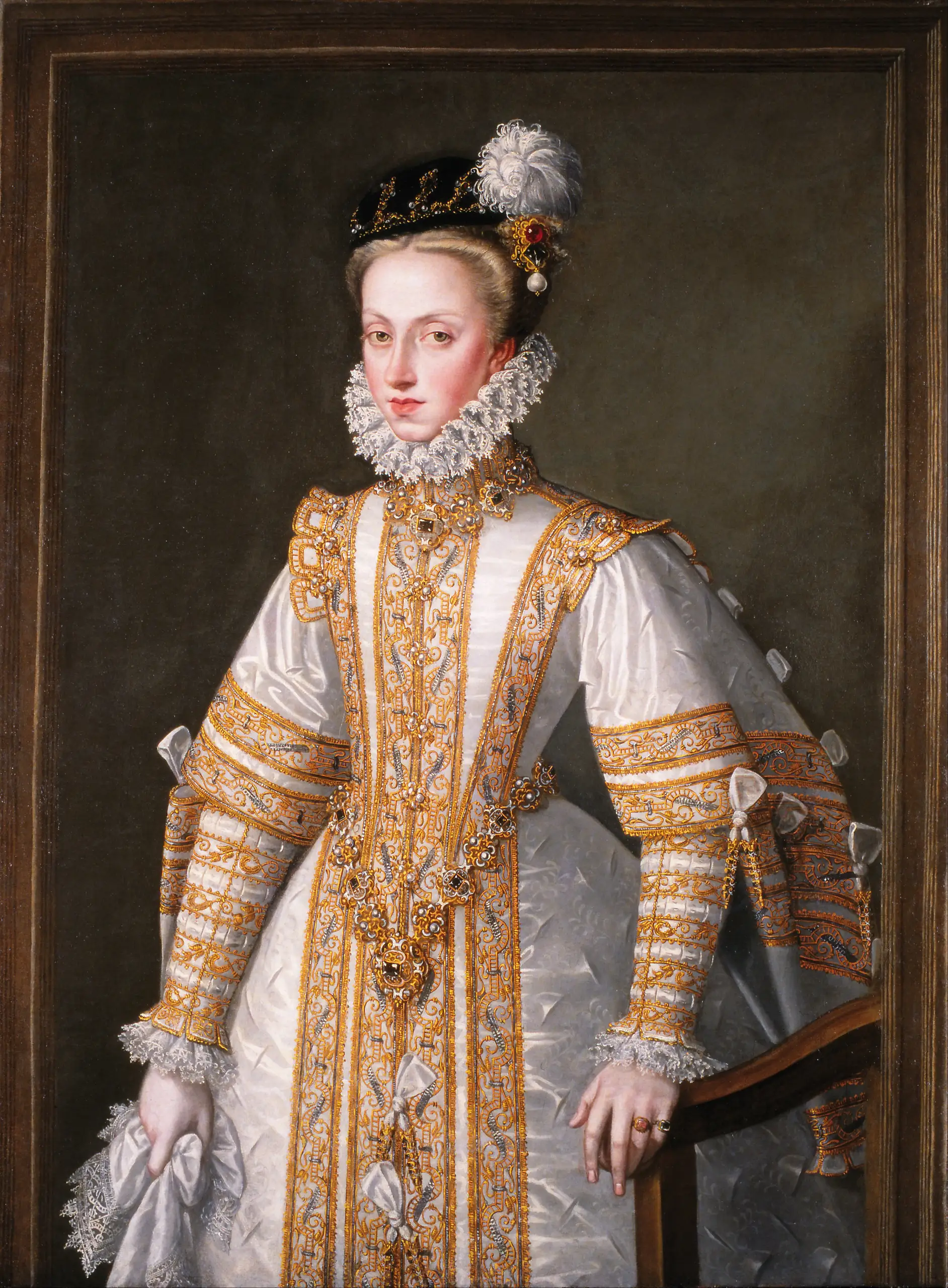
Anne of Austria
 Spain
SpainAlso known as: Ana María Mauricia, Anne d'Autriche, Queen Anne, Ana de Austria
Birthday
September 22, 1601
Birth Sign
Virgo
Birthplace
Valladolid, Spain
Age
Died at 64
About
Anne of Austria, born Ana María Mauricia on September 22, 1601, was a Spanish Habsburg princess who became Queen of France through her marriage to King Louis XIII. As the daughter of King Philip III of Spain and Margaret of Austria, she entered the French court at age fourteen to cement peace between two rival nations. Her tenure as queen consort was marked by deep political suspicion and personal hardship, yet she ultimately secured the future of the Bourbon dynasty by giving birth to the future Sun King, Louis XIV, after twenty-three years of childlessness. Upon Louis XIII's death in 1643, she assumed the role of Regent for her young son, navigating the treacherous waters of the Fronde rebellions before stepping down in 1651. She spent her final years retired at the Convent of Val-de-Grâce, where she died in 1666.
Early Life & Background
Ana María Mauricia was born into the opulent but politically rigid court of Madrid at the Benavente Palace in Valladolid. As a royal infant, she held titles including Infanta of Spain and Archduchess of Austria from birth, destined from the start for a life of dynastic alliance rather than personal choice. Her upbringing was defined by strict Catholic education and rigorous training in court etiquette, religious devotion, and the management of a royal household. Her father, Philip III, was known as a pious but weak monarch, while her mother, Margaret of Austria, exerted significant influence through her own piety. Anne was raised with a profound sense of duty to her family and faith, preparing her for the immense pressure of being a diplomatic pawn.
The pivotal moment of her early life arrived in 1615 when she traveled to France at the age of fourteen. The wedding ceremony took place on the Isle of Pheasants on the Bidasoa River, a neutral ground chosen to symbolize the peace between Spain and France. This transition from a beloved Spanish princess to a foreign queen in a court deeply suspicious of her heritage was immediate and jarring. She faced the daunting challenge of proving her loyalty to a new nation that viewed her origins as a potential threat to its sovereignty. Her arrival marked the beginning of a long struggle to find her footing in a hostile environment where her every move was scrutinized by rivals and ministers alike.
Career Growth
As Queen Consort from 1615 until 1643, Anne endured immense political pressure and a strained relationship with her husband, Louis XIII. Cardinal Richelieu, the king's chief minister, orchestrated plots to separate the couple and even attempted to exile Anne due to fears of her Spanish connections. Despite suffering multiple miscarriages that fueled rumors of infertility and accusations of treason, she persevered. In 1638, after twenty-three years of childlessness, she gave birth to a son, the future Louis XIV, securing the Bourbon dynasty. Two years later, she bore Philippe I, Duke of Orléans, further solidifying the royal line.
Following Louis XIII's death in 1643, Anne was appointed Regent for her four-year-old son. She initially shared this power with Cardinal Mazarin, whom she selected to succeed Richelieu. Her regency was tumultuous, marked by the Fronde, a series of civil wars and noble rebellions against the crown. Anne successfully navigated these crises, demonstrating remarkable political acumen and resilience. By 1651, Louis XIV was declared of age, and Anne stepped down from formal regency, though she remained an influential figure at court. After retiring to the Convent of Val-de-Grâce in 1661, she lived as a nun, dedicating herself to prayer and charity while maintaining a close advisory role with her son until her death.
Career Timeline
Public Image & Style
Anne of Austria is remembered as a resilient and pious queen who overcame political intrigue and personal tragedy to secure the future of the Bourbon dynasty. Her image is often portrayed as one of maternal strength and political savvy, contrasting sharply with the perception of her as a foreign spy during her husband's reign. Portraits depict her with a dignified bearing typical of the Habsburg lineage, often wearing dark, somber clothing that reflected her widowhood and religious devotion. She cultivated an aesthetic of restraint and piety, which helped her regain public trust after the chaos of the Fronde. Her legacy is one of endurance, transforming from a despised foreign princess into a capable ruler who laid the groundwork for the absolute monarchy of her son.
Fame & Fandom
Anne of Austria holds a unique position in the modern imagination where historical reality has been largely eclipsed by literary invention. While she possesses no organized fanbase, social media communities, or formal fandom name, her cultural footprint remains robust through the persistent popularity of Alexandre Dumas' The Three Musketeers and its countless adaptations. This singular dynamic creates an audience that engages with a fictionalized version of the queen rather than the historical figure who navigated the complex political landscape of seventeenth-century France. The lack of a dedicated fan community distinguishes her from modern celebrities; instead, her legacy is sustained by scholars, authors, and general audiences drawn to the dramatic narratives of court intrigue and romantic speculation that define her story in popular culture. Unlike figures with active fan clubs launching campaigns or organizing events, interest in Anne of Austria manifests as a steady consumption of literature, film, and academic analysis regarding her role in French history. She is remembered not for viral moments or celebrity scandals, but for her transformation from a hated foreign princess into the regent who secured the Bourbon dynasty. Despite the absence of contemporary adoration rituals, her image endures as a symbol of political survival and maternal resilience in the face of royal adversity. According to the iFANN Global Fame Rankings, she is currently evaluated by the engine but does not hold a placement in the published rankings, meaning she is not currently ranked within the Global Top 1,000 or any specific scope list.
Interesting Facts and Legends
A widely retold legend claims Anne of Austria had a romantic affair with the Duke of Buckingham, a plot point central to Alexandre Dumas' The Three Musketeers. Historical evidence suggests this was likely a fabrication or exaggeration by political enemies to discredit her, yet the story has become part of her folklore. Another recurring narrative involves Cardinal Richelieu repeatedly trying to isolate her and attempting to exile her, reflecting the deep distrust surrounding her loyalty. She built the Convent of Val-de-Grâce in 1645 as a vow of gratitude for the birth of Louis XIV, and it remains one of the finest examples of French Baroque architecture in Paris. Modern portrayals often emphasize her role as a mother and political survivor, keeping her character alive in the public imagination through adaptations like the 2024 film A Dangerous Friendship.
Notable Quotes
“I am a woman, and I have done my duty.”
“The stability of the kingdom depends on the succession.”
Family & Personal Life
Anne was the daughter of King Philip III of Spain and Margaret of Austria, both members of powerful European dynasties. Her marriage to Louis XIII produced two sons: Louis XIV, known as the Sun King, and Philippe I, Duke of Orléans. She maintained a close relationship with her confessor, Father Joseph de la Trinité, and was a devout Catholic who patronized the Jesuits. Her bond with her son Louis XIV was particularly strong; she often disapproved of his romantic entanglements and advised him on state matters throughout her life. Anne also had a sister, Isabella Clara Eugenia, who was the Governor of the Netherlands, and another brother, Philip IV of Spain, with whom she maintained correspondence despite the political tensions between their courts.
Notable Connections
Louis XIII of France, Louis XIV, Cardinal Richelieu, Cardinal Mazarin, Philip III of Spain, Margaret of Austria
Relationships & Dating History
Anne of Austria was married to Louis XIII of France from 1615 until his death in 1643. Their union was strictly a political arrangement designed to cement peace between Spain and France, and the relationship was reportedly distant and unhappy. Louis XIII allegedly had mistresses, and Anne was accused of infidelity, particularly regarding rumors involving the Duke of Buckingham, though these were largely unproven political smears. Despite the strain, Anne fulfilled her primary duty by producing two sons. No other confirmed romantic partners exist in historical records. Anne was widowed in 1643 and remained so until her death in 1666. Her posthumous status is that of a widowed queen whose legacy was defined by her children and her service as Regent.
- MarriedLouis XIII of France1615 - 1643Political marriage arranged to secure peace between Spain and France; ended with his death.
Death & Aftermath
Died
January 20, 1666 (aged 64)
Death Place
Paris, France
Cause of Death
Breast cancer
On January 20, 1666, Anne of Austria passed away at the Convent of Val-de-Grâce in Paris at the age of sixty-four. Her final days were spent in seclusion within the convent she had founded, dedicated to prayer and religious devotion rather than public affairs. The officially reported cause of death was breast cancer, a diagnosis confirmed by her attending physicians and consistent with royal medical protocols of the seventeenth century. Following her death, the French monarchy and the Catholic Church organized ecclesiastical ceremonies to honor her legacy, particularly emphasizing her role in consecrating France to the Virgin Mary in 1638.
Her body was transported to the Basilica of Saint-Denis for burial in the traditional resting place of French monarchs. A state funeral attended by the royal court and high-ranking clergy served as a public display of royal piety and respect. King Louis XIV oversaw the proceedings personally, marking the end of an era defined by his mother's resilience. Posthumously, her personal estate passed fully to the crown, consolidating the power she had managed during his minority. Unlike modern figures who leave behind complex estates or family disputes over wealth, Anne's assets were absorbed into the monarchy, leaving no lingering financial controversies. Her legacy remained one of maternal strength and political survival, securing the Bourbon dynasty against the backdrop of civil war and foreign intrigue.
Net Worth (Estate Value)
$0
iFANN Editorial Team estimate
As a deceased historical figure, Anne of Austria does not have a net worth in the modern financial sense. Her estate passed fully to the crown upon her death, consolidating the power of the monarchy. The value of her personal wealth is not quantifiable in contemporary currency, but her patronage of the arts, construction of the Val-de-Grâce convent, and maintenance of a royal household represented a significant portion of the French treasury's resources. During her lifetime, she controlled vast sums allocated for the royal court and religious foundations, but these were state funds rather than personal assets. After her passing, all remaining property and titles reverted to the crown, leaving no private fortune for heirs to manage. The economic impact of her reign lies in the stabilization of the French monarchy and the subsequent rise of absolute power under Louis XIV, rather than in accumulated personal wealth.
Awards & Accolades
View 7 records, honours and achievementsKnown For
Queen of France
1615 · Consort of Louis XIII
Regent of France
1643 · Mother of Louis XIV
The Three Musketeers
1844 · Literary Character (Fictionalized)
Keywords
Sources
Quick Facts
- Profession
- Queen Regnant
- Born
- September 22, 1601
- Birthplace
- Valladolid, Spain
- Died
- January 20, 1666
- Death Place
- Paris, France
- Gender
- Female
- Spouse
- Louis XIII of France
- Birth Sign
- Virgo
Personal Details
- Full Name
- Ana María Mauricia
- Spouse
- Louis XIII of France
- Children
- Louis XIV · Philippe I, Duke of Orléans
- Education
- Strict Catholic education and court etiquette training in Madrid
Frequently Asked Questions
Who was Anne of Austria?
Did Anne of Austria have an affair with the Duke of Buckingham?
Why was she called Anne of Austria?
What happened to Anne of Austria's children?
How did Anne of Austria die?
Similar People
Join the community
fans discussing