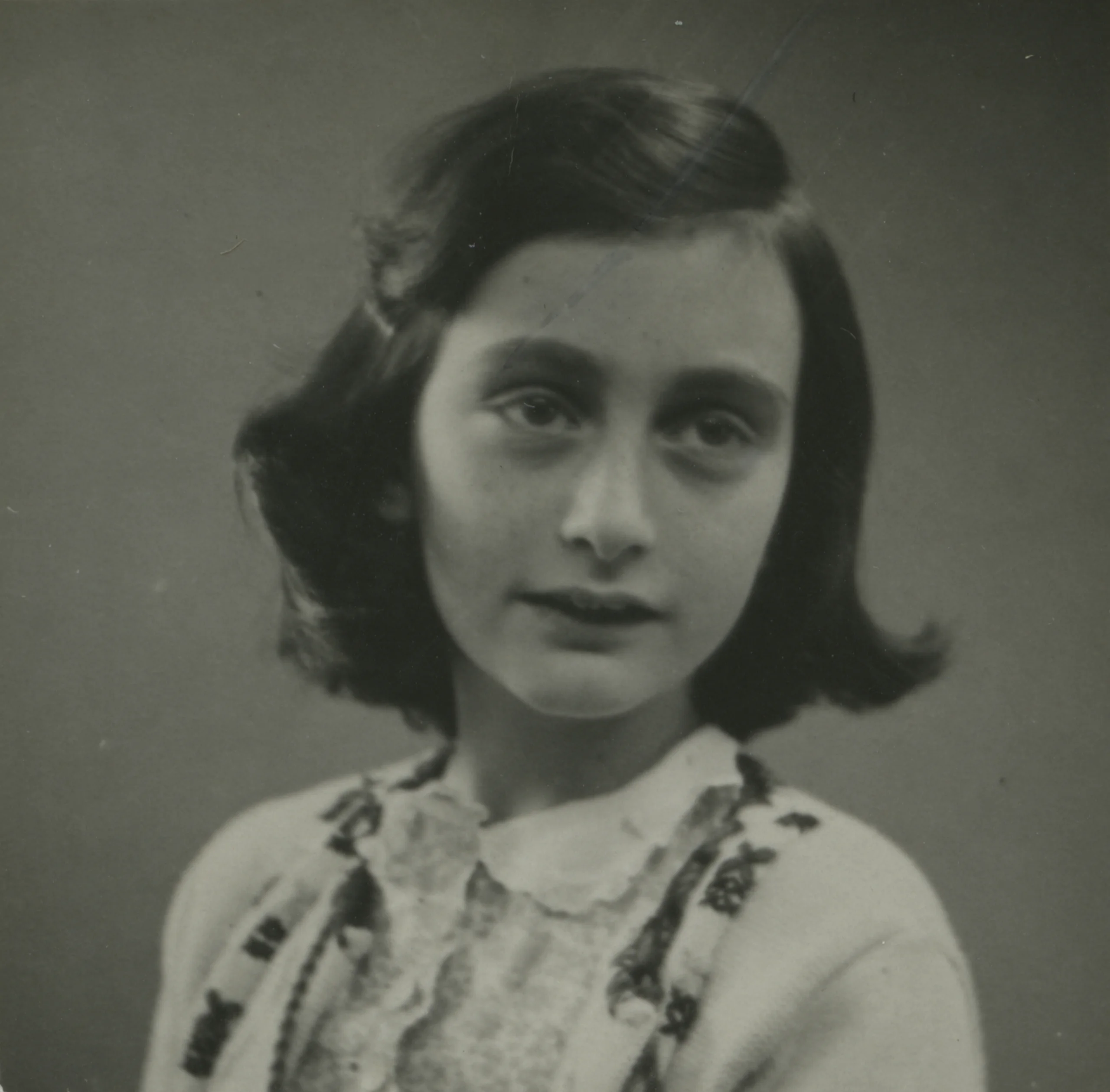
Anne Frank
 Germany
Also known as: Anna Frank, Anne Maries Frank, Anne M. Frank, Anna M Frank
Birthday
June 12, 1929
Birth Sign
Gemini
Birthplace
Maingau Clinic of the Red Cross, Frankfurt am Main, Germany
Age
Died at 15
Height
5 ft 5 in (1.65 m)
About
Annelies Marie Frank was a German-born Jewish diarist whose life and legacy were defined by her tragic death during the Holocaust and the posthumous publication of her diary. Born on June 12, 1929, in Frankfurt am Main, Germany, she became one of the most recognized voices of the twentieth century. Her family fled to Amsterdam in 1933 to escape rising antisemitism, but they were forced into hiding in 1942 when Nazi Germany occupied the Netherlands.
During two years of confinement in a secret annex behind a bookcase, Anne documented her daily life, fears, and hopes in a diary. Her entries reveal a profound maturity and literary talent that captivated the world after her death. Otto Frank, the sole survivor of the group, published her writings in 1947. Today, The Diary of a Young Girl stands as a testament to human resilience and remains one of the most widely read books in history.
Early Life & Background
Annelies Marie Frank was born on June 12, 1929, in Frankfurt am Main, Germany. She spent her early childhood in a comfortable home with her parents, Otto and Edith Frank, and her older sister, Margot. The family lived a middle-class Jewish life until the rise of the Nazi Party in 1933 forced them to flee Germany. They moved to Amsterdam, where Anne began attending the Montessori School. She was an energetic and talkative child who loved reading and writing, often keeping notebooks of her thoughts and stories.
Life in Amsterdam changed drastically after the German invasion in May 1940. The restrictions placed on Jewish people grew more severe, and Anne's freedom was increasingly curtailed. In July 1942, just two months after receiving a red-and-white checkered autograph book for her thirteenth birthday, the Frank family went into hiding. They concealed themselves in a secret annex behind a bookcase in the building at Prinsengracht 263, where Otto's business was located. Anne was not yet famous; she was simply a teenager trying to survive the horrors of occupation while documenting her reality.
Career Growth
The pivotal moment that launched Anne Frank's historical significance occurred on June 12, 1942, when she received a diary and decided to keep it as a record of her life. Two months later, the Frank family went into hiding in a secret annex behind a bookcase in the building at Prinsengracht 263 in Amsterdam. They were joined by the Van Pels family and Fritz Pfeffer. For over two years, Anne documented their daily lives, fears, and reflections on human nature. Her entries reveal a profound maturity and literary talent that would later captivate the world.
The family was betrayed and arrested by the Gestapo on August 4, 1944. After being held in transit camps, Anne and her sister Margot were deported to Auschwitz and then transferred to the Bergen-Belsen concentration camp in October 1944. Both sisters contracted typhus fever and died in February or March 1945, just weeks before the camp's liberation. Otto Frank, the only survivor, returned to Amsterdam and discovered Anne's diary. He fulfilled her dream of becoming a writer by publishing the diary in 1947 as Het Achterhuis, which was translated into English in 1952 as The Diary of a Young Girl.
Career Timeline
Public Image & Style
Anne Frank is portrayed as a symbol of innocence lost, resilience, and the power of the written word. Media coverage consistently highlights her youth, her intelligence, and her enduring message of hope. Her image is often associated with the diary, the secret annex, and the Holocaust. She represents the voice of a generation silenced by persecution, and her words continue to resonate with readers worldwide.
Fame & Fandom (iFAMOUS Rankings)
There is no formal moniker for the global community that reveres Anne Frank, as her legacy rests on historical remembrance rather than entertainment consumption. Her supporters are educators, students, and activists who gather at the Anne Frank House or engage in educational pilgrimages to preserve the memory of a life cut short by persecution. This audience actively defends the inclusion of her work in curricula and reacts with solemnity to commercialization attempts, viewing her story through the lens of human rights rather than fandom rituals. Within this landscape of enduring influence, the iFANN Global Fame Rankings measure her continued resonance across centuries. Current data places her as the 370th most famous person in the world, a position down from 364th last cycle. She also ranks as the 15th most famous person from Germany, holding steady from the previous cycle. In the realm of cultural output, she is listed as the 21st most famous person in Books & Literature. These placements reflect a global attention that tracks media coverage, search trends, and consumption signals worldwide without diminishing the gravity of her history. The rankings confirm that while she never sought celebrity, her diary has secured a permanent place in the public consciousness. No organized fan clubs or birthday campaigns exist; instead, the commemoration of her birth and the observation of her death remain the primary acts of devotion. Recent legal battles over copyright and distribution further demonstrate how this collective guardianship operates through institutional channels rather than informal networks.
Interesting Facts and Legends
Anne Frank used the pseudonym "Kitty" when addressing her diary, treating it as a confidante. Her father called her "Pim," a name she used throughout her diary entries. The identity of the person who betrayed the Frank family remains unknown, though investigations have pointed to several suspects over the years, including Willem van Maaren and Anton Ahlers, without definitive proof. Her diary originally contained two versions: the first written between June 1942 and August 1944, and a revised version she began working on in April 1944, intended for publication after the war. In July 2026, a controversy arose when the Anne Frank House authorized the sale of a KLM gin shot glass featuring her image, sparking debate about the commercialization of her memory. Educational disputes also persist, such as the 2026 incident in Ahmedabad where a school attempted to make her books optional, leading to immediate public outcry.
Notable Quotes
“In spite of everything, I still believe that people are really good at heart.”
“How wonderful it is that nobody need wait a single moment before starting to improve the world.”
“I don't think of all the misery, but of the beauty that still remains.”
Family & Personal Life
Anne Frank was the second daughter of Otto Frank and Edith Frank-Holländer. She had an older sister named Margot, who was three years her senior. The family lived together in Frankfurt before moving to Amsterdam. During their time in hiding, they were joined by Hermann and Auguste Van Pels and their son Peter, along with Fritz Pfeffer. Miep Gies and Bep Voskuijl were helpers who risked their lives to provide food and supplies to those in hiding. Otto Frank was the sole survivor of the group and dedicated his life to preserving Anne's legacy.
Notable Connections
Otto Frank, Edith Frank, Margot Frank, Miep Gies, Bep Voskuijl, Fritz Pfeffer, Hermann Van Pels, Auguste Van Pels, Peter Van Pels
Relationships & Dating History
Anne Frank did not have any romantic partners or dating history. She was a minor during her entire life and lived in constant confinement from age 13 to 15. While she wrote extensively about her feelings toward boys and her growing awareness of romance, particularly regarding Peter Van Pels, whom she met while in hiding, these were youthful infatuations and emotional explorations rather than established romantic relationships. There are no records of engagements, marriages, divorces, or children. As she passed away at the age of 15, her status at death was single, and she remains deceased.
Death & Aftermath
Died
March 1945 (aged 15)
Death Place
Bergen-Belsen concentration camp, Lower Saxony, Germany
Cause of Death
Typhus fever
Public tributes and global memorials emerged only after the conclusion of World War II, transforming a private tragedy into a universal symbol of the Holocaust. Anne Frank died in early 1945 at the Bergen-Belsen concentration camp in Lower Saxony, Germany, though the precise date remains an estimate rather than a confirmed fact. She was fifteen years old and had been transferred from Auschwitz to Bergen-Belsen during a death march in January 1945. The universally accepted cause of death is typhus fever, a disease that ravaged the overcrowded barracks where she suffered from severe malnutrition alongside her sister, Margot Frank.
No funeral service was held for Anne Frank in 1945, and her body was likely buried in an unmarked mass grave or cremated in a pyre by German forces before liberation. Her father, Otto Frank, never located a specific burial site. Public awareness began with the publication of her diary, Het Achterhuis, edited by Otto Frank in 1947. The work has since sold over 30 million copies in more than seventy languages and generated numerous film adaptations, including the Oscar-winning 1959 production. The Anne Frank House opened as a museum in Amsterdam in 1960, and the Anne Frank Fonds manages her literary estate and funds scholarships for young people. A star on the Hollywood Walk of Fame was awarded posthumously in 2019.
Net Worth (Estate Value)
$15 Million
iFANN Editorial Team estimate
Anne Frank's net worth is not applicable in the traditional sense as she died as a child and never earned income. However, the value of her estate and the commercial success of her work is substantial. The Anne Frank Fonds, managed by the Swiss charity of the same name, oversees her literary rights. The diary has sold over 30 million copies in more than 70 languages. Revenue streams include book sales, licensing for stage plays, films, documentaries, and merchandise. The estate generates significant income through royalties, which are used to fund scholarships for young people and support educational projects. Specific financial figures for the estate's annual revenue vary but are estimated to be in the millions of dollars annually, though exact 2026 figures are not publicly disclosed in real-time. The estate is managed by the Anne Frank Fonds in Basel, Switzerland, with trustees appointed to ensure the funds are used for charitable purposes aligned with Anne's legacy. iFANN currently estimates the value of Anne Frank's estate at approximately $15 Million based on ongoing royalty earnings and licensing deals.
Awards Won (3)
While Anne Frank could not win awards during her lifetime, her work has received numerous accolades. The 1959 film adaptation of her diary won the Academy Award for Best Writing, Screenplay Based on Material from Another Medium. In 1980, she was posthumously awarded the Order of Merit of the Federal Republic of Germany. A star on the Hollywood Walk of Fame was awarded to her in 2019, making her one of the few non-entertainers to receive this honor. She has been inducted into various halls of fame related to literature and human rights.
1959 · Best Writing, Screenplay Based on Material from Another Medium
The Diary of Anne Frank
1980 · Posthumous Honor
N/A
Known For
The Diary of a Young Girl
1947 · Author
The Diary of Anne Frank
1959 · Subject
Keywords
Sources
Quick Facts
- Profession
- diarist
- Born
- June 12, 1929
- Birthplace
- Maingau Clinic of the Red Cross
- Died
- March 1945
- Death Place
- Bergen-Belsen concentration camp
- Gender
- Female
- Birth Sign
- Gemini
Personal Details
- Full Name
- Annelies Marie Frank
- Height
- 5 ft 5 in (1.65 m)
- Children
- Education
- Montessori School, Amsterdam
Frequently Asked Questions
When did Anne Frank die?
What caused Anne Frank's death?
Who betrayed Anne Frank?
Where is Anne Frank buried?
What is the Anne Frank House?
Similar People


Join the community
fans discussing