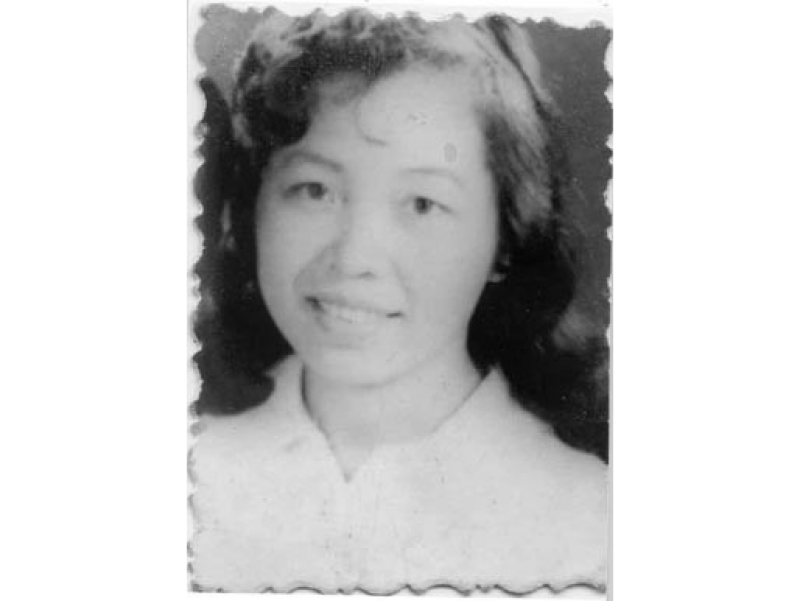
Đặng Thùy Trâm
 Vietnam
Also known as: Tram Dang
Birthday
November 26, 1942
Birth Sign
Sagittarius
Birthplace
Huế, Vietnam
Age
Died at 27
About
Đặng Thùy Trâm was a Vietnamese doctor and diarist, born on November 26, 1942, in Huế, Vietnam. She dedicated her brief adult life to medicine, serving as a battlefield surgeon for the People's Army of Vietnam and the Viet Cong during the Vietnam War. Her experiences on the front lines, providing care to wounded soldiers amidst intense conflict, were meticulously documented in her personal diaries. These writings, discovered and published posthumously as Nhật ký Đặng Thùy Trâm (The Diary of Đặng Thùy Trâm) in 2005, offered a profound and intimate perspective on the realities of war. The book became an international bestseller, humanizing the conflict for many readers and establishing Trâm's legacy as a voice of resilience and dedication. Her insights continue to be studied for their historical and personal significance, often drawing comparisons to Anne Frank for the intimate wartime perspective she provided. Her story is a poignant reminder of the personal cost of conflict and the enduring power of human documentation.
Early Life & Background
Đặng Thùy Trâm was born in Huế, Vietnam, on November 26, 1942, into a family deeply rooted in the medical profession. Both of her parents were physicians, establishing an environment that likely fostered her own early interest in healing and public service. Her formative years were spent navigating the complexities of a nation on the cusp of significant historical upheaval, which undoubtedly influenced her patriotic inclinations and sense of duty. She pursued her higher education at Hanoi Medical University, dedicating herself to extensive studies in medicine. Trâm successfully completed her degree and graduated in 1967, ready to embark on her professional life. Instead of opting for a more conventional medical career, she made a deliberate and profound choice to volunteer for front-line service. At the age of twenty-four, she committed herself to working in a Vietcong battlefield hospital situated in the Quan Ngai province. This assignment placed her directly into the heart of the Vietnam War, where she began her role as a surgeon, providing critical care to soldiers amidst the intense and demanding conditions of combat. Her decision reflected a deep personal conviction to contribute her skills where they were most urgently needed, even as the conflict intensified across the country, setting the stage for the remarkable period of her life that she would later document in her now-famous diaries.
Career Growth
Her medical career began immediately after graduating from Hanoi Medical University in 1967, when she volunteered to serve as a battlefield surgeon. She was assigned to a Vietcong battlefield hospital in the Quan Ngai province, where she worked tirelessly under arduous conditions, performing surgeries and treating wounded soldiers. Her commitment to her patients and her resilience in the face of constant danger were evident throughout her service. During this period, Trâm maintained a personal diary, documenting her daily experiences, observations, and reflections on the war and human nature. Tragically, her service was cut short on June 22, 1970, when she was killed at the age of 27 in Đức Phổ, Vietnam. She and a North Vietnamese Army soldier were shot at close range.
Decades later, her diaries were discovered by American intelligence officer Frederic Whitehurst, who chose to preserve them rather than destroy them. Whitehurst held onto the diaries for 35 years before returning them to Trâm's family in 2005. That same year, the diaries were published in Vietnam under the title Nhật ký Đặng Thùy Trâm (The Diary of Đặng Thùy Trâm). The book quickly became an international sensation, selling hundreds of thousands of copies and offering an unprecedented, intimate perspective on the Vietnam War from a Vietnamese viewpoint. Its publication allowed her experiences to reach a global audience, solidifying her legacy far beyond her brief lifetime.
Career Timeline
Public Image & Style
Đặng Thùy Trâm is remembered as a figure of profound dedication and courage within Vietnam and internationally. Her public image is largely shaped by the contents of her diary, which revealed her resilience, compassion, and unwavering commitment to her medical duties amidst the extreme pressures of the Vietnam War. She is often seen as a symbol of the personal human cost of conflict, providing a voice to the experiences of those directly involved. Her writings resonated deeply with readers, establishing her as an individual who, through her intimate observations, offered a unique and invaluable perspective on a significant historical period. The enduring interest in her story highlights her status as a poignant historical figure, often referred to as the "Anne Frank of Vietnam" due to the intimate nature of her wartime writings.
Fame & Fandom (iFAMOUS Rankings)
Đặng Thùy Trâm is currently evaluated by iFANN but holds no placement in the Global Top 1,000 or any published scope list. While her name resonates deeply across Vietnam and among historians of the conflict, she does not occupy a ranked position on the current global fame scale. The concept of a traditional fandom does not apply to a figure who passed away in 1970, as there are no organized fan clubs, streaming campaigns, or social media rituals associated with her life. Instead of fans, she is revered by citizens, veterans, and students as a national hero and martyr. Her legacy is maintained through state institutions, educational bodies, and patriotic observances rather than grassroots fan movements. Cultural projects dedicated to her memory, such as the publication of *The Third Diary* in 2025 and the staging of the play *Dang Thuy Tram*, function as acts of remembrance and historical education. These initiatives, including the annual Bui Hui Steppe Festival, draw participants seeking to honor her sacrifice rather than engage in celebrity worship. Her voice survives solely through her written words, which continue to be studied and read by the public decades after their discovery. This unique form of veneration transforms her audience into a community of shared history and moral reflection, distinct from the commercial engagement seen with living entertainers.
Interesting Facts and Legends
Đặng Thùy Trâm was often referred to as the "Anne Frank of Vietnam" following the posthumous publication of her diaries, a comparison that highlighted the intimate and personal insights they offered into wartime experiences. An American intelligence officer, Frederic Whitehurst, discovered her diaries in 1970. He made the decision to defy orders to burn them, instead preserving the writings and eventually returning them to her family 35 years later. A primary school in Ho Chi Minh City, named "Trường Tiểu học Đặng Thùy Trâm," was established in her honor, reflecting her enduring legacy and recognition within Vietnam. A news item from April 29, 2026, mentions a food poisoning incident at this school. Her writings were initially published in Vietnam under the title Nhật ký Đặng Thùy Trâm, which translates to The Diary of Đặng Thùy Trâm, before gaining international distribution. For years, it was believed only two volumes of her diary existed until 2025, when a new book titled *The Third Diary*, compiled by her sister Đặng Kim Trâm, revealed previously unpublished entries. The Bùi Hui grassland in Quang Ngai, where she died, has become a pilgrimage site for annual festivals honoring her spirit. In September 2025, nearly 500 military officers and soldiers attended a performance of the play *Dang Thuy Tram* in Dong Nai province, underscoring her status as a role model for the armed forces.
Family & Personal Life
Đặng Thùy Trâm was born into a family with a distinguished medical background. Both of her parents were physicians, a professional lineage that undoubtedly shaped her early aspirations and commitment to healthcare. While their names are not widely publicized, their influence on her career path was evident. There is no publicly available information concerning any siblings she may have had. Her adult life was largely defined by her service as a battlefield surgeon during the Vietnam War, a period where personal and family life were necessarily secondary to her duties. She did not marry or have children before her death in 1970. Her family's enduring legacy is intertwined with her own, particularly through their role in the eventual publication of her diaries.
Relationships & Dating History
Information regarding Đặng Thùy Trâm's personal relationships remains largely unrecorded in public sources. Her brief adult life, consumed by medical studies and then direct service as a battlefield surgeon during the Vietnam War, appears to have left little room for documented romantic engagements. Historical accounts and biographical sketches primarily focus on her professional dedication and her experiences at the front lines, which she meticulously chronicled in her diaries. There are no mentions of early relationships, long-term partners, or marriages in the available research. Her personal writings, while deeply introspective about her mission and observations, do not publicly detail any romantic attachments. Consequently, her relationship status at the time of her death in 1970 is not known through public records.
Death & Aftermath
Died
June 22, 1970 (aged 27)
Death Place
Đức Phổ District, Quảng Ngãi Province
Cause of Death
Combat injuries sustained during enemy engagement
The Vietnamese state officially recognized Đặng Thùy Trâm as a Hero Martyr following her death, an honor that cemented her status within the nation's historical narrative. On June 22, 1970, the 27-year-old surgeon was reported to have been killed during a combat engagement with United States forces at a medical station in Đức Phổ District, Quảng Ngãi Province. She had spent her final days treating wounded soldiers under constant threat of air raids and ground attacks before the fatal ambush occurred. While her body was initially held by opposing troops, the precise mechanics of her final moments remain part of the war narrative rather than a documented legal case file.
In the decades since her passing, public reaction has evolved from local mourning to widespread cultural veneration across Vietnam. Her story inspired the renaming of streets in major cities like Ho Chi Minh City and Huế, while annual commemorations on June 22 now feature vigils, educational programs, and recitations of her diary entries. A memorial complex stands in Đức Phổ where she is buried, serving as a site for government officials and veterans to pay tribute. The immediate aftermath involved the recovery of her personal effects, specifically her handwritten diaries, which were preserved by comrades and later returned to her family.
Posthumous releases have solidified her legacy far beyond her brief lifetime. Her original diary, written between 1968 and 1970, was first published in 2005 as Nhật ký Đặng Thùy Trâm and quickly became an international bestseller. The 2010 film Don't Burn, adapted from her writings, won critical acclaim, and a new volume titled The Third Diary was released in 2025. Her estate remains managed by her sister, Đặng Kim Trâm, who has been instrumental in preserving the archives and overseeing the publication of her works.
Net Worth (Estate Value)
$0
iFANN Editorial Team estimate
Per iFANN's editorial analysis, Đặng Thùy Trâm's net worth is estimated at $0. Her life as a battlefield surgeon during the Vietnam War meant that personal financial accumulation was not a focus of her existence. She dedicated her efforts to medical service under wartime conditions, and her professional activities were centered on treating the wounded rather than earning income for personal wealth. She was killed in 1970 at the age of 27, long before any significant career earnings or asset accumulation could have occurred. Consequently, there is no public record of a personal net worth for Đặng Thùy Trâm. Her legacy is entirely non-financial, rooted instead in her humanitarian service and the posthumous impact of her published diaries. The diaries, titled Nhật ký Đặng Thùy Trâm (The Diary of Đặng Thùy Trâm), became an international bestseller after their publication in 2005. While these writings generated considerable revenue, these proceeds would have accrued to her family and estate, not to Trâm personally. The family engaged the Carol Mann Agency in New York to manage the rights and distribution of the diaries, indicating a professional approach to the financial aspects of the publication. The book's success meant that her family benefited from royalties and sales, which contributed to their financial well-being in the decades following her passing. This financial aspect, however, represents the economic impact of her legacy rather than a personal net worth belonging to Đặng Thùy Trâm herself. The value of her contribution remains primarily in its historical and humanistic significance, rather than in any quantifiable financial assets.
Awards & Accolades
View 2 records, honours and achievementsKnown For
Nhật ký Đặng Thùy Trâm
2005 · Diarist
Keywords
Sources
Quick Facts
- Profession
- surgeon, diarist
- Born
- November 26, 1942
- Birthplace
- Huế, Vietnam
- Died
- June 22, 1970
- Death Place
- Đức Phổ, Vietnam
- Gender
- Female
- Birth Sign
- Sagittarius
- Education
- Hanoi Medical University
Personal Details
- Full Name
- Đặng Thùy Trâm
- Children
- Education
- Hanoi Medical University
Frequently Asked Questions
Who was Đặng Thùy Trâm?
When and where was Đặng Thùy Trâm born?
How did Đặng Thùy Trâm die?
What is Đặng Thùy Trâm famous for?
When was Đặng Thùy Trâm's diary published?
Join the community
fans discussing