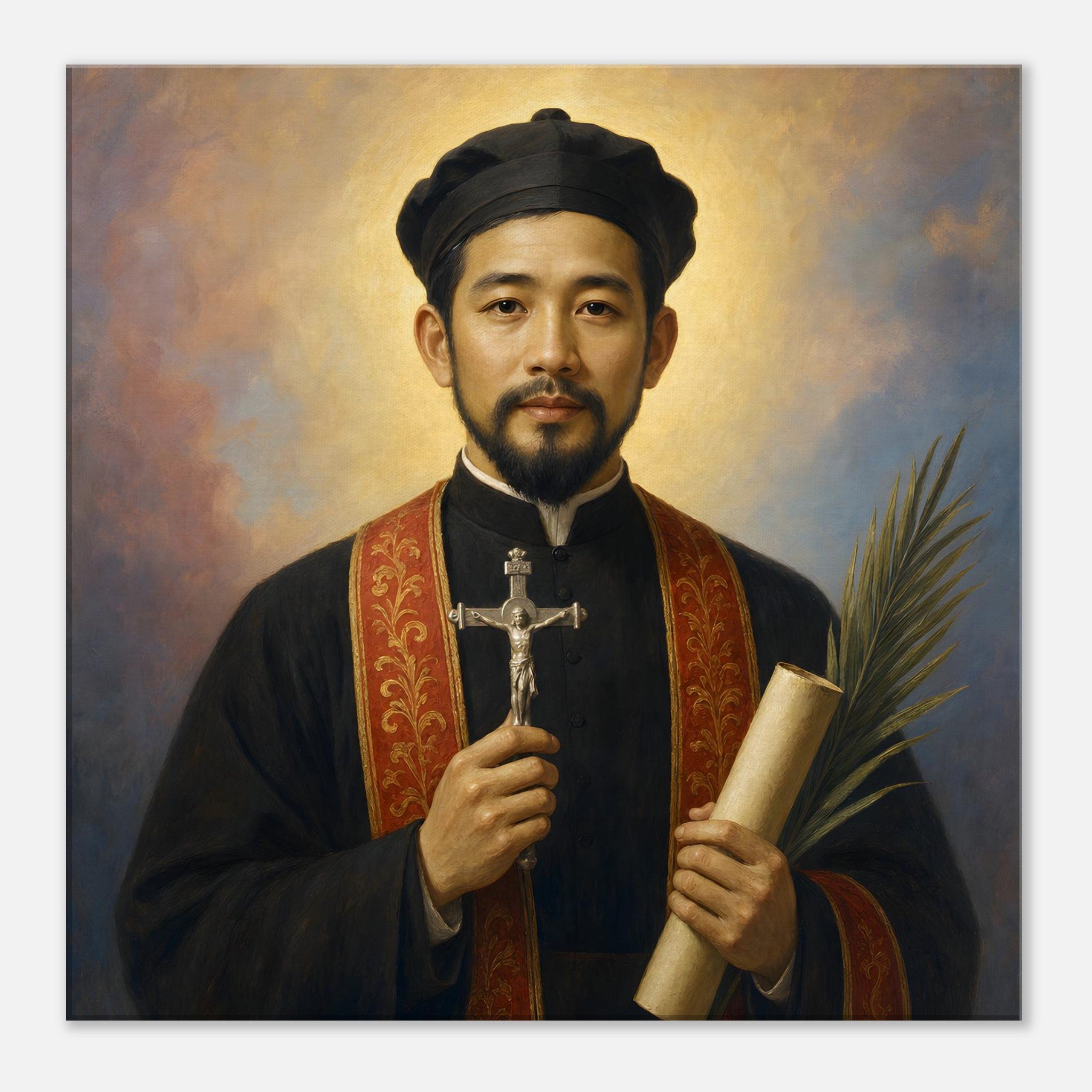
Andrew Dung-Lac
 Vietnam
Roman Catholic priest and martyr
Also known as: Andrew Dũng-Lạc, Anrê Dũng Lạc, Trần An Dũng
Birthday
1795
Birth Sign
Capricorn
Birthplace
Bắc Ninh, Vietnam
Age
Died at 44
About
Andrew Dung-Lac was a Vietnamese Roman Catholic priest and martyr, canonized as a saint in 1988. Born Trần An Dũng around 1795 in Bắc Ninh, he dedicated his life to the priesthood and was executed by beheading in 1839 for refusing to renounce his faith. He is one of the 117 Vietnamese Martyrs, a group venerated for their sacrifice under the persecution of Emperor Minh Mạng.
Today, Andrew Dung-Lac is remembered as a symbol of steadfast faith. His feast day is celebrated on November 24 in the General Roman Calendar, and he is the patron saint of the Diocese of Orange. His legacy continues to inspire Catholics in Vietnam and around the world, with his Wikipedia page drawing steady interest from Vietnamese-speaking audiences.
Early Life & Background
Andrew Dung-Lac was born into a poor family that practiced traditional religion. At age twelve, his family moved to Hanoi in search of work. There, he met a Catholic catechist who offered him shelter, food, and an education, and introduced him to Christianity. He was baptized, taking the name Andrew, and soon became a catechist himself, teaching others the faith.
His dedication led him to be chosen for the priesthood. He was ordained on March 15, 1823. His preaching and humble life attracted many converts, but this was a dangerous period for Christians in Vietnam, as the government increasingly viewed them with suspicion.
Career Growth
Andrew Dung-Lac's ministry flourished despite the dangers. In 1835, he was first arrested but ransomed by his parishioners. He adopted the name Lạc to evade persecution and moved to a different region. In 1839, he was arrested again, this time with another priest, Peter Thi. After being ransomed once more, they were captured again, tortured, and finally beheaded in Hanoi on December 21, 1839.
His martyrdom was recognized by the Church: he was beatified by Pope Leo XIII on November 21, 1900, and canonized by Pope John Paul II on June 19, 1988, as part of the 117 Vietnamese Martyrs. His feast day is observed on November 24, and he is the patron of the Diocese of Orange.
Career Timeline
Public Image & Style
Andrew Dung-Lac is venerated as a humble and devout priest who remained faithful under persecution. He is not a celebrity with fandom culture, but a saint whose example inspires Catholics. His image is that of a martyr who chose death over renouncing his beliefs, and his legacy is commemorated in churches and religious art.
Fame & Fandom (iFAMOUS Rankings)
Andrew Dung-Lac commands a following defined not by commercial metrics or social media trends, but by the enduring devotion of Vietnamese Catholics and the global faithful who revere his sacrifice. His legacy is sustained through liturgical celebration, parish dedications, and the quiet resilience of communities that view him as a spiritual patron rather than a celebrity figure. There is no formal fandom name, nor are there organized fan clubs or viral campaigns; instead, his devotees are identified simply as members of the Catholic Church or the Vietnamese diaspora, united by their shared history and faith. While modern entertainment figures chase chart positions, Andrew Dung-Lac holds a distinct place in historical memory, recognized for his steadfast refusal to renounce his beliefs during the persecution under Emperor Minh Mạng. This unique stature places him within specific global fame metrics despite his 19th-century origins. According to the iFANN Global Fame Rankings, he is currently the 97th most famous person from Vietnam, a position holding steady from the previous cycle. This ranking reflects the aggregate attention paid to his life story across international religious archives, cultural studies, and digital interest in Vietnamese heritage. The scope of this recognition extends beyond local veneration, acknowledging his role as a primary symbol of the 117 Vietnamese Martyrs. His presence in the rankings underscores how historical narratives can sustain significant global visibility long after the subjects have passed. The authority of these placements relies on the comprehensive tracking of media coverage and consumption signals worldwide, ensuring that figures like Andrew Dung-Lac remain visible in contemporary discourse. Even without a modern fanbase engaging in digital activism, his influence persists through the construction of new churches and the continued observance of his feast day on November 24.
Interesting Facts and Legends
Andrew Dung-Lac was born Trần An Dũng around 1795 in Bắc Ninh, though some sources suggest 1791. He adopted the name Andrew at baptism and later took the surname Lạc after his first arrest to evade detection. As one of the 117 Vietnamese Martyrs, he was executed by beheading in 1839 during a period when between 100,000 and 300,000 Catholics faced hardship or death under Emperor Minh Mạng. A stained glass window depicting him resides in St. Paul the Apostle Catholic Church in Westerville, Ohio. The central legend surrounding his life is his martyrdom, a verified historical event where he chose execution over renouncing his faith alongside 116 companions. This narrative serves as a foundational pillar for Vietnamese Catholic identity, inspiring the establishment of parishes named in his honor across the United States and Vietnam. His canonization by Pope John Paul II on June 19, 1988, solidified his status as a saint whose example continues to inspire believers facing persecution.
Family & Personal Life
Andrew Dung-Lac was born to a poor family in Bắc Ninh. His parents followed traditional religion, and little is known about them. His family moved to Hanoi when he was twelve, seeking work. As a priest, he took a vow of celibacy and had no spouse or children. His family life was centered on his faith and community.
Notable Connections
Relationships & Dating History
Death & Aftermath
Died
December 21, 1839 (aged 44)
Death Place
Hanoi, Vietnam
Cause of Death
Execution by beheading
Andrew Dung-Lac spent his final days in the custody of the imperial government under Emperor Minh Mạng, enduring repeated torture and imprisonment before facing a public sentencing for continuing to minister secretly. On December 21, 1839, he was executed by beheading at a site within the city walls of Hanoi, Vietnam, an act confirmed by subsequent canonization investigations rather than modern forensic records. The absence of a formal funeral service immediately following his death reflected the active persecution of Christians, which prevented any public burial or commemoration at the time; his remains were likely disposed of secretly or left exposed as a deterrent to other believers. Decades later, the Catholic Church verified the circumstances of his martyrdom through imperial court records and witness testimony gathered during beatification and canonization proceedings.
His legacy has since been commemorated through annual tributes on November 24, when he is honored alongside 116 companions as one of the Vietnamese Martyrs. Pope John Paul II formally canonized him on June 19, 1988, establishing his feast day in the General Roman Calendar. Numerous parishes dedicated to his name now serve as cultural hubs for Vietnamese Catholic communities in locations such as Lansing, Michigan, and Oklahoma City, while a major memorial shrine in Vietnam honors the collective sacrifice of the group.
Net Worth (Estate Value)
$0
iFANN Editorial Team estimate
Per iFANN's editorial analysis, the net worth of Andrew Dung-Lac is $0. As a poor priest in 19th-century Vietnam, he owned no property and accumulated no wealth during his lifetime. Following his execution in 1839, there has been no estate generating revenue, no licensing deals, or royalties associated with his name. His legacy remains purely spiritual, existing outside the realm of financial accumulation.
Awards Won (2)
Andrew Dung-Lac received recognition solely from the Catholic Church. He was beatified in 1900 and canonized in 1988, and is venerated as one of the 117 Vietnamese Martyrs. He is the patron saint of the Diocese of Orange.
1988 · Sainthood
Martyrdom
1900 · Beatification
Martyrdom
Known For
Martyrdom
1839 · Martyr
Keywords
Sources
Quick Facts
- Profession
- Roman Catholic priest
- Born
- c. 1795
- Birthplace
- Bắc Ninh, Vietnam
- Died
- December 21, 1839
- Death Place
- Hanoi, Vietnam
- Gender
- Male
- Birth Sign
- Capricorn
Personal Details
- Full Name
- Trần An Dũng
Frequently Asked Questions
Who was Andrew Dung-Lac?
When is the feast day of St. Andrew Dung-Lac?
How did Andrew Dung-Lac die?
Was Andrew Dung-Lac married?
Where was Andrew Dung-Lac born?
Join the community
fans discussing