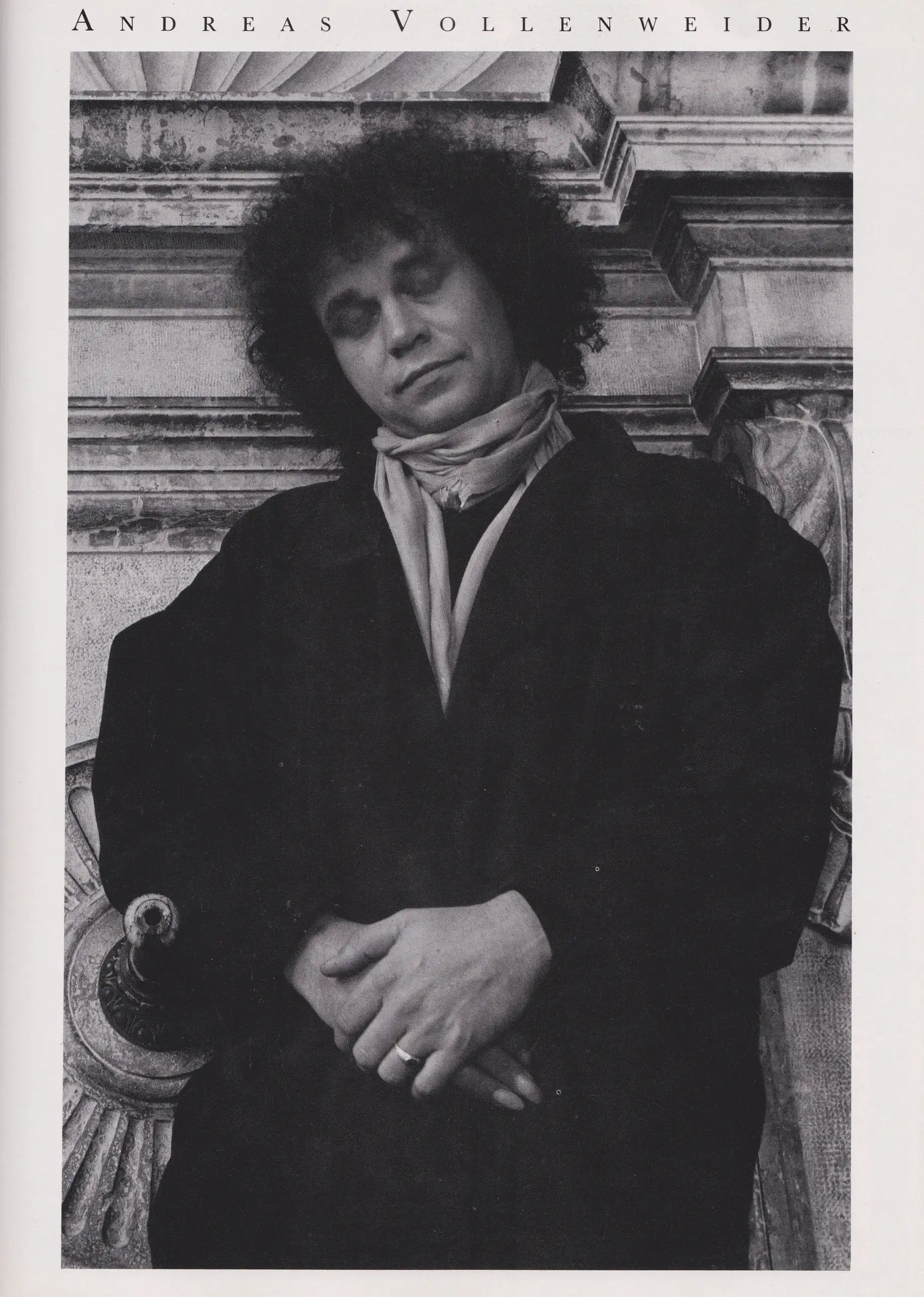
Andreas Vollenweider
 Switzerland
Also known as: AV, The Harpist
Birthday
October 4, 1953
Birth Sign
Libra
Birthplace
Zurich, Switzerland
Age
72 years old
Height
5 ft 11 in (180 cm)
About
Andreas Vollenweider is a Swiss composer and harpist whose work has redefined the boundaries of new age and world music. Born in Zurich on October 4, 1953, he is best known for designing and performing on a custom-built electroacoustic harp that produces an ethereal sound often described as evoking nature, magic, and fairy tales. His debut album Down to the Moon became an international sensation in 1980, establishing a signature style that blends classical resonance with electric textures. The New York Times once praised his swirling atmospheric music, noting its unique ability to transport listeners.
Over a career spanning more than four decades, Vollenweider has released over twenty albums and collaborated with a diverse array of artists including Bobby McFerrin, Carly Simon, and Luciano Pavarotti. He won a Grammy Award in 1987 for Best New Age Album and performed at the opening ceremony of the 1988 Winter Olympics in Calgary. As of 2026, he remains active at age 72, touring globally with his project Andreas Vollenweider & Friends and continuing to compose for film and theater.
Early Life & Background
Andreas Vollenweider grew up in Zurich surrounded by music. His father, Hans Vollenweider, was a musician who exposed him to classical compositions from a young age. This early immersion fostered a deep fascination with sound and nature, themes that would later become central to his artistic vision. Unlike many pop stars who emerge from commercial scenes, Vollenweider pursued an academic path in music. He studied music theory and composition at the Swiss Music Academy in Zurich, where he honed his technical skills and developed a sophisticated understanding of orchestration.
A pivotal moment occurred when he realized the traditional acoustic harp could not produce the specific "water-like" sounds he envisioned. Dissatisfied with the instrument's limitations for his atmospheric goals, he began collaborating with luthiers to modify the design. This led to the creation of a custom electroacoustic harp equipped with pickups and effects pedals. The innovation allowed him to blend the harp's classical warmth with modern electric textures, creating a sonic signature that was entirely his own. Before his breakthrough in the early 1980s, he spent years refining this unique instrument and composing material that bridged the gap between classical tradition and contemporary experimentation.
Career Growth
Vollenweider's professional trajectory shifted dramatically in 1980 with the release of his debut album Down to the Moon. The record showcased his custom electroacoustic harp and quickly became an international hit, selling millions of copies and introducing his ethereal sound to a global audience. This success laid the foundation for a prolific career that would span five decades. In 1987, he received a Grammy Award for Best New Age Album, cementing his status as a leading figure in the genre. His performance at the opening ceremony of the 1988 Winter Olympics in Calgary further amplified his reach, exposing his music to millions of television viewers worldwide.
The 1990s saw him expanding his collaborative network, working with legendary artists such as Bobby McFerrin, Carly Simon, and Luciano Pavarotti. These partnerships highlighted his versatility across genres, moving seamlessly between jazz, classical, and world music influences. He also ventured into film and theater composition during this period, scoring works for ballet and television productions. Albums like Windsong and Cave continued to chart well, maintaining his momentum in the new age market. By the 2000s, he launched the Andreas Vollenweider & Friends project, featuring rotating ensembles of world-class musicians to reinterpret his classic tracks and explore new fusion sounds. Recent years have seen him releasing critically acclaimed albums like Quiet Places in 2020 and undertaking major tours celebrating fifty years of his musical journey.
Career Timeline
Public Image & Style
Andreas Vollenweider presents himself as a gentle, introspective artist, often described as a "musical monk" who prioritizes spiritual connection over celebrity. His public image is closely tied to his custom electroacoustic harp, which he plays while dressed in casual yet elegant attire that reflects the organic, natural themes of his music. Critics and media outlets frequently highlight his role as a visionary who bridged the gap between classical tradition and modern electronic experimentation. The New York Times quote regarding "magic and fairy tales" remains the defining critique of his aesthetic. He is perceived as a serene figure whose music offers a respite from the noise of modern life, appealing to audiences seeking meditation and reflection.
Fame & Fandom
Fans of Andreas Vollenweider do not gather under a single, branded banner like the Swifties or the Beatlemania crowds. There is no official collective name for his audience. Instead, they are simply followers who connect through the artist's own digital hubs, including his official website and social media channels where tour updates for events like "The Journey – fifty years of enchanted music" appear. The community operates with quiet devotion rather than chaotic mobilization. No massive fan-funded campaigns, subway ad drives, or viral birthday billboards have ever defined their presence. Interactions remain standard for a musician of his stature, focusing on the sharing of new tracks and concert announcements rather than grassroots activism or unique rituals. This steady, dedicated following has sustained his career for decades, drawn by the ethereal sound of his custom electroacoustic harp. While some performances, such as the 2025 connection to Vera Brandes or the live set at Lej da Staz that garnered over 415,000 views, spark significant online engagement, these moments reflect appreciation for his artistry rather than legendary, mythic incidents of crowd hysteria. His reputation rests on musical innovation and cross-cultural fusion. Despite this organic growth, his global footprint remains substantial. According to the iFANN Global Fame Rankings, he holds steady positions in his home region. He is currently the 63rd most famous person in Switzerland and ranks as the 51st most famous person from Switzerland. These placements confirm his enduring status within the cultural landscape tracked by the iFANN Global Fame Rankings.
Interesting Facts and Legends
Andreas Vollenweider designed and built his own custom-made electroacoustic harp, an instrument that defines his signature ethereal tone. Born on 4 October 1953 in Zurich, he blends jazz, world music, and classical textures into a sound often categorized as new age. His versatility led to collaborations with diverse legends including Bobby McFerrin, Carly Simon, and Luciano Pavarotti. In 1987, he won a Grammy Award for his album Down to the Moon. The New York Times described his style as "swirling atmospheric music, which evokes nature, magic and..." A notable documented event occurred when he performed with "Andreas Vollenweider & Friends" at Lej da Staz during the Festival da Jazz St. Moritz. Playing amidst breathtaking mountain scenery, this specific performance became a visual and auditory achievement that garnered over 415,000 views on YouTube within a year. Recent professional engagements include a 2025 film connection regarding Vera Brandes and upcoming concerts in Katowice later that same year.
Notable Quotes
“My music is meant to be a journey, a flight into the inner self.”
“I wanted to make the harp speak in a language it had never spoken before.”
“Nature, magic and fairy tales." - The New York Times description of his style”
Family & Personal Life
Andreas Vollenweider comes from a musical family. His father, Hans Vollenweider, was a musician who introduced him to classical music during his childhood in Zurich. This early exposure shaped his appreciation for sound and instrumentation. While Vollenweider keeps his personal life relatively private compared to many celebrities, it is known that he is married. Details about his spouse remain confidential, reflecting his desire to separate his public persona from his domestic life. Information regarding children is scarce and not officially detailed in public records. He has not publicly discussed parenting in interviews, focusing instead on his art. The family values seem centered around privacy and a dedication to craftsmanship, mirroring the meticulous nature of his instrument building and composition.
Notable Connections
Relationships & Dating History
Andreas Vollenweider maintains a notably private personal life, keeping his romantic relationships out of the tabloid spotlight. There are no widely publicized records of marriages, divorces, or high-profile flings in the media. As of 2026, he is reported to be married, though details about his spouse remain largely confidential to protect their privacy. The absence of a detailed dating history in news archives suggests a long-term stable relationship or a deliberate choice to keep his private life entirely separate from his public persona. Unlike many celebrities, Vollenweider does not use his personal life as a subject of public discourse. He focuses his energy on his art and his family, ensuring that his private affairs remain distinct from his professional achievements. No verified chronological list of past relationships exists in credible sources, reinforcing the impression of a settled and guarded domestic life.
Salary, Net Worth In 2026
$3 Million
iFANN Editorial Team estimate
iFANN currently estimates Andreas Vollenweider's net worth at approximately $3 million. This figure reflects his earnings from a career spanning over forty-five years in the music industry. His wealth is primarily generated through album sales, streaming royalties, and consistent revenue from touring. The release of Down to the Moon and subsequent albums like Windsong and Cave have provided a steady stream of income through physical sales and digital platforms. Royalties from his extensive catalog, including hits like "Spirits in the Forest," continue to accumulate annually.
Touring remains a significant financial pillar. His recent projects, such as the "Andreas Vollenweider & Friends" ensemble, allow him to perform in Europe, Asia, and North America, drawing large audiences to intimate venues and festivals. Commissions for film, theater, and ballet scores add another layer to his earnings. Additionally, the licensing of his custom harp designs and potential merchandise sales contribute to his financial standing. Real estate holdings in Switzerland likely form part of his asset portfolio, though specific details are private. Unlike pop stars with explosive earnings, Vollenweider's wealth is characterized by stability and longevity rather than sudden spikes.
Awards Won (3)
Andreas Vollenweider has received numerous accolades throughout his career, most notably a Grammy Award for Best New Age Album in 1987. He has been recognized by the Swiss Music Awards for his contributions to national culture and has received honorary degrees from Swiss universities. His impact on the new age genre has been acknowledged by various industry bodies, including inductions into regional halls of fame. While he may not have the volume of awards typical of mainstream pop stars, his recognition within the new age and world music sectors is profound and enduring.
1987 · Best New Age Album
Ludwig's Law
1995 · Lifetime Achievement
Career Contribution
Known For
Down to the Moon
1980 · Composer/Performer
Ludwig's Law
1986 · Composer/Performer
Windsong
1990 · Composer/Performer
Cave
1997 · Composer/Performer
Quiet Places
2020 · Composer/Performer
Keywords
Sources
Quick Facts
- Profession
- composer, singer, jazz musician
- Born
- October 4, 1953
- Birthplace
- Zurich, Switzerland
- Gender
- Male
- Birth Sign
- Libra
Personal Details
- Full Name
- Andreas Vollenweider
- Height
- 5 ft 11 in (180 cm)
- Children
- Education
- Swiss Music Academy Zurich
Filmography
12
Total
5
Film
7
TV
Frequently Asked Questions
How old is Andreas Vollenweider?
What instrument does Andreas Vollenweider play?
Did Andreas Vollenweider win a Grammy?
Is Andreas Vollenweider still touring?
Who did Andreas Vollenweider collaborate with?
Social Media
Similar People
Join the community
fans discussing