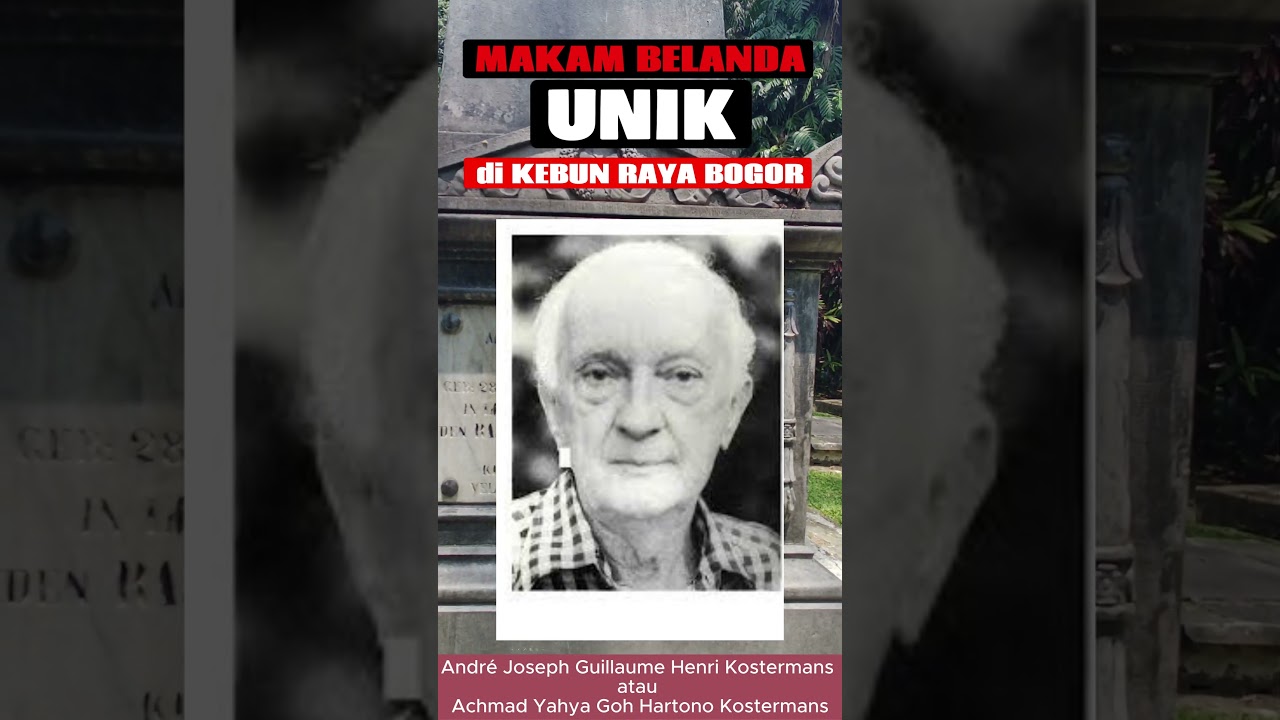
André Joseph Guillaume Henri Kostermans
 Indonesia
botanist•botanical collector•scientific collector
Also known as: Dok, Andre Kostermans, A. J. G. H. Kostermans, Achmad Jahja G. H. Kostermans
Birthday
July 1, 1906
Birth Sign
Cancer
Birthplace
Purworejo, Central Java, Dutch East Indies
Age
Died at 88
About
André Joseph Guillaume Henri Kostermans was an Indonesian botanist of Dutch ancestry, one of the most prolific taxonomists of Southeast Asian flora in the twentieth century. Known to colleagues as Dok, he spent decades at the botanical gardens in Bogor, describing hundreds of new species and revising whole families of plants. His name lives on in the genus Kostermansia and in more than fifty species that carry his name.
Kostermans' work focused on the Lauraceae, the Malvales group (including Bombacaceae and Sterculiaceae), and Dipterocarpaceae, the great timber trees of the rainforest. In his later years he turned to the cashew family, Anacardiaceae, and produced monographs that are still standard references. His 1993 book on mangoes, covering 69 species, came out just a year before his death, completed after a heart attack in 1991.
For researchers working on Southeast Asian plants, Kostermans' publications and the specimens he collected remain foundational. His legacy is an intellectual one, measured in the precision of his taxonomy and the breadth of his fieldwork, not in public fame.
Early Life & Background
Kostermans was born on July 1, 1906, in Purworejo, a town in Central Java, then part of the Dutch East Indies. His father taught at a Dutch-Native primary school, and the family lived surrounded by the island's lush tropical vegetation. That early immersion in Javanese flora would shape his entire career.
For university, he traveled to the Netherlands, enrolling at Utrecht University. There he studied botany and completed a doctoral thesis in 1936 on the Lauraceae family of Suriname, work that contributed to August Adriaan Pulle's Flora of Suriname. Though his dissertation dealt with South American plants, the skills he developed in taxonomy and fieldwork would soon be turned toward his native Southeast Asia.
After earning his PhD, Kostermans returned to Java and settled in Buitenzorg, the colonial name for Bogor. He joined the staff of the famous botanical gardens, the center of tropical botanical research in the Dutch East Indies. That move set the stage for a career that would last more than five decades.
Career Growth
Kostermans' breakthrough came when he shifted his research focus from South America to the flora of Southeast Asia. At the Bogor botanical gardens, he began the painstaking work of revising complex plant families, starting with the Lauraceae and then moving to the Malvales, which includes the Bombacaceae and Sterculiaceae. He also tackled the Dipterocarpaceae, the towering trees that dominate the region's rainforests.
His productivity was extraordinary. Over the decades he described numerous new species and produced revisions that became the backbone of modern taxonomy for the region. In his later years he concentrated on the Asian Anacardiaceae, the cashew family, and authored a series of influential monographs.
Even after a heart attack in March 1991, Kostermans kept working. He finished a substantial manuscript on mango species, and in 1993 Academic Press published his book covering 69 species. He died the following year, but his published work continued to guide botanists studying Southeast Asian plants.
Career Timeline
Public Image & Style
Kostermans never had a mass-media public image. He worked as a botanist in an era before celebrity culture touched scientists, and his reputation was built entirely within the international botanical community.
Among his peers, he was remembered as a tireless field worker and a meticulous taxonomist. His monographs were rigorous and detail-oriented, earning him respect that has lasted long after his death. For researchers studying Southeast Asian flora, his name appears constantly in taxonomic literature and herbarium records.
There is no fandom in the contemporary sense, no social media presence, and no fan rituals. His legacy is the kind that matters to specialists: the specimens he collected, the species he described, and the revisions he published, which remain essential tools for botanists today.
Fame & Fandom
André Joseph Guillaume Henri Kostermans has been evaluated by iFANN's Global Fame Engine, but he does not currently hold a placement in the published rankings (Global Top 1,000 or a Top-100 scope list). This reflects a comprehensive evaluation of his enduring presence in scientific literature and historical records rather than contemporary pop culture metrics. The data indicates he holds no position within the top-100 scope lists, a distinction that separates him from figures with massive global celebrity status while acknowledging his significant standing among specialists. His name appears consistently in taxonomic databases and botanical monographs, securing his reputation through decades of rigorous academic contribution rather than media saturation.
The concept of a formal fandom does not apply to Kostermans. There is no documented fanbase name, organized supporter group, or collective identity associated with his legacy. Unlike modern celebrities who cultivate dedicated communities for merchandise, social campaigns, or ritualistic gatherings, Kostermans was known strictly within the professional sphere of botany. His admirers are limited to researchers, students, and taxonomists who study his extensive work on Southeast Asian flora, particularly the Dipterocarpaceae and Anacardiaceae families. No fan rituals, birthday billboards, or viral incidents exist in connection with his life or death. The stories that persist regarding him are biographical accounts of his survival during World War II as a prisoner of war on the Burma–Thailand Railway, a verified historical event that highlights his resilience rather than generating folklore. His tomb remains in the Bogor Botanical Gardens, but it serves as a resting place rather than a pilgrimage site for fans. The lack of a public persona means there are no meet-and-greets, social media interactions, or crowd disruptions attributed to his name. His influence is measured in the hundreds of plant species he described and the monographs that remain standard references, leaving no room for the myth-making processes common in celebrity culture.
Interesting Facts and Legends
Among colleagues and friends, Kostermans was universally addressed by the nickname Dok, a concise abbreviation of his full name that persisted throughout his long career. While some sources cite his birth year as 1907, the weight of evidence, including his obituary in the journal Blumea, supports 1906 as the correct date. In Indonesia, he was also recorded under the local variant Achmad Jahja G. H. Kostermans, reflecting the cultural context of his decades-long service. His doctoral thesis focused on Surinamese Lauraceae, marking an early geographic pivot from South America before he established his lifelong expertise in Southeast Asian flora. Even after suffering a heart attack at age 84, he continued to revise manuscripts, demonstrating an unwavering commitment to his taxonomic work until the end. His magnum opus on mangoes, published in 1993, detailed 69 species and served as the culmination of years of research into the cashew family.
A defining narrative of his life involves his experience as a prisoner of war during World War II. Held by Japanese forces, Kostermans endured forced labor on the Burma–Thailand Railway, an ordeal that tested his physical limits and is frequently cited in historical accounts of his resilience. This period is not merely a footnote but a central chapter in his biography, illustrating the hardships faced by scientists in the region during the conflict. Despite the gravity of these events, they are treated as historical facts rather than legendary tales, grounding his legacy in real-world struggle and endurance rather than mythical exaggeration.
Family & Personal Life
Public records offer little about Kostermans' family life. His father worked as a schoolteacher at a Dutch-Native primary school in Purworejo, but no names or details about his mother or siblings survive in the available sources.
There is no documented information about a spouse or children. His obituary in Blumea focuses exclusively on his botanical career and field expeditions, leaving his personal life largely undocumented. He appears to have lived a life devoted to his work at the Bogor botanical gardens, with no public record of a household or family of his own.
Notable Connections
Kostermans worked within the international botanical community of his era. He contributed to the Flora of Suriname project led by August Adriaan Pulle, and his specimens are held at the Royal Botanic Gardens, Kew, and other major herbaria. These collections indicate extensive professional networks, though specific frequent collaborators are not documented in the available sources.
Relationships & Dating History
Public records contain no documented information about Kostermans' romantic relationships, marriage, or children. He was known primarily through his scientific work, and contemporary biographical sources, including his obituary in the journal Blumea (1995), focus exclusively on his botanical career and field expeditions.
There is no verifiable information on any spouse, partner, or offspring in any of the available sources. As a result, no dating history can be compiled; he is not known to have been publicly linked to any romantic partner. His personal life outside botany remains largely undocumented in the public record.
Death & Aftermath
Died
July 10, 1994 (aged 88)
Death Place
Unknown
Cause of Death
Unknown
Net Worth (Estate Value)
$1 Million
iFANN Editorial Team estimate
As a career academic botanist working primarily at the Bogor botanical gardens in Indonesia, Kostermans did not accumulate notable personal wealth. His legacy is intellectual rather than financial. His published monographs and taxonomic revisions remain in use by researchers, but they generate no significant royalty income. There is no evidence of posthumous commercial earnings, licensing deals, or estate-managed businesses. His estate, if any formal entity exists, is not publicly documented. The value of his contribution lies in the scientific knowledge he left behind, not in monetary terms. Per iFANN's editorial analysis, the estimated net worth of André Joseph Guillaume Henri Kostermans stands at $1 Million.
Awards & Accolades
View 3 records, honours and achievementsKnown For
Taxonomic revisions of Lauraceae
1936-1994 · Botanist
Monographs on Asian Anacardiaceae
Later career · Author
Mango species book
1993 · Author
Keywords
Sources
Quick Facts
- Profession
- botanist, botanical collector, scientific collector
- Born
- July 1, 1906
- Birthplace
- Purworejo, Central Java, Dutch East Indies
- Died
- July 10, 1994
- Death Place
- Jakarta, Indonesia
- Gender
- Male
- Birth Sign
- Cancer
- Education
- Utrecht University, PhD (1936)
Personal Details
- Full Name
- André Joseph Guillaume Henri Kostermans
- Education
- Utrecht University, PhD (1936)
Frequently Asked Questions
Who was André Kostermans?
What plants did Kostermans discover?
What is André Kostermans' mango book?
Where is André Kostermans buried?
How old was André Kostermans when he died?
Join the community
fans discussing