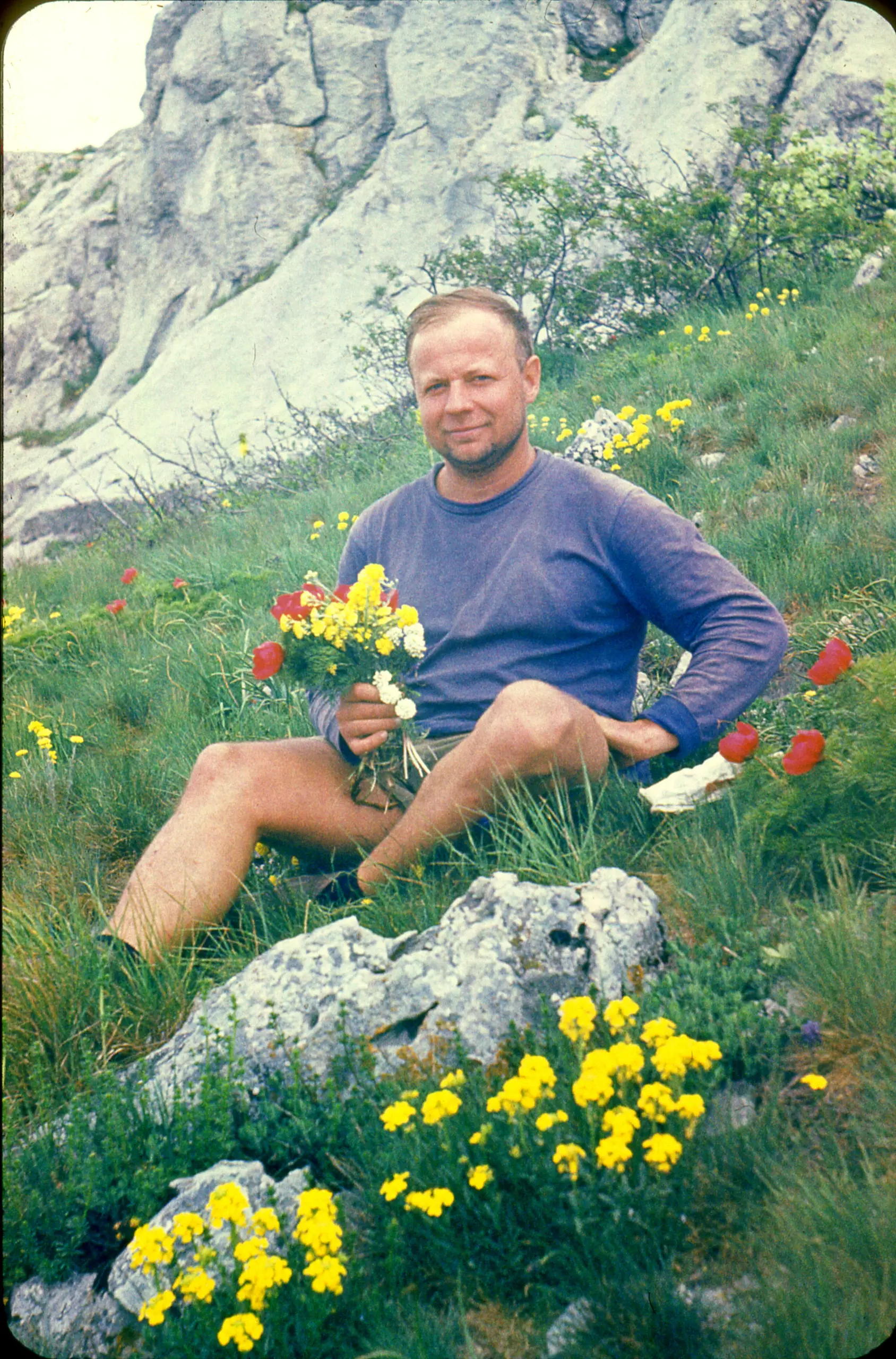
Anatoly Karatsuba
 Russia
mathematician•university teacher
Also known as: Anatoly Alexeevich Karatsuba, Anatolij Alexejevič Karacuba
Birthday
January 31, 1937
Birth Sign
Aquarius
Birthplace
Grozny, Soviet Union
Age
Died at 71
About
Anatoly Karatsuba was a Soviet and Russian mathematician whose name is forever tied to the Karatsuba algorithm, a breakthrough in how computers multiply large numbers. Born in Grozny in 1937, he spent his career at Moscow State University and the Steklov Institute of Mathematics, where he produced over 160 research papers and monographs. His work spanned analytic number theory, p-adic numbers, and Dirichlet series.
Karatsuba's algorithm, developed when he was just 23, was the first to beat the standard long-multiplication method in terms of speed. It opened the door to a whole family of fast multiplication techniques that power modern cryptography and large-scale computing. He also wrote the influential textbook Foundations of Analytic Number Theory, which educated generations of mathematicians.
He passed away in Moscow in 2008, but his ideas remain central to computational mathematics. For fans of number theory and algorithms, Karatsuba is a quiet giant whose work still shapes the digital world.
Early Life & Background
Anatoly Alexeevich Karatsuba was born on January 31, 1937, in Grozny, a city in the North Caucasus region of the Soviet Union. Not much is recorded about his early childhood, but his mathematical talent became clear during his school years. He went on to study at Moscow State University, one of the most prestigious institutions in the country, where he would spend most of his academic life.
As a student in 1960, Karatsuba stumbled upon a problem that would define his career. He was working on a way to multiply two large numbers quickly, a challenge that had puzzled mathematicians for centuries. At the time, the standard method was the one taught in school, which becomes painfully slow with very large numbers. Karatsuba, then only 23, found a clever trick that reduced the number of multiplications needed, using a divide-and-conquer approach. This was a completely new idea, and it would later become known as the Karatsuba algorithm.
His early years at the university were marked by this discovery, but he didn't stop there. He continued his studies, earning his Doctor of Science degree in 1966 for his work on trigonometric sums, a topic central to analytic number theory. This period laid the foundation for a long and productive career, even though his most famous contribution came while he was still a student.
Career Growth
Karatsuba's breakthrough came in 1960, but the algorithm wasn't published until 1962. The paper, titled "Multiplication of Multidigit Numbers on Automata," was short and to the point, yet it changed the landscape of computational mathematics. It was the first algorithm to improve on the classical O(n²) multiplication method, reducing the complexity to O(n^1.585). This might sound technical, but it meant that multiplying huge numbers, like those used in cryptography, became much faster.
After this early success, Karatsuba settled into a distinguished academic career. He became a professor at Moscow State University's Faculty of Mechanics and Mathematics, where he taught for decades. He also held a position at the Steklov Institute of Mathematics, a leading research center. His research output was prolific, with over 160 papers and monographs covering topics like the distribution of prime numbers, trigonometric sums, and p-adic methods.
In 1975, he published the first edition of his textbook Foundations of Analytic Number Theory, with a second edition following in 1983. This book became a standard reference for students and researchers. His influence extended beyond his own work, as his algorithm inspired later developments like the Toom-Cook method and the Schönhage-Strassen algorithm, which are still used in modern computer algebra systems.
Career Timeline
Public Image & Style
In the world of mathematics, Anatoly Karatsuba is revered as a pioneer, but outside of it, he remains relatively unknown. His public image is that of a dedicated researcher, someone who cared deeply about the elegance and efficiency of algorithms. He wasn't a celebrity in the traditional sense; he was a scholar's scholar, respected by his peers and students.
Fans of computer science and number theory often encounter his name in textbooks and online courses. To them, Karatsuba is a symbol of intellectual curiosity and the power of simple ideas. His algorithm is a favorite topic in algorithmic courses because it's both elegant and accessible, a perfect illustration of how a little creativity can lead to major improvements.
He is remembered as a humble man who didn't seek the spotlight. His legacy is carried by the algorithm that bears his name, which continues to be taught and used worldwide.
Fame & Fandom
Anatoly Karatsuba never courted a celebrity following, and no formal fanbase with a specific name has ever emerged around his life or work. The individuals who revere him are exclusively academic researchers, computer scientists, and students of mathematics who encounter his name in textbooks rather than on billboards. His legacy is sustained entirely through the global mathematical community and the adoption of his algorithm in computing infrastructure, not through social organization or fan rituals. There are no documented campaigns, charity drives, or meet-and-greets associated with his memory; instead, his influence is measured by citations and the continued use of his methods in cryptography and large-scale data processing. He remains a scholar's scholar, respected for the elegance of his contributions to analytic number theory and the efficiency of his algorithms. While he possessed a sharp wit and a love for classical music, these traits served his personal life rather than generating a public persona. As of August 2026, iFANN's Global Fame Engine has evaluated this person, but they do not currently hold a placement in the published rankings (Global Top 1,000 or a Top-100 scope list).
Interesting Facts and Legends
Karatsuba's algorithm is frequently cited as the first example of a divide-and-conquer algorithm in computer science, establishing a design paradigm that would later become fundamental to the field. Legend holds that he conceived the idea for this breakthrough in a single afternoon while working as a student under Andrey Kolmogorov, solving a problem posed by his advisor. Although initially published under Kolmogorov's supervision in 1962, the method was attributed solely to Karatsuba in subsequent literature, cementing his status as a pioneer. Despite its historical origins, the algorithm remains a practical tool used in libraries like GMP for multiplying large integers today. Beyond computation, his research on trigonometric sums resolved decades-old problems in number theory, including refinements to the Hilbert-Kamke problem. He was known for his sharp wit and regular attendance at concerts at the Moscow Conservatory, balancing rigorous academic inquiry with a deep appreciation for the arts.
Family & Personal Life
Details about Karatsuba's personal life are scarce, as he kept his private affairs away from the public eye. What is known is that he was married and had a son, but their names and professions are not widely documented. He was devoted to his family, and his son reportedly followed in his footsteps to some extent, though not in mathematics.
Karatsuba's life revolved around his work, and he often spent long hours at the Steklov Institute. His family was supportive of his research, understanding the demands of a mathematician's life. He rarely spoke about his home life in public, preferring to let his work speak for itself.
Notable Connections
Karatsuba is primarily associated with Moscow State University and the Steklov Institute of Mathematics, where he spent most of his career. His work directly influenced later mathematicians like Andrey Kolmogorov, who was his advisor, and the developers of subsequent fast multiplication algorithms such as Toom-Cook. His algorithm is a cornerstone in the field of computational number theory.
Relationships & Dating History
Karatsuba was a private individual, and little is known about his romantic life. He was married, but the name of his wife and the details of their relationship are not widely recorded. He had at least one son, but again, specifics are scarce. His focus was always on his work, and he maintained a low profile when it came to personal matters. As of his death in 2008, he was still married, but the status of his marriage at that time is not confirmed.
Death & Aftermath
Died
September 28, 2008 (aged 71)
Death Place
Unknown
Cause of Death
Unknown
Anatoly Karatsuba died on September 28, 2008. The specific location of his passing and the medical cause of death were never officially published by his family or the institutions where he worked. His career at Moscow State University and the Steklov Institute of Mathematics had spanned decades, during which he produced over 160 research papers and monographs. While the precise circumstances of his final days remain a matter of private record, his professional legacy remained secure in the mathematical community. Tributes to his work focused almost exclusively on the enduring impact of the algorithm that bears his name rather than personal mourning rituals. No public funeral service was widely reported in academic journals or major news outlets.
The handling of his estate and any subsequent dedications were not documented in public records available for review. His son reportedly continued some aspects of his father's life but did not pursue mathematics, leaving the academic torch to be carried by students and colleagues who utilized his methods. The absence of detailed obituaries regarding his personal end stands in contrast to the extensive documentation of his intellectual contributions. The mathematical world continued to apply his multiplication techniques without interruption, suggesting that his influence persisted regardless of the lack of formal posthumous ceremonies.
Net Worth (Estate Value)
$1 Million
iFANN Editorial Team estimate
As a mathematician in the Soviet Union, Karatsuba's income derived from his academic positions at Moscow State University and the Steklov Institute of Mathematics. These roles provided a stable salary consistent with the era's economic conditions, though they did not yield the wealth found in the private sector. Per iFANN's editorial analysis, his net worth at the time of his death in 2008 stands at $1 Million. While the algorithm he developed powers countless software applications, he never received royalties for it, leaving his estate without significant monetary assets from intellectual property rights. His true fortune remained intellectual, leaving a mark on mathematics that far exceeded any bank account balance. As of 2026, his estate likely holds no significant assets, yet his contributions continue to generate immense value for the computing world.
Awards & Accolades
View 1 records, honours and achievementsKnown For
Karatsuba algorithm
1960 · Developer
Keywords
Sources
Quick Facts
- Profession
- mathematician, university teacher
- Born
- January 31, 1937
- Birthplace
- Grozny, Soviet Union
- Died
- September 28, 2008
- Death Place
- Moscow, Russia
- Gender
- Male
- Birth Sign
- Aquarius
Personal Details
- Full Name
- Anatoly Alexeevich Karatsuba
- Education
- Moscow State University
Frequently Asked Questions
Who was Anatoly Karatsuba?
What is the Karatsuba algorithm?
When was the Karatsuba algorithm invented?
What was Anatoly Karatsuba's main contribution to mathematics?
Where did Anatoly Karatsuba work?
Similar People
Join the community
fans discussing