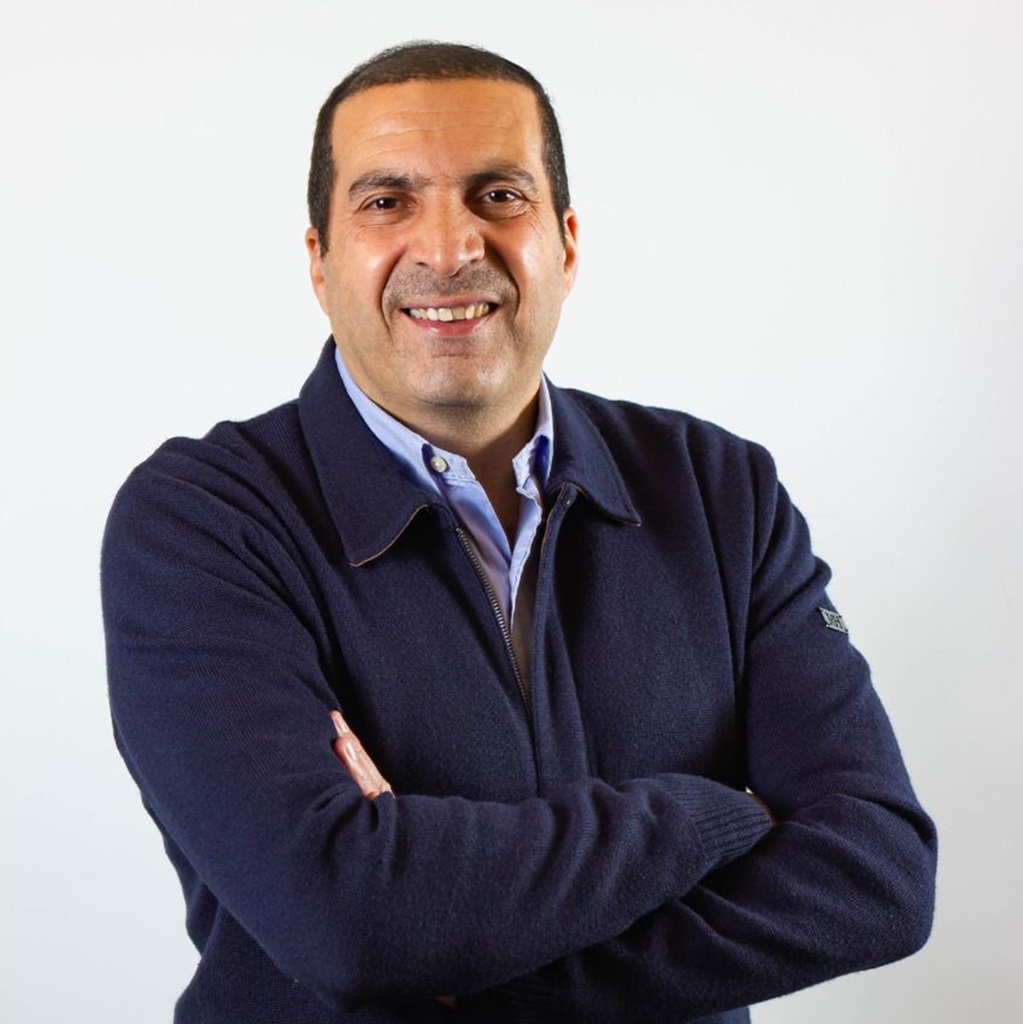
Amr Khaled
 Egypt
EgyptIslamic preacher•television presenter•activist
Also known as: Amr Mohamed Helmi Khaled, Doctor Amr Khaled
Birthday
September 5, 1967
Birth Sign
Virgo
Birthplace
Alexandria, Egypt
Age
59 years old
About
Amr Khaled is an Egyptian Islamic preacher, television presenter, and activist whose influence has reached far beyond the Arab world. Born on September 5, 1967, in Alexandria, he is best known for his modern, accessible style of religious teaching that emphasizes practical spirituality and social engagement. His television programs, including Words from the Heart and Life Makers, have attracted massive audiences across the Middle East and among Muslim communities in the West.
Khaled's approach departs sharply from traditional clerical discourse, blending motivational speaking with Quranic references. He has been recognized as one of the most influential religious figures of his generation, and his platform continues to grow through social media and ongoing television work. As of 2026, he remains a prominent voice in Islamic discourse, engaging millions of followers with his message of self-improvement and social responsibility.
Early Life & Background
Khaled grew up in a wealthy, well-connected family in Alexandria, Egypt. Despite his privileged upbringing, he was deeply affected by the poverty and suffering he witnessed around him from a young age. Unlike most Egyptian preachers who studied at Cairo's prestigious al-Azhar University, Khaled did not receive formal religious training there. Instead, he trained as an accountant, graduating in that field before pivoting to religious preaching.
His turn to preaching began in the 1990s, when he started delivering Islamic lectures in a modern, accessible style that departed sharply from the traditional sermon format. He emphasized practical spirituality, self-improvement, and social engagement rather than doctrinal rigidity. This fresh approach resonated powerfully with young, urban Arab audiences who found traditional clerical discourse alienating. By the late 1990s and early 2000s, his reputation had grown substantially, and he began producing his own television programs. The pivotal moment came with his show Words from the Heart, which catapulted him to regional superstardom.
Career Growth
Khaled's breakthrough came with Words from the Heart in the early 2000s, which made him a household name across the Arab world. His lectures drew massive audiences, and he quickly became a cultural phenomenon. In 2004, he launched Life Makers, one of his most influential programs, which encouraged viewers to engage in social activism and community improvement. The show inspired a generation of young Muslims to take action in their communities.
In 2006, The New York Times Magazine profiled him as "the world's most famous and influential Muslim television preacher," and in 2007, Time magazine listed him among the 100 most influential people in the world. He produced numerous additional television series, including On the Path of the Beloved and The Qur'an and Life, and authored several books on Islamic spirituality. His influence extended into the West, attracting large audiences among Muslims in Europe and North America.
However, his relationship with the Egyptian political establishment became more complex after the 2013 military takeover. Khaled became associated with the regime of President Abdel Fattah el-Sisi, with some critics characterizing him as "Sisi's newest messenger." By 2017, commentators described him as "Egypt's once hip preacher turned symbol of the past." Despite this, he continues to maintain an active media presence, with a large social media following and ongoing television work.
Career Timeline
Public Image & Style
Khaled's public persona is defined by his accessible, modern, motivational approach to Islamic teaching. He dresses in contemporary Western-adjacent or smart casual attire rather than traditional clerical robes, and his delivery is conversational rather than sermonizing. His content blends Quranic references with practical life advice, self-improvement, and social engagement. Coverage has shifted dramatically over his career. In the 2000s, Western and Arab media portrayed him as a progressive, moderate Islamic voice, a bridge between tradition and modernity. By the late 2010s, portrayals became more critical, focusing on his ties to the Sisi regime and critiques that his message was superficial or politically convenient. His audience is primarily Arabic-speaking Muslims across the Middle East, North Africa, and diaspora communities in the West. His Facebook following of nearly 35 million makes him one of the most-followed religious figures on the platform.
Fame & Fandom (iFAMOUS Rankings)
Amr Khaled commands a following defined less by the performative fervor of pop culture fandoms and more by a structured, theological engagement that treats his output as spiritual guidance rather than celebrity entertainment. His audience consists primarily of self-identified Muslims and adherents to his specific brand of Islamic revivalism, organized through institutional channels like his own media platforms and the Al-Khair foundation rather than through fan clubs or grassroots campaigns. There is no official designation for his supporters, nor are there recorded instances of fan-funded projects, birthday billboards, or chart pushes orchestrated to elevate his career metrics; the infrastructure surrounding him remains driven by charitable initiatives and religious discourse. While his lectures historically drew immense crowds capable of mobilizing large segments of the Muslim population, the dynamic is one of reverence for a reformer rather than the adoration of a star. The iFANN Global Fame Engine has evaluated Amr Khaled's current standing in August 2026, determining that he does not currently hold a placement in the published rankings such as the Global Top 1,000 or any Top-100 scope list. Consequently, he is not ranked numerically on the global stage at this time.
Interesting Facts and Legends
Amr Khaled never studied at al-Azhar University, the traditional training ground for Egyptian religious scholars, and was an accountant by profession before entering preaching, a background that shaped his layman's approach to theology. His style is frequently compared to self-help coaching and motivational speaking rather than traditional clerical discourse, emphasizing practical spirituality and social action over doctrinal rigidity. A widely retold story from his early career describes how he chose to live simply despite growing up wealthy in Alexandria, focusing his efforts on the suffering of the poor to cement his image as a pious reformer. This narrative of a rich-to-poor transformation remains a core part of his lore, often cited by followers as proof of his authenticity. Another defining legend involves his unprecedented rise as a global televangelist starting in 1998, where he captivated massive audiences with a message of tolerance and dialogue, earning him the title of a poster boy for the Islamic Renaissance. However, his legacy also includes significant controversies, such as the 2018 backlash over a chicken advertisement where critics accused him of trivializing religion for commercial gain. By 2015, his shift toward supporting the Egyptian government under President Abdel Fattah el-Sisi alienated many former fans who viewed him as a symbol of the past rather than a contemporary voice.
Family & Personal Life
Details about Khaled's immediate family are not comprehensively documented in public sources. His full name, Amr Mohamed Helmi Khaled, follows the Arabic patronymic naming convention, indicating his father's name was Helmi Khaled. He was born into a wealthy, well-connected family in Alexandria, which provided him with a privileged upbringing. Despite this, he was deeply affected by the poverty and suffering he witnessed around him from a young age. As of 2026, specific information about his parents, siblings, spouse, and children remains private, reflecting his focus on public religious work rather than personal exposure.
Notable Connections
Khaled has been associated with Egyptian President Abdel Fattah el-Sisi, particularly after the 2013 military takeover, when he became seen as a supporter of the regime. He has also been mentioned in the same news context as Egyptian actors Khaled Abol Naga and Amr Waked, who faced reprisals for political advocacy, though they are not collaborators.
Relationships & Dating History
Salary, Net Worth In 2026
$10 Million
iFANN Editorial Team estimate
Amr Khaled's net worth is not publicly reported by celebrity wealth trackers, but his income sources remain clear. He earns revenue from television production contracts with Arab satellite networks, book royalties, paid lecture appearances, and social media monetization. His Facebook page alone boasts nearly 35 million followers, and his YouTube channel serves as a primary broadcast hub for his content. Per iFANN's editorial analysis, his estimated net worth stands at $10 million as of 2026.
Awards & Accolades
View 4 records, honours and achievementsKnown For
Words from the Heart
2000 · Presenter
Life Makers
2004 · Presenter
On the Path of the Beloved
2005 · Presenter
Keywords
Sources
Quick Facts
- Profession
- Islamic preacher, television presenter, activist
- Born
- September 5, 1967
- Birthplace
- Alexandria, Egypt
- Gender
- Male
- Birth Sign
- Virgo
- Education
- Accountant
- Net Worth
- $10 Million
Personal Details
- Full Name
- Amr Mohamed Helmi Khaled
- Education
- Accountant
Frequently Asked Questions
Is Amr Khaled a doctor?
What happened to Amr Khaled?
Where is Amr Khaled now?
Did Amr Khaled study at Al-Azhar?
Is Amr Khaled Sunni or Shia?
Similar People
Join the community
fans discussing