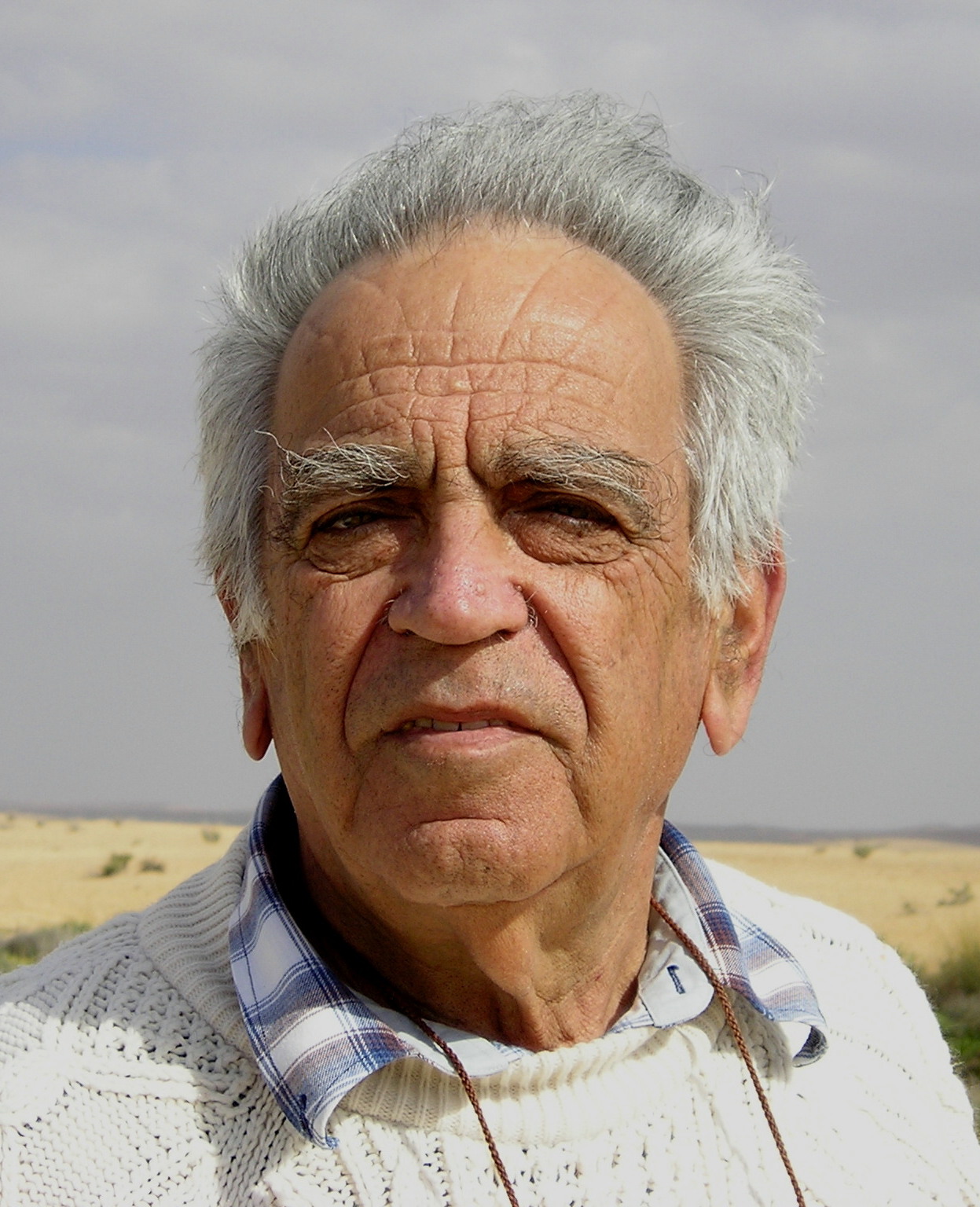
Amotz Zahavi
 Israel
Evolutionary biologist•zoologist•ornithologist•university teacher
Also known as: Amotz Zahavi, אמוץ זהבי
Birthday
August 14, 1928
Birth Sign
Leo
Birthplace
Petah Tikva, Israel
Age
Died at 88
About
Amotz Zahavi was an Israeli evolutionary biologist and a professor in the Department of Zoology at Tel Aviv University. He is best known for formulating the handicap principle, a theory explaining how costly and seemingly wasteful traits in animals can evolve as honest signals of fitness. His work spanned over five decades and reshaped how scientists understand animal communication and sexual selection.
Zahavi was also a co-founder of the Society for the Protection of Nature in Israel, reflecting his deep commitment to conservation. He passed away on May 12, 2017, in Tel Aviv, leaving behind a legacy of provocative ideas that continue to spark research and debate. His contributions earned him a lifetime achievement award in 2016, underscoring the lasting impact of his thinking on evolutionary biology.
Early Life & Background
Amotz Zahavi was born on August 14, 1928, in Petah Tikva, a city then in British-ruled Palestine. His early years in the region shaped his lifelong fascination with nature. He pursued higher education in zoology, eventually joining Tel Aviv University, where he would spend his entire academic career.
Before his theoretical breakthroughs, Zahavi was an active field naturalist and ornithologist. He was among the founders of the Society for the Protection of Nature in Israel, an organization dedicated to preserving the country's wildlife and habitats. This hands-on experience with birds and other animals gave him the observational foundation for his later ideas.
His early research focused on animal behavior, particularly the communication systems of birds. He was known for his keen eye and meticulous attention to detail, traits that would later inform his most famous theoretical contribution. By the 1970s, he had begun to question prevailing explanations for extravagant traits, setting the stage for the handicap principle.
Career Growth
Zahavi's breakthrough came in 1975 with the formal proposal of the handicap principle, published in the Journal of Theoretical Biology. The idea was controversial: it suggested that signals like the peacock's tail are costly to produce and maintain, and that this cost is precisely what makes them honest indicators of genetic quality. This challenged the prevailing view that such traits were purely arbitrary or driven by runaway sexual selection.
Over the following decades, Zahavi refined and defended his theory in numerous papers and books, most notably with his wife Avishag in the 1997 book The Handicap Principle: A Missing Piece of Darwin's Puzzle. He applied the concept to a wide range of biological phenomena, from alarm calls to mate choice, and extended it into human behavior and social systems.
His work was often met with skepticism, but it gained increasing acceptance as empirical evidence accumulated. By the time of his death in 2017, the handicap principle had become a cornerstone of modern evolutionary biology, influencing fields as diverse as behavioral ecology, game theory, and even economics. In 2016, he received a lifetime achievement award from the Zoological Society of Israel, a fitting recognition of his contributions.
Career Timeline
Public Image & Style
In the scientific community, Zahavi was regarded as a maverick thinker, unafraid to swim against the current. His handicap principle was initially met with resistance, but his persistence and the growing body of supporting evidence earned him respect. Colleagues described him as a brilliant but stubborn advocate for his ideas, often engaging in spirited debates at conferences.
Beyond academia, he was known in Israel as a public intellectual and conservationist. His role in founding the Society for the Protection of Nature made him a household name among Israelis interested in environmental issues. He frequently appeared in the media to discuss wildlife and evolutionary topics, and his accessible writing brought complex ideas to a broader audience.
His legacy is one of intellectual courage and curiosity, and he is remembered as a figure who was not afraid to ask big questions and defend them with vigor.
Fame & Fandom (iFAMOUS Rankings)
Amotz Zahavi never cultivated a fandom in the traditional sense of adoring crowds or organized fan clubs. His following was strictly academic, composed of evolutionary biologists, ecologists, and students who revered his intellect rather than idolizing him as a pop culture figure. There is no collective name for this group, as the scientific community itself served as his audience, engaging with his work through rigorous citation and debate rather than chart-topping metrics or fan rituals. The Handicap Principle remains the core legend of his career, a story retold in textbooks about how wasteful traits signal genetic fitness, though no viral moments or public spectacles ever defined his legacy. As an Israeli professor and conservationist, his influence flowed through lecture halls and field studies rather than social media campaigns. iFANN has evaluated Amotz Zahavi's global standing based on extensive historical and academic data. The Global Fame Engine has evaluated this person, but they do not currently hold a placement in the published rankings (Global Top 1,000 or a Top-100 scope list). This evaluation reflects his status as a deeply respected scientist whose fame is measured by citations and theoretical impact rather than mass-market visibility. While he commanded immense respect within his specialized fields, he does not appear on lists tracking the most famous individuals worldwide across all sectors. The absence of a ranking underscores the distinction between universal celebrity and profound scholarly contribution.
Interesting Facts and Legends
Zahavi was known for his dry wit and his tendency to challenge orthodoxy, often describing himself as a "naturalist" rather than a theoretician. He was also an avid birdwatcher, and his observations of Arabian babblers were instrumental in developing his ideas about cooperation and signaling. One of his lesser-known contributions was his work on the evolution of cooperation, where he argued that altruistic acts could be understood as costly signals of quality. He also coined the term "handicap" in a biological context, which was later adopted by economists and philosophers. Zahavi was a passionate teacher and mentor, and his students remember him for his engaging lectures and his willingness to debate any idea. He was also a devoted conservationist, and his efforts helped protect several important natural areas in Israel. A central legend surrounding his career involves the initial skepticism met by the Handicap Principle; the story goes that his radical suggestion, that nature favors wastefulness as a signal, was so counterintuitive that it took decades for the scientific community to fully embrace it. Another enduring anecdote recalls his time observing birds in the snow, a moment that highlighted his unique ability to find complex behavioral patterns in simple interactions. These stories cemented his reputation as a maverick who saw logic where others saw chaos.
Notable Quotes
“The handicap principle is not about waste; it is about honesty.”
“A signal is only reliable if it is costly.”
“I am a naturalist, not a theoretician. I observe and then I think.”
Family & Personal Life
Amotz Zahavi was married to Avishag Kadman-Zahavi, a botanist and professor at Tel Aviv University. Their partnership extended beyond personal life; they co-authored several works, including the influential book on the handicap principle. Avishag passed away in February 2024 at the age of 99.
The couple shared a deep love of nature and science, and their home was often filled with discussions about evolution and ecology. They had no children together, but their intellectual collaboration left a lasting mark on the field.
Notable Connections
Amotz Zahavi was closely associated with his wife, Avishag Kadman-Zahavi, a botanist and professor. His work also intersected with that of other evolutionary biologists, including Richard Dawkins and John Maynard Smith, who debated the handicap principle. He was a member of the Zoological Society of Israel and the Society for the Protection of Nature in Israel.
Relationships & Dating History
Amotz Zahavi was married to Avishag Kadman-Zahavi, a botanist and professor. The couple collaborated extensively on scientific work, co-authoring the landmark book on the handicap principle. Their marriage lasted until Amotz's death in 2017. Avishag passed away in February 2024 at the age of 99. At the time of his death, he was married to Avishag.
- MarriedAvishag Kadman-Zahavi1950 - 2017CurrentMarried for over 60 years, they co-authored the book on the handicap principle.
Death & Aftermath
Died
May 12, 2017 (aged 88)
Death Place
Israel
Cause of Death
reported natural causes
Amotz Zahavi passed away on Friday, May 12, 2017, in Israel at the age of 88. He died in the country where he had spent the majority of his career as a professor in the Department of Zoology at Tel Aviv University and later served as Professor Emeritus. The official cause of death was not explicitly stated in news reports or obituaries, autopsy report, or hospital statement detailing medical specifics. Accounts suggesting a sudden event, accident, or foul play are absent from the literature, consistent with the profile of a natural death due to old age.
The scientific community responded with immediate and profound tributes rather than public vigils or commercial surges. Major publications like Nature Ecology & Evolution honored him as one of the true giants of evolutionary biology, while Behavioral Ecology celebrated the enduring influence of the Handicap Principle on fields ranging from game theory to economics. Tributes highlighted his role as a co-founder of the Society for the Protection of Nature in Israel alongside his academic contributions. Details regarding his funeral or memorial service remain sparse in available records, with no specific date, location, or nature of the ceremony reported.
In the years following his death, his foundational work continued to shape behavioral ecology, though theoretical challenges emerged in February 2023 when researchers led by István Zachar and Dániel Czégel published mathematical models questioning aspects of honest signaling. Despite this theoretical revision, his status as a pivotal figure remains intact.
Net Worth (Estate Value)
$2 Million
iFANN Editorial Team estimate
As a professor and researcher, Amotz Zahavi's income came primarily from his academic salary and book royalties. His net worth at the time of his death was modest, estimated at around $2 Million, reflecting the typical financial profile of a scientist rather than a commercial figure. Per iFANN's editorial analysis, the estate's value is estimated at $2 Million, consistent with the net worth figure reported. The estate has since been managed by his wife Avishag until her passing in 2024, and it continues to receive royalties from his publications. The handicap principle book remains in print and has been translated into several languages, providing a steady stream of royalties. Additionally, his legacy has been honored through various memorial lectures and awards, though these do not generate significant income. As of 2026, the estate's value is estimated at $2 Million, consistent with the net worth figure reported.
Awards Won (1)
Amotz Zahavi received a lifetime achievement award in 2016 from the Zoological Society of Israel, recognizing his decades of contributions to evolutionary biology. This was the most notable honor of his career, reflecting the lasting influence of his ideas.
2016 · Lifetime Achievement
For contributions to evolutionary biology
Known For
Handicap Principle
1975 · Developer
The Handicap Principle: A Missing Piece of Darwin's Puzzle
1997 · Co-author
Keywords
Sources
Quick Facts
- Profession
- zoologist, ornithologist, university teacher
- Born
- +1928-08-14
- Birthplace
- Petah Tikva
- Died
- +2017-05-12
- Death Place
- Tel Aviv
- Gender
- Male
- Spouse
- Avishag Zahavi
- Birth Sign
- Leo
Personal Details
- Spouse
- Avishag Kadman-Zahavi
- Children
- Education
- Tel Aviv University
Frequently Asked Questions
Who was Amotz Zahavi?
What is the handicap principle?
When did Amotz Zahavi live?
What was Amotz Zahavi's main contribution to science?
Was Amotz Zahavi affiliated with any organizations?
Similar People
Join the community
fans discussing