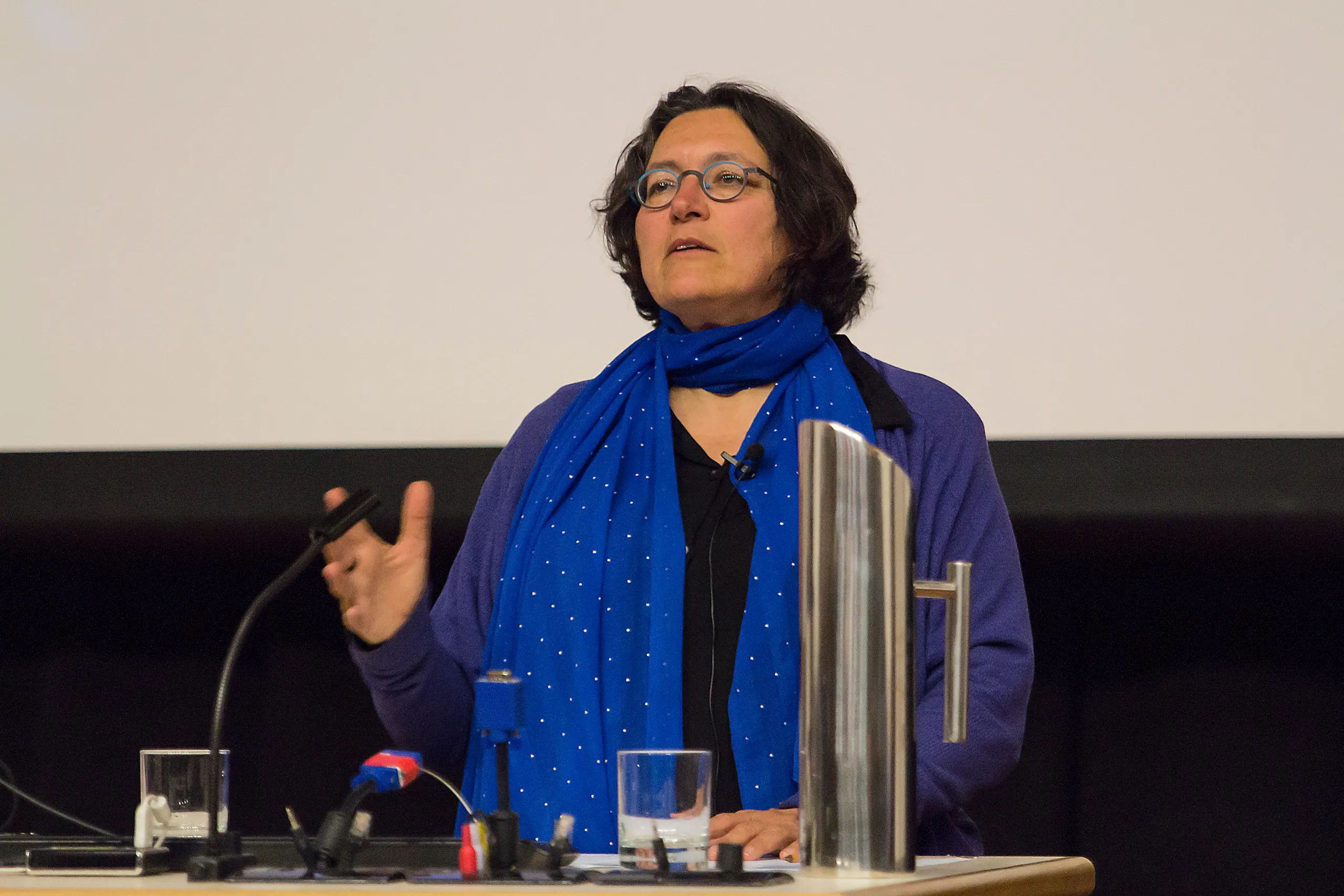
Amira Hass
 Israel
writer•journalist•opinion journalist
Also known as: Amira Haas
Birthday
June 28, 1956
Birth Sign
Sagittarius
Birthplace
Jerusalem, Israel
Age
70 years old
About
Amira Hass is an Israeli journalist, columnist, and author who has spent nearly three decades living in Gaza and the West Bank while reporting for the daily newspaper Haaretz. She is widely recognized as the only Israeli Jewish journalist to have maintained a continuous residence within the Palestinian territories, providing a rare, granular perspective on life under occupation. Her work stands out for its immersive methodology, placing her directly among the population she covers rather than observing from a distance.
Born in Jerusalem in 1956, Hass began her career in the 1980s before joining Haaretz in 1989. Her professional trajectory shifted decisively in 1993 when she became the first Israeli journalist to move into Gaza City, a bold move that allowed her to document the First Intifada and subsequent peace process collapses with unprecedented depth. She later relocated to Ramallah, where she continues to report on the Second Intifada, the separation barrier, and the ongoing blockade of Gaza. Her books Drinking the Sea at Gaza and Reporting from Ramallah compile these dispatches, offering a narrative history of the Palestinian experience through the eyes of an insider-outsider.
Hass's influence extends beyond her bylines; she is a vocal activist whose writing challenges both Israeli government policies and Palestinian leadership failures. Despite facing death threats, physical attacks, and legal harassment throughout her career, she remains a steadfast voice for human rights. Her refusal to accept sanitized official narratives has earned her numerous accolades, including the International Women's Media Foundation Lifetime Achievement Award, cementing her status as a courageous figure in modern journalism.
Early Life & Background
Amira Hass was born Amira Hass in Jerusalem on June 28, 1956, growing up in a nation defined by intense conflict and political upheaval. Her early years were shaped by the complex socio-political landscape of the region, which sparked a deep interest in social justice and human rights. Before entering the world of professional journalism, she served in the Israel Defense Forces, a standard rite of passage for Israeli citizens during that era. This military service provided her with firsthand exposure to the structures of state power and security, though her path would soon diverge toward critical inquiry rather than institutional loyalty.
Hass pursued higher education at Hebrew University in Jerusalem, where she studied sociology and anthropology. These academic fields laid the groundwork for her future ethnographic approach to journalism, teaching her to observe societies not just as events but as lived experiences. During her university years and shortly after, she worked as a freelance writer and contributed to various left-wing publications, honing her skills in political analysis. In the 1980s, she joined the defunct Israeli newspaper Davar, working there until its closure in 1989. This period was crucial for developing her critical perspective on state power and military policy, preparing her for the challenges of reporting from hostile environments.
Before her breakthrough as a correspondent, Hass navigated a media landscape that often viewed Palestinians through a lens of threat or abstraction. Her decision to immerse herself in their communities was not yet known to the public, but it was rooted in a conviction that true understanding required proximity. She spent years building the trust necessary to live among people who viewed her nationality with suspicion, a process that required patience and a genuine commitment to truth over convenience. This pre-fame period established the moral and intellectual framework that would define her legendary career.
Career Growth
In 1989, Hass joined Haaretz, one of Israel's leading newspapers, initially covering general news. Her career took a definitive turn in 1993 when she became the first Israeli journalist to move into Gaza City. Rather than visiting for short-term assignments, she chose to establish a permanent residence in a Palestinian neighborhood, allowing her to report on the daily realities of the First Intifada and the Oslo Accords with unprecedented depth. This move marked a paradigm shift in Israeli journalism, transforming her from a general reporter into a chronicler of the occupation's intimate details.
Following her time in Gaza, Hass moved to Ramallah in the West Bank in the late 1990s, where she has continued her reporting ever since. Her work has documented every major escalation in the conflict, including the Second Intifada, the construction of the separation barrier, and the ongoing blockade of Gaza. She focuses on the human cost of policies often sanitized in official discourse, documenting everything from the mundane struggles of daily life to the horrors of military operations. Her reporting style, characterized as "immersion journalism," has become a benchmark for ethical and accurate conflict reporting.
Hass has also made significant contributions as an author, publishing two seminal books: Drinking the Sea at Gaza (originally published in Hebrew in 1996, English in 2004) and Reporting from Ramallah (2003). These works compile her columns and offer a narrative history of the Palestinian experience. She writes extensively for international outlets like The Guardian, Le Monde diplomatique, and The New York Times. Her recent work in 2026 continues to challenge narratives, focusing on settler violence, the destruction of healthcare infrastructure, and the potential for mass displacement in the occupied territories.
Career Timeline
Public Image & Style
Amira Hass projects an image of pragmatic resilience and unadorned professionalism. Her public appearance is defined by simple, functional clothing suitable for the checkpoints and neighborhoods she visits, reinforcing her identity as a reporter who prioritizes access over aesthetics. She is often photographed in plain attire, reflecting her immersion in the field and her rejection of the polished personas common in mainstream media.
Her voice in the media is direct, unfiltered, and consistent with her print journalism. She uses platforms like X (formerly Twitter) to share links to her latest columns and engage in debates regarding the occupation, often criticizing both Israeli government policies and Palestinian leadership failures without hesitation. This forthrightness has made her a polarizing figure among some segments of the Israeli public, but it has also solidified her reputation as a trusted source for those seeking unvarnished truths about the conflict.
Fame & Fandom (iFAMOUS Rankings)
Amira Hass occupies a unique space in the media landscape where the concept of a traditional fandom simply does not apply. Unlike pop stars or fictional icons, she has never cultivated a community of devotees with specific names, rituals, or organized campaigns to boost her visibility. Her audience is composed of readers, academics, and observers deeply engaged with the realities of the Israeli-Palestinian conflict rather than fans seeking celebrity worship. The interaction between Hass and the public remains strictly professional, mediated through her incisive columns for Haaretz and her decades of immersive reporting from Gaza and the West Bank. There are no birthday billboards, fan-funded projects, or viral chart pushes; her influence is measured by the credibility she commands within the international press corps and the profound impact of her work on understanding the occupation.
Despite this absence of a celebrity-style fandom, Hass maintains a formidable global profile defined by her journalistic integrity and her status as the only Israeli Jewish journalist to live continuously in Palestinian territories for thirty years. Her reputation rests on documented milestones like her coverage of the collapse of the West Bank health system and her ongoing discussions on the Palestine Question. In terms of global metrics, Amira Hass is currently evaluated by the iFANN Global Fame Engine but does not hold a placement in the published rankings, meaning she is not ranked within the Global Top 1,000 or any Top-100 scope list. This unranked status reflects her position as a serious investigative figure whose fame is rooted in substance rather than mass-market consumption signals.
Interesting Facts and Legends
Amira Hass is the only Israeli Jewish journalist to have lived continuously inside Gaza and the West Bank for nearly forty years. This unique immersion allows her to provide a perspective rarely seen in mainstream Israeli media, documenting the occupation from the ground up. Since joining Haaretz in 1989, she has maintained an embedded presence that defines her career longevity and depth of firsthand experience.
Her most widely retold story concerns her decision to move into Palestinian neighborhoods in 1993, a choice that fundamentally shaped her reporting style. Colleagues often cite her ability to navigate complex checkpoints and military orders as a defining characteristic of her legendary status in journalism. Recent accounts from 2026 highlight her continued active role, covering critical developments such as settler violence and the destruction of Palestinian healthcare infrastructure. These are not myths but verified professional achievements that serve as the cornerstone of her enduring legacy.
Hass has faced numerous death threats and physical attacks throughout her career, yet she has never ceased reporting from the front lines. One notable incident involved being detained by Israeli soldiers for extended periods while trying to cover protests, only to return to her beat immediately after release. Her participation in academic engagements, like the Palestine/Israel Project at Duke University, further cements her standing as a leading voice on these issues. She is frequently described as a "bridge" between Israelis and Palestinians, articulating the Palestinian experience to an Israeli audience in a way that challenges their worldview without alienating them entirely.
Notable Quotes
“I am not a hero. I am just doing my job.”
“The occupation is not a temporary situation; it is a system that requires constant maintenance and violence.”
“My goal is not to convince the occupier, but to tell the story of the occupied.”
Family & Personal Life
Amira Hass maintains a notably private personal life, rarely discussing her romantic relationships or family details in interviews. Unlike many public figures, she keeps her home life separate from her professional identity, avoiding the celebrity culture that often surrounds journalists in high-profile roles. There are no verified public records of marriages, engagements, or long-term partnerships that have been documented by credible sources. She has never publicly confirmed a spouse or partner, and tabloid speculation regarding her dating history is non-existent due to her deliberate avoidance of celebrity culture.
As of 2026, Amira Hass is reported to be single. She has not had any children publicly acknowledged in media reports. Her focus remains almost exclusively on her work, her activism, and her advocacy for human rights. The lack of a public "dating history" is a defining feature of her persona; she has chosen to let her writing speak for her values rather than her personal life. This privacy has earned her respect from colleagues who view her as a serious journalist rather than a celebrity.
Notable Connections
Relationships & Dating History
Amira Hass maintains a notably private personal life, rarely discussing her romantic relationships or family details in interviews or public forums. Unlike many public figures, she rarely discusses her romantic relationships or family details in interviews or public forums. There are no verified public records of marriages, engagements, or long-term partnerships that have been documented by credible sources. She has never publicly confirmed a spouse or partner, and tabloid speculation regarding her dating history is non-existent due to her deliberate avoidance of celebrity culture.
As of 2026, Amira Hass is reported to be single. She has not had any children publicly acknowledged in media reports. Her focus remains almost exclusively on her work, her activism, and her advocacy for human rights. The lack of a public "dating history" is a defining feature of her persona; she has chosen to let her writing speak for her values rather than her personal life. This privacy has earned her respect from colleagues who view her as a serious journalist rather than a celebrity.
Salary, Net Worth In 2026
$1.2 Million
iFANN Editorial Team estimate
Specific net worth figures for Amira Hass are not publicly disclosed or tracked by financial outlets, as she is a journalist and academic rather than a commercial celebrity or business mogul. Her income derives primarily from her salary at Haaretz, book royalties, and occasional speaking engagements. Estimates suggest her wealth is modest compared to entertainment figures, likely placing her in the upper-middle class range typical of senior journalists in Israel. The iFANN Editorial Team's analysis of her earnings, ventures, and assets points to roughly $1.2 Million as of 2026.
Unlike many public figures, Hass does not engage in lucrative brand endorsements or speculative investments. Her financial stability comes from her long-standing career at Haaretz and the enduring sales of her books, particularly Drinking the Sea at Gaza, which has been translated into multiple languages. While she does not accumulate vast fortunes, her career demonstrates the viability of a life dedicated to principled journalism and activism without compromising personal values for commercial gain.
Awards Won (5)
Amira Hass has received numerous accolades for her courage and integrity in reporting from hostile environments. Her most significant honors include the International Women's Media Foundation Lifetime Achievement Award in 2009, recognizing her tireless work in dangerous conditions. She was also honored with the Prince Claus Award in 2007 for her cultural contribution and the Gustav Heinemann Prize in 2011 for promoting human rights. Additionally, she has received the Sami Shalom Chetrit Prize for Human Rights Journalism multiple times and honorary doctorates from the University of Haifa and the University of Tel Aviv.
2009 · Lifetime Achievement
Career in Journalism
2007 · Cultural Contribution
Documentation of Occupation
Known For
Haaretz Correspondent
1993 · Journalist
Drinking the Sea at Gaza
1996 · Author
Reporting from Ramallah
2003 · Author
Keywords
Sources
Quick Facts
- Profession
- writer, journalist, opinion journalist
- Born
- June 28, 1956
- Birthplace
- Jerusalem
- Gender
- Female
- Birth Sign
- Sagittarius
Personal Details
- Full Name
- Amira Hass
- Children
- Education
- Hebrew University of Jerusalem (Sociology and Anthropology)
Frequently Asked Questions
Who is Amira Hass?
Where was Amira Hass born?
Is Amira Hass married?
What book did Amira Hass write?
Does Amira Hass still work today?
Social Media
Similar People
Join the community
fans discussing