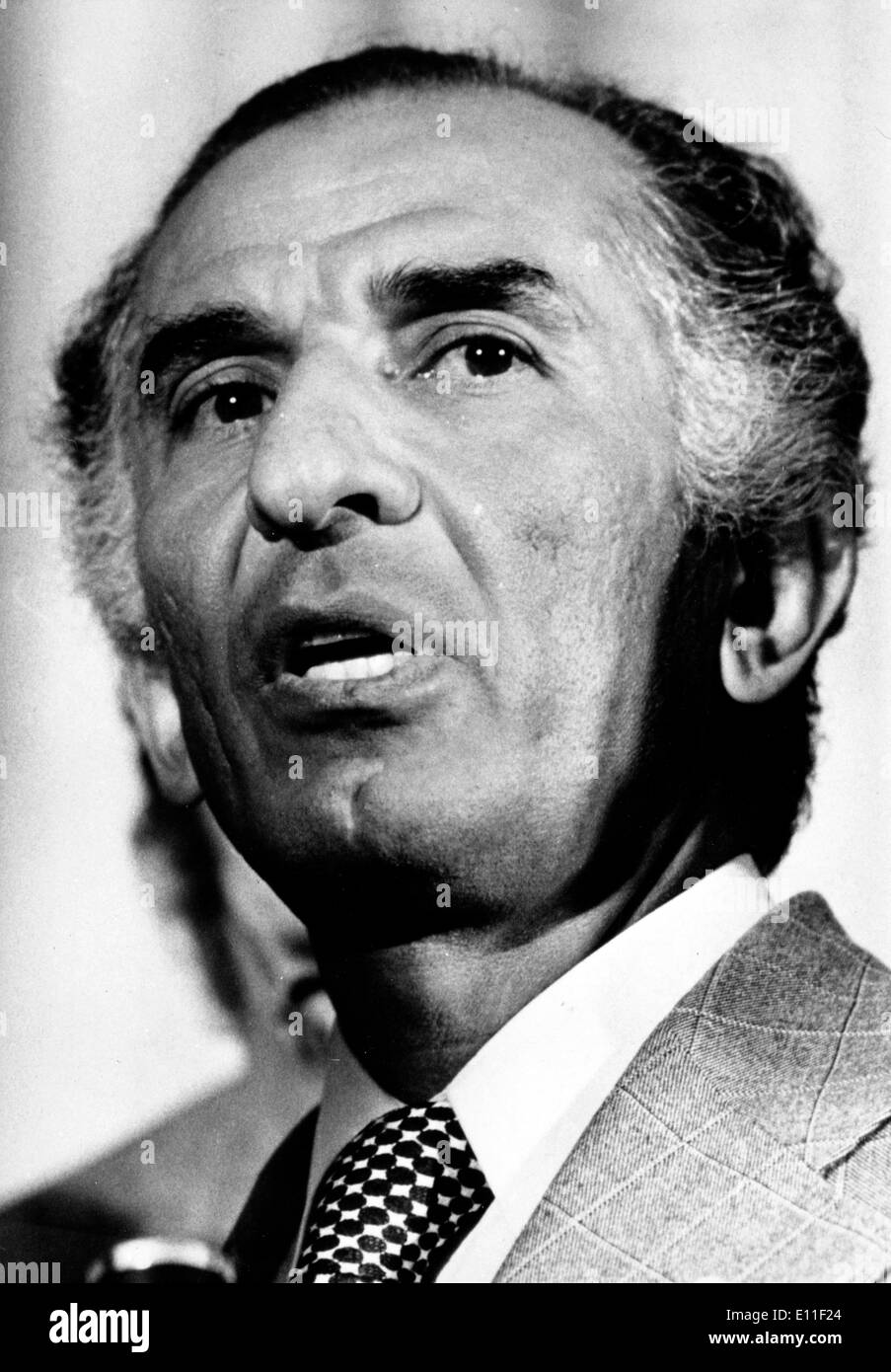
Amir-Abbas Hoveyda
 Iran
Iranpolitician•economist•diplomat•writer
Birthday
February 18, 1919
Birth Sign
Aquarius
Birthplace
Tehran, Iran
Age
Died at 60
About
Amir-Abbas Hoveyda was an Iranian economist and politician who served as Prime Minister of Iran for an unprecedented 13 years, from 1965 to 1977. He was a central figure in the Pahlavi dynasty's modernization drive, implementing many of Shah Mohammad Reza Pahlavi's reformist policies, known as the White Revolution. Hoveyda also briefly led the Rastakhiz Party as its Secretary-General in 1975-76.
His tenure was marked by rapid economic growth, Westernization, and political repression. He was arrested after the Iranian Revolution and executed by firing squad on April 7, 1979, following a secret trial. His life remains a symbol of the struggle between modernity and tradition in Iran.
Early Life & Background
Born in Tehran in 1919, Amir-Abbas Hoveyda grew up in a family with diplomatic ties; his father was a court official, and his brother Fereidoun later became a diplomat. He attended elite schools in Tehran before moving to Europe for higher education, earning a degree in political science from the Université libre de Bruxelles in 1941.
Returning to Iran, he worked as a journalist and then entered the civil service, holding positions in the foreign ministry and as a diplomat in various embassies. His political rise began when he joined the Iran Novin Party, founded by his friend Hassan Ali Mansur, and became its deputy secretary-general.
Career Growth
Hoveyda's breakthrough came in 1964 when he was appointed Minister of Finance under Prime Minister Hassan Ali Mansur. After Mansur's assassination in 1965, Hoveyda was named Prime Minister, a position he held for 13 years. He implemented the White Revolution reforms, including land redistribution, women's suffrage, and economic modernization, while also consolidating the Shah's authoritarian rule.
He served as Secretary-General of the Rastakhiz Party from 1975 to 1976, a single-party system designed to mobilize political support. As the economy boomed with oil revenues, Hoveyda's government faced growing criticism for corruption and repression. He resigned in 1977 under pressure from the Shah, and was later arrested during the revolution.
Career Timeline
Public Image & Style
Hoveyda was perceived as a cultured, urbane technocrat, often seen as the face of the Shah's modernization program. He was criticized by both the left and the religious right, who viewed him as a symbol of Western decadence and authoritarianism. In the West, he was seen as a pragmatic reformer, but his association with the Shah's secret police tarnished his legacy. Today, he is remembered as a tragic figure, caught between the forces of modernity and tradition.
Fame & Fandom (iFAMOUS Rankings)
Amir-Abbas Hoveyda stands as a figure whose historical weight often overshadows his presence in modern pop culture rankings. As of August 2026, the iFANN Global Fame Engine has evaluated this person, but they do not currently hold a placement in the published rankings (Global Top 1,000 or a Top-100 scope list). This absence from the charts reflects a legacy defined by political biography and revolutionary history rather than celebrity worship or viral fame signals worldwide. While he commanded the Iranian state for over a decade, the public discourse surrounding him remains anchored in the gravity of his execution and the complex struggle between modernity and tradition, preventing him from accumulating the casual recognition typical of global entertainment icons.
The audience for Amir-Abbas Hoveyda does not form a formal fandom with an official name, nor are there organized fan rituals, fan-funded projects, or dedicated campaigns to keep his memory popular in the manner of music or film stars. There is no documented fanbase that interacts through specific hashtags or subreddits under a unified banner. Instead, his admirers and critics engage with him strictly through the lens of historical analysis. The cultural mythology surrounding him is rooted entirely in the dramatic narrative of his life, particularly the widely retold story of his arrest ordered by the Shah himself in November 1978 and his subsequent execution by firing squad at Qasr Prison on April 7, 1979. These events serve as the central pillars of his modern historical narrative, cited alongside the broader wave of executions of former Shah officials that began in early April 1979. Recent retrospective works, such as Mostafa Shoqi's 2017 film titled "Hoveyda," attempt to present an unbiased look at his life, yet these remain historical examinations rather than contemporary folklore driven by fan enthusiasm. His title as the "Persian Sphinx" endures as a moniker reflecting his enigmatic role in Iran's modernization, but it exists within academic and historical circles rather than a vibrant, active fan community.
Interesting Facts and Legends
Known for his elegant dress and deep appreciation for French culture, Hoveyda frequently quoted Voltaire and Molière during conversations. He was a prolific writer who authored several books on economics and politics, including 'The Modernization of Iran.' An avid tennis player, he played regularly with the Shah, sharing a courtship that mirrored their political partnership. His brother Fereidoun was a prominent diplomat and novelist who later criticized the revolution, adding a layer of familial complexity to the family's public narrative.
Beyond these biographical details, the most enduring legend surrounding Hoveyda is the circumstances of his death. A story that is often retold involves his execution following a secret trial conducted by the Islamic Revolutionary Court, where reports note he was machine-gunned to death after a closed proceeding. This event is characterized as a virtual certainty prior to the actual execution, marking a dramatic fall from grace for the man who had served as the longest-serving prime minister in Iran's modern history. His tenure, lasting thirteen years from 1965 to 1977, cemented his status as a central figure in the Pahlavi dynasty's modernization drive, yet his legacy remains inextricably linked to the tragedy of his final days at Qasr Prison.
Family & Personal Life
Hoveyda married Leila Emami in 1950, a union that produced no children. Leila, from a prominent family, remained a supportive partner throughout his career. His brother Fereidoun Hoveyda was a diplomat and writer, who served as Iran's ambassador to the United Nations. The family was deeply connected to the Pahlavi court, and their fortunes reversed after the revolution.
Notable Connections
Hoveyda was closely associated with Shah Mohammad Reza Pahlavi, who appointed and later abandoned him. His wife Leila Emami and brother Fereidoun Hoveyda were also key figures in his life. He worked alongside Hassan Ali Mansur, his predecessor, and was influenced by the intellectual circles of the time.
Relationships & Dating History
Hoveyda married Leila Emami in 1950, and they remained together until his execution. Their marriage was stable but childless. There are no public records of other significant relationships. At the time of his death, he was married to Leila.
- MarriedLeila Emami1950 - 1979Married until his death; no children.
Death & Aftermath
Died
April 7, 1979 (aged 60)
Death Place
Tehran
Cause of Death
Execution by firing squad
The Islamic Revolutionary Court, presided over by Ayatollah Sadegh Khalkhali, formally concluded its secret trial of Amir-Abbas Hoveyda on April 7, 1979, ruling that the former Prime Minister would be executed. This judicial determination followed a closed proceeding at Qasr Prison in Tehran where Hoveyda faced charges without public access or formal defense counsel, leading to his immediate execution alongside six other military officers. The Washington Post reported the following day that he was machine gunned to death, confirming the violent end of a life that had defined an era of Iranian modernization under the Pahlavi dynasty. Public reaction within Iran was sharply divided, with revolutionary supporters celebrating the purge of the old regime.
His body was reportedly not returned to his family for a formal burial, and historical accounts suggest he was laid to rest in an unmarked grave to prevent the site from becoming a shrine. In the decades since, the event has been revisited by historians and documentary filmmakers, including Mostafa Shoqi's 2017 film titled Hoveyda, which sought to document the circumstances without legal re-investigation. Abbas Milani later published the definitive biography The Persian Sphinx: Amir Abbas Hoveyda and the Riddle of the Iranian Revolution, cementing his legacy as a symbol of the struggle between modernity and tradition.
Net Worth (Estate Value)
$5 Million
iFANN Editorial Team estimate
As a long-serving prime minister, Hoveyda accumulated wealth through his government salary and connections, though exact figures remained unclear during his lifetime. His estate, managed after his death, has seen minimal income, primarily from royalties from his published works. Per iFANN's editorial analysis, the estate's value is estimated at around $5 Million as of 2026, reflecting the liquidation of assets and legal battles over the years. This figure represents the current standing of his financial legacy, shaped by decades of posthumous management and the dissolution of various holdings.
Awards & Accolades
Known For
Prime Minister of Iran
1965-1977 · Prime Minister
White Revolution reforms
1960s · Implementer
Keywords
Sources
Quick Facts
- Profession
- politician, economist, diplomat, writer
- Born
- +1919-02-18
- Birthplace
- Tehran
- Died
- +1979-04-07
- Death Place
- Tehran
- Gender
- Male
- Spouse
- Leila Emami
- Birth Sign
- Aquarius
Personal Details
- Full Name
- Amir-Abbas Hoveyda
- Spouse
- Leila Emami
- Education
- Bachelor's degree in political science from Université libre de Bruxelles
Frequently Asked Questions
Who was Amir-Abbas Hoveyda?
How did Amir-Abbas Hoveyda die?
What was Amir-Abbas Hoveyda's net worth?
Why is Amir-Abbas Hoveyda famous?
Was Amir-Abbas Hoveyda married?
Similar People
Join the community
fans discussing