American Civil Liberties Union
 United States
About
The American Civil Liberties Union, commonly known as the ACLU, is a nonprofit civil rights organization that has been fighting for individual freedoms since its founding in 1920. With affiliates in all 50 states, Washington, D.C., and Puerto Rico, the ACLU has grown into a formidable legal force. Its 2024 budget stood at $383 million, reflecting its expansive reach and the scale of its operations.
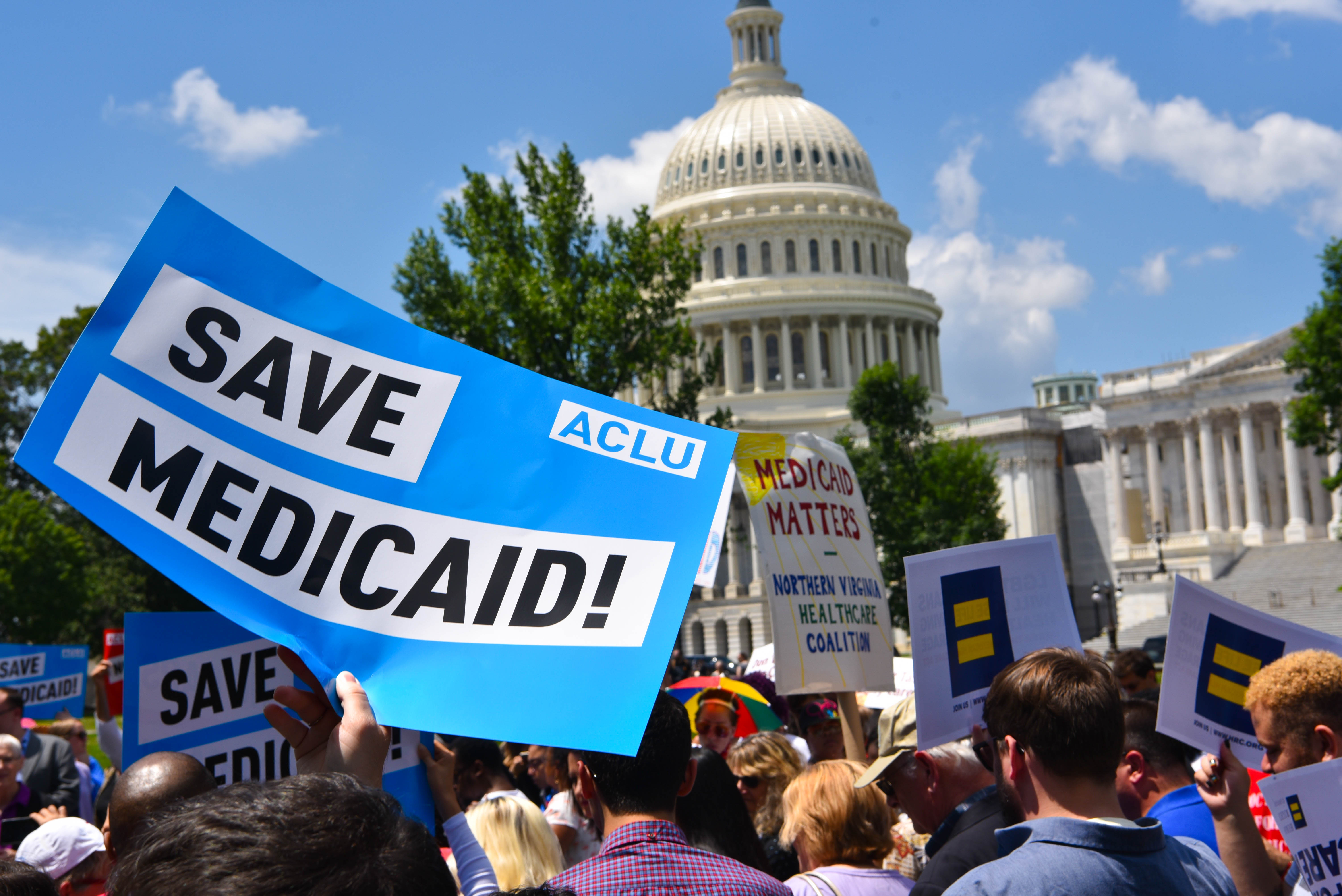
The organization provides legal assistance in cases where civil liberties are at risk, often taking a secularist stance to challenge excessive religious entanglement with the U.S. government. The ACLU's work spans a wide range of issues, from free speech and privacy to reproductive rights and racial justice. Its approach combines direct legal representation, legislative advocacy, and public education, making it one of the most influential civil rights organizations in the country.
Over the past century, the ACLU has been at the center of nearly every major civil liberties battle in America. It has defended free speech in the Scopes Trial, fought for desegregation, and taken on government surveillance programs. The organization's legal victories have shaped constitutional law, and its ongoing campaigns continue to address contemporary threats to civil rights, from immigration enforcement overreach to mass surveillance technologies.
Mission
The ACLU's mission is to defend and preserve the individual rights and liberties guaranteed by the U.S. Constitution and the laws of the United States. It works through litigation, legislative advocacy, and public education to protect civil liberties including free speech, privacy, reproductive rights, racial justice, immigrants' rights, and religious freedom. The organization is explicitly nonpartisan, committed to defending the rights of all Americans regardless of political affiliation.
History
The ACLU's roots go back to the National Civil Liberties Bureau, formed during World War I to defend conscientious objectors and anti-war activists. In 1920, Roger Nash Baldwin and a coalition of lawyers, social reformers, and activists transformed that bureau into the ACLU. The founders included Crystal Eastman, Walter Nelles, Morris Ernst, Albert DeSilver, Arthur Garfield Hays, Jane Addams, Felix Frankfurter, and Elizabeth Gurley Flynn. They shared a commitment to defending constitutional rights, and the organization was deliberately nonpartisan.
From its earliest days, the ACLU took on landmark cases. In 1925, it defended John Scopes in the famous "Scopes Monkey Trial," challenging a Tennessee law that banned the teaching of evolution. During the civil rights era, the ACLU was involved in desegregation efforts and voting rights litigation. The organization also played a key role in expanding free speech protections, arguing cases like New York Times Co. v. Sullivan and Brandenburg v. Ohio.
As the decades passed, the ACLU expanded its focus to include privacy, reproductive rights, and immigrants' rights. It established specialized projects, such as the Women's Rights Project and the LGBTQ & HIV Project, to address emerging civil liberties issues. The organization's willingness to defend unpopular speakers, including hate groups, has made it a frequent target of criticism, but its commitment to principle has remained steady.
Subdivisions
ACLU Foundation
The tax-deductible arm of the ACLU that handles educational and litigation work, separate from the advocacy-focused Union.
State Affiliates
Independent organizations in all 50 states, Washington, D.C., and Puerto Rico that coordinate with the national office on major initiatives.
Notable People
Susan N. Herman
Chairman · 2008-present
Constitutional law scholar and professor emerita at Brooklyn Law School, leading the ACLU's board.
Roger Nash Baldwin
Founder · 1920-1950
First executive director, shaped the organization's early direction and commitment to civil liberties.
Crystal Eastman
Founder · 1920
Co-founded the ACLU, advocate for women's rights and civil liberties.
Walter Nelles
Founder · 1920
Legal counsel and co-founder, helped shape early legal strategies.
Morris Ernst
Founder · 1920
Prominent attorney, defended literary works and free speech.
Albert DeSilver
Founder · 1920
Co-founder, served as treasurer and financial supporter.
Arthur Garfield Hays
Founder · 1920
Prominent civil liberties lawyer, involved in high-profile cases.
Jane Addams
Founder · 1920
Social reformer and Nobel laureate, supported the founding mission.
Felix Frankfurter
Founder · 1920
Later Supreme Court Justice, helped establish the ACLU's legal credibility.
Elizabeth Gurley Flynn
Founder · 1920
Labor organizer and activist, brought working-class perspective to the board.
Milestones
1920
Founded in New York City by Roger Baldwin and others.
1925
Defended John Scopes in the Scopes Monkey Trial over teaching evolution.
1954
Contributed to the legal strategy in Brown v. Board of Education, supporting desegregation.
1964
Argued New York Times Co. v. Sullivan, strengthening press freedom.
1973
Supported Roe v. Wade, establishing a constitutional right to abortion.
1987
Founded the Women's Rights Project to fight gender discrimination.
1994
Launched the National Security Project to address post-Cold War security and civil liberties.
2013
Challenged NSA surveillance programs after Edward Snowden's disclosures.
2018
Fought against family separation at the U.S.-Mexico border.
2020
Celebrated its centennial, reflecting on a century of civil liberties advocacy.
2024
Budget reached $383 million, with ongoing litigation on surveillance and immigration.
Departments
Sources
Organization Info
- Founded
- 1920
- Headquarters
- New York City
- Country
- United States
- Chairman
- Susan N. Herman
- Type
- Non-profit
- Founder
- Roger Nash Baldwin, Crystal Eastman, Walter Nelles, Morris Ernst, Albert DeSilver, Arthur Garfield Hays, Jane Addams, Felix Frankfurter, Elizabeth Gurley Flynn
Financials
- Revenue
- $0.2 billion
- Budget
- $383 million
Official Website
www.aclu.org/
Join the community
fans discussing