 United States
“American Bandstand was the first and longest-running rock-and-roll show on television, a cultural touchstone that taught America's teenagers how to dance and what music to love.”
David Hinckley
New York Daily News
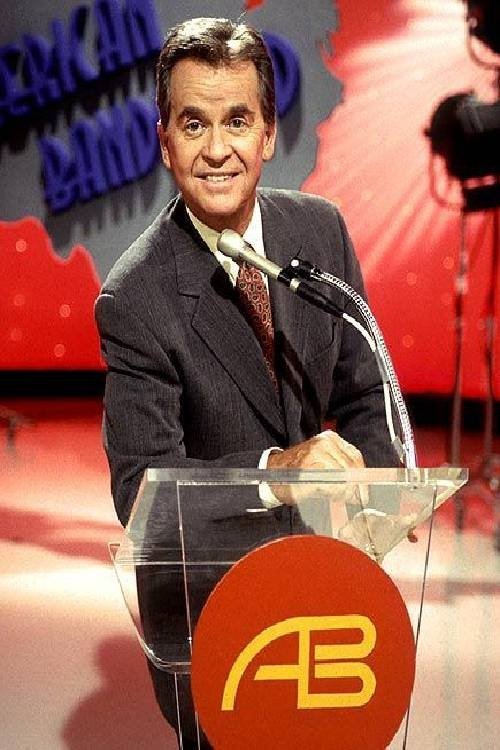
American Bandstand premiered as a local Philadelphia show on WFIL-TV in 1952, but it was Dick Clark who turned it into a national institution. Clark took over hosting in 1956 at age 26, and within a year ABC picked up the show for weekday afternoons. For the next three decades, teenagers across America rushed home from school to watch their peers dance to the latest hits in Studio B. The formula was deceptively simple: a clean-cut host, a roomful of kids, and a stack of 45s.
The show's influence stretched far beyond the TV screen. It broke new artists, popularized dance crazes from the Stroll to the Twist, and helped legitimize rock and roll for a skeptical older generation. Clark's even-handed approach also meant Black and white performers appeared side by side, a quietly progressive stance in the 1950s and 60s. The show moved to Los Angeles in 1964, shifted to syndication in the late 80s, and finally ended on USA Network in 1989, exactly 37 years after its debut.
American Bandstand was built around a single, irresistible idea: put teenagers in a TV studio, play the Top 40, and let the cameras roll. The show originated in Philadelphia on October 6, 1952, as a local program called Bandstand, hosted by radio DJ Bob Horn. It aired live from Studio B at 46th and Market Streets, with high school pennants lining the walls and a rotating cast of regular dancers who became minor celebrities in their own right. The two-and-a-half-hour broadcast reached nearly six million viewers in the Delaware Valley alone.
When Dick Clark took over in July 1956, he brought a sharper business sense and a warmer on-screen presence. The show went national on ABC in August 1957 as American Bandstand, airing weekday afternoons from 3:30 to 5:00 PM Eastern. Each episode followed a reliable rhythm: Clark would count down the Top 10, ask dancers what they thought of a new record (the famous question "Does it have a good beat and can you dance to it?"), and introduce a featured artist who usually lip-synced their latest single. The regular dancers, kids like Justine Carrelli, Arlene Sullivan, and Kenny Rossi, became style icons, their clothing and moves copied by teens across the country.
The show's arc over its 37 seasons can be divided into three broad eras. The Philadelphia years (1952-1964) were its golden age, when Bandstand was the epicenter of youth culture. Artists like Chubby Checker, Connie Francis, and the Rolling Stones made pivotal appearances. The move to Los Angeles in 1964 opened the door to Hollywood's biggest acts, from the Jackson 5 to the Mamas & the Papas. The syndicated years (1987-1989) saw declining ratings as MTV reshaped music television, but the show maintained its core identity. The final season on USA Network, hosted by comedian David Hirsch, tried to recapture the old magic but ended quietly on October 7, 1989.
Throughout its run, American Bandstand remained remarkably consistent. Dick Clark's steady hand ensured the show never veered from its mission: to present popular music in a fun, accessible way. The show introduced countless dance fads, the Stroll, the Hully Gully, the Loco-Motion, and gave America a weekly window into what was cool. It also served as a launching pad for careers: Freddy "Boom Boom" Cannon appeared 110 times, more than any other performer, while acts like Madonna and Prince made early television appearances on the show.
Critical Consensus
American Bandstand predates modern critical aggregation, but its cultural footprint is undeniable. The show defined music television for three decades, launching careers and shaping youth culture. Its legacy is measured in influence rather than reviews.
“American Bandstand was the first and longest-running rock-and-roll show on television, a cultural touchstone that taught America's teenagers how to dance and what music to love.”
David Hinckley
New York Daily News
“The show's genius was its simplicity: put teenagers in a room with good music and let the camera roll. Clark understood that the real stars were the kids dancing.”
Tom Shales
Washington Post
“American Bandstand created a template for music television that would influence everything from Soul Train to MTV, making it arguably the most important music show in television history.”
John J. O'Connor
The New York Times
“For millions of Americans growing up in the 1950s, 60s, and 70s, American Bandstand was the place to discover new music and learn the latest dances, a national classroom for youth culture.”
Rick Kogan
Chicago Tribune
Dick Clark
Self - Host
Bob Horn
Self - Host (1952-1956)
Tony Mammarella
Self - Host (interim)
David Hirsch
Self - Host (1989)
Producer
Dick Clark
Rock and Roll Hall of Fame (1993)
Honorary Exhibit: Inducted
Television Hall of Fame (1990)
Inductee (Dick Clark): Inducted
Join the community
fans discussing