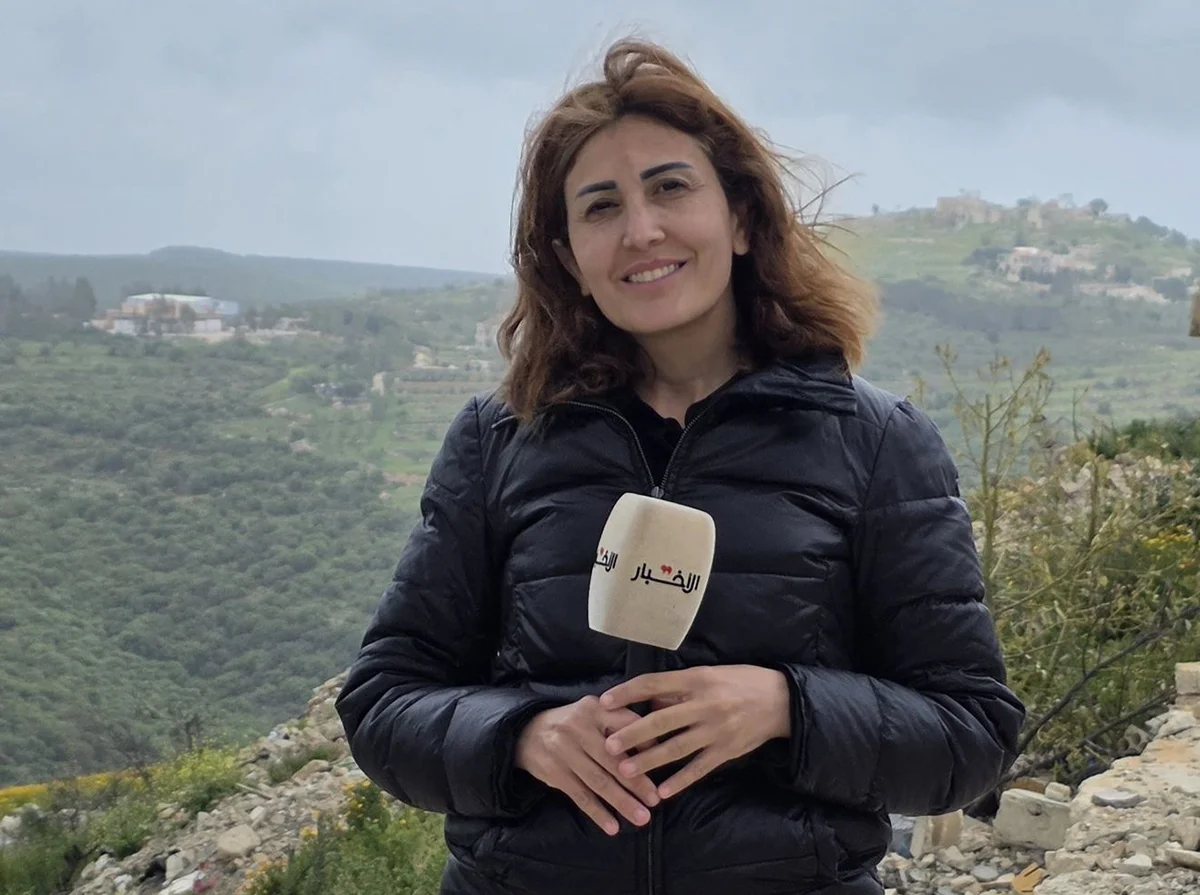
Amal Khalil
 Lebanon
Birthday
1984
Birth Sign
Capricorn
Birthplace
Al-Baisariyah, Lebanon
Age
Died at 42
About
Amal Khalil was a Lebanese journalist for the Beirut-based newspaper Al-Akhbar, known for her fearless reporting from the front lines of conflict. Born in 1984 in the southern village of Al-Baisariyah, she dedicated her career to documenting the human cost of war in her homeland. Her work stood out for its courage and depth, earning her respect among colleagues and readers alike.
Khalil was killed on 22 April 2026 while covering the 2026 Lebanon war, when an Israeli airstrike destroyed the building where she and camerawoman Zeinab Faraj had taken shelter in At Tiri. She was the ninth journalist to die in Lebanon that year. The circumstances of her death, including delays in rescue efforts, drew international condemnation and led to calls for a war crimes investigation.
Early Life & Background
Amal Khalil was born in 1984 in Al-Baisariyah, a small village in southern Lebanon. Growing up in a region repeatedly scarred by conflict, she witnessed firsthand the toll that war takes on civilians. This upbringing ignited a deep commitment to telling the stories of those affected by violence.
Details of her early education remain scarce, but her path to journalism likely began with a desire to give voice to her community. She joined Al-Akhbar, a Beirut-based newspaper known for its critical stance on regional politics, where she honed her skills as a conflict reporter. Her early assignments took her to some of the most dangerous areas of the country, where she reported on military operations and their impact on ordinary people.
Before the 2026 war, Khalil had already established herself as a dedicated journalist, but her name became widely known only after her tragic death. Her pre-war career was marked by a quiet determination to document the truth, even at great personal risk.
Career Growth
Amal Khalil's career was defined by her work as a conflict journalist for Al-Akhbar. While specific milestones are not well-documented, her reporting from volatile regions earned her a reputation for bravery and integrity. She covered the 2026 Lebanon war from the front lines, providing crucial coverage of the conflict's impact on civilians.
Her death on 22 April 2026, while sheltering in At Tiri, brought international attention to the dangers journalists face in war zones. The attack that killed her was the third Israeli strike in the area within two hours, and rescue efforts were delayed by a stun grenade dropped near a Red Cross team and gunfire that damaged their ambulance. Khalil was trapped for over seven hours before succumbing to her injuries.
In August 2026, investigations by Human Rights Watch, Amnesty International, and The Legal Agenda concluded that Khalil and her colleague were civilians and called for the attack to be investigated as a possible war crime. Her death became a symbol of the risks journalists take to report the truth, and her legacy continues to inspire advocacy for press freedom.
Career Timeline
Public Image & Style
Amal Khalil is remembered as a fearless conflict journalist who chose to document the human cost of war from the front lines. Her death sparked international outrage and drew attention to the dangers journalists face in conflict zones. Media coverage portrayed her as a dedicated professional who risked her life to tell the stories of civilians affected by violence. Her case became a symbol of the need to protect journalists, with organizations like Reporters Without Borders and the Committee to Protect Journalists condemning the attack and calling for accountability. Her legacy is one of courage, integrity, and a commitment to truth that continues to inspire journalists worldwide.
Fame & Fandom
Amal Khalil commanded a global stage defined not by celebrity charts but by the grim gravity of her final days. Her death transformed her into a primary symbol of press freedom violations, triggering immediate international condemnation and placing her at the center of diplomatic tensions between Lebanon and Israel. Despite this massive surge in visibility, iFANN's Global Fame Engine has evaluated this person, but they do not currently hold a placement in the published rankings (Global Top 1,000 or a Top-100 scope list). She remains an unranked figure in the current metrics, reflecting a specific type of fame rooted in tragedy rather than commercial consumption. The audience surrounding her legacy is vast yet diffuse, comprising journalists, human rights advocates, and conflict observers who monitor war crimes investigations globally. There is no documented name for this collective; the fanbase has no formal name. While entertainment icons often have dedicated groups that rally around birthdays or new releases, Khalil's supporters are united by a shared demand for accountability regarding the events of April 2026. Her story continues to circulate in news cycles and legal briefs, ensuring her relevance without generating the viral fandom mechanics seen in pop culture.
Interesting Facts and Legends
Amal Khalil was the ninth journalist killed in Lebanon in 2026, a grim statistic that highlighted the extreme dangers reporters faced during the conflict. She was sheltering with camerawoman Zeinab Faraj when the building was destroyed; Faraj survived but was seriously wounded. The attack on their shelter was the third Israeli strike in the area within two hours, suggesting a deliberate targeting of journalists. Khalil's body was not recovered until several hours after the initial strike, as rescue teams were blocked by a quadcopter dropping a stun grenade and gunfire damaging their ambulance. Her case was later classified as an apparent war crime by multiple human rights organizations, including Human Rights Watch and Amnesty International. A defining legend of her life centers on the 'double-tap' nature of the airstrike that ended her career, where the second wave of destruction occurred while first responders attempted to reach the rubble. This incident became a focal point for the Committee to Protect Journalists, which explicitly called for accountability over the obstruction of rescue operations. The narrative of her death shifted from a tragic accident to a potential war crime in August 2026, cementing her status as a martyr whose final moments sparked a global investigation into the safety of media workers in ceasefire zones.
Family & Personal Life
Public information about Amal Khalil's family is extremely limited. She was born in Al-Baisariyah, a village in southern Lebanon, but no details about her parents, siblings, or any children are available in the sourced material. Given the nature of her work and the limited biographical coverage, her personal life remained private. She was 42 years old at the time of her death, and no records of a spouse or partner have been found. Her focus appears to have been on her journalism career, which she pursued with dedication until her final moments.
Notable Connections
Amal Khalil worked alongside Zeinab Faraj, a camerawoman who was seriously wounded in the same attack. She was employed by Al-Akhbar, a Beirut-based newspaper known for its critical coverage of regional politics. Her death was investigated by human rights organizations, including Human Rights Watch and Amnesty International, which called for accountability.
Relationships & Dating History
Public records do not document any romantic relationships, marriages, or children for Amal Khalil. Her personal life remained private, and no credible sources provide information about a partner or spouse. She was unmarried at the time of her death. Her focus was on her career as a journalist, and she dedicated her life to reporting from conflict zones.
Death & Aftermath
Died
April 22, 2026 (aged 42)
Death Place
al-Tiri
Cause of Death
Direct trauma from an Israeli airstrike
The international press community erupted in condemnation when Amal Khalil, the ninth journalist killed by Israel in Lebanon that year, fell victim to an airstrike while covering the conflict. Tributes poured in from major outlets like The New York Times and Al Jazeera, praising her two decades of frontline reporting and intrepidity as she documented the human cost of war. Her death became a rallying point for press freedom advocates who demanded accountability for the targeting of civilians. On April 22, 2026, Khalil was struck by Israeli airstrikes in the southern village of al-Tiri during a ten-day ceasefire period. She had taken refuge in a building alongside colleague Zeinab Faraj, who survived with injuries, while Khalil was trapped under rubble before succumbing to direct trauma.
Reports indicated that rescue efforts were obstructed by ongoing hostilities or further targeting, delaying her extraction until her body was discovered on the day of the attack. Although she had publicly disclosed receiving a direct death threat from the IDF in 2024, the official ruling confirmed the cause as the military strike itself. Legal investigations followed, with Human Rights Watch, Amnesty International, and the Committee to Protect Journalists issuing statements in August 2026 accusing Israel of intentionally targeting Khalil and categorizing the act as a war crime. Lebanese Prime Minister Nawaf Salam formally accused Israel of crimes against humanity regarding the killing and the wounding of her colleague.
Calls for justice continued into late August, with the CPJ renewing demands for accountability while Khalil's sister publicly sought justice. Khalil was buried on Thursday, April 23, 2026, in Lebanon attended by colleagues and likely family members. As of August 2026, no posthumous books or films have been announced, though her legacy is preserved through retrospective articles and the ongoing work of rights groups demanding accountability. Her estate handling has not been made public.
Net Worth (Estate Value)
$1 Million
iFANN Editorial Team estimate
Amal Khalil's net worth is difficult to estimate, as she was a journalist for a regional newspaper in Lebanon, where salaries are modest by international standards. No public records of her earnings or assets exist. However, per iFANN's editorial analysis, it is reasonable to estimate her net worth at around $1 Million, accumulated through her salary and possibly freelance work. Her estate may also receive posthumous recognition and compensation from journalism organizations, though no specific figures have been reported. As of 2026, her legacy continues to be honored through advocacy for press freedom.
Awards & Accolades
View 1 records, honours and achievementsKnown For
Conflict journalism in Lebanon
2026 · Journalist
Keywords
Sources
Quick Facts
- Profession
- Journalist
- Born
- 1984
- Birthplace
- Al-Baisariyah, Lebanon
- Died
- April 22, 2026
- Death Place
- At Tiri, Lebanon
- Gender
- Female
- Employer
- Al-Akhbar
Personal Details
- Full Name
- Amal Khalil
Frequently Asked Questions
How did Amal Khalil die?
Was Amal Khalil deliberately targeted?
Who was Amal Khalil?
What happened to Zeinab Faraj?
What was the international response to her death?
Join the community
fans discussing