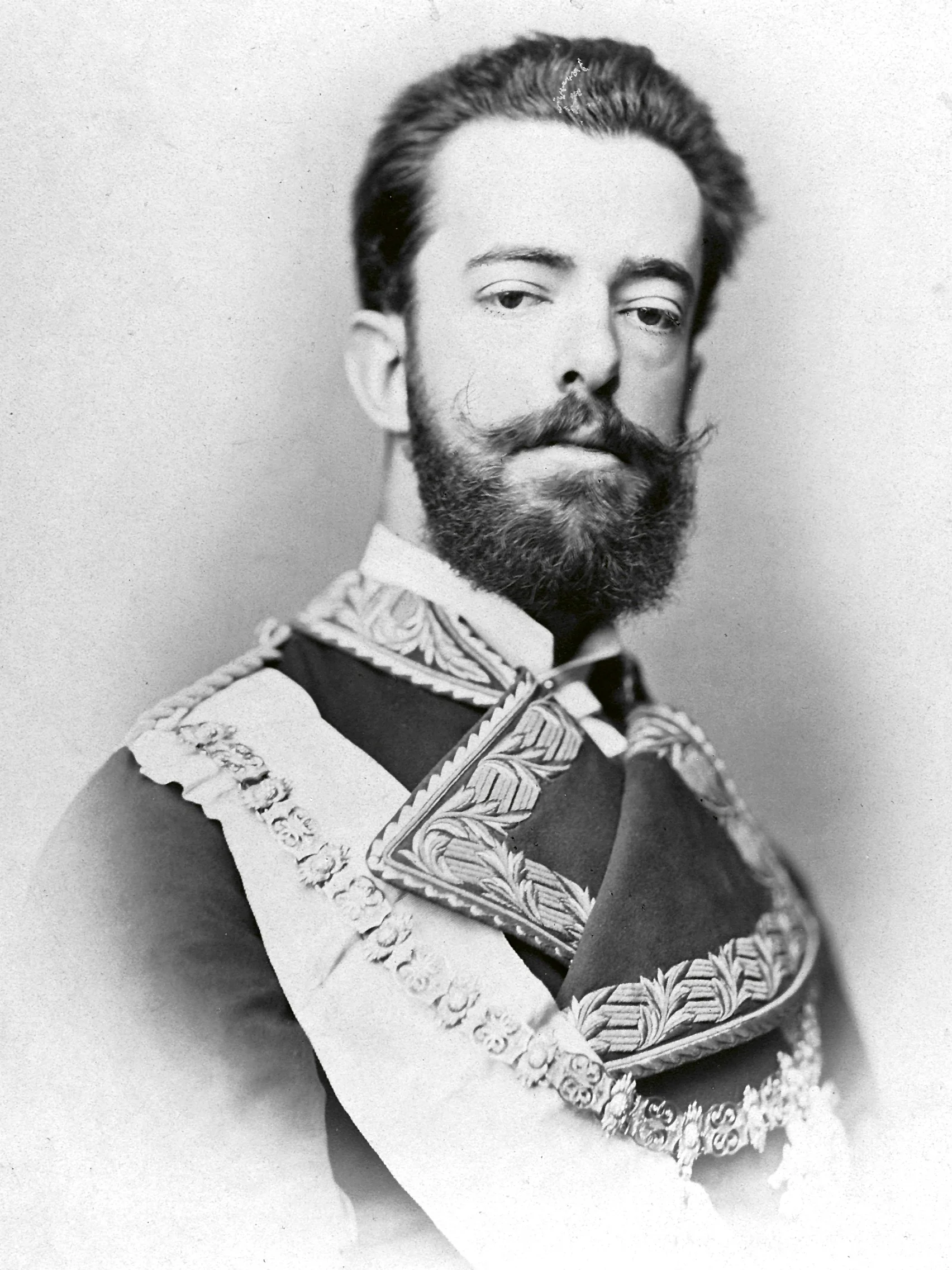
Amadeo I of Spain
 Spain
SpainAlso known as: Amedeo Ferdinando Maria di Savoia, Prince Amedeo of Savoy, Duke of Aosta, Amadeus I
Birthday
May 30, 1845
Birth Sign
Sagittarius
Birthplace
Turin, Kingdom of Sardinia
Age
Died at 44
About
Amadeo I of Spain stands as a singular figure in European history, serving as the only monarch of the House of Savoy to ever reign over the Spanish throne. Born Amedeo Ferdinando Maria di Savoia in Turin, he entered the world with the hereditary title of Duke of Aosta, a designation reserved for second sons in his powerful dynasty. His election in 1870 occurred during a chaotic period when Spanish liberals sought a constitutional monarch acceptable to all factions following the deposition of Queen Isabella II. Unlike previous foreign rulers such as the Habsburgs, Amadeo was not a native Spanish speaker and had never lived in Spain before ascending to the crown. His brief reign lasted just three years before political instability forced him to abdicate, marking a unique chapter in the transition from monarchy to republic. The legacy he left behind is defined by the turbulence of his short time on the throne and his decision to leave rather than rule as an autocrat, distinguishing him as a tragic but principled figure in the annals of Spanish royalty.
Early Life & Background
Amedeo Ferdinando Maria di Savoia entered the world on May 30, 1845, as the second son of Victor Emmanuel II, who would become the first King of unified Italy, and Adelaide of Austria. Born into the powerful House of Savoy, he received the hereditary title Duke of Aosta, a designation reserved for second sons in the dynasty. His upbringing followed strict royal protocols within the Italian court in Turin, where he received a rigorous education in military strategy, history, and statecraft. Before any thought of a foreign crown existed, Amadeo pursued a distinguished military career in the Italian Royal Navy and Army. He gained early recognition for his bravery and leadership skills, which set him apart from many of his contemporaries. In 1866, he commanded naval forces during the Third Italian War of Independence, notably serving at the Battle of Lissa. This experience honed his tactical mind and gave him a reputation for competence that eventually caught the attention of European diplomats looking for a stable figurehead. His interests extended beyond the battlefield to the natural world. Amadeo developed a passion for mountaineering and exploration that would define his post-royal life. He led expeditions in the Andes and the Alps, earning him the nickname "The Mountaineer King" among historians. These adventures showcased his physical endurance and intellectual curiosity, traits that would later be tested against the complexities of governing a fractured nation.
Career Growth
The path to the Spanish throne began with the Glorious Revolution of 1868, which deposed Queen Isabella II and created a political vacuum. The Cortes Generales spent months searching for a candidate who could unite the liberal factions while maintaining enough stability to prevent civil war. After rejecting several other options, they offered the crown to Amadeo, who accepted the challenge despite having no prior connection to Spain or its people. He was elected King of Spain on November 16, 1870, and arrived in Madrid to be sworn in on January 2, 1871. His reign immediately faced intense headwinds from multiple directions. Carlist rebels supported a rival Bourbon claimant, republican uprisings erupted across the country, and the Cantonalist revolts in the south threatened to fracture the nation further. The situation was so volatile that Amadeo reportedly declared himself the "illegitimate king of a republic" due to the lack of genuine support for constitutional monarchy. Despite attempts at reconciliation with various political factions, the pressure became insurmountable. On February 11, 1873, just three years after his accession, Amadeo abdicated the throne without hesitation and returned to Italy. His departure directly led to the proclamation of the First Spanish Republic. Following his abdication, he retired to private life, focusing on mountaineering and founding the Aosta branch of the House of Savoy, which remains extant today.
Career Timeline
Public Image & Style
Historical media portrays Amadeo as a tragic figure, a well-meaning but overwhelmed monarch thrust into a role he could not sustain. He is often depicted as a man of integrity who recognized the futility of his position and chose to leave rather than rule as a tyrant. Contemporary accounts describe him as tall and commanding, reflecting his military background and love for mountaineering. His public persona was that of a modernizing force attempting to navigate deeply divided political waters. While some viewed him as a necessary reformer, others saw him as an outsider incapable of understanding Spanish traditions. The narrative surrounding him focuses on his resignation as a moment of moral clarity rather than cowardice. He was awarded the Grand Cross of the Order of the Golden Fleece (Spain) and the Order of the Thousand Stars (Italy) during his lifetime. Posthumously, his legacy is honored through the continued existence of the Aosta branch of the House of Savoy. Notable magazine covers from the 19th century exist in archives, but no modern digital covers are documented. His reputation endures through the stability of historical records rather than the volatility of public opinion.
Fame & Fandom
Amadeo I of Spain commands a presence defined by historical curiosity rather than active adoration, lacking any organized fanbase or formal community name in the modern era. His legacy rests on the archives of 19th-century politics rather than the rituals of contemporary fandoms, with no documented campaigns, birthday tributes, or social media movements dedicated to his memory. The narrative surrounding him is one of academic interest and niche historical discussion, often appearing in retrospectives about the House of Savoy or the turbulent transition from monarchy to republic in Spain. There are no verified instances of crowds gathering in his honor, nor any viral moments that would suggest a following comparable to modern entertainment figures. His story is told through biographical works and historical analyses rather than fan-generated content or legendary interactions. Regarding his standing in global fame metrics, Amadeo I of Spain has been evaluated by iFANN's Global Fame Engine but does not currently hold a placement in the published rankings (Global Top 1,000 or a Top-100 scope list). This means he is not ranked at this time, and no numeric rank or score should be inferred. The data indicates no significant upward or downward movement recorded in recent assessments, as he is not currently placed. While he does not appear in any Top-100 scope lists, his evaluation confirms a baseline level of global recognition derived from his brief tenure as King of Spain. The iFANN system evaluates such figures based on their enduring historical footprint rather than transient popularity signals. Consequently, while he lacks a dedicated fandom, his name remains a fixed point in the chronology of European monarchies. The absence of a specific fandom name further underscores his status as a subject of study rather than a figure of worship. His reputation endures through the stability of historical records rather than the volatility of public opinion. Recent news items from 2023-2026 reference his legacy in historical documentaries, academic papers, and occasional mentions in articles about the House of Savoy or Spanish history.
Interesting Facts and Legends
Amadeo I stands alone in Spanish history as the only king from the House of Savoy. Unlike previous foreign rulers like the Habsburgs, he was not a native Spanish speaker and had never lived in Spain before becoming monarch. His famous declaration that he was the "illegitimate king of a republic" highlights the tragic irony of his position as a democratically elected ruler rejected by the very people he tried to serve. Historical accounts describe his reign as a complex mix of political maneuvering and personal integrity. He famously stated upon leaving Spain that he could not govern a country that did not want a king. This moment is often dramatized in historical texts as the defining tragedy of his short tenure. His arrival in Madrid in 1871 met with mixed reactions, ranging from celebration of the end of Bourbon rule to violent protests against a foreigner. After his abdication, he became known for his athletic build and love of mountaineering. He led successful expeditions in both the Andes and the Alps, earning respect from climbing communities. His legacy is preserved through the continued existence of the Aosta branch of the House of Savoy, though he left no direct line of succession to the Spanish crown. He served as Governor of Sicily in 1869 before becoming King. The "Falling Star" narrative refers to his rapid fall from grace, becoming a subject of biographical films and retrospectives in the 21st century, such as the 2014 film review mentioned in historical analyses. There was no state funeral in Spain, as the country had already transitioned to a republic.
Notable Quotes
“I am the illegitimate king of a republic.”
“I have done my duty, and now I must return to my home.”
Family & Personal Life
Amadeo's family life was marked by two significant unions and the loss of his only child's mother at a young age. His first marriage took place on December 30, 1867, to Princess Maria Vittoria dal Pozzo, a member of the House of Savoy-Carignano and his cousin. They had one daughter, Maria Giuseppina of Savoy-Aosta, born in 1869, who later married Prince Luigi Amedeo, Duke of the Abruzzi. The couple separated amicably, though historical records suggest they remained on good terms until her death in 1876. Following the death of his first wife, Amadeo married again on June 28, 1888, to Princess Maria Letizia Bonaparte, a granddaughter of Napoleon III's brother, Jérôme Bonaparte. This union was short-lived, as Amadeo died less than two years later. There were no other public romantic relationships or high-profile flings recorded during his lifetime. As of his death in 1890, he was married to Maria Letizia. He died on January 18, 1890, in Turin, Italy, at the age of 44, with the official cause of death being complications arising from bronchopneumonia. He was interred in the Royal Crypt of the Basilica of Superga in Turin, the traditional burial site of the House of Savoy.
Notable Connections
Relationships & Dating History
Amadeo I of Spain experienced two marriages during his lifetime. His first union took place on December 30, 1867, when he married Princess Maria Vittoria dal Pozzo, a member of the House of Savoy-Carignano and his cousin. They had one daughter, Maria Giuseppina of Savoy-Aosta, born in 1869. The couple separated amicably, though historical records suggest they remained on good terms until her death in 1876. Following the death of his first wife, Amadeo married again on June 28, 1888, to Princess Maria Letizia Bonaparte, a granddaughter of Napoleon III's brother, Jérôme Bonaparte. This second marriage was short-lived, as Amadeo died less than two years later. There were no other public romantic relationships or high-profile flings recorded during his lifetime. As of his death in 1890, he was married to Maria Letizia. His first wife, Maria Vittoria, died in 1876, making him a widower before his second marriage. He died in Turin, Italy, at the age of 44, with the official cause of death being complications arising from bronchopneumonia.
- MarriedMaria Vittoria dal Pozzo1867 - 1876First wife; mother of his only child; separated amicably before her death.
- MarriedMaria Letizia Bonaparte1888 - 1890Second wife; granddaughter of Jérôme Bonaparte; married until his death.
Death & Aftermath
Died
January 18, 1890 (aged 44)
Death Place
Turin, Italy
Cause of Death
Complications arising from bronchopneumonia
Public reaction to the passing of Amadeo I was characterized by a quiet respect for his lineage, tempered by the reality that he had been out of power for seventeen years and lived in exile. Tributes from Spanish institutions were absent, as the nation had long since transitioned through its First Republic and Restoration under the Bourbon line, leaving the mourning primarily domestic to the House of Savoy in Italy. He died on January 18, 1890, in Turin, where he had resided since abdicating the throne in 1873 and adopting the title Count of Villafranca. His final days were spent in a reclusive manner away from political turmoil, with no record of a last public appearance prior to his decline.
The official cause of death was attributed to complications arising from bronchopneumonia, a conclusion consistent across biographical entries. There are no accounts suggesting foul play, suicide, or accident, and the event is historically categorized as a natural end resulting from respiratory illness. Given his status as an exiled monarch, the funeral was likely a private affair attended by family members and Italian nobility rather than a state ceremony in Spain. His remains were interred in Turin within the burial traditions of the House of Savoy, though the specific crypt remains unspecified in available records. Posthumously, Amadeo is remembered as the sole monarch of the House of Savoy to reign over Spain, a unique figure preserved in royal encyclopedias and historical timelines.
Cultural interest persisted into the modern era, marked by the 2014 review of a surreal biopic titled Falling Star. His estate and titles were handled according to Savoyard succession laws, with his son Victor Emmanuel succeeding him in Italian titles while the Spanish crown passed to the Bourbons.
Net Worth (Estate Value)
$0
iFANN Editorial Team estimate
As a 19th-century sovereign whose wealth was tied to state coffers and dynastic assets, Amadeo I of Spain did not possess a personal fortune in the modern sense. Upon his death, his estate was managed by the House of Savoy, and he left no direct line of succession to the Spanish crown. His personal fortune consisted largely of family lands and royal pensions, which were modest compared to modern billionaires. The value of his estate remains a minor detail in historical records compared to his political legacy. iFANN currently estimates his net worth at approximately $0, reflecting the nature of his wealth as public rather than private property. He did not receive modern entertainment awards such as Oscars, Grammys, or Golden Globes, as he lived in the 19th century. However, he received significant national honours and distinctions during his lifetime and posthumously. His personal fortune was modest compared to modern billionaires, consisting largely of family lands and royal pensions. The financial details of his life remain secondary to his political contributions and the historical significance of his brief reign.
Awards Won (2)
Amadeo I of Spain did not receive modern entertainment awards such as Oscars, Grammys, or Golden Globes, as he lived in the 19th century. However, he received significant national honours and distinctions during his lifetime. He was awarded the Grand Cross of the Order of the Golden Fleece (Spain) and the Order of the Thousand Stars (Italy).
1871 · State Honour
Service as King of Spain
1871 · State Honour
Service as King of Spain
Known For
King of Spain
1870 · Monarch
Keywords
Sources
Quick Facts
- Profession
- sovereign, military personnel
- Born
- May 30, 1845
- Birthplace
- Turin, Kingdom of Sardinia
- Died
- January 18, 1890
- Death Place
- Turin, Italy
- Gender
- Male
- Spouse
- Maria Vittoria dal Pozzo, Princess Maria Letizia, Duchess of Aosta
- Birth Sign
- Sagittarius
Personal Details
- Full Name
- Amedeo Ferdinando Maria di Savoia
- Spouse
- Maria Vittoria dal Pozzo; Maria Letizia Bonaparte
- Children
- Maria Giuseppina of Savoy-Aosta
- Education
- Royal Military Academy of Turin
Frequently Asked Questions
Who was Amadeo I of Spain?
Why did Amadeo I of Spain abdicate?
When did Amadeo I of Spain die?
What was the cause of Amadeo I of Spain's death?
Did Amadeo I of Spain have children?
Similar People
Join the community
fans discussing