 Colombia
About
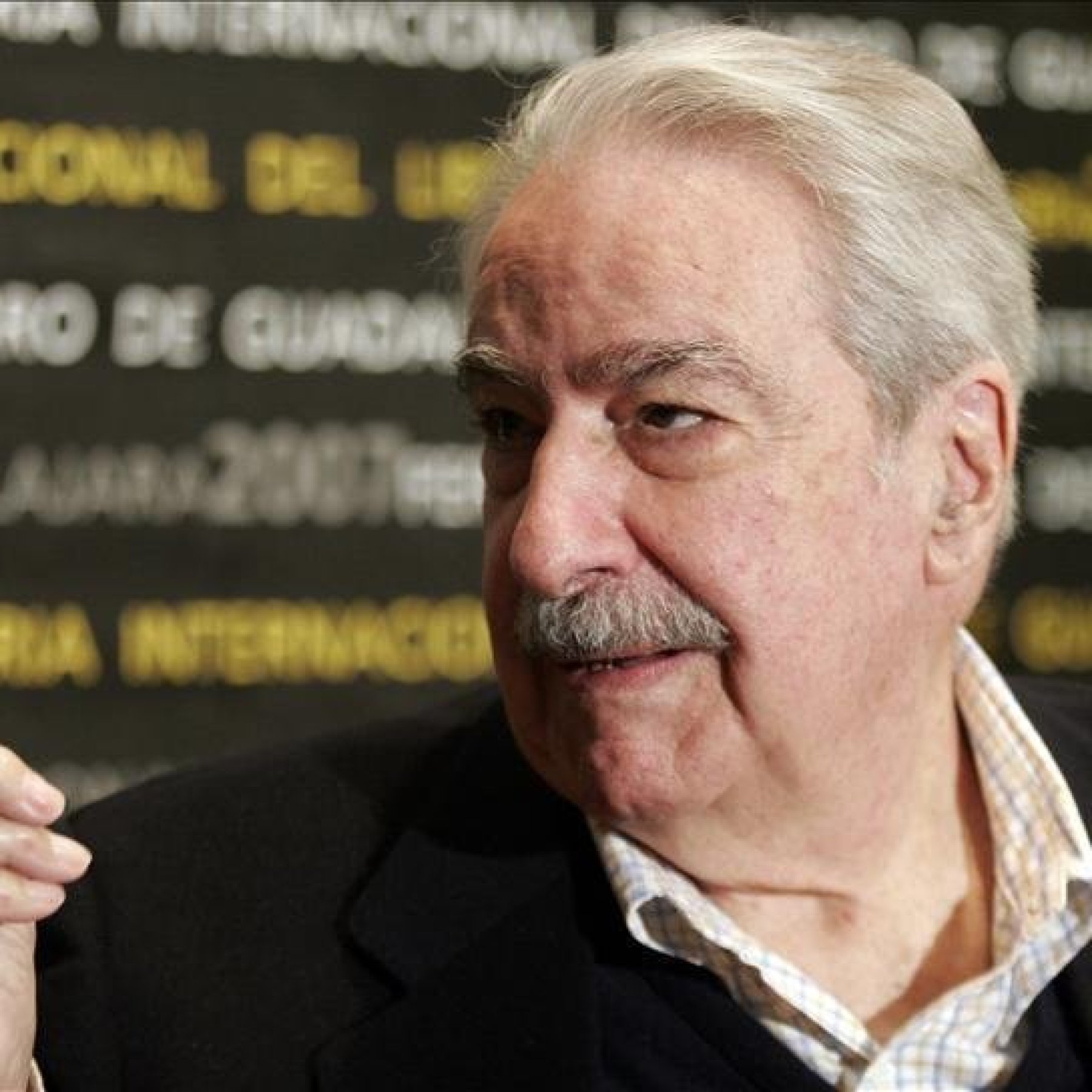
Álvaro Mutis Jaramillo was a towering Colombian poet, novelist, and essayist who created the enigmatic sailor Maqroll el Gaviero. His work explored themes of exile, memory, and the human condition through a sprawling novel sequence that spanned over six decades. Mutis passed away in 2013 at the age of 90, leaving behind a legacy that cemented him as one of the most original voices in Spanish-language letters. He is celebrated for his unique narrative voice that blends adventure with deep philosophical inquiry, creating a literary universe where the journey itself becomes the destination. His influence extends far beyond Colombia, resonating with readers globally who find solace in his contemplative prose and the timeless figure of the wanderer.
Early Life & Background
Born on August 25, 1923, in Bogotá, Álvaro Mutis Jaramillo entered a world defined by political turbulence in Latin America. His father served as a diplomat, which dictated a peripatetic childhood that took the young boy far from his native soil. Before settling permanently in Mexico, Mutis spent much of his early years in Brussels, Belgium, where he attended school and absorbed European culture. This international upbringing instilled in him a sense of rootlessness that would later permeate his writing. He returned to Colombia briefly before moving to Mexico City in the late 1940s, a city that would become his permanent home and the setting for much of his literary output. His education was formalized through these international experiences, though specific university details are less documented than his self-education through travel and observation. From a young age, Mutis displayed a profound interest in literature and the arts, often engaging with the bohemian circles of Europe and Latin America. In Mexico City, he navigated a diverse professional landscape, working as a journalist and a film salesman for major studios including Universal Pictures. These roles provided financial stability while exposing him to global cinematic narratives that influenced his storytelling style. It was during this period that he began to cultivate a reputation within literary circles, particularly through his association with other prominent Latin American writers. A pivotal moment in his early career was the establishment of his friendship with Gabriel García Márquez; the two met in Paris in the 1950s, forming a bond that would last until Mutis's death and significantly influence the "Boom" of Latin American literature. Mutis's transition from journalism and film sales to full-time writing was gradual. He initially gained recognition for his poetry collections, such as La niebla y la hoja in 1950 and El tren de los recuerdos in 1953. However, it was the introduction of Maqroll el Gaviero in the short story "Maqroll el Gaviero" in 1955 that signaled his unique literary voice. This character became the anchor of his future work, allowing Mutis to explore existential themes through the lens of a wanderer who never quite settles.
Career Growth
Mutis's career is defined by the evolution of the Maqroll cycle, a series of novels and stories that chronicle the life of the sailor from the Panama Canal to the Congo, and beyond. The sequence includes major works such as Naufragios in 1970, Un viejo que leía novelas de amor in 1986, and La nieve del almirante in 1993. These works were not merely commercial successes but critical darlings, earning him a place among the giants of post-war literature. Key milestones in his career include the publication of his first poems in 1948, which launched his literary career. The introduction of Maqroll el Gaviero in 1955 established his signature character. The release of Naufragios in 1970 solidified the Maqroll narrative arc. The publication of Un viejo que leía novelas de amor in 1986 garnered widespread international attention and was later adapted into a film. He was awarded the International Nonino Prize in Italy in 1991, recognizing his contribution to literature. In 1997, he received the Princess of Asturias Award, a prestigious honor that cemented his status in the Spanish-speaking world. He was honored with the Miguel de Cervantes Prize in 2001, widely considered the highest award in Hispanic literature. Finally, he won the Neustadt International Prize for Literature in 2002, further validating his global impact. Throughout his career, Mutis maintained a low public profile, preferring the solitude of his study to the glare of celebrity. His writing was characterized by a melancholic yet adventurous tone, often reflecting his own life of exile and displacement.
Career Timeline
Public Image & Style
Specific physical attributes such as height are not widely recorded in public sources, likely due to his preference for privacy. However, descriptions of him often emphasize his intellectual demeanor and the contemplative nature of his presence. Mutis was known for his signature style of a quiet, introspective writer who avoided the limelight. His public image was that of a solitary wanderer, mirroring the character he created, and his content, his books, was marked by a deep, philosophical tone that resonated with readers seeking meaning in the chaos of existence.
Fame & Fandom
The devotion surrounding Álvaro Mutis does not manifest in crowded conventions or organized campaigns, but rather in the quiet reverence of readers who have followed the solitary voyages of Maqroll el Gaviero for decades. His audience consists primarily of academics, critics, and dedicated students of Latin American literature who cherish his work without needing a formal collective identity. There is no documented name for this community, nor are there records of fan-funded initiatives, birthday advertisements, or viral rituals typical of modern celebrity culture. The mythology built around him is strictly literary, centered on the existential wanderer he created and the contemplative life he lived abroad before returning to Mexico City. While anecdotes about his friendship with Gabriel García Márquez circulate among literary circles, these remain intimate stories rather than public spectacles. The most enduring narrative of his life is simply his passing at age 90, an event that marked the end of a six-decade career and was covered by major international outlets as the loss of a rambling, ruminative soul. Unlike performers who generate hysteria through stage appearances, Mutis left behind a legacy defined entirely by his written words. Because iFANN's Global Fame Engine has evaluated this person, they do not currently hold a placement in the published rankings, meaning no specific ordinal position can be assigned to his global standing among the world's most famous individuals.
Interesting Facts and Legends
Maqroll el Gaviero is based partly on Mutis's own experiences as a traveler and observer of the world. Despite his fame, he was known for his humility and reluctance to give interviews or attend public events. One notable sentiment, often cited in tributes after his death, reflects his view on mortality: "Humanity knows nothing about death." Another recurring theme in his writing, often attributed to him in critical analyses, is the idea that "the only true adventure is the internal one," a sentiment that underscores the existential journey of Maqroll. His induction into the Pantheon of Latin American Letters is implicit in his inclusion in the "Greatest of All Time" discussions by critics, though he does not appear on specific commercial ranking lists like Billboard or Rolling Stone's "Singers" due to his non-musical profession. Other notable figures in his orbit included Francisco Goldman, who wrote extensively about Mutis.
Notable Quotes
“Humanity knows nothing about death.”
“The only true adventure is the internal one.”
Family & Personal Life
Álvaro Mutis was known for his privacy regarding his personal life. While some biographical accounts mention a sister, Santiago Mutis Durán, who later wrote about their shared memories and García Márquez's anecdotes, there is no evidence of children or spouses. Sources consistently describe him as a man who dedicated his life to his craft and his close circle of literary friends, rather than to a conventional family life. His father, a diplomat, shaped his early years, but Mutis himself never established a traditional household. The absence of information on dating history suggests either a deliberate choice to keep his private life out of the public eye or a lack of high-profile relationships that made news. As of his death in 2013, he was unmarried and childless, leaving behind a legacy entirely defined by his written words and his friendships within the literary community.
Notable Connections
Relationships & Dating History
Álvaro Mutis was known for his privacy regarding his personal life. Unlike many contemporaries, he rarely discussed his romantic relationships in interviews or public statements. There is no publicly documented record of marriages, engagements, or long-term partners in the traditional sense. Sources consistently describe him as a man who dedicated his life to his craft and his close circle of literary friends, particularly García Márquez, rather than to a conventional family life. While some biographical accounts mention a sister, Santiago Mutis Durán, who later wrote about their shared memories and García Márquez's anecdotes, there is no evidence of children or spouses. The absence of information on dating history suggests either a deliberate choice to keep his private life out of the public eye or a lack of high-profile relationships that made news. As of his death in 2013, he was unmarried and childless, leaving behind a legacy entirely defined by his written words and his friendships within the literary community.
Death & Aftermath
Died
September 22, 2013 (aged 90)
Death Place
Mexico City, Mexico
Cause of Death
Natural causes (undisclosed)
Álvaro Mutis Jaramillo died on September 22, 2013, in Mexico City at the age of ninety. While his family and medical authorities never released a specific clinical diagnosis, reports described his passing as a natural end following a long life marked by travel and literary dedication. He had spent the final decades of his career managing film sales for major studios before devoting himself entirely to writing, leaving behind the character Maqroll el Gaviero as his most enduring creation. The literary world responded with immediate and profound tributes across the Spanish-speaking sphere. Major outlets like El País, The New York Times, and The Guardian published extensive retrospectives honoring his contributions to Latin American literature. A notable sentiment emerged from these commemorations, reflecting his philosophical approach to mortality where one tribute quoted his own earlier reflection that humanity knows nothing about death, framing his passing as the final voyage of his famous mariner. Following his death, his legacy continued to thrive through the reprints and study of his works, particularly the Maqroll series, which remained central to his acclaim alongside his 1997 Princess of Asturias Award. No legal disputes or investigations followed his passing; his estate has since managed the publication and translation of his books, ensuring his voice remains active in academic circles and among dedicated readers worldwide.
Net Worth (Estate Value)
$1 Million
iFANN Editorial Team estimate
As a literary figure who lived a relatively modest life and did not engage in high-profile commercial ventures, Mutis's net worth is not publicly quantified in the same way as entertainers. Estimates suggest his wealth was derived primarily from royalties, advances, and the sale of his manuscripts. Following his death, his estate has likely continued to generate revenue through the ongoing publication and licensing of his works. Given the enduring popularity of the Maqroll series, the estate value is estimated to be in the range of hundreds of thousands to low millions of dollars, managed by his heirs or literary executors. Specific figures are not available, but the financial impact of his work remains significant in the literary market. iFANN currently estimates Álvaro Mutis's estate value at approximately $1 Million.
Awards Won (4)
Álvaro Mutis received numerous prestigious awards throughout his lifetime, reflecting his immense contribution to literature. These include the 1991 International Nonino Prize in Italy, the 1997 Princess of Asturias Award in Spain, the 2001 Miguel de Cervantes Prize, and the 2002 Neustadt International Prize for Literature in the United States. His induction into the Pantheon of Latin American Letters is implicit in his inclusion in the "Greatest of All Time" discussions by critics.
1991 · Literature
Body of Work
1997 · Literature
Body of Work
Known For
The Adventures and Misadventures of Maqroll
1955 · Author
Un viejo que leía novelas de amor
1986 · Author
La nieve del almirante
1993 · Author
Keywords
Sources
Quick Facts
- Profession
- writer, novelist, poet
- Born
- August 25, 1923
- Birthplace
- Bogotá, Colombia
- Died
- September 22, 2013
- Death Place
- Mexico City, Mexico
- Gender
- Male
- Birth Sign
- Sagittarius
Personal Details
- Full Name
- Álvaro Mutis Jaramillo
- Children
- Education
- Attended school in Brussels, Belgium
Frequently Asked Questions
Who was Álvaro Mutis?
When did Álvaro Mutis die?
What is the main theme of Álvaro Mutis's writing?
Did Álvaro Mutis have any children?
What major awards did Álvaro Mutis win?
Similar People
Join the community
fans discussing